
Our Resynthesising the Traditional artistic lab also returns, featuring performances and talks by six fellows selected via open call. The lab explores various ways to confront conservative views of culture and digs into the emancipatory potentials of critically connecting to the traditional in contemporary ways.
With the festival theme dissonate < > resonate, CTM 2026 brings together a multitude of voices echoing our cacophonous and interwoven realities. Co-conspirators in an ongoing exchange, dissonance and resonance offer ways to sense, question, and interpret the worlds we inhabit. They are an invitation to inhabit the spaces in-between, the charged fields where frequencies meet, clash, and sometimes unexpectedly unite.
Weekend passes are now available, as well as tickets to many events, and a limited number of full festival passes remain on sale. The second wave of acts is announced below. More acts, workshops, the festival exhibition, and a collaboration with Refuge Worldwide will be announced mid-December. The Discourse programme will be announced in January.
Newly confirmed acts and projects are:
- Assyouti b2b OKO DJ
- Benfika
- Blood of Aza
- DJ Babatr
- DJ Deep RH
- DJ Love
- feeo
- Finlay Shakespeare
- gamut inc – »Dialogue de l'orgue double«
- Hilary Woods
- Jehia
- John Glacier
- Kara-Lis Coverdale
- Kentaro Hayashi
- King Yosef
- Marylou b2b Fukinsei
- NGHTCRWLR
- Noémi Büchi – »Exuvie«
- Rozzma
- Ruiseñor
- Sarah Davachi – »Double Reeds«
- TOCCORORO
- Viiann
- Vv Pete x UTILITY
- White Prata
- Youth Code
Plus Resynthesising the Traditional artistic lab fellows:
- Bint Mbareh
- Dorothy Carlos
- Marina Tantanozi
- Maarja Nut
- Miłosz Kędra
- Saba Alizadeh

Concerts and Commissioned Works
EBM duo Youth Code thrash in a stained space where hardcore and metal grind nastily up on the rusted foundations of industrial. With their new EP Yours, With Malice, that tension intensionifies – synth lines glare harder, drums smack that mental booty punishingly, and the shadows behind it all rear impossibly high.
King Yosef carries in his swollen industrialised hardcore an elemental weight that presses inward before it cracks messily open. Textures sharpen to test gravity, synths hissing and splitting under the tension as melodies are drawn from fog and stretched gauzily before being shattered by the next ripple of distortion.
In between mastering Merzbow records, Osaka-based producer and sound engineer Kentaro Hayashi sculpts his own world of breathing distortion, static hums, and hand-forged frequencies drawn from experimental electronics, industrial atmospheres, and underground club culture’s kinetic energy.
Delicate and dense, the late-night apparatus that is Blood Of Aza flutters with intimate, fragile melodies submerged beneath dense shape-shifting rhythms pulsating with a distinctly digital melancholy. Textures ooze between ghost-ambient drone and ruptured power electronics, songs drifting in a hypnotic limbo.
Along with such noisy aurals, the programme also weaves in various strands of sensitive and experimental hybrid pop.
Where traditional hip-hop might prize bravado, John Glacier offers nuance and vulnerability bound together with a vibrating stillness. Her vocal delivery often hovers between rap and plainspoken speech, soundscapes unfolding like a ribbon of experience, curving and flopping before looping back in on themselves in a wash of contrasts: ambient warmth slipped into stilted rhythm, subtle humor waxing atop poetic gravity, lo-fi textures welded to polished vision.
Engaging the tension between the inner and outer worlds, feeo draws from the charged collective energy of dance spaces and the quiet solitude of the bedroom studio. Muted synths, drifting guitar traces, ghost-lined samples and pressing rhythmic undercurrents, creating an ambient field that hovers on the edge of listening. Willing and unwavering follows her voice, cutting through this fog with quiet intensity. Her debut album Goodness, released on AD 93 in October 2025, is an open, impressionistic assemblage of drone, ambient, experimental electronic, improvisational and minimalist dance music tracing an ever-evolving counterpoint between connection and isolation.
Spectral and otherworldly, uncanny instrumentalist excursions seep through into the programme as well.
The shimmering emotional intimacy of Kara-Lis Coverdale explores subtle tonal ambiguity and gestural nuance. Her compositions balance clarity and mystery, evocative of environments that hover in the liminal brainspaces as potent dream-recollections. Out on Smalltown Supersound, her latest albums A Series of Actions in a Sphere of Forever and Changes in Air extend these ideas into a meditative world of choral haze, fragile dissonance and layered harmonic interplay. At CTM she’ll channel her third new album From Where You Came, distilling its gorgeous melancholy and ambient washes upon the audience.
Hilary Woods drifts inward on breath and reverberation. A former bassist who turned toward composition and analogue film, her work balances delicately peeled-back emotion with trained precision. Songs unfold as ceremonies beneath the moon, doors opened into unlit places made of brass, choirs hovering about as strings waver between devotion and decay. Released on Sacred Bones, her new album Night CRIÚ lingers with ancient patience and writhes with new births.
Premiering her new A/V show Exuvie, composer Noémi Büchi deepens her exploration of the human form and transformation. A filmed collaboration with dancer Rebeka Mondovics, Büchi places the body at the center of the visual frame, its sharp and measured movements shaped by the shifting textures of her new album. Influenced by Francis Bacon’s fractured figures, moments of uneasy closeness and the quiet that follows transformation, she blends orchestral and electroacoustic layers with fragments of video-game, anime and hip-hop sensibilities. Working emphatically without AI, she grounds the work fully in human presence, building a clear, resonant structure of memory, with the idea of exuviae - the shed skin left after metamorphosis - acting as a reminder of what lingers between loss and renewal.
Sarah Davachi shapes sustained explorations of timbre and extended temporality, arraying chamber music, solo tapings, and large-scale durational pieces side by side, often recorded in symphonic tandem with the resonance of churches to intertwine instrument and architecture. Her organs and synthesizers are imbued with gateway potential, opening aural dimensions where overtones and resonance are meticulously revealed. At CTM she will unveil »Double Reeds«, an A/V solo organ performance with a film by Los Angeles filmmaker Dicky Bahto.
Tying in to CTM’s Resynthesising the Traditional thread, the Berlin-based duo of Marion Wörle and Maciej Śledziecki aka gamut inc focuses on electro-acoustic and machine-built performances, sharpening a critique of mechanisation, digitality, and the human in between. At CTM they present a special spatial performance inaugurating their custom-built modular windynamic organ BLACK SQUARE, developed by musical automaton manufacturer Decap. Using machine-learning processes, gamut inc will re-create and project voices and sound materials through their two computer-controlled organ modules, dialoguing with a composition diffused over Haus der Visionäre’s d&b Soundscape spatial PA system.

Club Programme
King Woman’s Kris Esfandiari has operated under multiple vessels, facets of a restless mind drawn toward extremes. As NGHTCRWLR her voice erupts with stainless steel force, pushing through a wound of sound to bend the machinery of the club and the cacophony of the subterranean to her will. Out on YEAR0001, her new album Oz is filled with the skittery signifiers of drum-and-bass in her deep, dark atmospheres, theatrical flourishes and hardcore punk elements slamdancing with breakbeats and basslines.
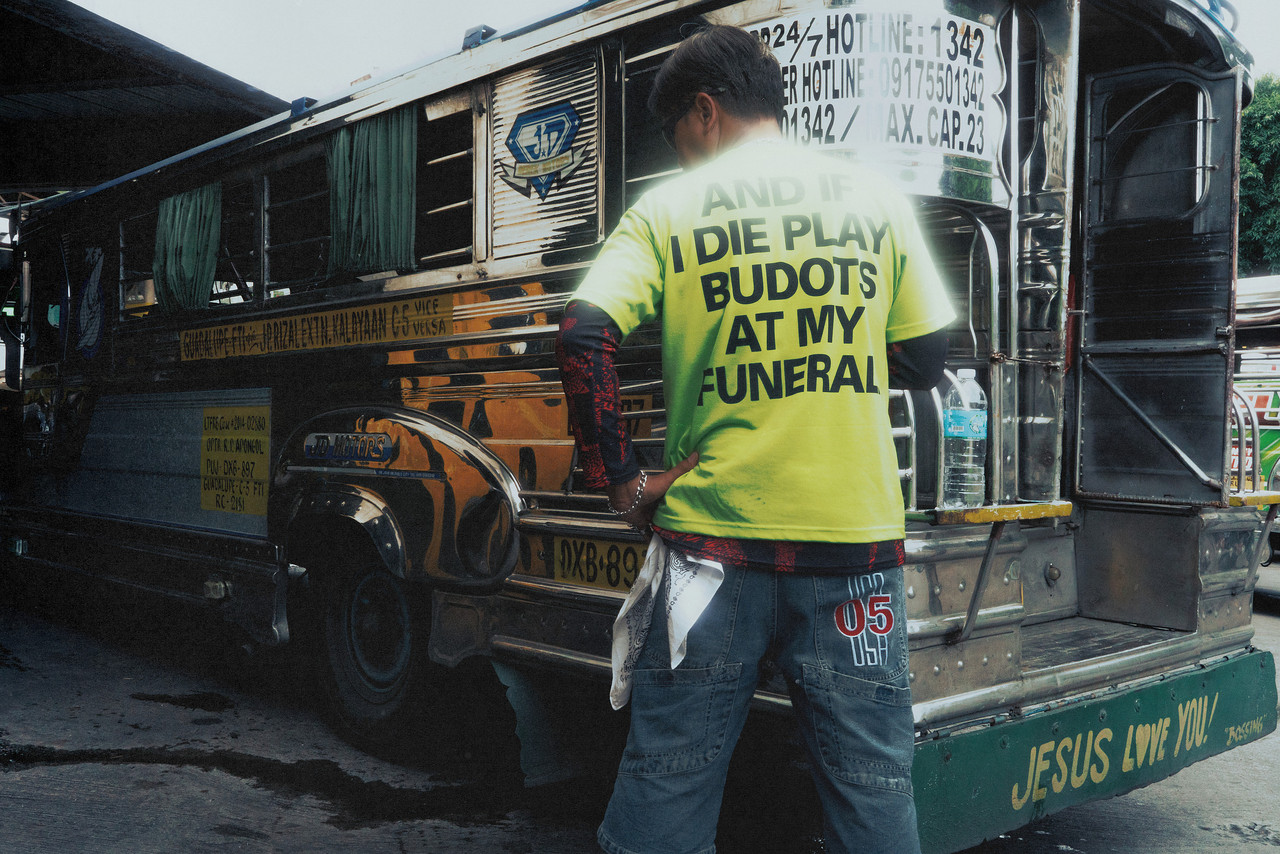
Becoming a DJ and choreographer by high school, what began as small sets in DJ Love’s community grew as he started producing his own tracks with a distinct twist, giving rise to a new style: budots, a high-octane dance genre marrying thick bass with vibrant collages of synthetic beats, jeepney horns, sirens, and whistles thumping at 140 BPM. After having to cancel his announced CTM 2025 appearance due to health issues, we’re all the more excited to finally welcome the Filipino budots pioneer this year.
Finlay Shakespeare’s background as a synth builder feeds into his work, the quirks of his machines, their limits and the in/felicitous surprises they’re capable of becoming part of the music. Modular electronics, brute-synth rhythms and a vocal delivery quaking with urgency thread into songs where a pulse of pop structure always lurks behind the noise.
A member of Brazil's leading queer rave collective Mamba Negra, White Prata flexes the taut rhythms of hardcore and gabber, acid-drenched dub and Hard Baile swirled into the mix to chart an internal map, patiently detailed cartographies where emptiness resonates with the weight of impact. Techno is broken down, breakcore shattered, all while ramping up the energy higher and harder.
Vv Pete pulls you into the sweat of the floor by a bounce of the bass and a fire bar, one moment in celebration and the next a flicker of something harder. The Sudanese-Australian rapper’s voice moves across Brodinski-produced landscapes built on gqom, drill and baile funk hooks, carving out verses that glance sideways before striking.
TOCCORORO’s sets are interwoven with the languages of her Cuban-Spanish lineage. Guaracha mutates into hardstyle, raptor house curling into ballroom, Jersey Club detonating under tribal percussion, all weaving into a delirious ecosystem where hips conspire with bass. There’s a theatrical glint to the way she performs, a sly invocation of ritual and costume.
Raised between forest and ocean in the southwest of France, Marylou came to music through painting and film, later channeling those sensibilities into her DJing. Her crackling sets move through traditional music, improvisational jazz, noise, dub, footwork, jungle and breakcore, always finding moments of dreamlike intensity within the repetition.
Going B2B with Marylou, Fukinsei builds DJ sets in tangled narratives of footwork, jungle, hardcore, rave and dub ground against jagged, broken flows. Her work is a map of shadows and glints - a journey through sound systems smothered in grit. The founder of the label-project Fukstep, her experimental investigations take form in »Innesta,« a radical research project blending traditional Sicilian oral practices with percussive cut-up rhythms and often staged in unusual spaces.
A Club Night at RSO features a floor curation by No_Stone Collective. Emerging from Egypt’s underground music scene and shaped by the contrasting pulses of Berlin and Barcelona, it’s a melding of distinct yet harmonious artistic sensibilities.
Cairo’s cluttered streets, its ambient noise and chaotic rhythms are the raw material Assyouti transforms into breakbeat club experiments. Berlin-based since 2021, his productions often feel assembled from broken machines and half-heard radio, samples shredded beyond recognition, sets crafted to destabilize.
Going B2B with Assyouti, OKO DJ has cultivated a reputation for genre-fluid sets that shift between coldwave textures, EBM beats and the ambient tension of stripped-down dancefloor moments. Emphasising mood and journey over fixed musical lanes, she brings a selectiveness and breadth that keeps her dancefloors wonderfully unpredictable.
Jehia shapes his sound by soaking in a mix of club genres - jungle, bass, IDM, deconstructed club - and then letting the energy channel through his sets as a fierce, fluid blend of rhythm and mood. His performances lean into tension, intricate breakdowns that resolve into heavy groovage and unexpected maneuvers.
Fusing rave bass, Egyptian rap, and experimental production with a (lens) flair for the uncanny cinematic, an aural journey with Rozzma takes the ear into abrasive bass drops and high-velocity percussion. Releasing on XL, his rough edges are embraced and made rougher as rhythms loop back on themselves in disorienting ways; a futuristic shaʿbi for the club’s darkened corners.
Another Club Night will feature a floor hosted and curated by the collective Terminal. Founded in Mexico, Terminal has evolved into a translocal network connecting Latin American and global electronic scenes through music, research and collective exchange.
DJ Babatr has shaped the relentless fusion of rhythm and rebellion that is raptor house, a sound carrying the weight and joy of collective experience. Hard Techno, tribal, house, and the unmistakable swing of Caracas collide in his sets and productions, anthems for those who move against the current.
Mentored by Babatr, DJ Deep RH has been one of the makers shaping a sound that’s roared from underground parties straight into a global force. Capturing the electricity of the streets, he transmogrifies it into the kinetic language of rhythm, heavy percussion colliding with fiery energy.
Benfika channels sounds rooted in guaracha, tribal house, techno and ’90s trance, sculpting each track with exacting precision, driving rhythms intertwining with melodic textures and emotional undercurrents so it punches out the guts while whipping the psyche into a fine froth.
Ruiseñor traces the living currents of the Latin American and Caribbean sound, carrying echoes of cumbia, salsa, reggaetón, dembow, and pre-Hispanic percussion into dialogue with the kinetic languages of techno, house, trance and bass music. Each set is a cartography of bodies in motion, a migration and return.
Ambient atmospheres, intricate percussion, broken beats and techno pulse within Viiaan’s work, utilizing field recordings, dark ambient textures and dancefloor energy in a carefully calibrated mix. Her sets and productions conjure mythic imagery of water, night and memory converging within the contours of the brain.

Resynthesising the Traditional
Resynthesising the Traditional is an artistic lab which will host six artists selected via open call for a weeklong exploration of the intersection of heritage, technology, and political imagination. Co-hosted by Yara Mekawei and Stas Shärifullá, the fellows will be working during the festival week at Radialsystem studios. They will present their current solo work in short, public presentations on Tuesday 27 January 2026, and share insights into some of the ideas, processes and conversations explored during the week at a roundtable discussion on the festival’s closing Sunday 1 February.
This year’s fellows were selected from 400 applications: Bint Mbareh is a Palestinian artist working in folkloric research and resurgence. Dorothy Carlos employs electronics and a wide spectrum of extended techniques to push the cello beyond the confines of the classical tradition. Maarja Nuut has been exploring archival Estonian sounds, dances, and texts, with a special interest in how landscape and environment shape these. Marina Tantanozi combines the bassflute, voice, inside-flute amplifications, and effects as she explores how to integrate with the traditional in a radical and authentic way.
The artistic practice of Miłosz Kędra is deeply rooted in ritual, structure, and sensibility that stems from a conservative Catholic upbringing. Often finding it difficult to express aspects of their experience through art, they are interested in expanding the imagination around practices of queering. Saba Alizadeh is a kamancheh player who bridges Persian musical traditions with experimental sound practices, often incorporating archival, historical, and political recordings in a neo musique concrète approach.
Festival Passes and Accreditation
CTM Festival passes are on sale now in limited quantities. You can choose from CTM Festival passes which grant access to most CTM events, weekend passes for each respective CTM Festival weekend, and Connect Passes for access to both CTM + transmediale. Tickets to several events are available, with more coming in December.
The press accreditation application period is currently open until 9 January 2026. Journalists can apply to cover CTM or transmediale respectively, or for a combined accreditation to both festivals.