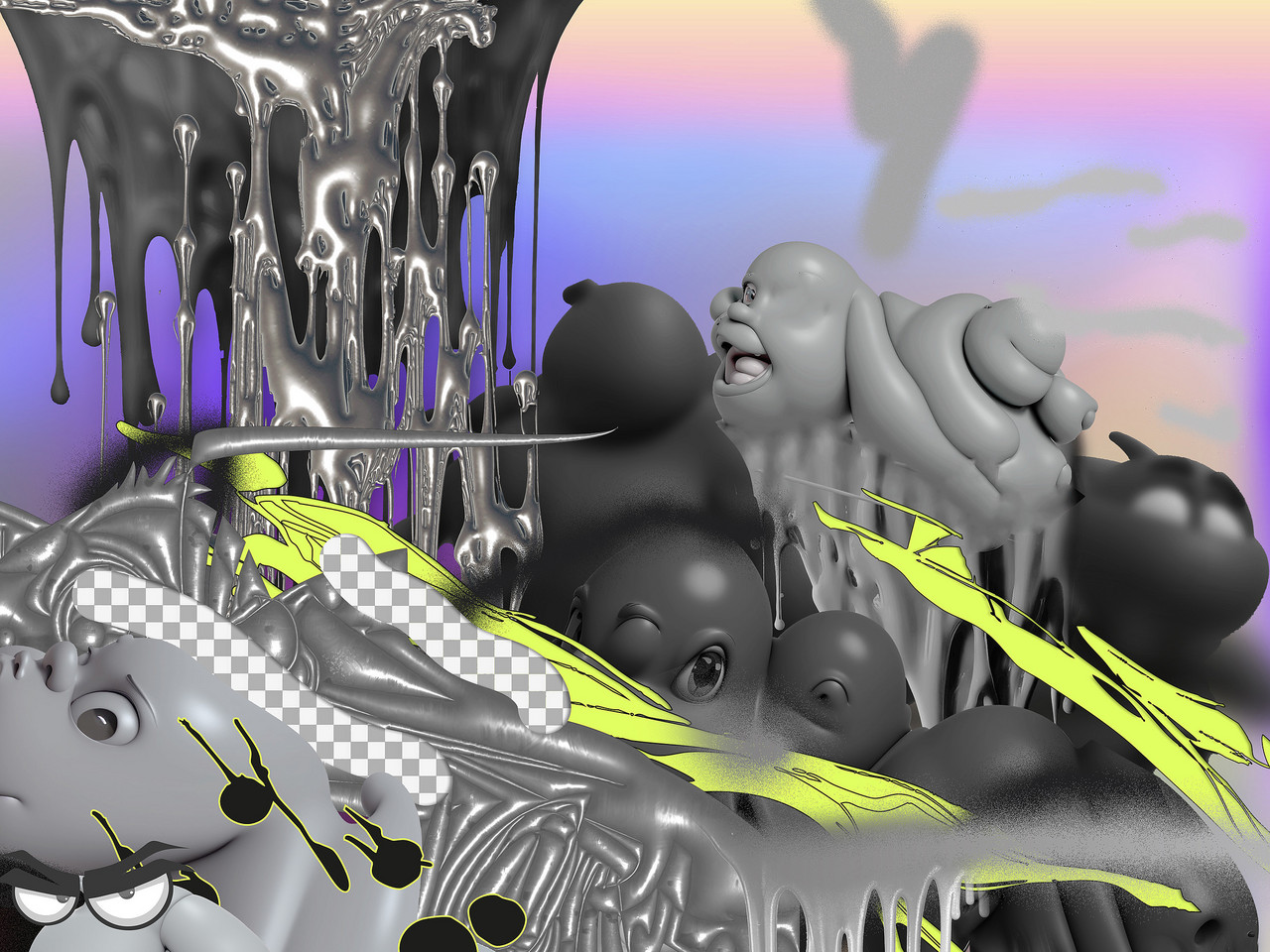
The unconventional sides and anarchic possibilities of AI have been a running sub-theme within CTM Festival editions for a number of years. We invite you to check related events at this festival edition, from an artistic lab, to concerts and talks.
This edition will be hosting the ongoing initiative Wilding AI with a namesake artistic lab where participants selected via open call will explore the boundaries of AI’s creative potential, offering an experimental space where artists and sound creators can engage with the weirder side of AI systems. Hosted within the immersive 4DSOUND environment at MONOM in Berlin, the Wilding AI Lab will allow participants to interact with AI systems, bridging large language models (LLMs) and generative audio in a spatialised setting. Morning skill-sharing sessions open to the public will explore the use of LLMs and narratives in creating sound, working with data to create generative sound, and tools for spatialising generative models. The lab culminates with a public finale presentation, inviting discussion and allowing for demonstrations of some of the prototyping and experimentation that occurred during the lab’s three days.
Several concerts within CTM’s music programme highlight some of the latest developments in generative AI, A/V storytelling, and data sonification, notably within the Synthesis concerts presented together with transmediale with feature critical works by Hulubalang with Brandon Tay, Portrait XO, Rick Farin & Actual Objects, and ZULI. Born from hackathon culture and tempered by art and algorithm, the neural networks of the Dadabots collective will run an entire night of prompt jockeying on one of the floors of CTM's club night at Alte Münze, while also giving a workshop during CTM’s daytime programme, on the arduous path of building, training, and breaking one’s own neural networks.
Further inputs into the daytime Discourse programme including two panels from the Wilding AI cohort, which explore the vision behind the Wilding AI Lab—resisting normative middle grounds to embrace a wilder approach to AI that encourages creative freedom. The discussions will include a deep dive into the emerging technologies that could redefine the ways we think about sound, image, and performance. Writer and editor Michael Salu and Subtext label head Jamez Ginzburg will also present their Cybernetics, or Ghosts? literary anthology and companion album, which played with AI’s potential to reshape language, mythology, and speculative futures, drawing on the ideas of Italo Calvino. On the final festival weekend, the third Research Networking Day module will focus on the anarchic possibilities of AI with presentations from three researchers and artists.
As the use of AI in creative spaces continues to evolve, crucial questions arise: What kind of AI would we in the independent arts community wish to create? How can we ensure that AI fosters more inclusive and diverse creative practices, and what ethical considerations must we address when bringing AI into the arts and our various communities? This is not limited only to questions of copyright and authenticity, but also of the kind of relationality we might wish to foster with AI. In which ways might we attempt to resist the corporate standardisation and centralisation of AI technologies, to allow the stranger and wilder sides of AI to flourish? How might AI redefine the boundaries of human creativity in ways we have yet to imagine?
- Alexandre Saunier
- Beth Coleman
- Dadabots
- Daniela Huerta
- James Ginzburg
- jiawen uffline
- Matwe Kascak
- Maurice Jones
- Michael Salu
- Noah Pred
- Pía Baltazar
- Portrait XO
- Romi Morrison
- Sahar Homami
- William Russell
- Yann Martins / Younger Sibling
- Daniel Limaverde
- Evangeline Y Brooks
- Federico Visi
- Gadi Sassoon
- Hyeji Nam
- Irini Kalaitzidi
- Nico Daleman
- Ninon and Jun Suzuki
- SENAIDA
- Three Amps
- Transient Cat
- TWEE