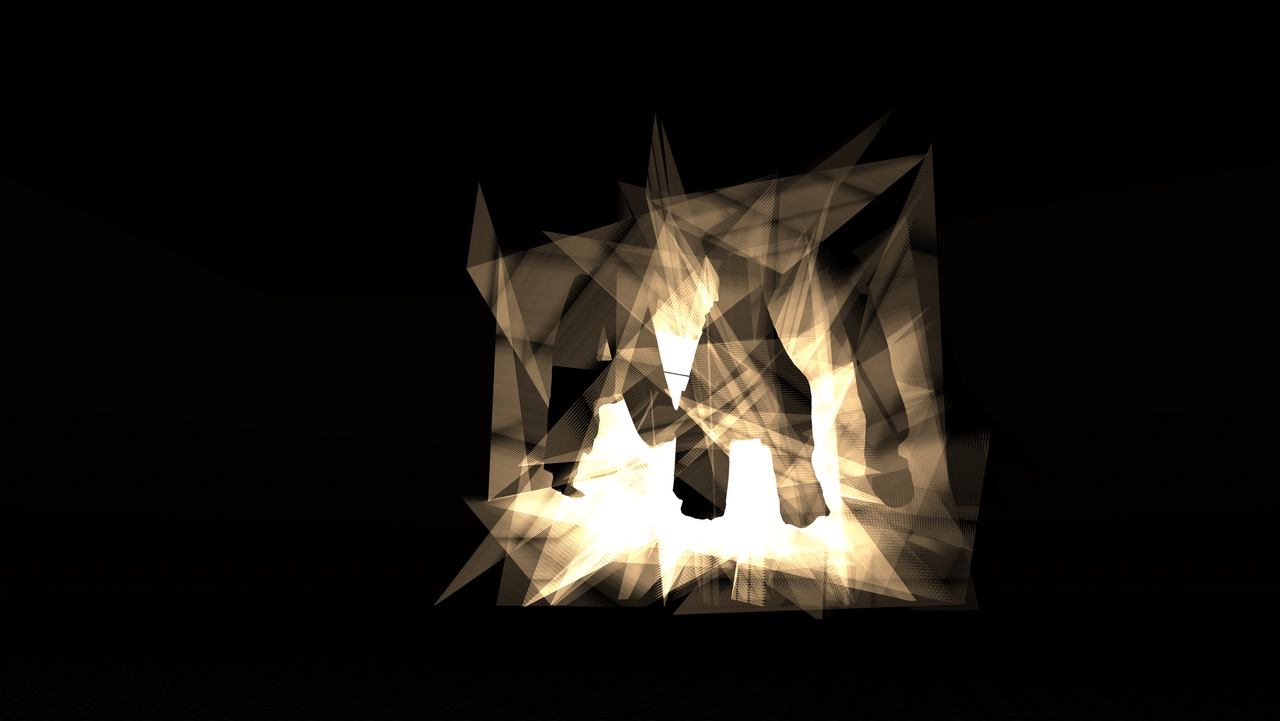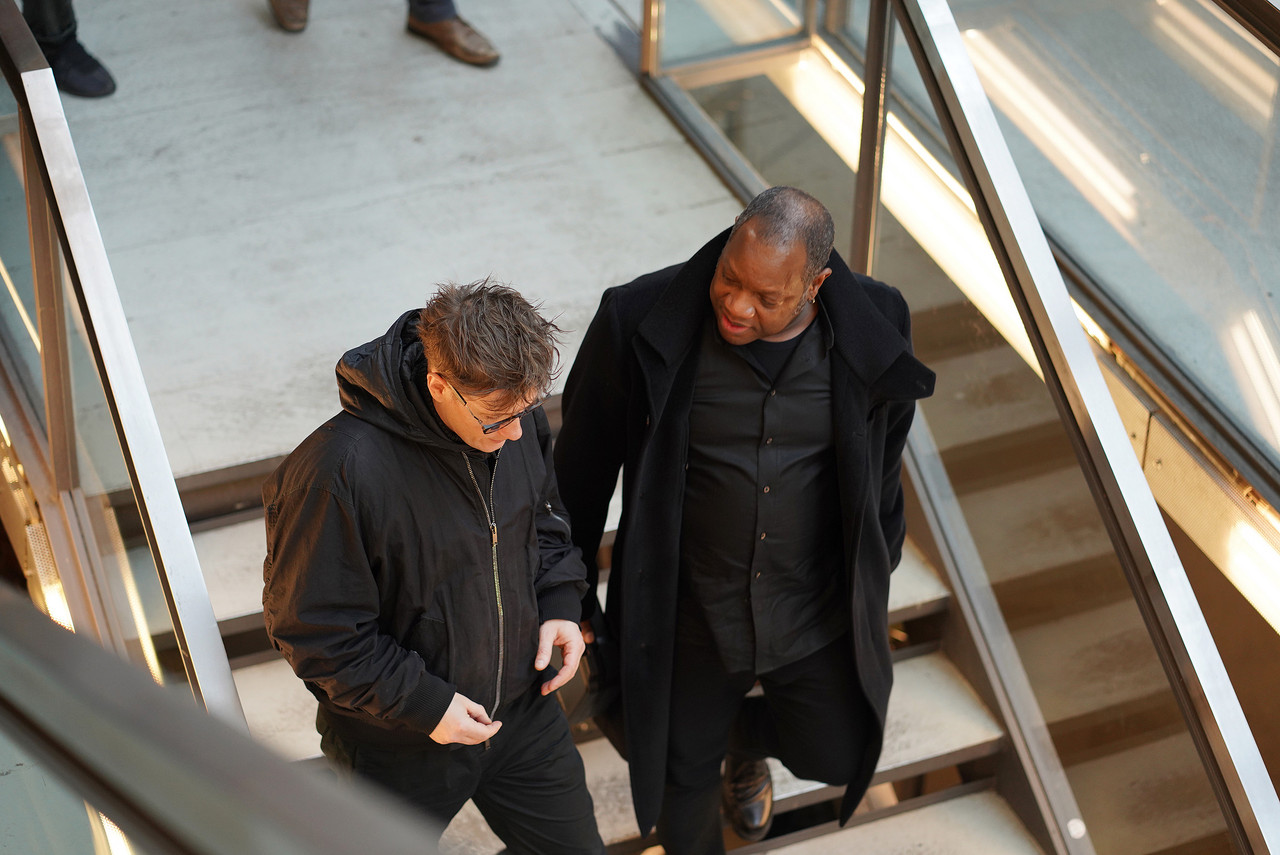
On February 26, Mouse On Mars will release their new album AAI (Anarchic Artificial Intelligence), a deep meditation on Werner and Andi Toma’s preoccupation with technology, in collaboration with Chude-Sokei and percussionist Dodo NKishi. The project is a fascinating AI narrative framework modelled on the writing and voice of Chude-Sokei and DJ/producer Yağmur Uçkunkaya, exploring artificial intelligence as both infrastructure and compositional tool, while rendered speech is engaged as a malleable instrument with increasing autonomy. AAI is presented online at CTM Cyberia in February and March 2021, and will be shown as an in situ installation later this year at silent green Betonhalle. On the day of release of AAI’s first single, »Artificial Authentic,« Chude-Sokei and Werner connected for another chapter of deep, discursive inquiry.
Jan Werner: The song »Artificial Authentic« was released today. People who already heard the AAI album are writing to me now as if they haven’t heard the song before. It doesn't sound [at first] as the hit pop song on the record. Now people are writing to me saying, »wow, that track you just released is so fresh.«
Louis Chude-Sokei: I love that track. When I first heard the playbacks that one stood out to me as the closest thing to an official pop song.
JW: I think it's the last song we made for the album. We just let go. We needed that. We didn’t have to think about consistency or the narrative anymore. It's great, because it was a sketch that had actually been hanging around for a while; it's made with an app called Elastic Drums that we released on MoM Instruments. A lot of our 2018 album, Dimensional People, was initially made just with that app. You load it with samples, chop them up, and you get that free flow of sketches. The way you skip between these sketches is so free that interesting combinations make something new.
It was exactly the same with this song, I just added these two samples of Yağmur saying »what are you?« and your reply: »artificial authentic.« It's so simple, there wasn't much else to do. I think there's still a guitar lick by Justin Vernon from Dimensional People, you don't hear it as guitar, but that’s the original sound.
Christine Kakaire: Jan, you said you »needed« that track. What do you mean?
JW: The recordings were super intense because there was a story that we were telling in sound as well as with Louis's text accompanying the work, guiding it, having a dialogue with an imaginative AI that eventually grows parts that we're not even aware of. We felt like we had told that story, we were true to what we had subscribed to. So the final track, »Artificial Authentic,« felt like a really interesting overview, that still kept within the framework and theme. It's like changing perspective. You create a song structure and try to step out, watch it from the outside, bring in different influences, or find an opening where the song could possibly change into something else or connect to something else. »Artificial Authentic« did all that. It kind of summed up the album. The weird thing is, I noticed today that »Artificial Authentic« also has the AA element, the doubling, kind of stuttering moment where you don't say »AI« but »AAI.«
What if we creolised or hijacked or bootlegged mainstream dominant technologies as we do in music? What if AI gets downloaded and remixed by people who don't work for dominant corporations and political systems?
CK: Why is the other A in AAI »Anarchic?«
JW: We wanted this AI to have its own life and have the possibility to change and grow and be wild and unpredictable, all that we would not apply to AI usually: efficiency and absolute normalisation towards a specific goal. Anarchic is a term that pops up in the history of Mouse on Mars quite often. We were quite sloppy about using the term because we're referring to quite early anarchic ideas, not only the contemporary political situation. It goes back to humanism and Enlightenment and ideas of how men and nature interact, or how we could find our way into nature – certain principles of letting things grow, or living respectfully with life around us. It made sense to us to apply these concepts to artificial intelligence, too.
LCS: I remember one of the earlier conversations we had in the studio, when we're all trying to riff off of what the A and the A and the I could all mean. One of the things that attracted me to the project is that »anarchic« reminds me, and should remind us that AI, cyborgs, and robotics are almost always produced by state power. They represent corporate capital and the centralisation of knowledge and power. But the beautiful thing is that music has always been the space where people who don't necessarily work for centralised state power and authority, get to play with technology, particularly people of colour. So I thought, »well, what if?« How would people who are not working for Google’s DeepMind and all these corporations get access to artificial intelligence? It’s more than likely that this would be through the cultural sector, definitely music. What if we created AI? What if we creolised or hijacked or bootlegged mainstream dominant technologies as we do in music? What if AI gets downloaded and remixed by people who don't work for dominant corporations and political systems? What would we create? What kind of AI would grow if we allowed it to grow separately from the expectations of corporations and state power? That's what I found to be anarchic. Music has always been where that happens.
JW: You know, what's beautiful is that in the presentation of the album online at CTM Cyberia, and, later on, as an installation at silent green Betonhalle, there will be other artists doing pieces for these systems. There's Marcin Pietruszewski, a programmer who invented a beautiful software called The New Pulsar Generator. For his project for CTM, Marcin is working with a person who actually reads the text [out loud]. He met AI tech collective Birds on Mars and was very keen on learning about the AI that they had created for us together with Derek [Tingle] and Rany [Keddo], and they made a version for him. So during CTM there's already a second iteration of the AI that produced your speech model. The mutation is already out there.
»The Latent Space« from <em>AAI</em> by Mouse on Mars.
Label: Thrill Jockey, 2021.
»The Latent Space« from <em>AAI</em> by Mouse on Mars.
Label: Thrill Jockey, 2021.
CK: I’d like to know a little more about how you found each other? What was the seed of this project?
LCS: Jan broke into my house and tried to steal some of my books! I saw that he chose the right books, and I said, »I love this guy« [laughs]. No, no, the practical story is, I had been invited to HKW (Berlin’s House of World Cultures) to do a collaboration with the wonderful sound artist Marina Rosenfeld and part of it was a presentation on the parallels between the history of sound and technology, and Black people in the African diaspora – particularly the Caribbean. After that talk, this guy came up to me very enthusiastically, and started a conversation. That, of course, was Jan. I was taken by the conversation and it continues. It just keeps evolving and growing and turning into other things. It's really the same conversation, it just has multiple aspects to it. Now it's longer and has more of a substantial, practical aspect to it. I’m referring not just to the album, but other projects we're doing as well.
JW: Yeah, it's beautiful. There's a profound quality to this conversation which I think is quite implicit or imminent. You're onto something, or at the core of a very profound question, and rather than just saying what that is, you keep producing work by exploiting that lack or little gap that’s between you and that revelation, or that thing that could be framed or formulated. You stay away from this formulation, and you use that energy to keep producing work. I think we're both very close to a specific question about sound, not just one quality of sound – it's such a simple word and it really covers such a vast area – still, within that area, there is a certain dynamic and a certain magic. Instead of trying to zoom into that moment, you do what is much more interesting. When you are so close to that core, to that heated molecular activity that's just bursting with energy, you would rather use that energy than describe that molecular core. And this is what we started doing pretty immediately after we met again.
LCS: I like the way you described it. I would like to think it's because I used to be a musician, and one of the great things about studying jazz is that you don't play the note, you play to the left to the right to the top to the bottom, in front and behind. That void is also where the energy comes from. Most of the music I used to play was reggae, and one of the reasons I love being a reggae bassist is that a perfect or a good bassline is one that is hinged on this moment when you don't play a note. Historians say that Lloyd Brevett a reggae bassist back in the 1960s came up with this idea of that pause. It's interesting that you put it that way, because when you pause and don't play that cycle, everything hinges on the void.
CK: It seems like this void there isn’t just an absence of form, it’s also a particular type of tension, or a lack of resolution.
LCS: It's also fear, because what if you don’t articulate it? Are you done?
...one of the great things about studying jazz is that you don't play the note, you play to the left to the right to the top to the bottom, in front and behind. That void is also where the energy comes from.
JW: Fear of articulation is very profound. It's definitely one of the main phobias of people who dedicate themselves to what we call being an artist, whatever that means.
CK: You made this lovely observation about Louis maintaining a crucial distance from this knowledge core; is this something you identify with in your work as well?
JW: Yeah. The thing for me is the moment I see something very clearly, it immediately unfolds into many things. I've learned to just give in to this because it created anxiety when I was younger, I felt overwhelmed. It made me a little neurotic, not in a negative way but I could never be finished with something. Now I embrace it. I realise it's a technique and will probably never change, it’s also not a bad thing. You don't have to be nervous or afraid of forgetting a good idea, or not refining a good thread. Everything's always there; some things have more urgency, and you can get back to the others later. The things that really matter to you might be in a cupboard or drawer for a couple of years, then you just take them out casually and they become part of something. And then you notice that they're not that big thing that you thought they represented in the first place. I think that's essential. The explicit and trackable pause, the obvious break – which is a funny word with respect to sound – is something that Mouse on Mars always embraced; not just within the rhythm, but having the rhythm stop, or not having that one melodic signal that you would need to make the melody complete, having that moment of stumbling on to something else. You just open a space for another sound to take over. Rhythm, or melody, they're all interlinked. If you include the idea of a break, or a pause, or restraint within the nature of that actual structure, you could continue the narrative without having to explicitly continue that structure. That's why for me, beat-driven music, especially when it’s very steady, like a four/four kind of techno rhythm, was always very, very hard to relate to. There is music that I like, but it has always been a challenge for me. I really had to work on it, because when I get all the information in one layer, I feel cheated or tricked, or I feel I don't trust it. Getting back to the beginning of this particular point in our discussion, I need the break. And I need the pause to have that narrative, to be inconsistent, or to find consistency in what I’m engaging with.
LCS: What you described reminds me a lot of the Mouse on Mars project over the years. It's precisely that that makes it seem as if you've always been working on AAI even though you didn't know it. A lot of your description of the sound is really about you guys working with technology in a certain way, trying to make it move almost in a biological way. Moving around consuming, stopping, enveloping, shaping, mutating. The story of AAI is really that we're at a point where technology can and does develop in similar ways to biological life. The story of AAI is thus far the culmination of the Mouse on Mars project, in that they've used sound to describe anarchic or chaotic life processes.
JW: Very often when you speak, something like a perspective or door opens that I feel I hadn't really consciously opened yet. This aspect of the human mind that creates limits around what »organic« or »biological« means. It's a trivial statement, but what it means is that the little we know about what biology really means, how organic really happens, is reflected in the little we know about the artificial. I wouldn't say there's a balance of anything, but who are we to judge what the artificial means, what or where it will lead us to? It's all based on our ideologies, strategies, and political agendas. I think this is what you described; at least it’s my feeling that Mouse on Mars has not been very judgmental. We haven't been very elitist about which styles of music to pursue or which collaborators to engage with.
LCS: Let me go back to an earlier point. You were talking about the politics of definitions of artificial and authentic. Another very politicised distinction and definition is life itself – how we define intelligence, how we define life, what we consider biological in terms of sexuality, because the question of biology is also the question of what is natural and unnatural. My work on artificial intelligence and robotics has really been about how it parallels these politicised definitions of life; whether Negroes, for example, are human or inhuman or animals or some kind of complex prosthetic used for labour. Or how gender and sexuality are created as political categories, which we're wrestling with now. With that history, can we trust our definitions of the artificial and the authentic? The beautiful thing about being more in an artistic zone than in the biological and scientific zone is that that pause can be called a creative moment of doubt. We can stop in that pause while scientists can't necessarily do that. We can go »wait a minute: since we want to define this entire different race of people as organic or inhuman, or non intellectual, etc., can we trust our current definitions of artificial and authentic?« For me, this project is not just future-oriented in terms of technology in the science-fiction narrative. Science-fiction has always been about history, using the future as a way to talk about the past. The birth of this AI creature is us looking back at the past. If we pause and realise that we've done a pretty bad job of it, how can we not do that again? That takes us back to the anarchic, letting the creatures define themselves as they move forward.
the little we know about what biology really means, how organic really happens, is reflected in the little we know about the artificial...who are we to judge what the artificial means, what or where it will lead us to?
JW: What's really great about this aspect of doubt is the moment where you see a crossroads or bifurcation. That is what doubt represents. However if there's no more bifurcations, no more options, no crossroads, it's essential to be able to create tools. But it's very hard when you want to navigate and negotiate between different interests, species, agendas. You’ve got to figure out what the agenda is. What is the truth? What is the urgency or agency of my experience? When you don't add the bifurcation option into that dialogue, into that encounter, you're doomed, because you won’t be engaged. What you’ll very likely do is make that lack of bifurcation part of the tool that you're building. That might lead you to use something against its nature, which will basically make your system unstable; it will make it break, it will corrupt it. That's an anarchic idea. If you build political systems based on power structures that are only there to dominate and negate, then all the shit will come back at you. That, to me, is like when I see American politics, for instance; I always think of Poltergeist.
LCS: Oh boy!
JW: It's a shiny surface that you know has lots boiling underneath. Death will soon come out of the TV set and reach for you. In general we're all living on a big pile of disaster but that's where we are. This is why doubt is a really good tool. Isn't there doubt in your text as well?
LCS: I define doubt as part of creativity. I've written so many of these texts I don't know which, but I know there's a suggestion in the work that doubt and hesitation as a part of this artificial consciousness is partly what makes it seem more human than machine.
JW: I studied your stuff well! I didn't just sample it and cut it up.
LCS: I told you you stole the right books, man [laughs] After we met at the HKW thing, your enthusiasm for sound is what got me interested. I came back to the United States and we started to email. I went back to Berlin for a residency and we did a presentation together. To be quite honest, I was so involved in the actual conversation, that I was surprised and pleased that you also wanted to manifest the conversation in other forums. In the world that we live in, everyone has ideas, and everyone says we should do this, we should do that, but rarely ever do anything about. So it was really wonderful that you were very keen on taking the conversation and making it manifest in material, public, and creative ways. You also have a very concrete side. In my own world, and in my own work, I'm a lot like that. I spend a lot of time getting stuff done and I've always really celebrated the ability to take abstract ideas and turn them into things that other people can look at, read, see, experience. The fact that you have that energy as well, blended with mine. I've always kind of done that but you partition things and put ideas into things and categories or packages that don't exist yet. But the fact that you put them there means that they will then be turned into a thing. And that's different from the way I operate. I tend to establish the things and then put the ideas in them. I think that's a good dynamic.
CK: Jan, you seem quite taken aback by that. Is that a quality you've not recognised in yourself?
JW: Yeah, but there are at least two aspects to it. One is that it seems like sometimes I really get things done. The other is that I read appreciation in it. But for me, I'm mostly not interested in the idea of finishing anything. I'm very much into the idea of sharing things and sharing ideas and making them available and discussing them or riffing off them with others. That is mostly what I feel I'm there for; I'm happy when things get created and we see sparks, offshoots, and derivates, whatever you want to call it. Mutations. Mis-taking, misreading.
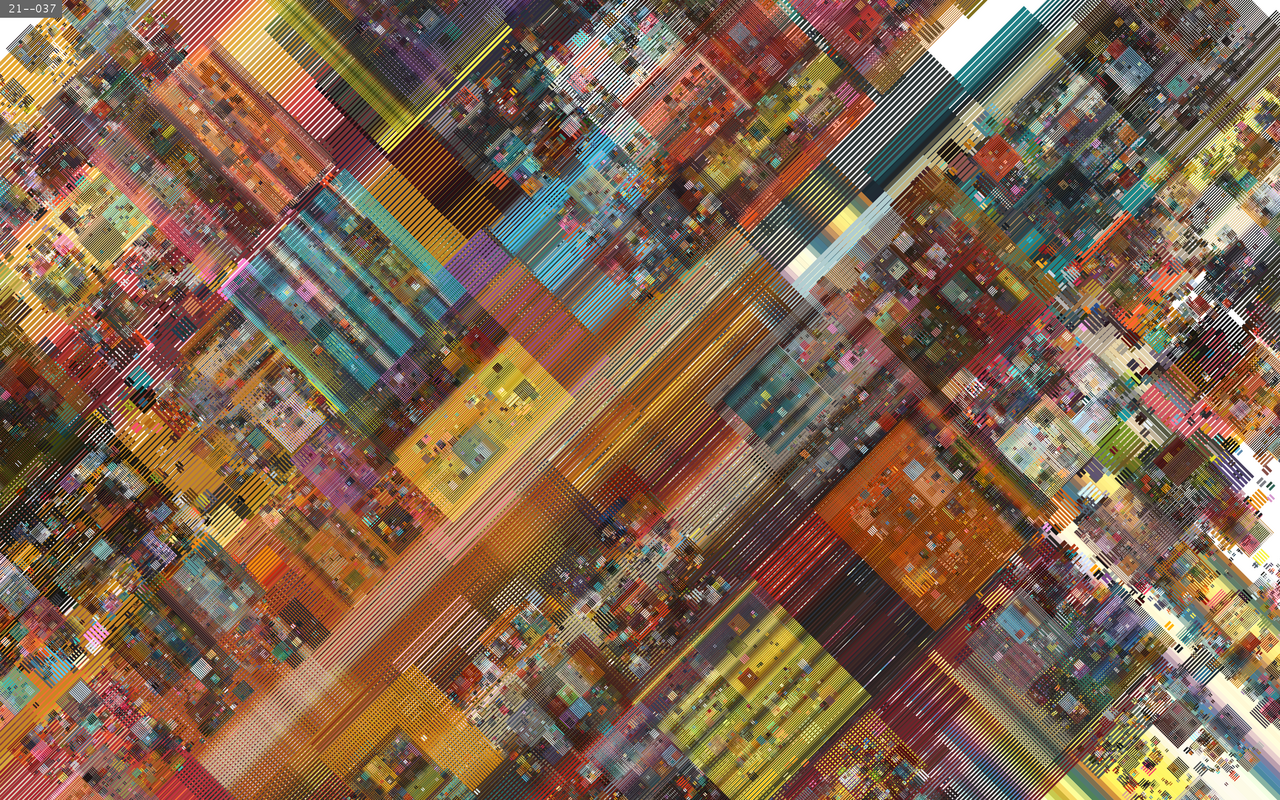
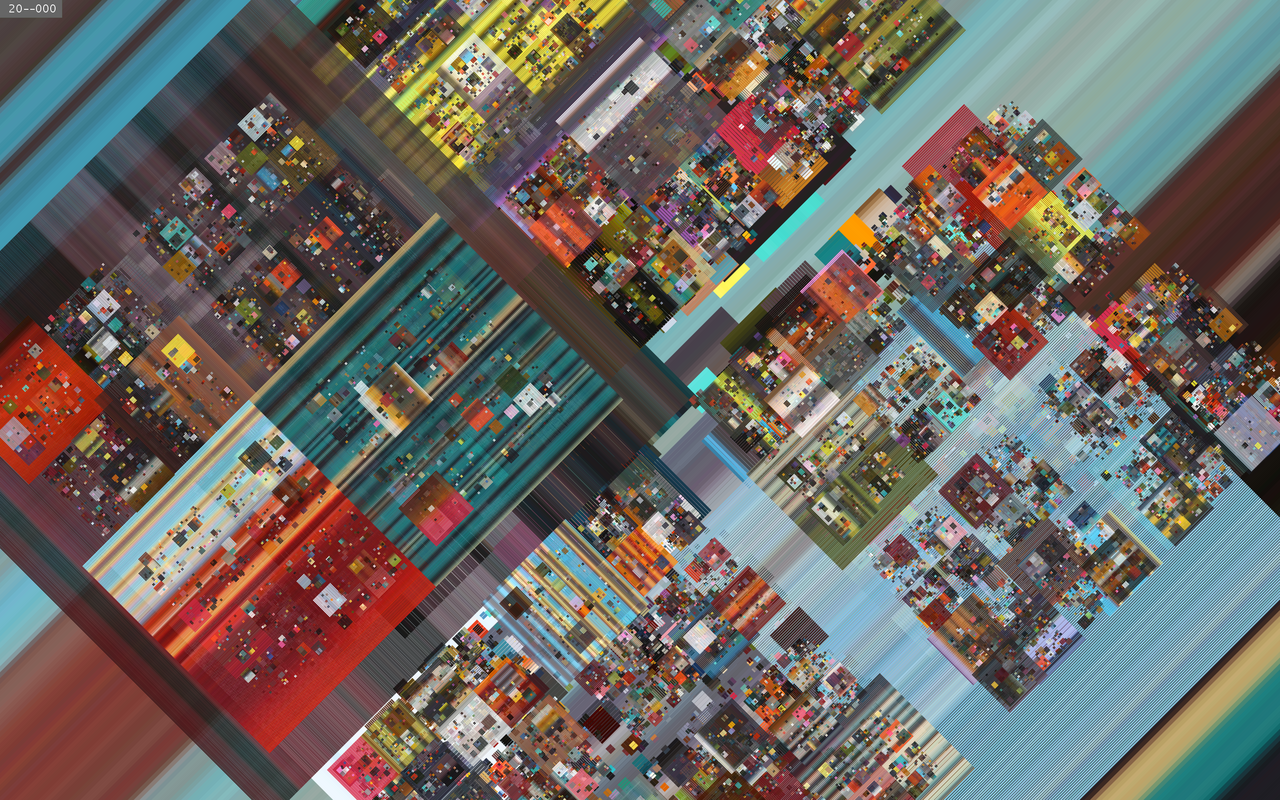
LCS: One of the things that I've written about is when human beings make mistakes and errors, we think of them as signs of personality and character. But with machines, we tend to think of them as defects in programming that must be fixed. What if we attribute to machines and artist AI the same readings of mistakes and errors that we do with human beings? What if those errors and mistakes and rust or brokenness restructure how the processing works? They're actually signs of personality. AI is not just about technology; it's really how we read differences. I think it might be a mistake if people listen to AAI and listen to the story and think it's just about these folks fetishising machines. No, this is about difference, and how the history of how we deal with differences define how we deal with differences in the future.
JW: Exactly. Defining an error as an obvious malfunction is one thing, and on the other hand we can think of a malfunction as something acting according to its true nature. That is an interesting dichotomy. Like a lenticular image that you slightly tilt, where a static horse then looks like it’s galloping. It's not an either/or situation, It's a neither/nor situation. Both elements have that doubt in them, but they're really entangled. The idea of the error should always come with the question, »but is it really an error?«
LCS: Or a cultural difference?
JW: Yeah, or an incorrect usage, from not having understood the manual or not having understood the nature of what that thing truly strives towards. We see it very often in technical history, and in cultural and social history, that a thing that was initially made for a specific purpose turns out to be much better at something else, through a misuse, misinterpretation, or reinterpretation, or change of context. At the same time, the misreading can also be something you think you mistook, but shows you a very important detail of your own self. The whole appearance of a thing can be affected by a minor detail that is actually completely irrelevant to how that thing is shaped within a specific cultural context. But somebody at some point picks up on that detail. It is probably a misreading, but you can't get rid of that detail. That creates a completely new image and a completely new construction. So both of these elements are basically quantum connected. I think it's an interesting time, because we're more open to the idea that we don't have to be one identity as a human being. Throughout the day, we change. Quantum physics can actually help to produce computers that just calculate facts, it isn't just a random hippie idea of physics. It can be applied, although it is still very miraculous and overly complex, because we cannot predict much. It comes back again to doubt. Again, we're back there. What we mostly do when constructing technological tools and applications is to predict the outcome. You create towards a specific goal. You assume. I think it’s really important to also question that aspect of prediction, because humans are the worst at predicting the outcome of a specific situation. Our technological society is mostly based on prediction. We have 24 hours daily in our human lives as proof that from the beginning to end of a day, we're predicting the wrong shit all the time.
LCS: I think with all of that, though, the other theme here of doubt is also the anarchic. It's about doubt, it's about blending. It's about uncertainty. It's about chaos. But it's also about transcending those oppositions that define so much of our culture.
...when human beings make mistakes and errors, we think of them as signs of personality and character. But with machines, we tend to think of them as defects in programming that must be fixed. What if we attribute to machines and artist AI the same readings of mistakes and errors that we do with human beings?
JW: A big part of early anarchic thought is also about letting things be what they are. It's less about interference than in any other political concept that I've learned of so far.
LCS: Let me add one thing about anarchy, because one of the reasons I think some people have a hard time with classical anarchism, even me when I was younger, is it requires a weird kind of trust. You have to trust that the world that you're engaging in and your fellow human beings are not going to suddenly descend on you and destroy you. There has to be a faith in the capacity of each human being to, in various different ways, achieve their own optimum life outcomes. Not a centralised, organised life outcome by the state or the government, but a trust that I can't govern others, but in order for me to interact with them, I have to trust that they are capable of governing themselves. That's the core of a lot of classical anarchy.
JW: The beauty is also that it's a very strong concept against fascism, which at its core just basically assumes that every human being is an animal. If you don't tame that animal, if you're not faster than that animal, you're doomed. Who pulls the gun first? That kind of approach is the core. It's really hard to subscribe to that, because if you apply it, it again comes down to you trusting and governing yourself, and then how do you deal with yourself as a fascist? What do you do with yourself?
LCS: Well, perhaps that's the definition of fascism. You don't deal with yourself.
JW: True!
LCS: That's the power and the joy of centralised authoritarian systems.
CK: I'm glad you introduced the word trust, because much earlier when you were both speaking about kind of existing in these moments of pause, of tension, the word that occurred to me immediately was »trust.« Like an implicit trusting in there being a next stage, a next statement, a next musical note.
LCS: Part of what we like about artists and musicians and performers is that they submit themselves to a larger trust system, and that they sometimes fail really badly, of course. Sometimes trust doesn't work. Sometimes it's not warranted. But part of operating within a creative zone is that your instincts, your training, your tastes, your vision, but also things outside of you are working. You're inhabiting something that is also outside of you. It sounds metaphysical, but those things will connect in ways that require you to connect them. But it doesn't feel as if you're the one doing it. I'm a writer, and this may sound super cheesy, but when I'm writing really well I don't think that it's me that's writing. I'm not a super metaphysical person. It's just that there is something outside of you that you're keying into. That's one of the things we who do these things offer to the world: a sense of trust that there are other systems at work beyond just your ego.
...when you write or make music and you're in a flow, and you feel like it's not you, I would claim it's mostly the construction of you that society puts upon you; the task for you to define yourself through or to identify yourself versus others.
JW: That's another important aspect when you talk about anarchy – the division of senses, and the communication tools that we rely on within society. We have many ways to connect to each other and navigate through everyday life. But there are some really predominant strategies of how we do that; visually, we're reading signs and following certain agreements, either written down or in the form of a logo, a person's approval, or rejection. So there are all these visual cues, and then there's acoustic orientation. But then there is an infinite world that we're not aware of, that actually draws from different sources and immediately compares what you see visually with what it smells like or what it sounds like or other information you can grab in that very moment. We’re performing so many calculations. In this state of, let's say, trust, especially when you write or make music and you're in a flow, and you feel like it's not you, I would claim it's mostly the construction of you that society puts upon you; the task for you to define yourself through or to identify yourself versus others. We're trained to be specific in relation to others. When you open up and explore those different yous, even another orbit of your consciousness where your senses come in, then connections are made. You have many of these incoming/outgoing routes at hand, you have access to most of them. Whatever Terence McKenna would say, like, if you lick that toad and experience the equivalent of so many LSD trips at the same time as taking a dose of vitamin C and getting a foot massage, you would wonder how many more levels of awareness you could include. But for me, it's fine to have a flow going plus a good piece of chocolate. I'm fine with that. It's already overload. But it creates that feeling, and that flow is kind of, in a certain way, getting rid of that you.
LCS: That's one of the things that artists or people involved in the creative world get to experience in a non-religious way, the transcendence of self. I want to throw one thing in, though. When we started working on AAI, Jan and I weren't talking explicitly about the rise in fascism all over the world, authoritarianism, and the collapse of faith in these political and cultural systems. But I think that's also going on in the project because I feel as if there's a shared desire to think and create our way outside of this current, historical cul-de-sac or crisis that we're in. The question is, how do you recreate a relationship to technology, to governments, to each other, to society? One thing that held us together politically, I think, is the question of reinventing identities. one of the controversial aspects that's been central to my work is subjecting identity, particularly Black identity or minority identity, to not only the oppressed history that you want to reclaim and celebrate, but also asking can you accept that this will change and transform and mutate this identity beyond your own control? It's easy to tell the story of that kind of identity shifting with technology and science-fiction in general. That's why my last book was about science-fiction, and also about race, colonialism, and transformation. That's what's going on right now. This song that we're talking about today, »Artificial, Authentic,« I think of as the pop song on the album, because it's a joyful explosion. It's not the resolution, but in the midst of this chaos, it is joy or possibility. That one in particular stood out with this kind of »hey! Dance!«
JW: What that track also does is give you the idea that you can find that [moment] on that album, if you revisit it.
LCS: Absolutely true. That track was a kind of cathartic moment without resolution. Some people think of catharsis as resolution, but, no. Catharsis is just an experience of letting off some of those energies. For me, it's all really political. First of all, because I don't do things that aren't involved in political thinking on some level, but also, because AAI is so much about the mood and the climate we're in right now – technology, power, government, anarchy, resistance, identities, you know. I'm very proud to be a part of something I think is just so damned relevant.
JW: Well, the level is rising now! I don't know what to say anymore.
LCS: Well, the good thing is: the algorithm will speak for you.
Christine Kakaire (she/her) is a Berlin-based writer, editor, teacher, and speaker. Her writing, editing, podcasts, and event hosting has been published by Ableton, Audio Technica, Crack, DJ Mag, Groove, Pitchfork, and Red Bull Music Academy. She has presented and spoken at numerous music conferences and festivals across Europe, and she currently teaches about popular music culture and critical theory as a Lecturer at BIMM Institute, Berlin and London.
This text was commissioned as part of CTM 2021 – Transformation.