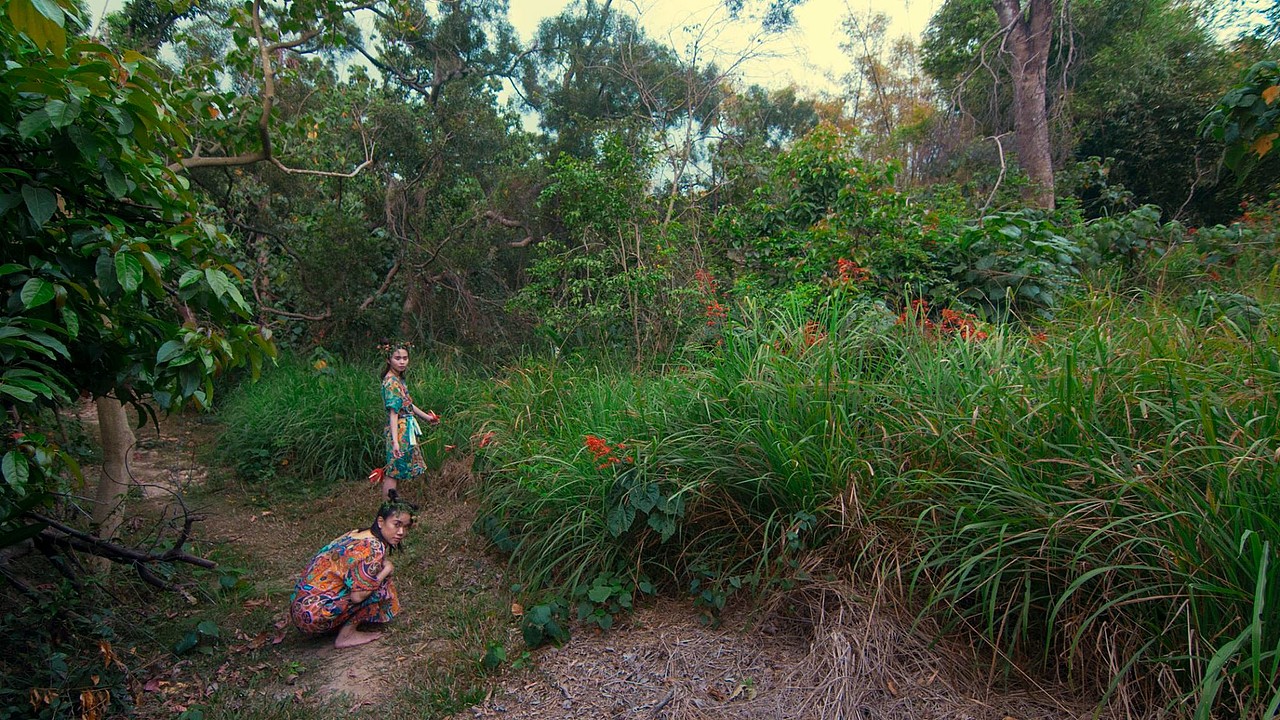
On Island no. 16, memory is a verb. It differs from »remember,« which specifically indicates recalling or bringing something back to mind. The word »memory,« having evolved from its Proto-Indo-European roots in Latin (memoria), Sanskrit ( स्मृति, smriti), and ancient Greek (μνήμη, mnḗmē), emphasises mindfulness, care, and a recollection of consciousness. In the Sinosphere, »memory« consists of two characters: »回憶,« where »回« means (re-)turning, spiralling, rotating and »憶« means missing, longing for, or thinking of something that is absent. The word indicates both a phenomenon and an embodied action. In this light, memory as an entity and as a prolonged action embalms different ways of remembering on a molecular scale: consciously, mindfully, carefully, or spirally (re-)turning (to) an elusive moment, a feeling, a touch, a resilient experience that is gone or yet to come – this is what our fragile ears might encounter on Island no. 16.
Island no.16 - Memories of Future Landscapes, by SABIWA
Island no.16 - Memories of Future Landscapes, by SABIWA
Remembered, or rather »memory-ed« by the Taiwanese, Berlin-based audiovisual artist Sabiwa, the album Island no. 16 – Memories of Future Landscapes (島16 – 回憶未來的風景) floats as a memory island of sonic waves and vibrations. For Sabiwa, memory does not belong to the so-called past, but is an ongoing amalgamation that constantly constitutes and re-constitutes past, present, and future simultaneously – time rotates, spirals, and (re-)turns. For her, to »memory about« something is to sustain the sensational momentum that gradually disappears along with the linearcolonial temporality marked by technological and economical progress. Here, »sensational momentum« refers to traditions, customs, rituals, and folklore which constitute the capability of sensing as a form of embodied knowledge. Sound and music are the streams of energy that enable Sabiwa to traverse freely in between these dimensions for re-experiencing such embodied knowledge.
On an early autumn afternoon in Berlin, Sabiwa invited me for tea at her cosy apartment. When I »memory about« our first meeting, my body can still sense the cold air outside of the window and the curious sound of the running washing machine. Like two cats, we huddled into the warmth of spicy cookies and the hot steam rising from herbal tea – and Sabiwa consciously, mindfully, carefully, spirally took me into the memories of future landscapes. There, music grows deliciously, but there is also not just music…
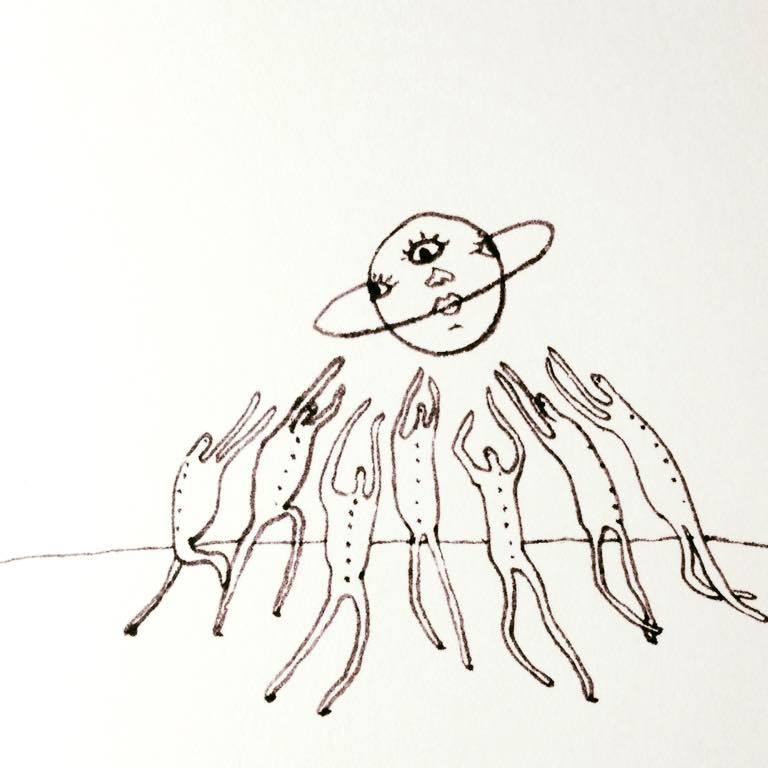
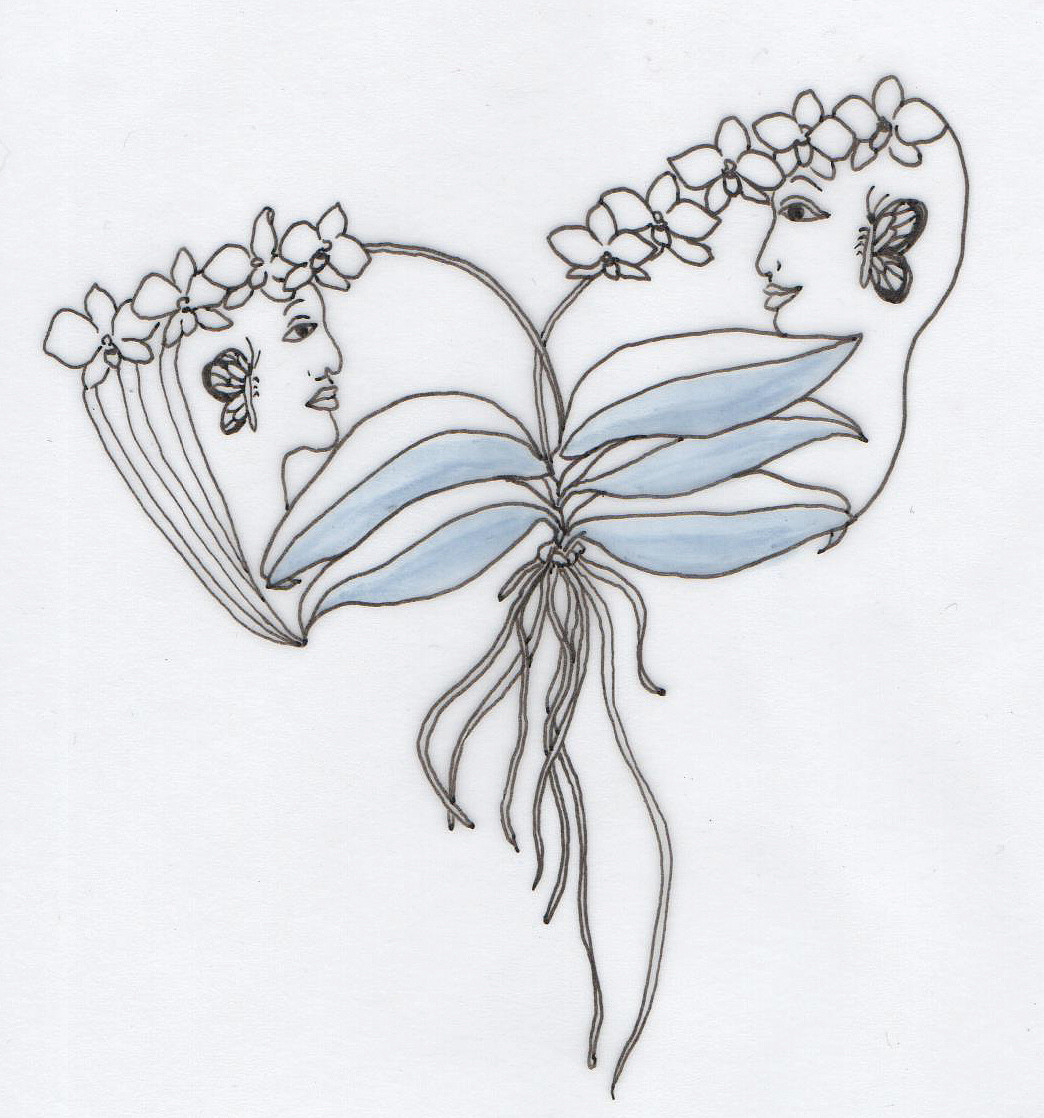
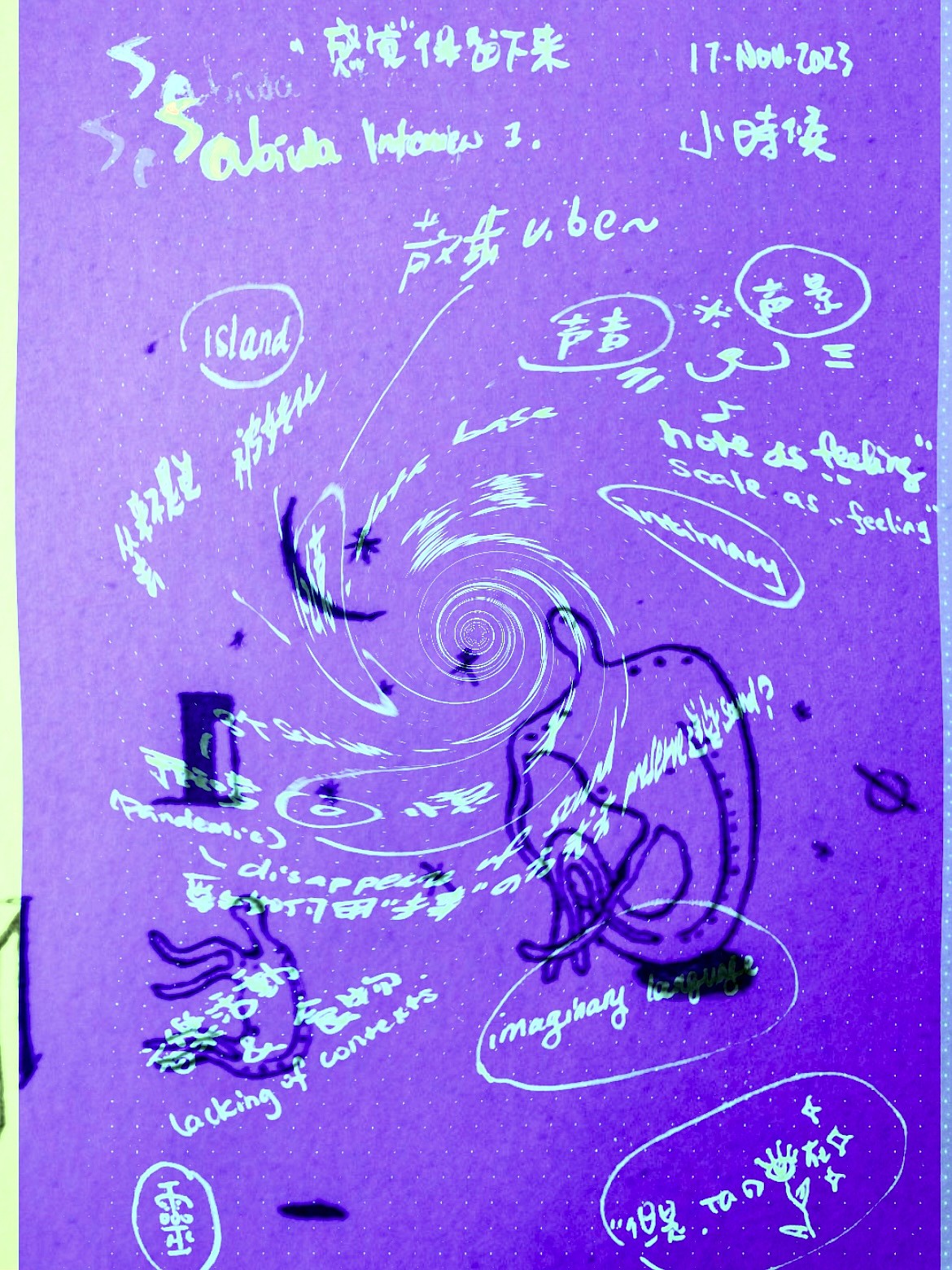
oxi peng: When I was listening to Island no. 16, the following »bubbles« appeared in my mind: island, memories of the future, sound and soundscape, intimacy, spirit, imaginary language... When did you start making music?
Sabiwa: I can't remember anymore.
op: When you were very young?
S: Not really. Probably about 10 years ago. I started with visual art. So making music was first more about creating sound for my videos, like foley, soundscape. After that, I slowly started to get into music on its own.
op: Why did you decide to include the number 16 in the title of your release?
S:Simply because I like the number, as I was born on the 16th.
op: Which month ?
S:April 16th.
op: Aries!
S:Yes! When I was little, I used to believe that the 16th of every month was my birthday (laughs). I would celebrate my birthday every month on the 16th and be so happy on that day. To me, the number »16« represents birth.
op: In Mandarin, the album’s name is »Memories of the Future.« It feels like the meeting of diverse temporalities rather than a singular, linear one. Where does this concept come from?
Suddenly, I had this feeling: At present, I am looking at a past version of myself telling a future story. It's as if three versions of myself existed simultaneously.
S: It comes from many threads. The initial trigger was the pandemic, when I went back to Taiwan and stayed there for almost two years. During that period, I went through a lot of things I had collected since I was a child. It was like looking at someone else's diary, but it was written by myself. Suddenly, I had this feeling: At present, I am looking at a past version of myself telling a future story. It's as if three versions of myself existed simultaneously. And because of this process, I started to reconnect with that past state of myself. But at the same time, it's like…you know how children like to pretend to be »adults.«
op: Yes, when I was little I also wanted to grow up faster. So it’s like being in parallel spaces.
S: Exactly. This makes me feel that it breaks the linear concept of time – past, present, and future all exist together in the same space. Now, I find this idea very romantic. Moreover, during that time I realised that the sounds I was accustomed to as a child are slowly and continuously disappearing. Then I started to think about how to use a method of the »future« to preserve and recreate the sounds that are vanishing or have already disappeared. For example, I remember when I was little, my father would only listen to »Enka«1 or the radio. Do you know about those Taiwanese »medicine-selling« radio stations?
op: What is it?
S:In Taiwan, there's a type of radio station that the elderly listen to, and once they start, they might listen to it all day long, like my grandma. The radio programmes are about selling medicine and singing karaoke. It's quite odd. The station would have a host continuously promoting various types of medicine. At the same time, there might be people calling in to share their experiences. For example, someone might say, »I also had problems walking, but after taking this, I got better,« and so on. The elderly really love listening to this. And many of the medicines advertised are actually not legally on the market.
op: Self-cultivated medicine?!
S:Exactly – the elderly who listen to this radio station come to believe that the medicine advertised is truly effective, and then they call to order these products. Afterward, the medicine is delivered to their homes. They have their own local networks where everyone shares these things. And when the radio station isn't selling medicine, it hosts karaoke sessions. People can call in to sing. They can also request songs and ask the host to sing. The hosts are usually good singers.
I started to think about how to use a method of the »future« to preserve and recreate the sounds that are vanishing or have already disappeared.
op: It’s fascinating. It sounds similar to what my grandparents' generation would have in mainland China. But it's not around anymore. This radio station sounds like a time tunnel. Does it still exist in Taiwan?
S:It does. My parents sometimes listen to it, too. When I was young, I thought it was very boring. But in recent years, as I've slowly revisited it, I've come to find these sounds quite impressive. They're so chaotic yet so familiar, and at the same time very futuristic. Perhaps it's because living in Europe has created a distance, allowing me to connect with these sounds from a different perspective. I am intrigued, and would like to connect all these things together.
op: It feels familiar and distant at the same time, like childhood memories, which then creates a space where various temporalities meet. It's quite sci-fi.
S:Exactly. During my time back in Taiwan, I encountered many phenomena like this, reminiscing about travels or a particular moment from my childhood. Those experiences then became this album. Each track represents a small journey from a different time – a memory of a stroll.
Another thing concerning vanishing sounds – I have recently watched a documentary about Taiwanese folk songs. In this film, Chen Ming-chang and Chen Da, two well-known Taiwanese folk musicians, talk about music traditions in the southern area of Taiwan. Back in the day the music there was not entirely based on the Western music system. For example, songs like »Hengchun Melody« combine elements of speaking and singing in a unique form of expression. This style of music typically uses only a few notes, and people use these notes to narrate stories, describing events that happened the day before or activities currently taking place. They also mentioned that, for example, in Asian music, like »Re,« we actually don't have a specific range called »Re.« In contrast to Western music, it’s more like a feeling.2 But when shifting the same sound into the Western scale, it might be considered out of tune. Sometimes it’s like a feeling between two notes, in relation to the composed melody. There's such a great freedom to it. But I have forgotten about this for a long time. Now looking back, it makes so much sense.
op:I can really relate. As you mentioned, pitch and tone are a kind of »feeling.« This »feeling« is actually a very trippy thing, because it can't be formatted or standardised. As a result, a lot of diversity emerges. The diversity we talk about is a sensorial diversity. It's not a diversity within the framework of identity politics. At the same time, there's also a lot of ambiguity in it. This is a very poetic thing, even though it also brings a lot of chaos and uncertainty.
S:Indeed. I feel that modern Western formats and standardisation have become somehow too convenient, and thus turned into something universal. My album is dedicated to sustaining these very trippy »feelings.« People of my father's generation actually have a strong resistance to the West. Such resistance has a scary aspect, but at the same time, it also preserves something. For example, they are still very much »feeling« people, they are not so... how should I say, speculative or ideological. They have preserved many traditions through their resistance. I really want to cherish the feelings that reside within these people's bodies, and…
op:To sustain these feelings before they go extinct.
S:Right. The education my generation received in school is primarily based on Western ideology. We learn music through staff notation, not from this tradition which is freer and more »uncertain.« The concept of »feeling« seems to be... (laughs) It's not that it's undervalued in Western culture, but its significance is quite limited because it cannot really be »scientifically verified.« Take my album, for example: it lacks a conventional structure because I wanted to create something intuitive, something deeply rooted in feelings. Perhaps one can learn to construct a framework and then have the ability to express it through language or logic. But at the same time, this seems to diminish our capacity to express things through feelings. Back home, the so-called »uneducated people« from my father’s generation have a kind of innate »feeling,« which I now find to be extremely precious. This kind of »feeling« is attached to their traditional, less »modern« way of living. Indeed the education we receive today equips us to articulate many things through language and logic, yet we seem to have lost a certain sensitivity...
op:That's true. Our bodies are also modified by all sorts of information flows and digital technology, like smartphones, LED screens…and all these conveniences which produce our current »hypermodernity.« As you mentioned, these vanishing feelings are something intangible, abstract, and at the same time, very poetic. One can only »feel« about such »feelings.« An interesting thing I've noticed is that in the West, people are very accustomed to saying »I think,« but one doesn't use »I feel« when arguing something metaphysical or delineating a piece of »thought.« But in Mandarin, we are used to say »我覺得« – »I feel« to express »I think.« »我覺得« »I feel« and »我想« »I think« represent two completely different ways of connecting with the world.
S: Indeed!
op: Speaking of cultural differences between the East and the West, what differences do you perceive in how people understand sound, or events related to music?
S:I feel like when Asian music makes its way to Europe, it often leaves behind its cultural context. In Asia, music events are traditionally tied to food. In Taiwan, the concept of nightclubs and bars was borrowed from the West. But if you're not from a big city – I myself didn't grow up in Taipei, but in the south – locals don't typically flock to clubs or bars to listen to music, drink, or dance. Traditional music usually surfaces during collective celebrations like the Chinese New Year or the Harvest Festival, always accompanied by certain foods. My musician friends and I, who have East Asian backgrounds, have been brainstorming event ideas. Imagine if during the Dragon Boat Festival, instead of just holding a concert, we could all get together to make zongzi while enjoying performances of festival-related music, like the powerful beats of dragon boat drums. We would really love to bring these experiences back to their cultural roots, not just to showcase an image of Asia by fitting specific sounds into a label of electronic music. But I'm not sure how to reconnect these things here, as perceptions differ – for example, in Europe, eating and music are two different things.
When I returned to Berlin this May, I brought back all the materials for making zongzi from Taiwan. It takes about two days – on the first day, you prepare the filling, and it's not until the second day that you can start wrapping and cooking them. The whole process is like a ritual, and spending so much time on it makes me realise that here, the sensory experience seems to lack the dimension of taste, which is a very important part of Asian culture. However, at a purely music event, it might be impossible to show this aspect because it simply requires more time and energy. I believe that time is a very important element. As a performer at a concert, you can only present or perform the final result, but the rich details of the process are often overlooked.
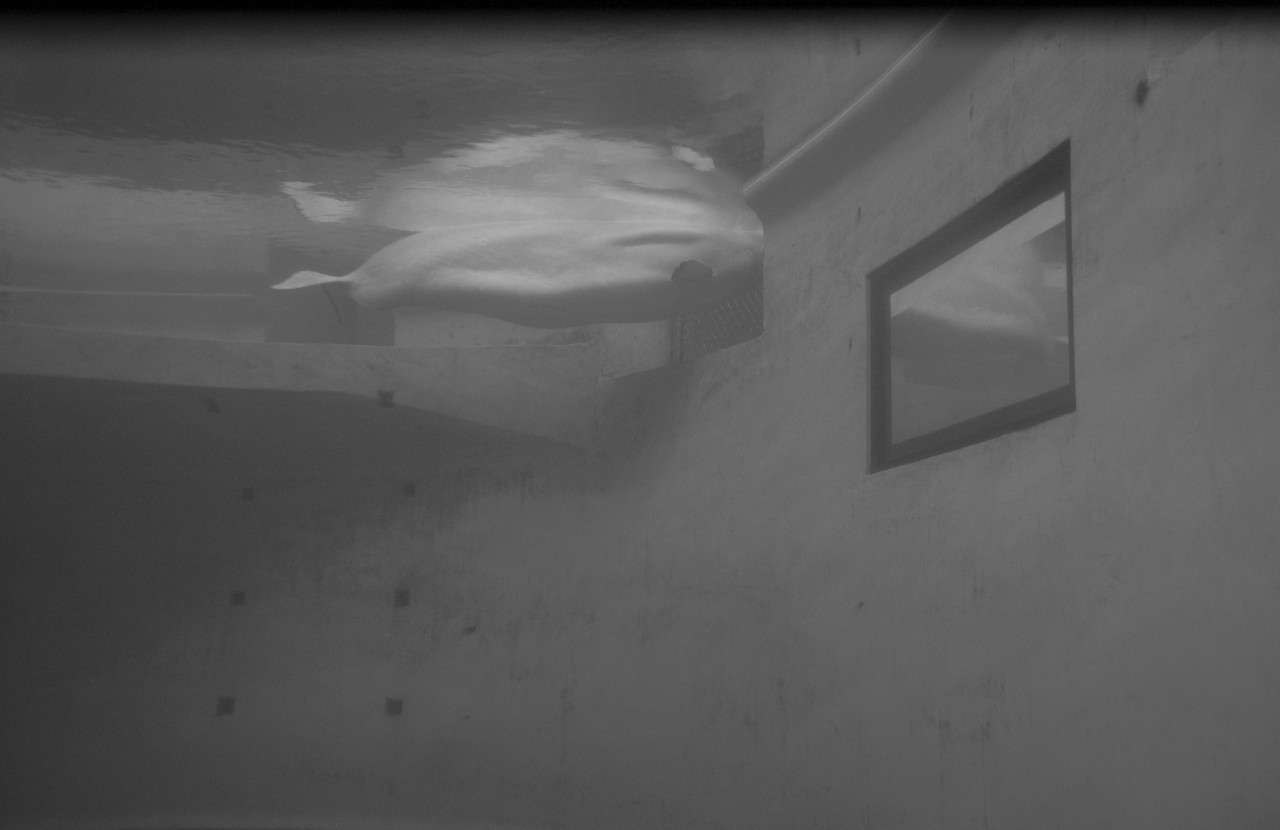
op:Speaking of time, I'd like to discuss memory with you. Listening to Island No. 16, I feel like it's an island woven from memories. Memory is the soil, and sounds grow and spread across this island like plants. This island then becomes a memory of the future, or perhaps the very existence of this island is about »memorying« (the) future(s). What does memory mean to you? What role does memory play in your creation?
S:I think of memories as my entire database. At the same time, they are something that need to be transformed. There are many such transformations on this album. I feel that memories are never just about the past because things keep happening.
For example, the memories of my dad from when I was little: he would get drunk every day. After getting drunk, he would become a different person. During the day, he was the kind of father that society expects – hardly talking, with very short responses, and a voice that was kept low. But as soon as he got drunk at night, he would suddenly have this high-pitched voice. We had five cats at home. He would start making a bunch of weird sounds to tease the cats, trying to play with them, and talking to them. I really hated this when I was a kid. But now that I've grown up, I think he's pretty trippy. Sometimes it feels like memories need a bit of distance, and then they become endearing. On this album, there are in fact many parts where... I'm imitating my dad (laughs).
op:Awwwwwwwwww. It seems like your dad plays a very special role in your memories. At night, he transforms into a playful person with the cats, which contrasts to his daytime persona. This makes me think of how people in our memories are not one-dimensional; they can have multiple identities and characteristics. Your dad's nighttime behaviour is like a glimpse of his inner softness and childlike innocence, which comes out when he interacts with the cats. It feels heartwarming, almost as if to say, »turns out dad has a cat inside his heart too.«
S: (Laughs) That's right. In the past few years, due to the pandemic, we spent a lot of time at home and eventually reconnected. I kept telling him that I wanted to record the sounds he makes when he's drunk (laughs). He struggled with the idea and adamantly refused to let me do it. Even when he was drunk, as soon as he saw a camera, he would immediately clam up. I've never succeeded in capturing it. Then, one day, I told him that I wanted to make a documentary. Of course, I pitched it differently, telling him it was for a school assignment.
op:And the assignment requires recording the sound of dad when he's drunk (laughs).
S: (laughs) That's right! In the end, he still didn't record himself. But he took the matter very seriously and didn't reply to my messages for a long time. Until one day, he suddenly sent me many messages. He had actually gone around our village asking people to make sound recordings. Facing this sudden request, nobody actually knew what to record, but they all took it very seriously. Some even went to the bookstore to look for books and read a poem in Taiwanese dialect, and so on. These things happen along with memories. I also only recently found out that I have an uncle who is a performer. My dad found him, and then he recorded the last song for the album. It was the first time I heard him sing. It was amazing.
I feel that memories are never really in the past. They are always connected to the present and they continuously fabricate the present, the future, and everything together.
oxi peng is a memory born on the other side of sunset, first captured on 16mm film – a fictional presence among words, symbols, energies, and touches created by peng. oxi practices (embodied writing), creates (psychedelic poetry), and dreams (of pink tardigrade) softly.
This text was commissioned as part of CTM 2024 – Sustain.
- 1
»Enka« is a traditional Japanese music genre. It is inherited from the colonial time of Taiwan occupied by the Japanese from 1895 to 1945. A lot of Japanese traditions were integrated into Taiwan during that period.
- 2
The note »Re« does not correspond to a fixed pitch with a specific, precise sonic frequency. Instead of adhering to a rigid standardisation of tonality, the notes, in Hengchun Melody for instance, are relational and fluid. Their value is determined by the notes that precede and follow them, as well as the environment that the musician is situated within – a form of dynamic tonality and a relational scale that resonates with the performer's immediate feelings at the moment of its delivery.