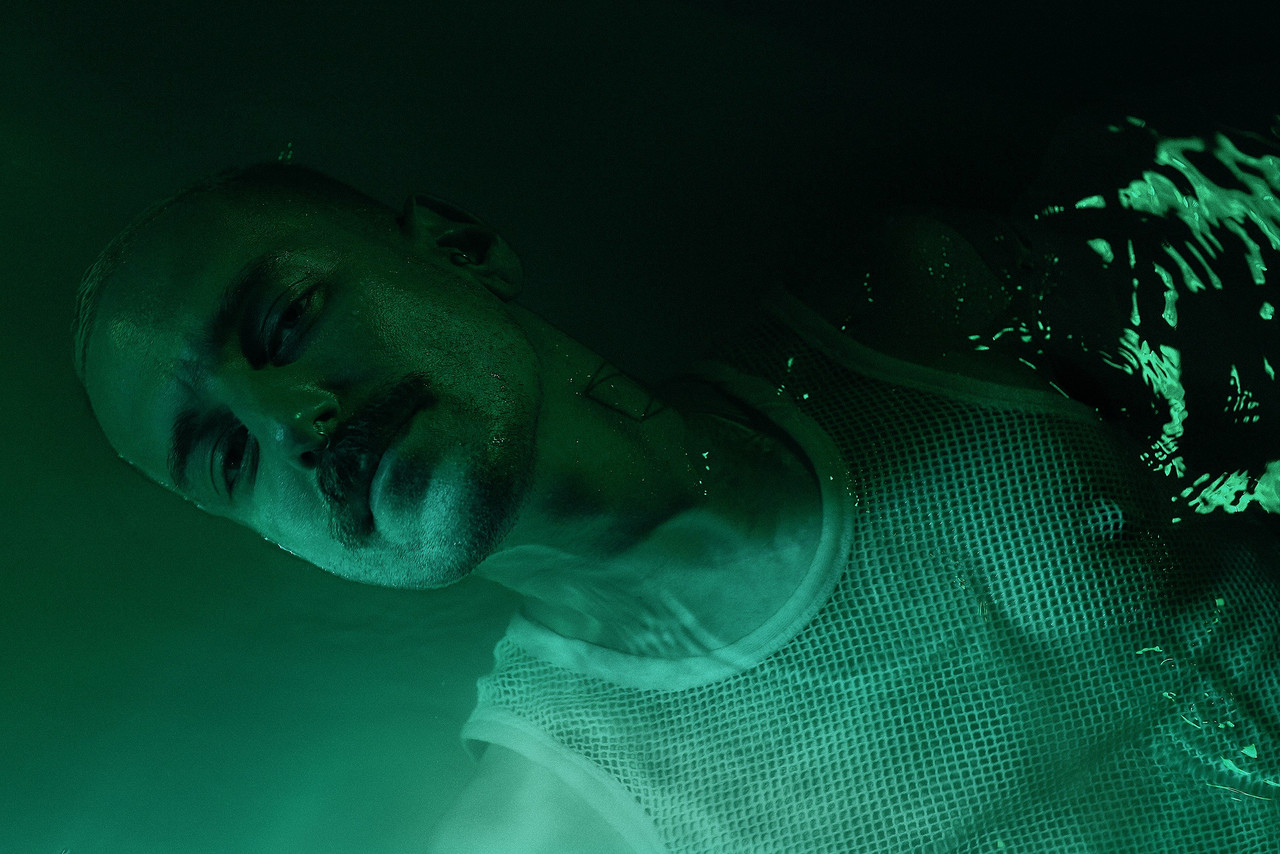
Dominika Sitnicka: When we met a few years ago you were more of a so-called local DJ. By now, your career has accelerated – you release EPs regularly, have your own party series, contribute to collectives, play across the country and abroad. What happened?
Avtomat: It's a series of conscious decisions and fortunate coincidences. I have been a music producer far longer than a DJ. I started when I was 16, using a funny program called Magix, where you could only use samples. I still have those tracks, I really like them.
DS: 16 years old is early. Were your parents musicians?
A: For most of my childhood my mum hosted a radio broadcast. She actually founded the biggest radio station in Toruń…
DS: Radio Maryja [a Catholic radio station notorious for promoting nationalism, homophobia, antisemitism, etc.]?
A: [Laughs] Sorry, the second biggest radio station of Toruń. My parents were kind of music snobs. At that time in Poland, most people listened to Polish music, but they were totally into progressive rock, early metal, foreign avant-pop – the likes of Kate Bush, Tangerine Dream, Pink Floyd, Black Sabbath.
DS: How come they had access to such music in communist Poland in the 70s and 80s?
A: They got records from family and friends who lived abroad, for example those who had emigrated to Germany. It was a huge privilege. I have photos and films showing me as a four-year-old with a scraped knee singing to Michael Jackson’s songs.
DS: And did you play instruments as a child?
A: Yes, many of them, one after the other – but I'm not a very good instrumentalist. You really have to apply yourself to it, it requires many years of practice. But I used to play guitar, keyboards, and percussion instruments. I ended up playing bass, I even played bass and sang in a few bands.
DS: That's why you play bass music now.
A: [Laughs] Yeah. But I still listen to a lot of guitar music, I go to concerts.
I always laugh when I hear that the guys from Amnesia Scanner, for example, were the pioneers of the post-club movement. Just listen to Skinny Puppy's The Greater Wrong of the Right. Crashed, interesting, experimental, genre-breaking sounds have been with us for a long time.
DS: And what did your teenage productions sound like?
A: At that time, I knew nothing about genres but I was making weird electronic music, kind of noisy but melodic and industrial. I managed to sample a cassette of the Polish nu-metal band, Aion. The sounds were slow, doomy, lots of cracks, smacks, banging on metal objects. And it's still like that [laughs].
DS: In other words, you have invented the post-club.
A: [Laughs] I think the post-club already existed at that time. I always laugh when I hear that the guys from Amnesia Scanner, for example, were the pioneers of that movement. Just listen to Skinny Puppy's The Greater Wrong of the Right. Crashed, interesting, experimental, genre-breaking sounds have been with us for a long time.
DS: And what genres roused you when you became intentionally interested in electronic music?
A: The way to club music was somehow full of twists and turns. As a kid I listened mostly to Swedish pop, then I discovered metal – bands like Rammstein, Guano Apes, Korn – and from there I slowly bumped into industrial – Skinny Puppy, Laibach, and so on. I really got into the scene of Wave Gotik Treffen [the annual festival for »dark« music and »dark culture« in Leipzig], or Poland’s Castle Party [a similar festival in central Europe] style, I mean gothic raw music. I used to go to the Krzywa Wieża [Leaning Tower] in Toruń, my hometown. Dark electro parties were organised there, on the top floor, which was seriously uneven. Once I noticed a poster of a party called Electroclash in the NRD club in Toruń. I thought it would be similar but I ended up at my first parties with electro, italo disco, some early tech-house. I met Cattolica and Plastic Dolla, the organisers of that party, and after some persuasion they taught me how to spin records and DJ.
Avtomat's »Dzwoni Doopsko« from <em>Doolska</em>
Label: 51-53, 2021
Avtomat's »Dzwoni Doopsko« from <em>Doolska</em>
Label: 51-53, 2021
DS: Was it a shock to move out of Toruń and get to know the scene in the big city?
A: When I was 20, I left Toruń for the first time to study in Scotland. The difference was huge. In Toruń there was one, sometimes two clubs that played electronic music, not disco music. The first one was NRD, and the other Pilon – it was a typical squat place, located in a public toilet, where the dance floor was the same size as my room. I was often going there for all night drum & bass parties during which I never left the dance floor.
DS: In Toruń, you were in the closet, weren’t you?
A: Actually, I was in the closet until the end of high school, when I was outed against my will by a person I didn’t know.
DS: How did it happen?
A: This person found my profile on a gay dating site and spread it around my peers in Toruń.
DS: Was it hard?
A: It was unpleasant. Some people stopped shaking my hand, others started some crazy rumours, and on my birthday some gang of hooligans wanted to raid my house. But my mum and sister accepted it from the very beginning and my dad – after some time – did as well. I was supported by them and my closest friends. Music also helped me. I know it looks like an answer from some Miss beauty contest, but that's how I grew up – I always poured all my bad emotions into music, and I think that this mechanism still continues to work.
DS: Therefore, moving to Scotland was not only an opening to music, but also an opening into a different world?
A: I wanted to experience a different life. Despite the move to a more tolerant country, I didn't tell anyone that I was gay during my first year of university.
DS: You could have moved to Warsaw and yet you chose Scotland.
A: I'm old. When I went off to college in 2006, things didn’t look rosy in the big cities in Poland either. Even the Pride Parades were blocked by city mayors.
I couldn't stand the fact that people insisted on partying while the health service was overloaded and doctors that were working their fingers to the bone were dropping like flies.
DS: It's scary, though, that after 15 years we're still at square one. A pride parade of 100,000 people passes through Warsaw in June and still LGBTQI+ people have no rights; moreover, there is a fierce witch hunt from the part of the authorities.
A: We are probably even in a worse place. In 2006 it seemed that everything was heading in the right direction. Now I have the impression that we are sinking.
DS: Do you say that as an LGBTQI+ person, or do you refer to more general conditions?
A: We are in the hands of ruthless people who, for the sake of power, are cynically drowning the country in hatred and religious fanaticism. When I was about to graduate from high school and was thinking about staying in Poland, I saw the light at the end of the tunnel. I could feel that social attitudes towards otherness were changing. At that time, everything was opening up to the West. And now I see that young people are much more educated since they have access to knowledge in their pockets, on their phones. But on the other hand, the people in power press propaganda on those who don't have the perseverance to resist it, or the privilege of growing up in a more progressive environment.
DS: Do you think that 15-20 years ago homophobia resulted from ignorance and social taboos, while nowadays homophobia is consciously controlled, has a more ideological foundation, and is more fiery?
A: Sure, homophobia is used instrumentally.
DS: Do you think about emigration?
A: For several years I have been refusing it firmly in interviews since it is my country and someone has to stay here, to make sure that things will get better. But I'm not sure about this anymore.
DS: What has changed?
A: I’m older and some bad things have happened in my life. I’ve gotten tired. I have to continue my career as a freelance musician in a difficult situation, and find a way to conduct a healthy personal life. Struggling with politics on top is self-destruction.
DS: Has the pandemic contributed to these difficulties? Do you earn your living as a musician?
A: Yes. I play, produce, license songs for films and exhibitions, and I make music for theatres. And first of all I teach DJing.
DS: It's a good situation in view of Polish conditions. Hardly anyone working in music in Poland is able to support themselves.
A: Yes, it's a great privilege. But I've worked for it for a dozen or so years. Until recently I had to earn my living as a graphic designer. I'm proud of it, especially since it was a conscious decision. I decided to stake everything on one card and told myself that I would either do it properly or withdraw.
But it's a tightrope walk, and there’s an obligation to work non-stop – remixing, doing PR, taking care of social media, making graphics, staying on top of emails, organising transportation to gigs, etc. With the Ciężki Brokat collective [ENG – Hard Glitter], I try to create safe club spaces for queer people. It’s time-consuming. I work from morning until night, hanging on the phone, emails, Messenger… I don't finish my work at 5 pm. With such a mode of operation it's easy to burn out. It almost happened at the beginning of this year.
DS: What happened?
A: I had serious health problems. My professional life broke down. I had to resign from two important initiatives due to a pandemic call out.
DS: You'll have to explain what this »pandemic call out« is.
A: Ok. In Poland, many people associated with the club scene were organising illegal parties during lockdowns, during the worst, mortal waves of Covid-19. At that time, vaccines were not yet available, or the vaccination campaign had only just started. I observed that phenomenon. Finally, in March 2021, I published a post on my personal Facebook account with screenshots of the line-ups of all those parties.
DS: And what happened?
A: I’ve become the pariah of the club scene. A huge part of the community has turned their back on me.
DS: Do you regret it?
A: I had to do it. I couldn't sit quietly. I thought it would create some kind of point of departure for the club scene, for some kind of discussion on whether such practices are ethical. Today my attitude is slightly more nuanced. I understand that illegal events were a matter of financial survival for some of those people. But I couldn't stand the fact that people insisted on partying while the health service was overloaded and doctors that were working their fingers to the bone were dropping like flies. And the reaction to my criticism of that phenomenon was so aggressive, I received threats. The whole situation opened my eyes to the real motivations of many people in this environment.
You can position yourself as a responsible business while cutting salaries or ordering non-organic products. The PR of a club, its image, and how it actually operates are often disconnected, even contradictory.
DS: Are you blacklisted when it comes to playing?
A: Yes, probably in most clubs in Poland.
DS: So where do you play now?
A: I went back to my roots a bit. I play at events connected with art or in clubs that have grown out of a tradition that is similar to mine – squats, anti-fascist groups.
DS: Were you disappointed with clubs after that callout?
A: My naivety was over. Beforehand, I had participated in club culture without fully realising what had happened to the culture of clubbing. I thought it was about music, being together, having fun, maybe even greater values. But now it's just a huge business. I don't think I want to take part in it under such conditions anymore.
DS: But there are so many clubs now that speak out about values. That they are against racism and homophobia. Some clubs in Poland even collected signatures for legal abortion.
A: In the case of big clubs, you never know if these are Corporate Social Responsibility tactics or not. Being woke gives you money as well. Pensioners listening to Radio Maryja are not the target audience of clubs. You can position yourself as a responsible business while cutting salaries or ordering non-organic products. The PR of a club, its image, and how it actually operates are often disconnected, even contradictory.
DS: Okay, you say you have less and less hope for this country. Meanwhile, a huge mass uprising has taken place in relation to helping refugees from Ukraine. It’s been a while since the so-called progressive bubble could be proud of something.
A: But the refugees are being helped by people, not the state. By individuals.
DS: What kind of people?
A: The people who are fed up with being told that we are surrounded by enemies. That they want to have our lunch, take our jobs, and kidnap »our women,« and that they are some kind of threat.
DS: The right wing are saying: »and where are all those feminists and LGBT people who were rioting and saying that Poles are terrible and they persecute minorities... There you have it, see how good we are.«
A: But it’s exactly these communities, among others, who are helping. All the grass-roots support is organised by people who have worked for a better society, and have the know-how. They were already working for refugees or other excluded people. The network of women's and LGBTQI+ organisations has also played a role here. But the hypocrisy of the right wing is a very broad subject, there is no need to paddle into it.
As it comes to other positive phenomena, the club scene has suddenly discovered that there is also a Ukrainian scene in Poland. All of a sudden they discovered that there are many DJs from Eastern Europe living here.
DS: You say that with a sneer.
A: Unintentionally. I'm really happy that this is happening. Talented people who used to play small parties now have a chance to develop.
DS: Who would you name?
A: Bijū, Ceremonial Rites, Anka Borsuk, Vlad Blyzniuk, or Lofi, my latest discovery, who I personally taught to DJ. I feel as if it was – forgive me for not having a better word – an opportunity to notice, finally, what was passing us by. We saw Ukrainians driving Ubers or working behind the counter in a shop. Now we're finally beginning to understand that they also contribute to our culture.
The electronic scene is gatekept, it is difficult to get into it. Until recently, white cis straight guys ruled here. One by one, successive groups are breaking through this ceiling. First women, then queers, and now it's the Ukrainians’ turn.
DS: And how do you perceive Polish-Ukrainian relations in the country in future? Many of these millions of migrants will stay here.
A: We will manage. Of course, housing will be a problem, since there was a shortage of accommodation even before the war broke out. But when it comes to the general attitude of Poles – I'm optimistic about it. The majority of Ukrainian refugees are lucky that, unlike non-white refugees or LGBTQI+ people, they are not the object of hate campaigns. On the contrary, according to the government, it’s a Polish raison d'état to support them. I have an impression that we underestimate Polish society.
DS: The society that beat gays up in Białystok?
A: It is easy to get into such a pattern, especially from the perspective of Western Europe. But it is not true. The average Pole doesn't give a monkey about whether someone walks hand in hand with someone else in the street. In Białystok we saw extreme cases, but it doesn’t represent the whole society.
DS: So conservatives in the USA talk about the so-called silent majority, do we in Poland have a »screaming minority?«
A: I think so.
DS: You’d better be right! And apart from discovering the Ukrainian scene, do you have any new musical interests? What do you consider as a new quality, something fresh on the scene?
A: For me the last huge event was the »deconstructed club« scene. That freedom, no codification, no rules. Everyone was groping in the dark. One found a gold mine, the other a shit mine. Experiments with rhythm, texture, sound.
As it comes to other positive phenomena, the club scene has suddenly discovered that there is also a Ukrainian scene in Poland. All of a sudden they discovered that there are many DJs from Eastern Europe living here.
DS: And is this formula over?
A: The mainstream has taken it over. Artists who until recently were active in the underground started playing for big money, advertising clothing brands, and are on the covers of magazines. We should enjoy it – because it's appreciation. In addition, these people present values from the underground – for example, the fight against discrimination. But history has come full circle. The scene born from the need to reject patterns has started to fall into them. Suddenly you have the same samples everywhere, jersey-club drums, ballroom crashes, and speed-rap on vocals (I'm to blame for some of this). The same thing happened with hyper pop, bubblegum bass – it was post-ironic, even pastiche music, and it became what it had made fun of.
DS: So what, have you grown out of the two things that have been most inspiring to you in recent years? And now?
A: Right now I'm in a fix. I see a revival of electro, drum & bass, jungle – these are the genres I grew up on. But I don't think in terms of genres now – rather in ways of expression. I would like to focus more on production and live performance. Before joining the Oramics collective I was totally blocked, I had doubts about my production and vocal abilities. I'm slowly getting out of this. I want to move the centre of gravity now. With DJ booking things are easier now, because the scene has blown up. But I want to play live. I'm not ashamed of singing anymore and live performance might rescue me from this disappointment regarding the DJ scene.
DS: What is your biggest inspiration while making music?
A: I try not to fall into producer ruts, into one genre. I was thinking about what makes me think that producers are geniuses. These people always run from genre to genre, they don't stick to one style. I've been listening to a lot of metal, djent, and industrial lately. I think you may hear such inspirations in my productions. In every second of my tracks there is a sample from an old nu-metal song; I try to hide something on every EP. On »Gusła (Human Rites)« there is Guano Apes, in »Nieludzie (Ignorance Ha)« some Korn, in »Stop Bzdurom (The Bad Gays)« some Deftones, and in »Szeptucha (Hex Therapy)« a sample from Sui Generis Umbra (a Polish black metal-ambient project featuring a growling woman).
Avtomat's »Our Daily Dread« from <em>Lamenty</em>
Label: self-released, 2022
Avtomat's »Our Daily Dread« from <em>Lamenty</em>
Label: self-released, 2022
I want to play live. I'm not ashamed of singing anymore and live performance might rescue me from this disappointment regarding the DJ scene.
DS: Your productions have something I would call... a journalistic streak. Your last EP Lamenty, or fundraising compilation Cut The Wire were inspired by refugees. Gusła (Human Rites) refers to attacks on LGBTQI+ people, and Doolska is about the closed Polish mentality. Do political and social events inspire you? And do you start composing from that inspiration or do you create first and then add titles to draw attention to something?
A: I’ve tried both options. Lamenty was composed mainly out of sadness. But sometimes I actually make a club track, to dance to, and then I think about what I associate it with. That’s the result since my brain, unfortunately, is always orbiting around such political issues, so this is the effect. Maybe when things calm down or I move to a more normal country, it will change and I'll start writing songs about love and watering flowers.
DS: I’m thinking of one of your tracks that is actually cheerful and packaged joyfully. It's »Dzwoni Doopsko« [which can be translated as »Ass is ringing«].
A: This track was written in 1.5 days. I had a deadline from the publisher, three days left, and I still needed one more track. I just shut myself in, turned off all the notifications on my phone, and recorded something that I would feel good dancing to.
DS: Where does the leitmotif come from?
A: It's a sample of the Tuba Dei bell from the biggest church in Toruń. An inside joke because of Rydzyk [the infamous far-right clergyman active in Toruń, inventor of Radio Maryja].
DS: All right, but what does Rydzyk have in common with the ass?
A: [Laughs] Nothing. It's not a political piece. »Dzwoni Doopsko« is a celebration of my life partner's beautiful ass. When Kuba comes to my parties, I know he's not doing it from a sense of duty. I can see that he's having a great time and his ass is literally ringing.
Dominika Sitnicka is a journalist at the OKO.press portal specialising in the subject of the rule of law, a radio host at newonce.radio, and a DJ associated with the Ciężki Brokat collective.
This text was commissioned as part of CTM 2022 – Contact. Translated from the Polish by Paulina Szulim-Kopacka.