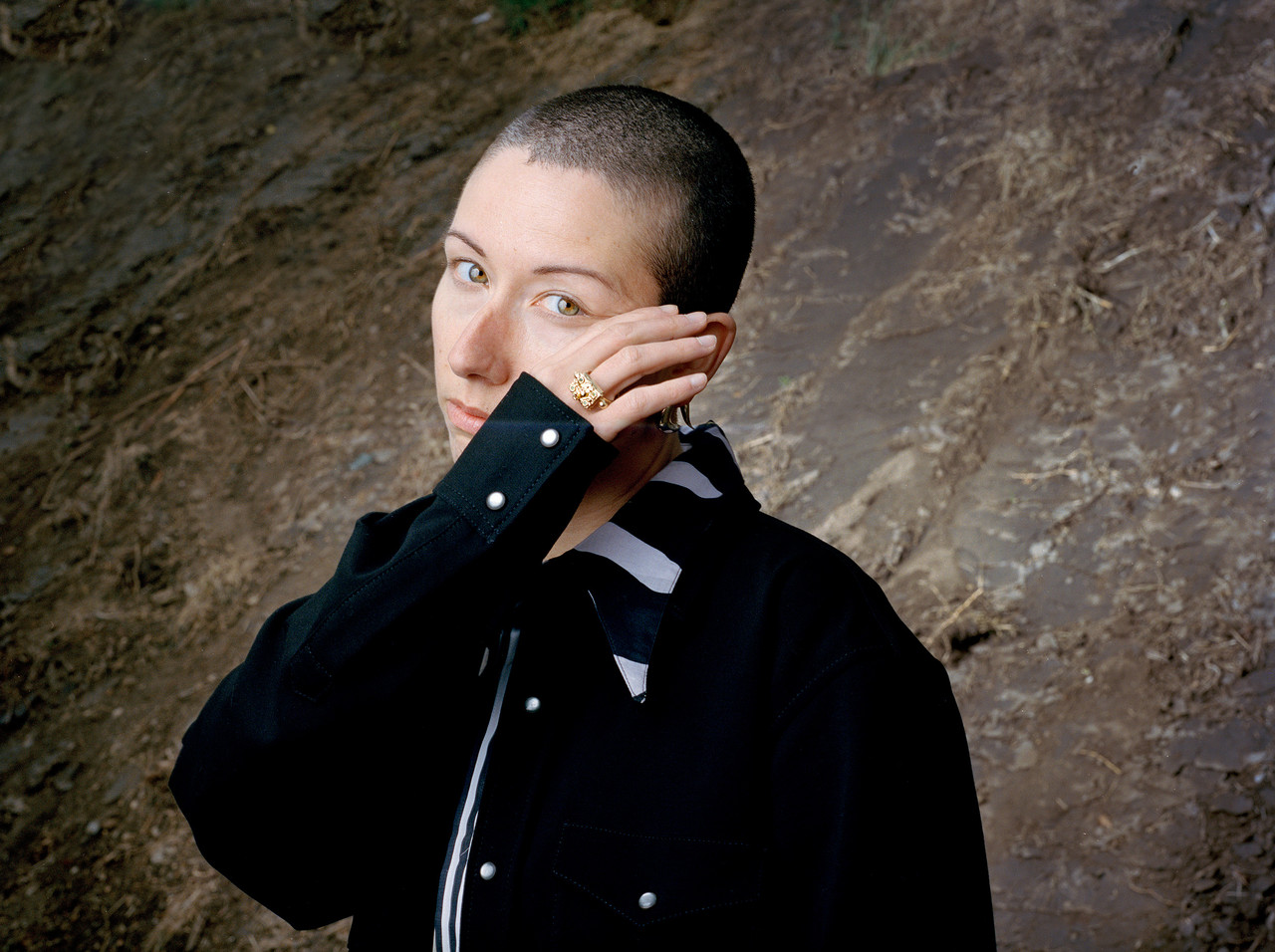
Keep up the desire. Move the voice. Bring it back to the surface by going down to the bowels of the world. In a yellow, complicated, barren and beautiful land all at once. Let the words travel with the sea. Filled with saltiness, suddenly they rest on your face.
You lick your skin and feel it's salty. You open your eyes and you are in Naples.
A journey to the lands of the South, an alliance with the devil, a twisted, tilted, outwardly-stretched line, searching for the self, searching for the Other. From the mix of hardcore, synth sequences, and Neapolitan neomelodic music, singer and musician Tullia Benedicta gave birth to the new experimental project NZIRIA, debuting on Gabber Eleganza's Never Sleep record label with XXYBRID. As a psychomagic act of disidentification and, crossed by the artist's androgynous voice, the album transports the listener to an urban soundscape inhabited by queer bodies; desiring communities trying to break with the established canon of identity, and claim their right to speak.
Chiara Pagano: You have probably found yourself talking about it over and over again, but I would like to start with the name you have chosen for this new project: NZIRIA. For those unfamiliar with Naples, this word remains difficult to connote; hidden behind an aura of mystery, it is challenging to place it in a specific geography, yet this same word tells a very unique story and holds a proper attitude. Would you like to explain the meaning of this term and the choices that led you to appropriate it by taking it on as a stage name?
NZIRIA: Of course. Nziria is a word that comes from the Neapolitan dialect – which is so complex and has so many different facets that it can be considered a language in its own right. I was looking for an abstract, gender-neutral Neapolitan word that could be mistaken for a foreign one. By chance, I discovered the word »'nziria,« which means »stizza« (irritation), »fare i capricci« (throwing a tantrum). The word is associated with the stubborn crying of children when they are tired: it is said »ha pijat la 'nziria 'e suonn« (»has started to cry because s/he is sleepy/tired«). In a sense, 'nziria can also be associated with longing, as it represents a lament arising from a burning need…Well, there was a moment when I experienced the urge to reconnect with my roots and with Naples and that is how I found my 'nziria, in the desire to find Naples outside and inside myself.
XXYBRID by NZIRIA (Never Sleep)
XXYBRID by NZIRIA (Never Sleep)
CP: This project led you to the production of XXYBRID: an album released on Alberto Guerrini aka Gabber Eleganza’s imprint Never Sleep. How did the meeting between the two of you happen?
N: The encounter with Alberto was unexpected and lucky. We first met in 2019 at Loophole in Berlin. I was there to play – I had an industrial techno project at the time – he was there for a friend who had to play before me. Coincidentally, my live performance got bumped up. We kept in touch online, and one day I sent him a demo of Positano Noise, the project I had at the time: Neapolitan song covers, rearranged in an electronic key.
The fundamental encounter for NZIRIA to be born, however, happened in Bologna, at a gig of Alberto's. In that circumstance, he told me he had listened to the cover project and that I could improve it by writing my own lyrics in my original dialect; lyrics that spoke about me and my story. And so I did. A year later I sent him XXYBRID and he asked me if I was interested in publishing it on Never Sleep, and here we are.
I have always greatly admired Alberto and his work, and I find that our projects are close in many ways, starting precisely with this deep attachment to one's past combined with the desire to step outside the self through contamination and constant dialogue with different musical genres.
CP: Moreover, Gabber Eleganza is a project that attempts to draw lines between hardcore and European folklore, while folklore, in your case, is represented by Neapolitan song. I find the choice to bring neomelodic music to the center of your production very relevant. In the meeting with hardcore – tied to the rave scene that emerged in the Netherlands in the 1990s and equally definable as traditional music – you seem to want to define an extemporaneous and mobile territory in which the present enters into dialogue with the past.
It is curious because these two genres, although very distant from each other, have many things in common: both arise from the need of marginalised groups – or secondary communities – to subvert a given order and certain social obligations. What is your connection to these music genres and why did you decide to bring them together?
N: I discovered hardcore when I was 12…I had a gabber classmate who was older than me and who gave me burned CDs of Rotterdam Terror Corps and Masters of Hardcore Vol. 2...It was a revolution for me! Actually, gabber at that time was not so niche, both Echoes and Cocoricò in Riccione organised hardcore nights. Then there was a radio programme on the well-known radio station m2o that for two hours, in the afternoon, played only hardcore, and that was my daily appointment.
Throughout my artistic journey, I have explored various genres, but with NZIRIA I felt the need to go back there, back to 2002, to those sounds that I had left in the drawer of memories...When I listened to Alberto's track »Never Sleep«, I immediately thought it sounded like a tarantella: a traditional and popular dance of southern Italy, characterized by movement and lively rhythm, capable of inducing, according to popular belief, ecstatic trances. Well, that was the first input that made me think that combining hardcore with the Neapolitan song was not only possible but necessary, in a way.
On the contrary, the neomelodic is a genre that I explored late. In my family, we listened to classical Neapolitan music, while neomelodic was viewed negatively and considered a boorish and distasteful genre – with the exception of Gigi D'Alessio, who was, on the other hand, beloved in my house.
I think the red thread that unites two only seemingly distant genres, such as neomelodic and hardcore, is precisely passion. They are both driven, and emotional, they speak to people's bellies, to their bodies...They are also in a way material, made of a kind of corporeality. So I decided to relate them, and call the typo hard neomelodic.
CP: I would like to dwell for a second on this last choice. The Neapolitan song was born in Southern Italy and tells of deep, often painful, loves, born out of the common condition of being marginalised, of the shared desire to find redemption. Although it has long been considered the archetypal Italian song, during the 20th century it began to take on a new connotation. It was indeed often criticised because it was considered a vehicle for lyrics that were way too romantic and »honeyed« (trite), not conforming to the modern idea of the universal individual, whose body is mute, abstract, and heroic because it is not subsumed by its passions. In your tracks, it is as if the desire is to redeem the history of this genre by bringing back to the center precisely that long-criticised sentimentalism. How important do you think it is to talk about love today?
N: I find it essential to talk about love, today more than ever. We live in a world, in my opinion, that is very cynical and at times cruel, cold, and hyper-technological, constantly reflecting our image like a mirror blind to everything that surrounds us.
I was recently reading Elisa Cuter's essay »Restarting from Desire;« a text that I found interesting because it talks precisely about desire and how it is increasingly self-referential, inviting instead to rediscover it as a tool that can take us out of ourselves to rediscover the other and the world around us.
I wonder, then, if talking about love is not a way of reminding ourselves of how important it is to share a feeling with someone we care about...Isn't this perhaps the flame that keeps us alive?
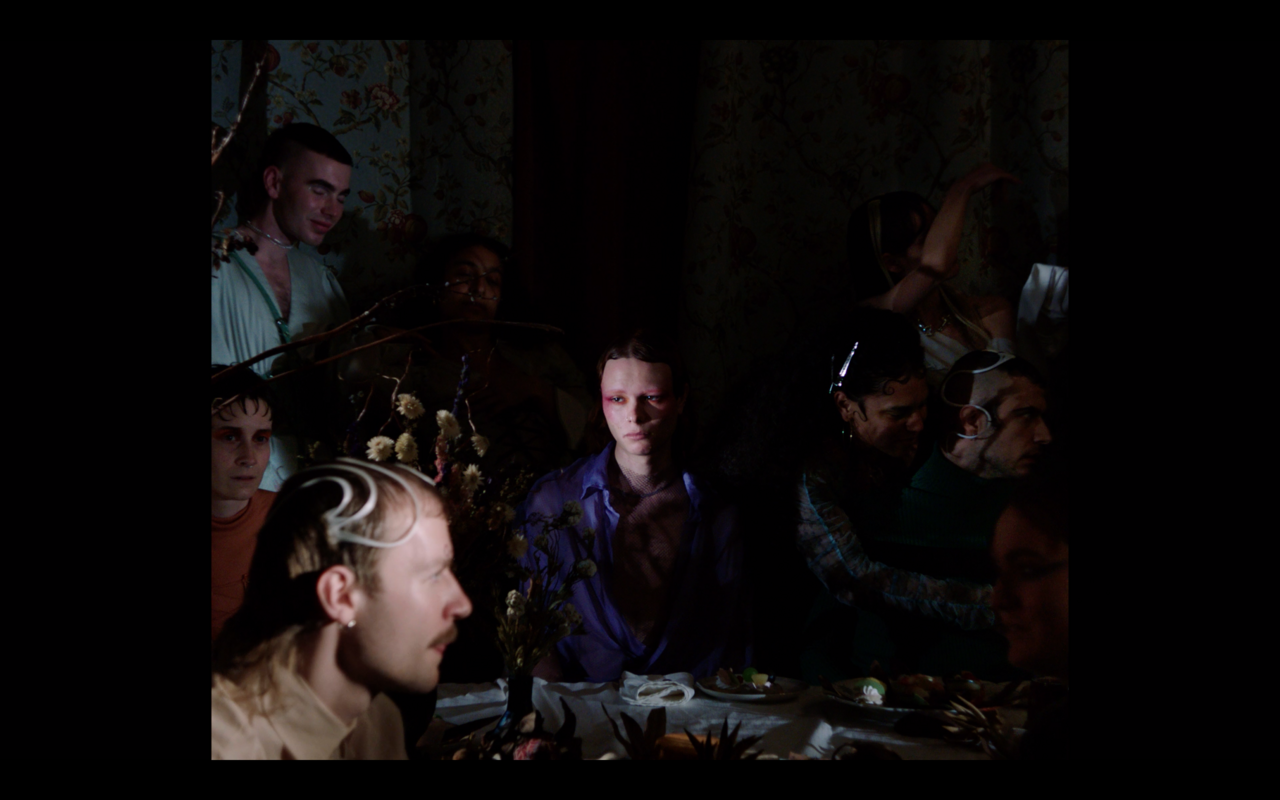
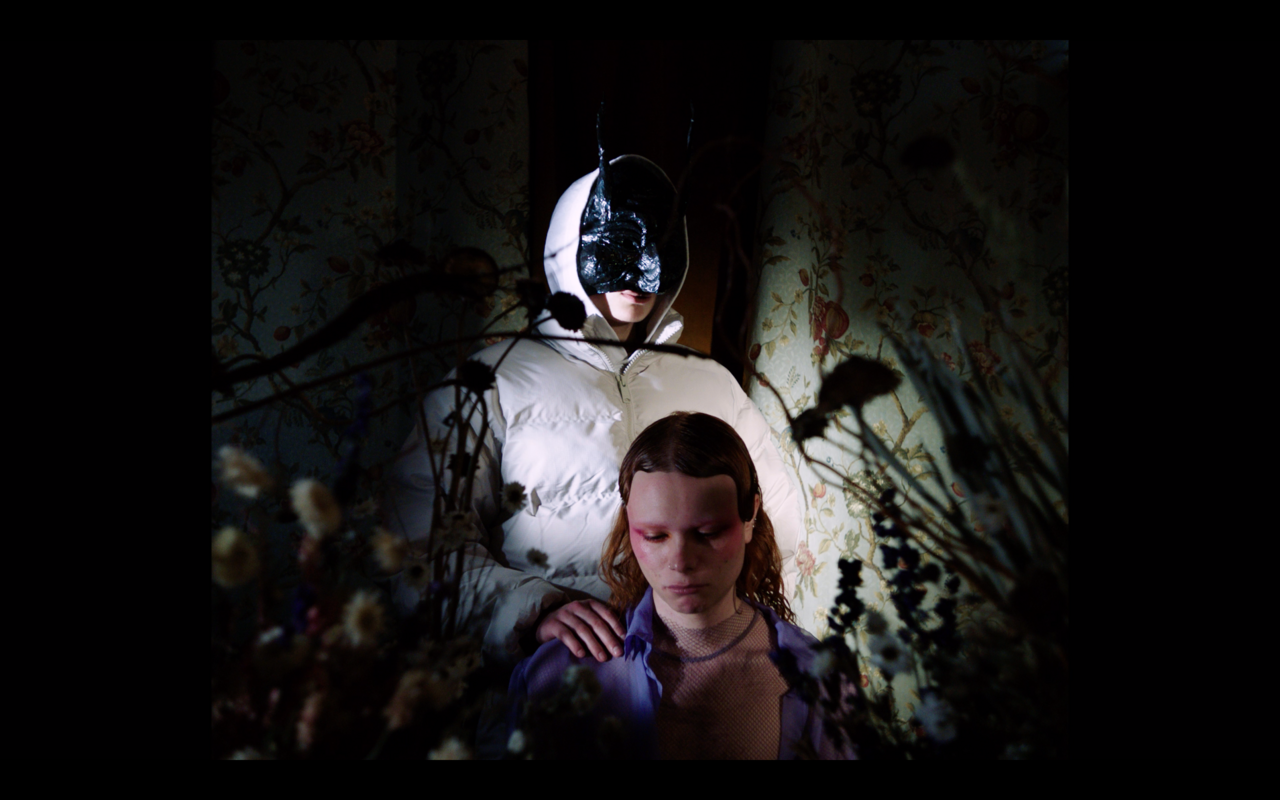
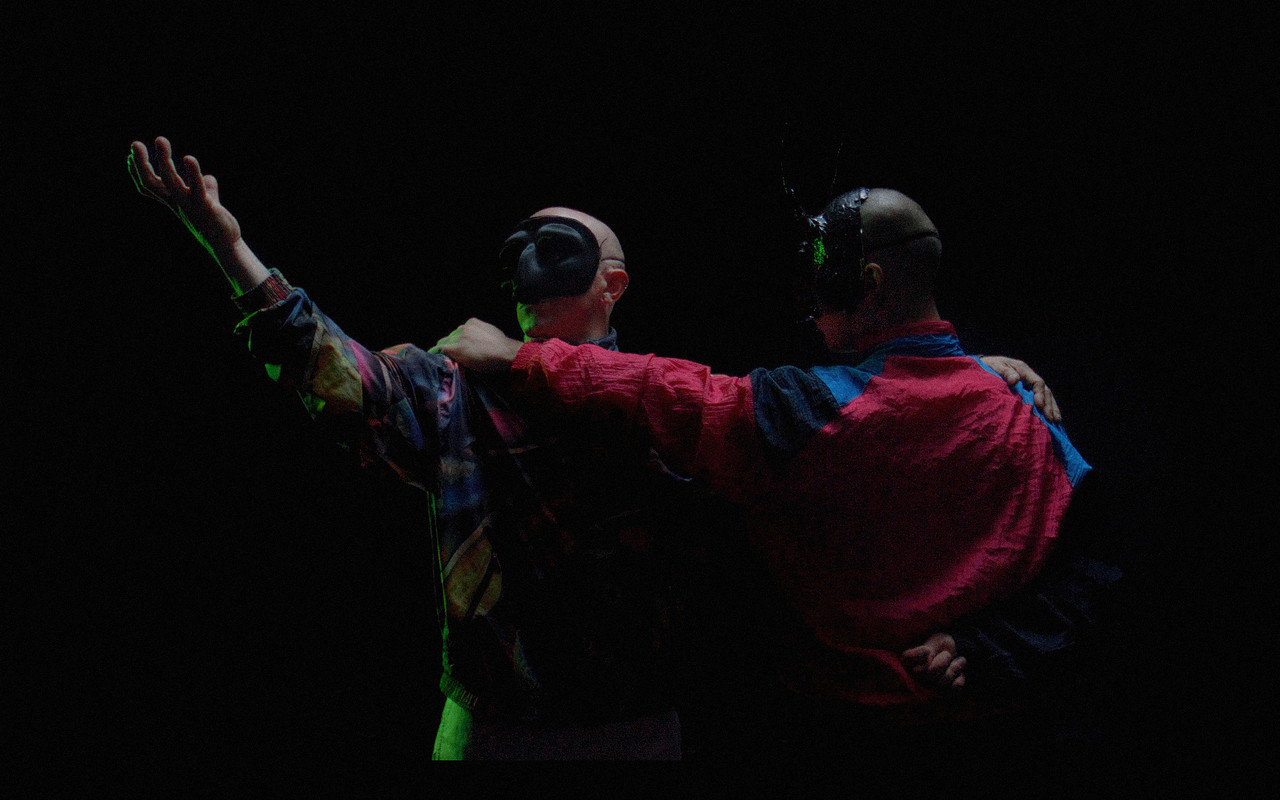
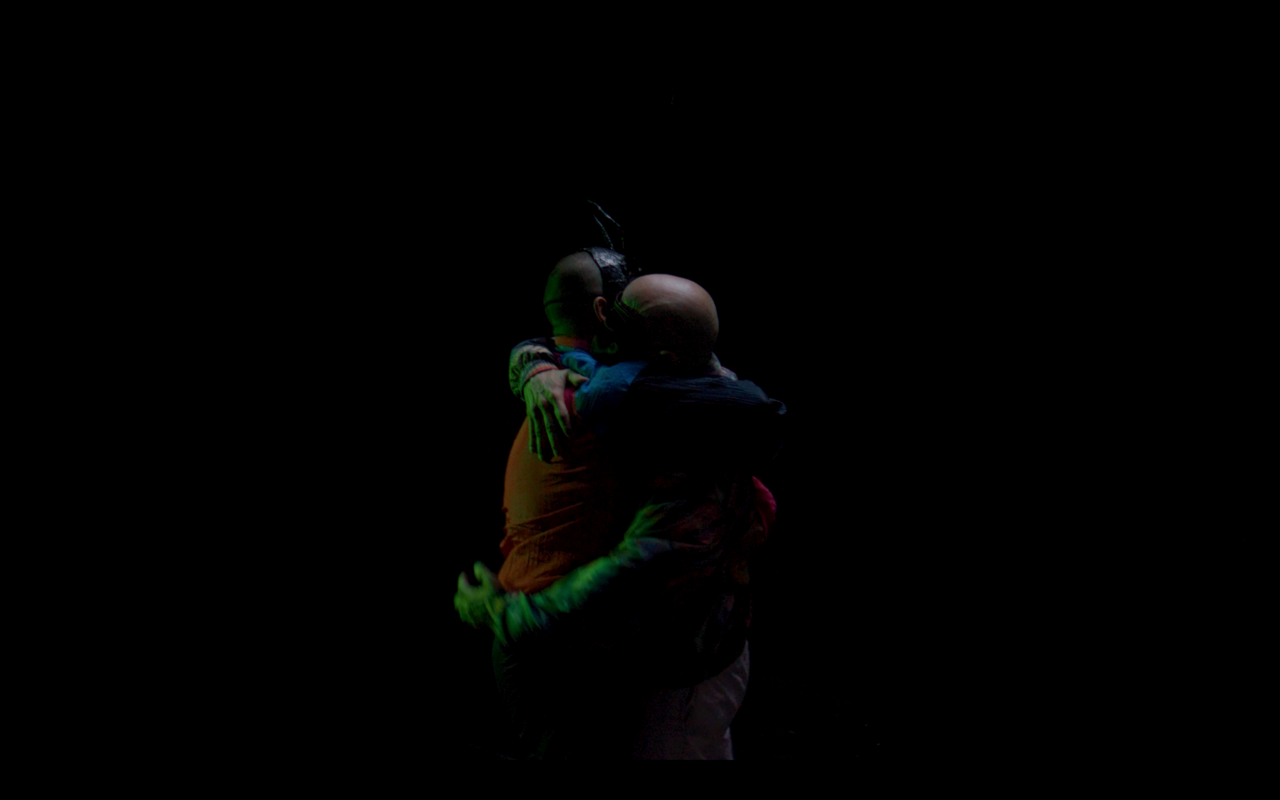
With Bianca Peruzzi, a visual artist with whom I have been collaborating since 2017, we tried to represent the power of desire in the video clips we shot. In »Pensiero,« for example, a series of looped embraces seem to want to reassure us, as if to say that, in that embrace, we can inhabit ourselves. In »Amam Ancora,« on the other hand, the main character, witnessing the wedding of her lost loved one, is shaken to the core by love and jealousy, and because of this, the community tightens around her, supporting her and easing her pain.
Well, I believe that to talk about love is to talk about our need for community; an urgent and inescapable necessity, which is then the only way we can chase away loneliness.
I have always experienced sound as a magical force that can draw me into another dimension, and I find that certain sounds inevitably lead you to abstraction to the point where you can no longer control your movements.
CP: With respect to what you say, the connection that both hardcore and Neapolitan neomelodica share with dance comes to my mind: through a kind of possession induced by listening to music, the person becomes permeable to change. Nomadic in the lands of its own body, the self is lost in favour of a community, subverting the imperative to capitalist individualism. How do you experience the relationship between sound and movement?
N: I have always experienced sound as a magical force that can draw me into another dimension, and I find that certain sounds inevitably lead you to abstraction to the point where you can no longer control your movements – or if they are indeed controlled, they end up being guided by a higher consciousness.
With XXYBRID I tried to create a narrative that was not only sonic but also performative: there are moments of stillness alternating with moments of explosion and chaos, which then close in ecstatic tensions that bring the listener back to a meditative state. I myself dance on stage. It would seem absurd not to, because it is a need that arises from listening to and encountering sound.
For CTM festival, I finally have the opportunity to take this performance to another, more theatrical level. In fact, on this occasion and under the artistic direction of myself and Bianca, I will have the pleasure of performing together with choreographer and dancer Franka Marlene Foth and dancer Jana Laubscher. Let's say it will be an embodied declination of the album XXYBRID; a sort of extension I decided to call »And then a Flame Rumbled Like an Earthquake,« inspired by the image of the volcano Vesuvio towering over a burning Naples.
CP: The co-presence of the two genres also emerges from the mix you made for CTM Magazine, in which the traditional Neapolitan song of singers such as Maria Nazionale and Toni Colombo meets with pioneers of a completely experimental electronic music. It seems to me that NZIRIA somehow stands as a bridge capable of bringing into dialogue the different worlds and styles you propose in your selection, activating a very interesting conversation. Speculating on possible imaginaries, if there was an event, and everyone was invited, what kind of event would it be?
N: It would definitely be a big party, full of people. A Temporary Autonomous Zone that occupies and blocks all the streets of the city, in which gabbers dressed as pulcinella and tarantella dancers dance a hybrid dance together, femminielli and masculilli celebrate weddings, neomelodic singer and contemporary electronic pioneers play together, scooters speed by rearing with smoke bombs and throwing flowers on people. It would be a big party in which policemen would take off their uniforms to join the party, while from afar, a sea wake is always glimpsed.
CTM 2023: Hard Neomelodic selection by NZIRIA by CTM Festival
CTM 2023: Hard Neomelodic selection by NZIRIA by CTM Festival
CP: So, going into the details of your album...the title XXYBRID can be considered a statement of intent. A kind of manifesto. In this choice, one senses the desire to assert a kind of aesthetic that claims a particular kind of corporeality that, in subverting the canon and aspiring towards self-determination, wishes to redeem its own identity, its own history. Confronted with the recent political elections in Italy, which, like in many other European and non-European countries, has seen the comeback of far-right politics strongly oriented toward conservative policies that do not reserve rights for LGBTQI+ communities, what does it mean to be a queer and non-binary body here today? And how do we resist gender stereotypes?
N: First of all, it's hard to accept the fact that we end up with a neo-fascist government in Italy nowadays...I never thought it could really happen. There is a lot of work to be done, and every now and then I wonder if it doesn't perhaps make more sense to simply leave. But then I think that I'm young, angry, and brave, and I believe in the values of resistance, the expression of dissent, and above all freedom and respect for every living being.
NZIRIA is a musical project, but it also carries with it a political message that I care about and that I hope will speak to someone. The anger towards these people who are supposed to represent us – and who instead want to crush us like troublemaking insects – leads me to want to resist through my tools, namely music and art, creating new stories, situations, incentives to the benefit of my community. If there are no spaces for us, we create them. If they pull up walls, we tear them down. And this is always thanks to the community we were talking about previously.
I have found in Italian journalism so much resistance and pressure to assimilate and to »manage« my gender identity...You don't know how many interviews or articles I have had corrected because punctually the feminine gender was used ignoring my request to use the neutral pronoun »schwa.« Here in Italy, we are still far behind, but as always, things have to be conquered…I think of all the »femminielli« in Naples (in traditional Neapolitan culture, Femminielli are people with a male biological gender who identify their gender as female) and the hard battles they fought, suffering far more serious sorrows than just an ignored schwa. The important thing is to not stop resisting and to carry on one's battle.
The passion and the need that drives one to dance until the body no longer has the strength to move is basically the same: dancing to drive evil away from oneself, reconnecting with others in a kind of shared ritual.
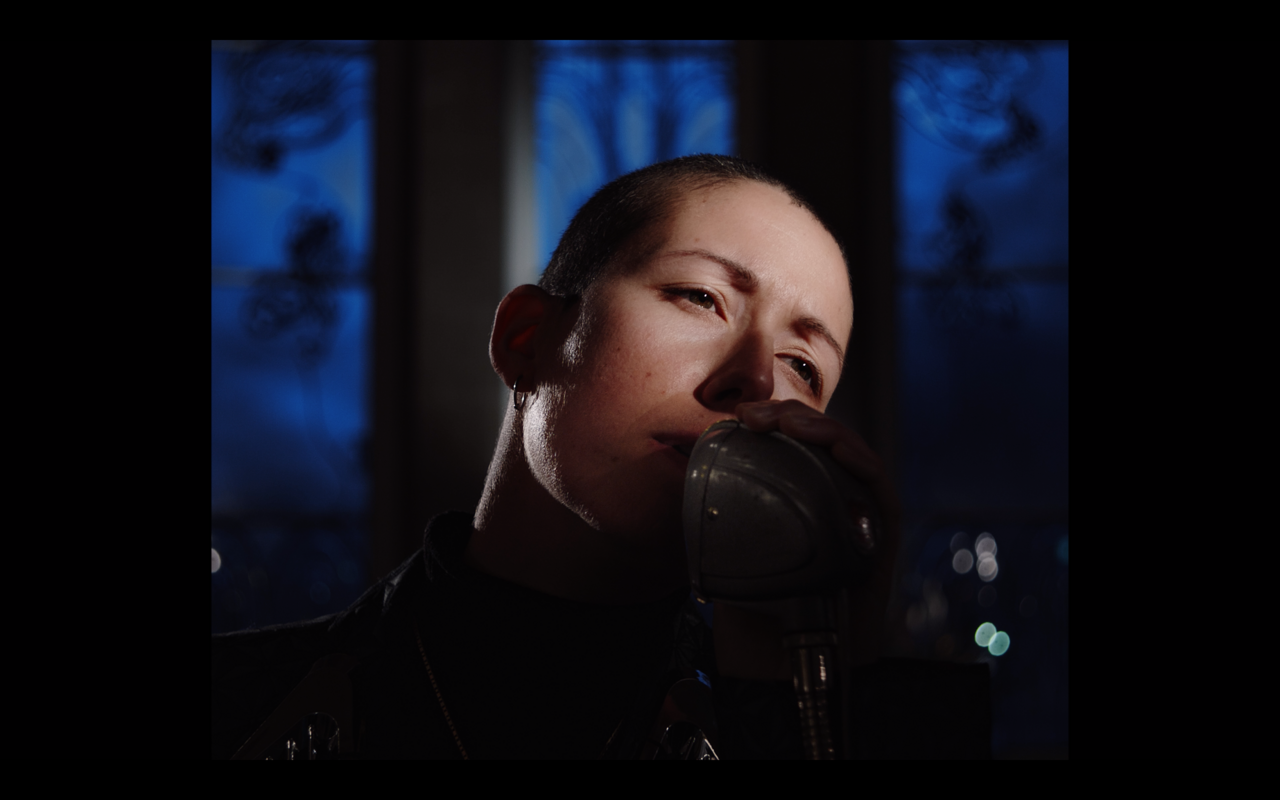
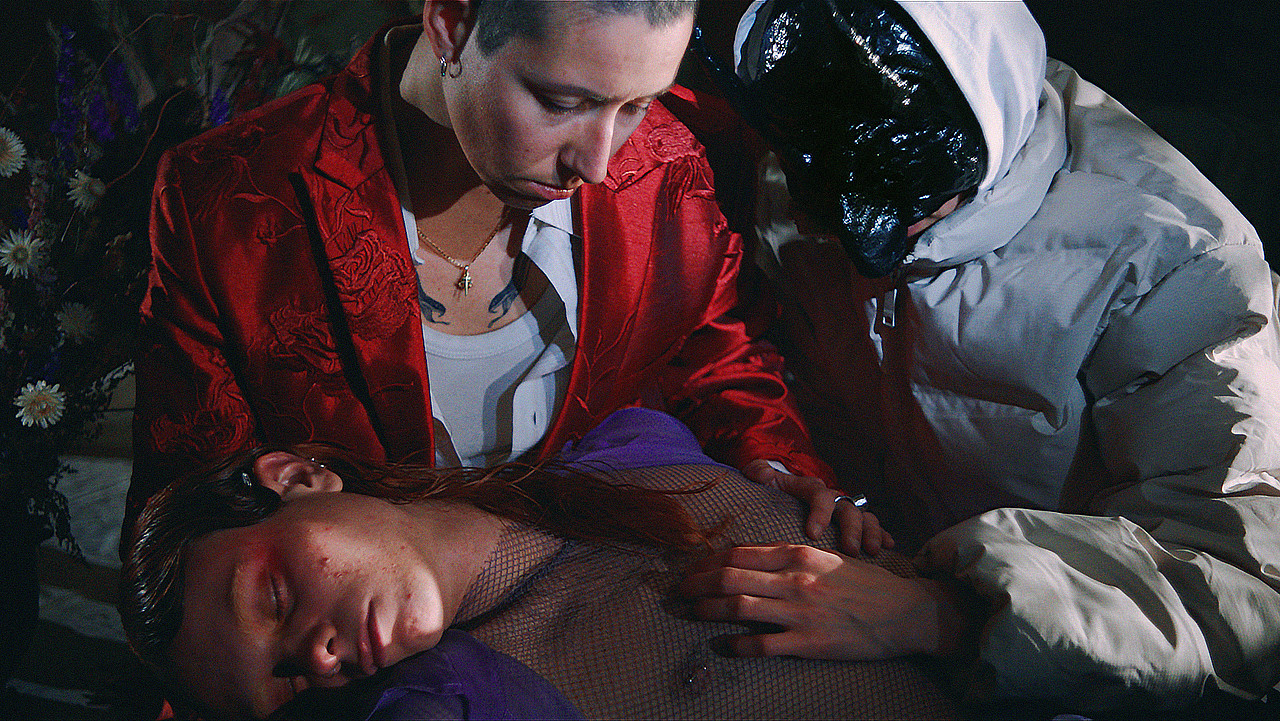
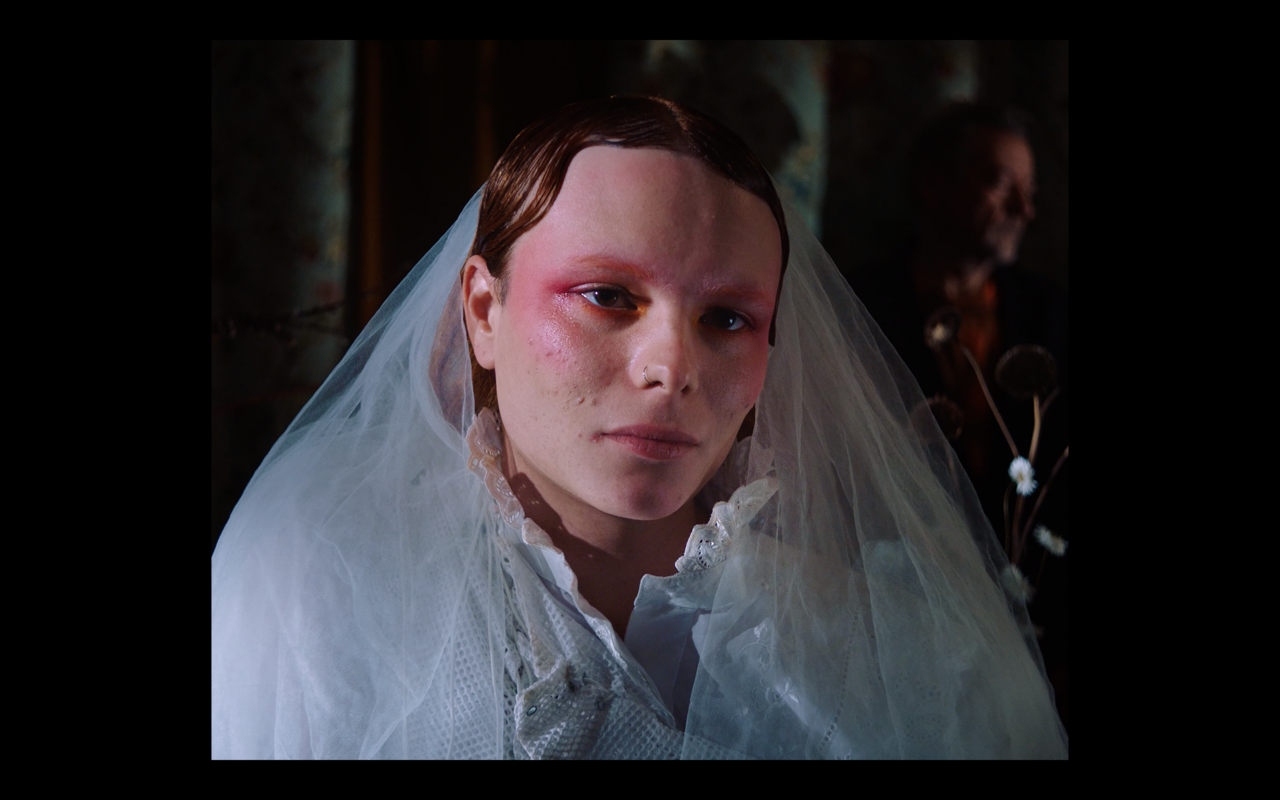
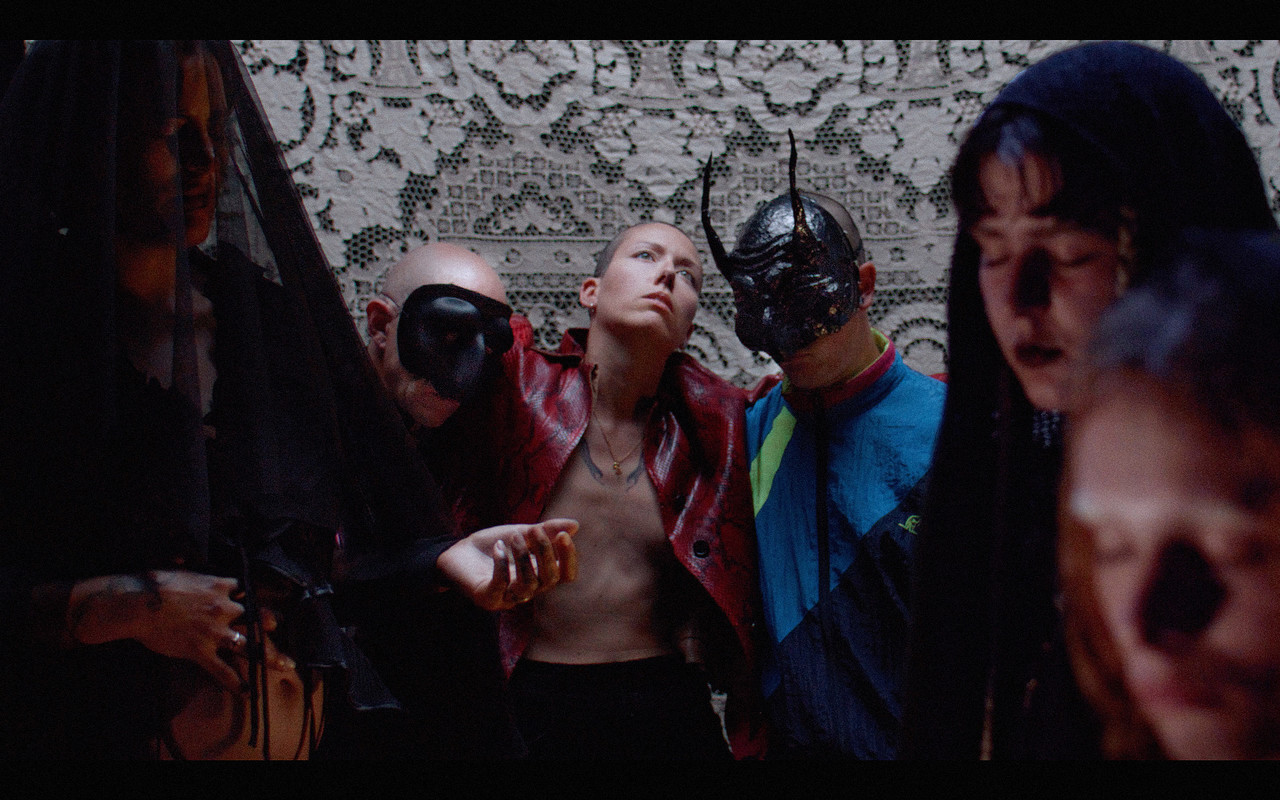
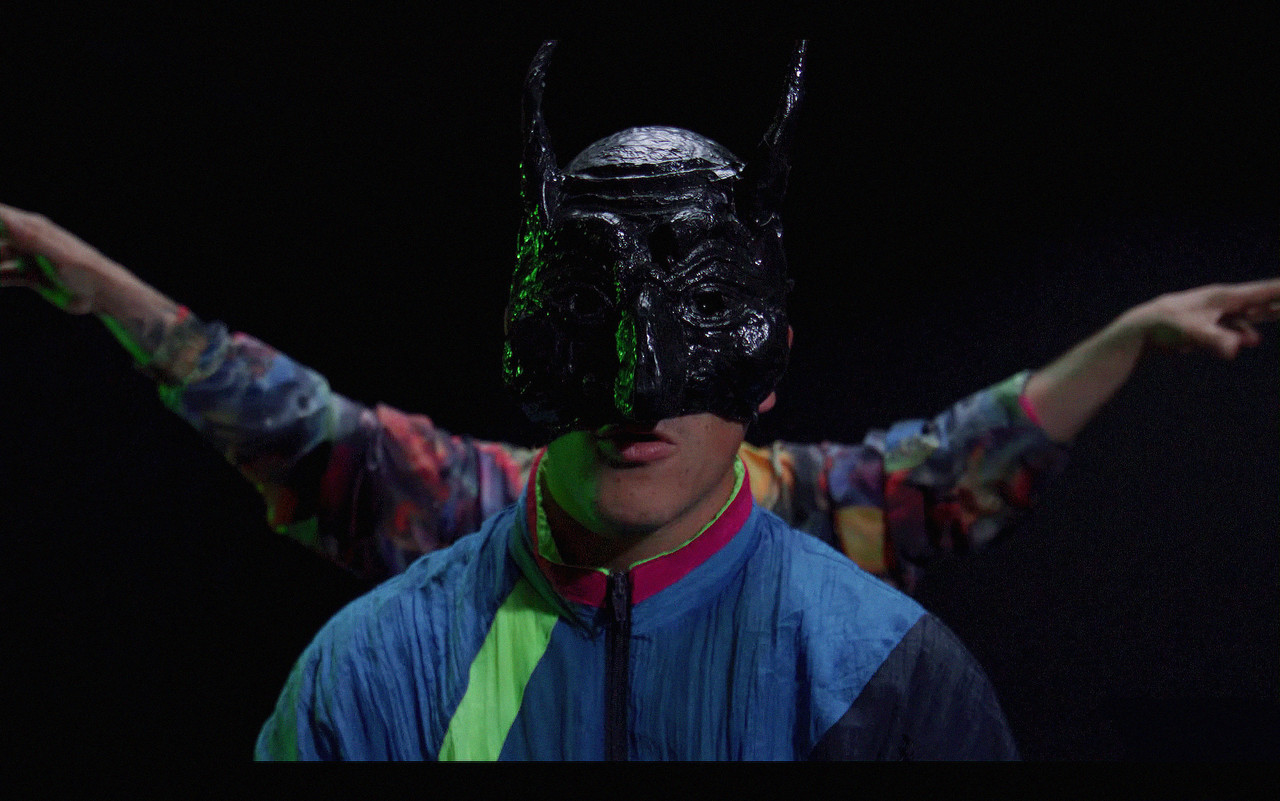
CP: Speaking of resistance...Your record opens with »E Riavule« (The Devils), a track that sounds like a prayer and a summoning at the same time, as if the earth is beating bangs and new bodies are trembling from its bowels; a kind of prophecy that seems to grow from the feet to rise to the throat, exploding into a song that screams insubordination. As you've told in other interviews, in making this track, you manipulated a sample of an evening in which a femminiello tells a myth about the figure of the devil. A very significant choice. What does this figure represent for you and why this connection with the devil?
N: You have perfectly captured my intentions with »E Riavule.« I wanted it to be perceived as a volcanic explosion of light and energy, especially after my years of quiet and darkness during the lockdown. Who is the figure that resides at the bottom, at the center of the Earth, where lava never ceases to flow? Dante believed it was the devil.
In the Jodorowsky-Camoin tarot, the Devil XV is a volcano of creative energy and is auspicious for the arts and creativity. It is a figure looked at with prejudice because it is the only one who rebels against God's will, questioning Catholic morality and human behaviour. Yet Lucifer, understood as the bearer of light and knowledge, is nothing less than a seeker of truth.
For me, the Devil has always been a lucky talisman, to the point that I tattooed it on my back, and when by chance I discovered a video in which the femminiello in question, Gerardo Amarante, pulls out the number 77 and tells an anecdote about it, I knew that that had to be the opening track of the record: I wanted XXYBRID to be magical, rebellious, brave, and lucky. Just like the figures of the devil and the femminiello.
CP: Moving on to another track, »Hard Tarantella« is instead an unmistakable reference to the Neapolitan taranta. Here, the accelerated kick takes the place of the tamorra – a Neapolitan drum – typically used to beat out the rhythm of what was considered to all intents and purposes a magical ritual dance that told of the peasant world, the desire for aggregation, the cult of Dionysus, eros, and the very strong bond with the land. Themes that are all shared by hardcore. In the case of this track in particular, the substitution of some traditional instruments of one genre with those of the other, suggests a desire to create a bridge between the two. What was your approach to this kind of manipulation? And what is the source of the desire to actualise the tarantella?
N: The compositional process was relatively simple. I listened to different versions of tarantellas, and tried to keep a similar structure while replacing the drum with a strictly distorted 909 kick. I wanted to create something that was powerful, tribal, and euphoric, like hardcore but also like tarantella. I had had this connection between hardcore and tarantella in my mind for years, and it was becoming an obsession that I could not get out of my head until I put it into action.
I grew up in Romagna, and for me, going dancing on the Riviera every Saturday was normal: I remember the feeling of dancing under the glass pyramid at Cocoricò, waiting for the first light of dawn and with exhausted legs, among so many other bodies, tired but happy. Well, I wanted to recreate that kind of ecstatic experience related to dance and community, of which the tarantella is in some ways the ancient double...Because the passion and the need that drives one to dance until the body no longer has the strength to move is basically the same: dancing to drive evil away from oneself, reconnecting with others in a kind of shared ritual.
CP: A work of re-actualisation that makes me think of Italy's relationship with traditions – a kind of relationship that at times leads to hostility toward progress and difficulty accepting the Other, but that at other times allows one to keep in mind one's history and preserve links with one's ancestors. What is your relationship with traditions?
N: I find that traditions are a double-edged sword: as you say, they can be peaks to cling to in order to understand who you are, where you come from, but at the same time they can be extremely castrating.
Italy in my opinion needs to learn to loosen these ropes a bit and to leave room for the unknown...It is too safe to stay within a defined »traditional« zone, no? You already know the rules with no room for error or exception.
With NZIRIA I wanted to look at these traditions with an objective gaze, and I chose to overcome them with the knowledge that I had overstepped boundaries: when the project came out, I received quite a lot of criticism from those who call themselves »true Neapolitan«...Someone wrote to me asking me what my intentions were, someone else criticised my accent or corrected the lyrics, keeping in mind that I was not Neapolitan.
Traditions are often the result of the encounter between different cultures or different people, and seeing them as unchanging elements does not allow one to grasp their layered process of hybridisation.
At first, it made me a little uncomfortable because it always comes back to that theme of the half-blood: you come from a Neapolitan family but you have always lived in the North, you are neither meat nor fish, you don't belong anywhere. Then I realized that NZIRIA is also this...That the margin of error is part of the game, and that tradition has to be followed only up to a certain point. I also believe that tradition is actually not static but reshapes itself over time according to situations...And in this lies also its value as a force that leads to change: traditions are often the result of the encounter between different cultures or different people, and seeing them as unchanging elements does not allow one to grasp their layered process of hybridisation.
CP: Speaking of traditions, how was your project perceived by your family and friends?
N: My family is happy with this project, although I think they did not really understand it initially. I would have liked to have had my grandparents listen to it. They loved Neapolitan music very much.
The reaction of the Neapolitan audience is definitely the one that intimidates me the most. So far I can say that NZIRIA has definitely been criticised and had to pass several »tests« from people that call themselves the Neapolitan »doc« people (in Italy, »doc« is a somewhat ironic way of claiming that something is authentic, true), but I've also had a lot of positive feedback and interest from young people in Naples: I find it remarkable that once again the hard core of the inflexible caste is always populated by cisgender straight adult men. Funny isn't it?
Anyway, the New Year's Eve gig in Piazza Plebiscito went very well so maybe I passed the test!
CP: As written in the record's press release, this project was born during the worldwide lockdown – a period that for many people was experienced as one of great loneliness. »Pensiero« is perhaps the track that tells us best about this phase: faced with the impossibility of an in person meeting, your voice returns and becomes a word-touch. A caress that travels through time to reach the other. How did your experience of lockdown influence the sounds you chose to use in your album?
N: The lockdown was a period that brought a lot of anguish and suffering, but somehow I think it was a kind of reset, at least for me.
Thanks to this forced break, I was pushed to stop, revise plans, and prepare new ones. I decided to put aside my previous project, Tullia Benedicta, and make room for something new, which I had been hatching for years but had never devoted enough time, research and dedication to. I decided to change genres, to move away from techno and embrace new sounds, brighter, more energetic, because that was what I needed.
»Pensiero« is definitely the track that somehow best describes the lockdown period in 2020. I wrote it precisely with the idea of constraint, of confinement, obviously reconnecting metaphorically with another main theme of the neo-melodic genre: the prison. In »Pensiero« I wanted to sublimate the desire to get out, to re-embrace loved ones, and to see the sea again, which for me is absolute freedom.
The voice used in the Neomelodic genre is a cry for love: it is heartbreaking and melancholic, but also intense and passionate, and it is able to get right to your stomach and make you cry.
CP: Throughout the album, the more acidic and synthetic sounds are frequently crossed and cut through by your voice, which often emerges as an echo from the past, bringing with it joy, nostalgia, longing, love, sometimes grief, never resignation. It is a visceral and deep singing that tells of a kind of resistance. What role and meaning does the voice have for you?
N: The voice is my greatest means of expression. I have been dreaming of singing since I was five years old. Thanks to Neapolitan song, and especially Neomelodic song, I rediscovered the importance of the voice and of conveying emotions through singing. The voice was something that I had sacrificed a lot in my previous project, in favour of stylistic production.
The voice used in the Neomelodic genre is a cry for love: it is heartbreaking and melancholic, but also intense and passionate, and it is able to get right to your stomach and make you cry.
And then Neapolitan is extremely musical and beautiful to sing. I think my love for this language led me to embrace this genre and make it my own, while also rediscovering new possibilities of expression that I could give to my voice.
CP: Before we leave, I’m curious about one last thing. Anyone who has lived in Naples for a month or an entire lifetime knows that this city with a wonderful soul can do a lot of good and a lot of bad at the same time. Sometimes it is immensely cruel. Your music transports the listener to the emotional landscapes that lie between these two poles. You do not currently live in Naples. What is your relationship with this city? Would you live there?
N: I just moved there! I pondered for a long time about where to move after the Bologna chapter, and the desire to live in Naples grew stronger and stronger, especially after this previous year with NZIRIA. Then a series of coincidences meant that I had to come and live here. This surprises me to a certain extent, because I have a very special relationship with the city, and it is amazing how welcome I feel in this magical land full of poetry. Yet at the same time, it is difficult and ruthless. Playing on December 30 in Piazza Plebiscito was definitely a great gift. I couldn't have received a better welcome than that, and I feel that I need this city now.
I want to write a second record (which I have already started), deepen my research, and start organising events in Naples, which is a fertile ground full of talent and creativity, bringing my experience from London and Bologna here, and mixing it, once again, with the local sphere. It will be a nice experiment and I can't wait to get started.
Chiara Pagano is an artist and researcher currently based in Rome. Her works span performance, sound, writing, and printed matter. Dealing with feminist epistemologies and corporeality, and moving into the territories of queer studies and critical race theory, her research reconsiders cultural memory and politics recorded from the mid-twentieth century onwards, specifically in Italy.
This text was commissioned as part of CTM 2023 – Portals. Translated from the Italian by Chiara Pagano.
NZIRIA is supported by SHAPE+ which is funded by the European Union. Views and opinions expressed are however those of the author(s) only and do not necessarily reflect those of the European Union or the European Education and Culture Executive Agency (EACEA). Neither the European Union nor EACEA can be held responsible for them.