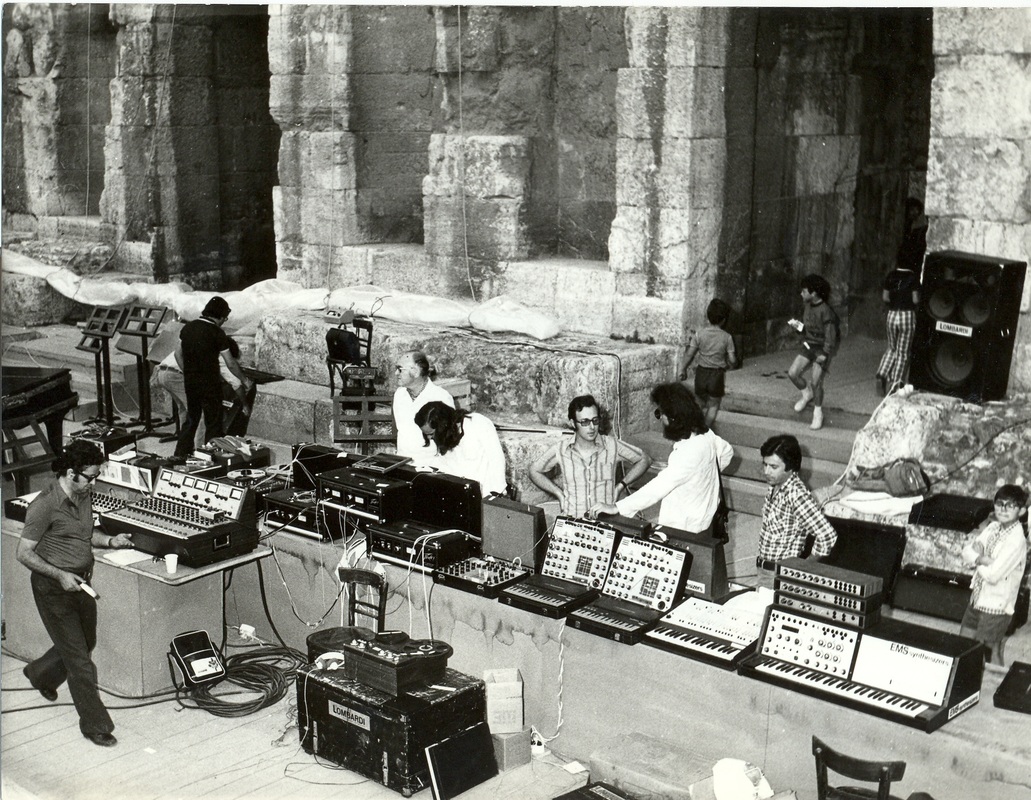
The Contemporary Music Research Centre (CMRC or Κ.ΣΥ.Μ.Ε. in Greek) came into existence in 1979. It was conceived by John G. Papaioannou, Stephanos Vassiliadis, and Iannis Xenakis with the expressed aim to support and advance research and development of electroacoustic music in Greece. Each unique in their own way, these three figures espoused and promoted ideas about music, education, and art that still resonate in several obvious or subtler ways with contemporary music in Greece and beyond.
Xenakis' shadow looms large over the CMRC (Κ.ΣΥ.Μ.Ε.), the »/ks/« sound at the beginning of the Greek acronym acoustically reflecting how the X in the composer’s surname is pronounced in Greek. Xenakis was a singular figure in the European avant garde at the time. In many ways he embodies the archetypal polymath auteur. His compositional methods draw elements from wildly diverse sources, incorporating mathematical, statistical, and architectural concepts as well as themes from ancient Greek mythology. His works incorporate classical instrumentation alongside electronic electroacoustic sources and musique concrete manipulations. He often presented his works as large-scale events, somewhere between sonic theatre and installation work. By the late 1970s he was already an established figure, and among the few composers in the international new music scene that pushed boundaries while still managing to reach large audiences, far exceeding the Greek context where he was by comparison little known.
Stephanos Vassiliadis' compositional work is intrinsically connected to contemporary theatre, both through his capacity as a music director in the National Theatre of Northern Greece and as a music teacher in the Drama School of the National Theatre of Greece for many years. He composed music for many theatrical performances (ancient Greek tragedies as well as contemporary plays). He was also active as a musicologist and researcher and worked extensively on documenting local traditional music idioms all over Greece. In the few recordings of his work that have been made widely available we hear an idiosyncratic compositional language where synthesisers and tape manipulations are intertwined with field recordings and traditional folk instruments, evoking at the same time futurist and archaic associations. Vassiliadis also collaborated closely with Jani Christou, Michael Adamis, and Iannis Xenakis.
John G. Papaioannou (often affectionately referred to with the nickname »Nanakos«) was also a polymath. An architect, pianist and, crucially, musicologist, he ceaselessly acted as curator and instigator of avant-garde music since the late 1950s. As co-director of the Goethe-Institut Athen initiative, Workshop for Contemporary Music (alongside Günther Becker), since 1962, he was instrumental in creating one the first electronic music studios in Greece, in 1969. He regularly gave lectures showcasing, contextualising, and supporting Greek avant-garde composers and organised the »Hellenic Contemporary Music Weeks« concert series (1966 – 1976). In his theoretical writings and his practice he proposed an expanded view of music creation and performance as inter-media practice that incorporates elements from diverse art practices including painting, sound installation, light design, theatrical and dance performance, film projection etc. To describe this concept he used the term »polytechno« (πολύτεχνο) and was always trying to curate events in this spirit.
The year 1974 marked the end of the seven year military dictatorship in Greece, the far-right regime that had dissolved democratic institutions and stifled free speech. In 1976, Xenakis received an official pardon (he had been sentenced to death for activities in the left-wing resistance in 1947). These first turbulent years during which democratic institutions re-emerged in Greece were imbued with a new optimism. Xenakis' proposal to create a »Scientific Research Centre of Music« in Athens that would be subsidised by the Greek state and would, in his own words, be »the flower of the most progressive artistic-scientific thought in music« perfectly reflects that particular moment.
Documenting the Present, Archiving the Past
Currently within the CMRC archive lies a treasure trove of live and studio recordings, original scores, programme notes, photographs, letters, and handwritten notes, as well as instruments and pieces of equipment. These were collected from several disparate sources, including personal archives of composers, musicians, collectors, and new music enthusiasts. Among these documents we find hours of tape recordings of unreleased works by local and international artists, graphic scores by Anestis Logothetis, and the correspondence of Iannis Xenakis. Parts of the archive have been made available to the public for limited periods either as part of exhibitions or of online libraries. The conservation and availability of the archival material raises complex issues of copyright, authorship, funding, and institutional prestige. For the time being, since 2018, CMRC functions as part of the Athens Conservatory and its archive has been integrated in the Conservatoire's collection, which also includes other archives and private collections that intricately interconnect, for example the Janni Christou archive.
As all archives, the CMRC archive presents a narrative. It is the story of Greek avant-garde music and the primary narrator is John G. Papaioannou. Most of the archival material that covers the period from the 1930s until 1979 is largely drawn from his own collection which was back then already an authoritative archive of 20th century Greek music. The story that it tells begins with seminal composer Nikos Skalkottas (1904 – 1949), whose personal archive Papaioannou cared for and disseminated after Skalkottas' passing. Another big part of the archive is connected to a group of composers that were showcased during the »Hellenic Contemporary Music Weeks,« a series of events that had created a sense of cohesion in that loose heterogeneous circle of composers. They perceived themselves as the new Greek avant-garde and that is how Papaioannou had presented their activities, as both a part of the Western musical avant-garde (many among them had studied outside of Greece) and also decidedly Greek. Most of them aspired to attune themselves with what was happening in the international contemporary music and art scene. They began to experiment with electronic instruments, musique concrete techniques, and other new music currents, without necessarily doing away completely with acoustic instruments and more conventional compositions. Ancient Greek mythology, philosophy, and theatre appear to be a recurring source of inspiration for many of them. Some tried intently to re-contextualise Greek folk and Byzantine music traditions in ways that give a pre-eminent position to mysticism and ritual. In this broad milieu we find figures like Jani Christou, Anestis Logothetis, Michael Adamis,Theodore Antoniou, Nikos Mamagakis, Yorgos Sicilianos, Dimitris Dragatakis, Dimitris Terzakis, and George Leotsakos.
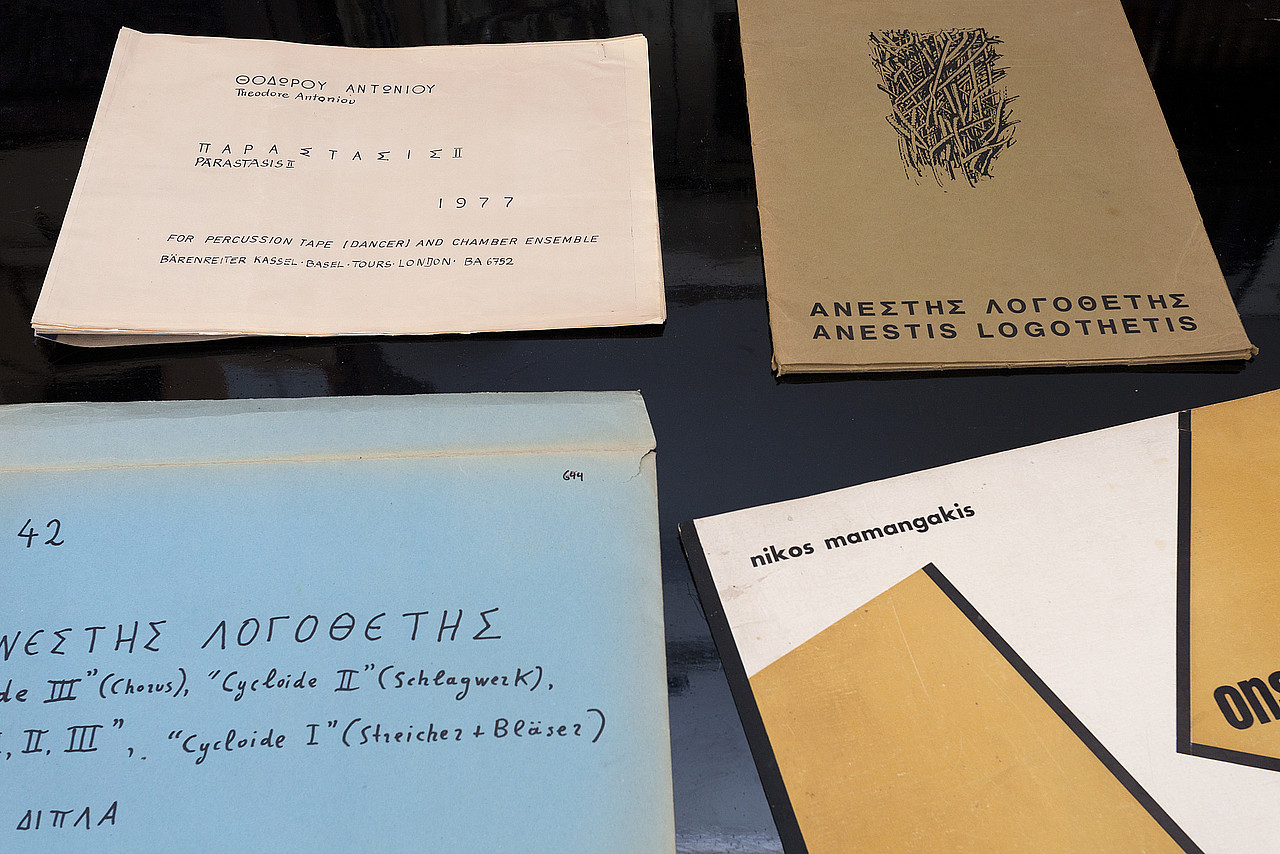
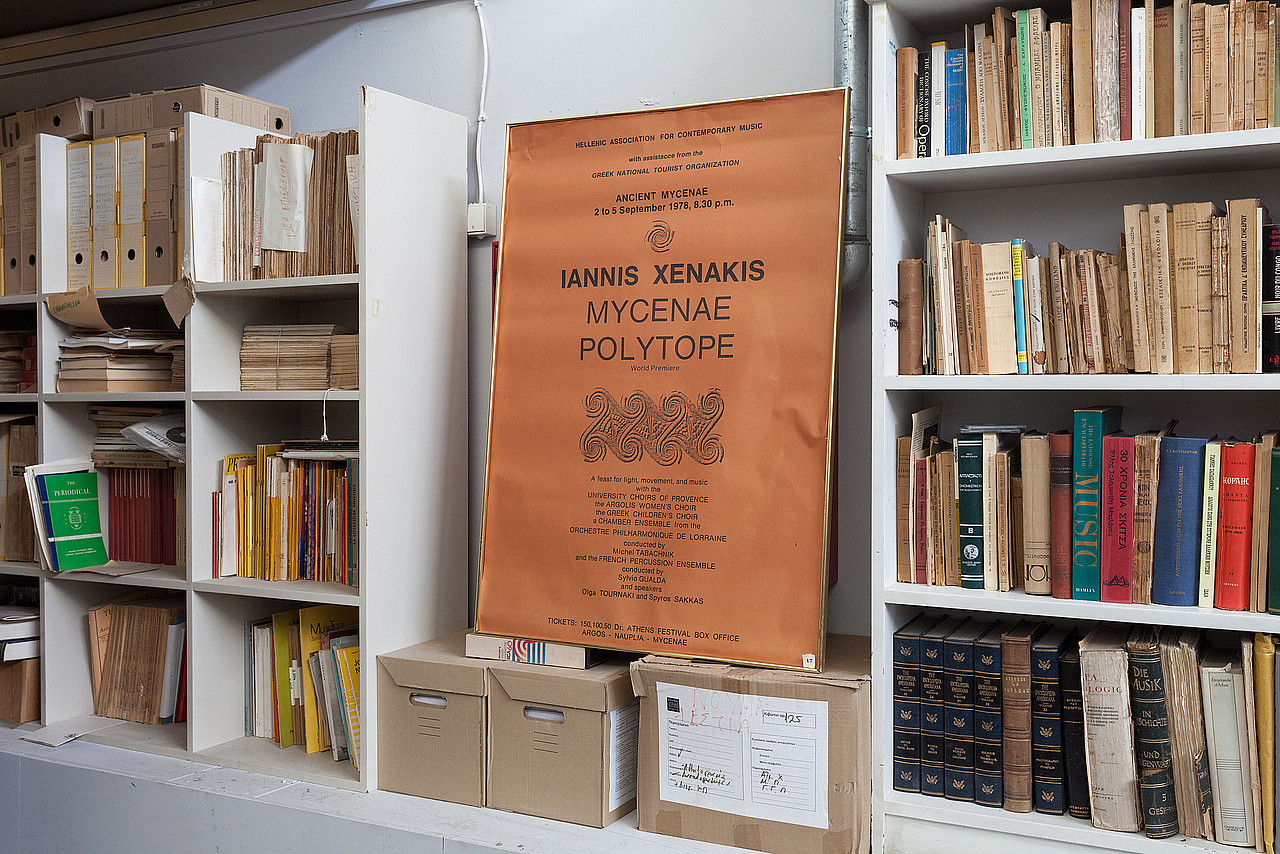
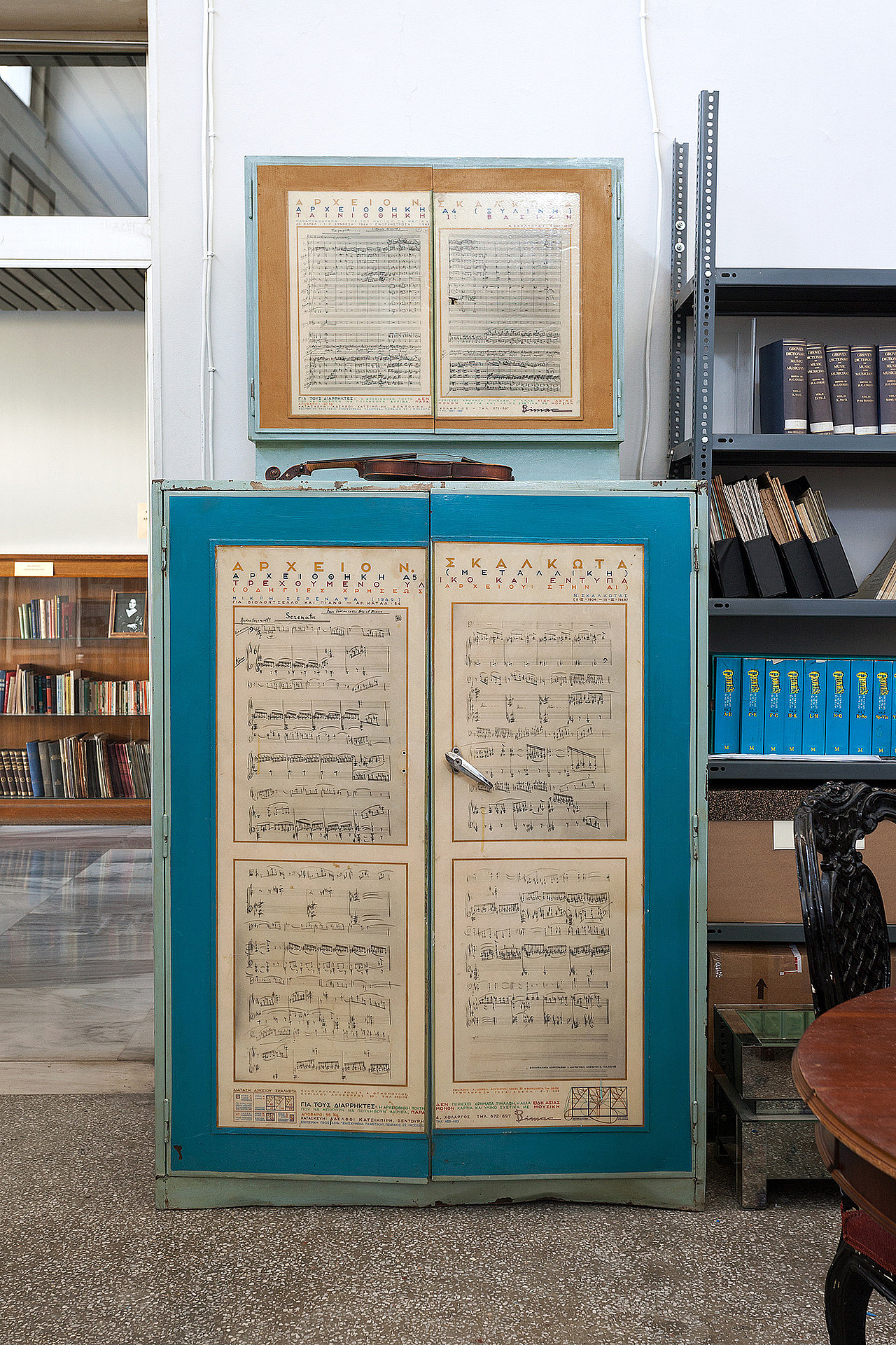
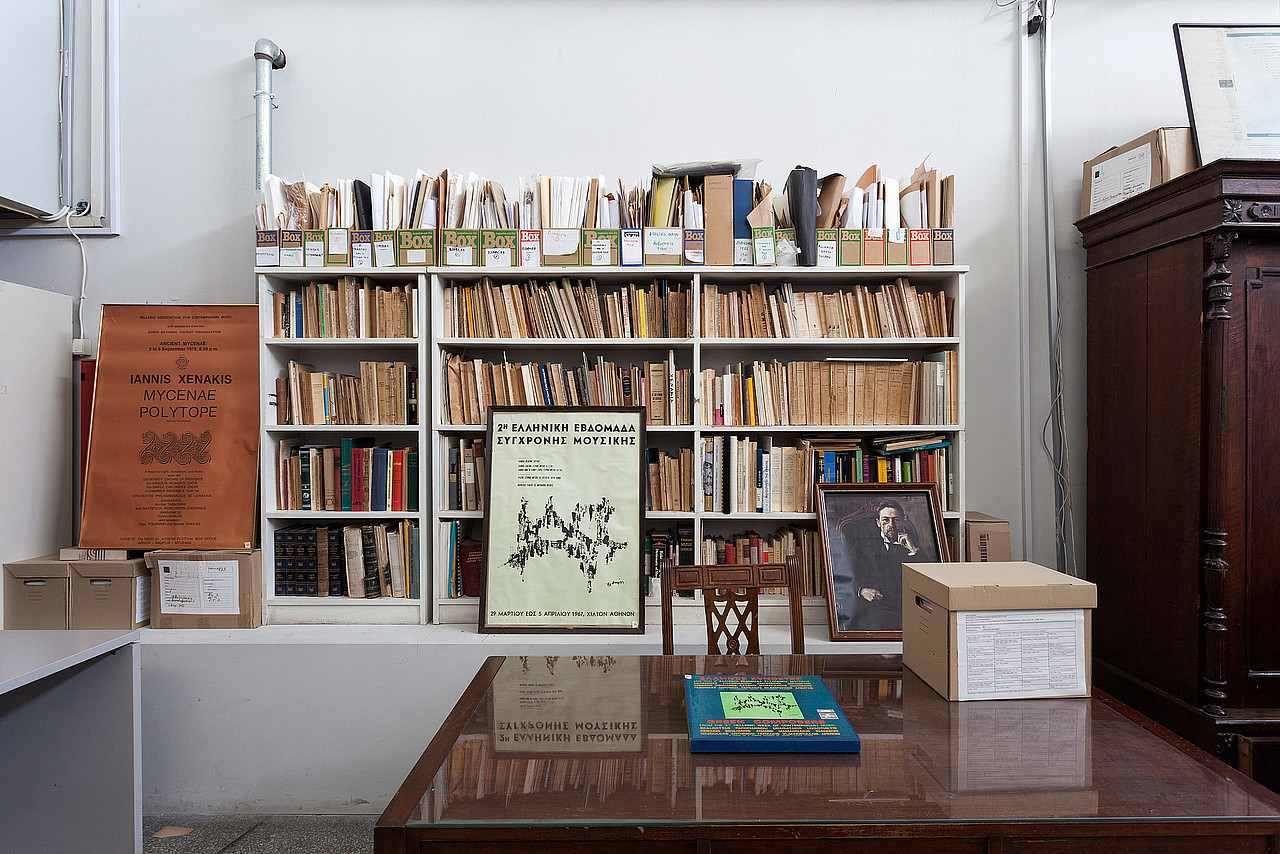

The texture of the archival material changes slightly from 1986 onwards, as the CMRC begins functioning as a studio for young composers. The material is no longer associated with the past but directly connected with what is happening in the moment. This period, between 1986 and 1999, is also the most active in terms of music production within the CMRC and the organisation of unconventional concerts and mixed media events, still under the guidance of Papaioannou and Vassiliadis, who remained very active as curators, organisers, teachers, mentors etc. Panos Kanelopoulos, who attended seminars in the CMRC in the the early 1990s and followed closely the concerts organised by the Centre around this period, vividly recalls the Aixoni Festival where wildly experimental compositions were performed alongside the works of Nikos Mamagakis in the unique Aixoni sculpted theatre (designed by the artist Nella Golanda).
Many among the composers and musicians that gathered around the studio around this time had been taught by the preceding generation (Xenakis, Papaioannou, Adamis etc) and in many ways are seen as the continuation of that lineage. At this time there was much greater technical literacy and familiarity with electronic equipment among them and the music that was being produced documents the gradual move from analogue to digital technology. Some favoured purely electronic sound and many were active in the production of music for dance, theatre, film, and radio, while others were interested in more popular musical idioms. Charis Xanthoudakis, Dimitris Kamarotos, Akis Daoutis, Costas Mantzoros, Petros Fragistas, Panayiotis Velianitis, Dimitris Karageorgos, and Nickos Harizanos are a few of the composers who were active at the CMRC at that time. The relative openness around the centre gave many composers the opportunity to pass through its doors and become loosely associated for specific time periods before moving on. For others it offered a long-term roof and a sense of community as they started to also assume increasingly more administrative positions. Perhaps quite tellingly about the general orientation of CMRC and how it promoted ideas of artistic hybridisation (already stated in the »polytechno« concept), some of the more engaged practitioners that remained present throughout the years came from the milieu of fine arts and poetry (Costis Triantafyllou, Spyros Feggos). Presumably, the centre’s growing emphasis on digital electronic media and cross-arts approaches allowed those with a non-musical background or less formal training in music to feel welcome, and to experiment freely with CMRC’s resources.
Archival and studio activity within the CMRC began winding down around the end of the 1990s. Many factors contributed to that deceleration: new technologies that allowed electronic music to be produced at home using personal computers, but also a lack of funding and institutional support, played a significant part. Moreover Papaioannou and Vassiliadis were becoming less active in the years leading up to their deaths in 2000 and 2004 respectively.
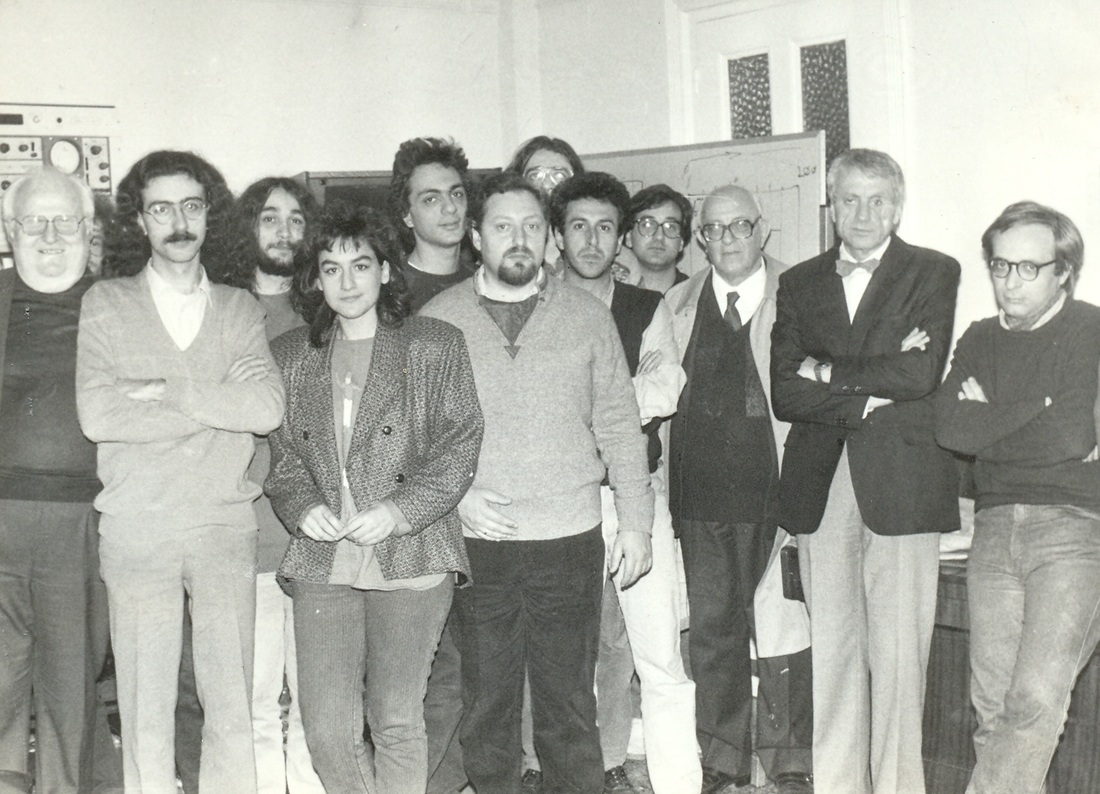
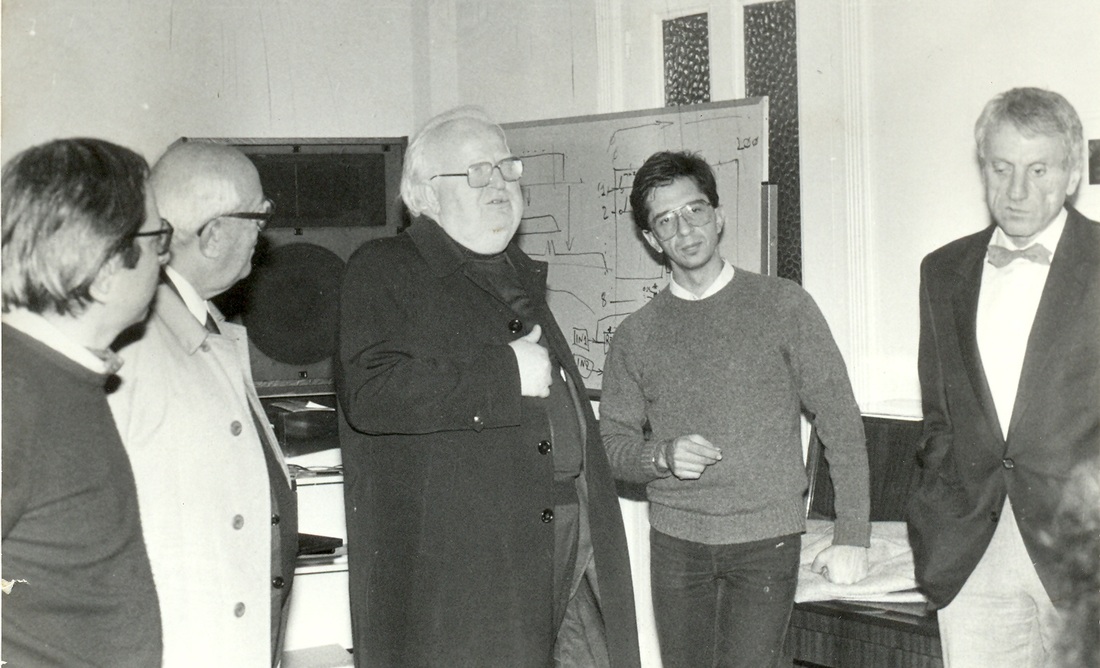
By the mid-2000s CMRC premises functioned primarily as a meeting place where electronic musicians, composers, and improvisers of different generations got to hang out and share knowledge, ideas, and sounds. Around that time, the younger artists drawn to the centre came from diverse backgrounds. Composers like Nicoleta Chatzopoulou, Yiorgis Sakellariou, and Marinos Koutsomichalis are equally connected with underground music scenes and formal music education. Listening sessions and discussions, and several (small scale) electronic music concerts were organised. In the 2000s a very large effort to digitise all the tape recordings in the CMRC archive was completed. This was a very long and arduous endeavour, but also one with significant impact.
This smaller scale of activity allowed also for a communal music endeavour to come into being with many of the affiliated artists collaborating as a loose unit with the name KSYMEnsemble (Costas Mantzoros, Nickos Harizanos, Nicoleta Chatzopoulou, Akis Daoutis, Petros Fragistas, and Costis Triantafyllou among others). This group effected a series of performances, operating between electronic composition and free improvisation, and often incorporating elements of poetry and film, in line with the hybrid media culture already developed by previous CMRC generations.
A Place to Share Knowledge – The Electroacoustic Studio
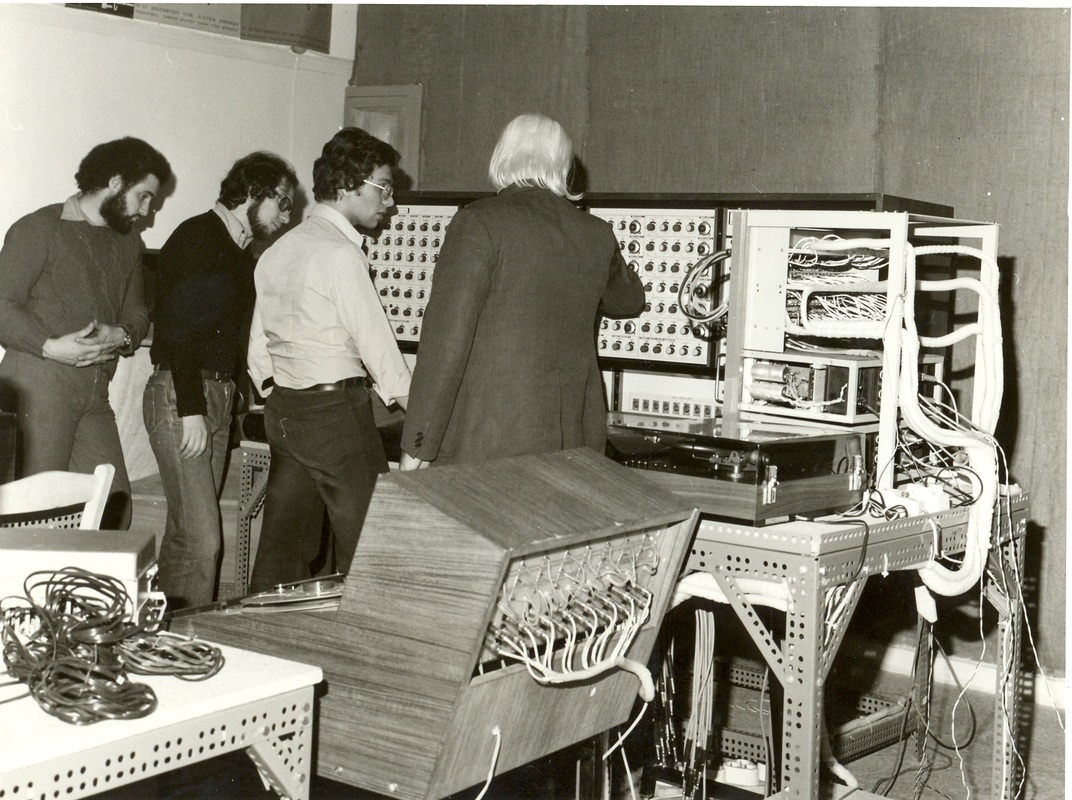
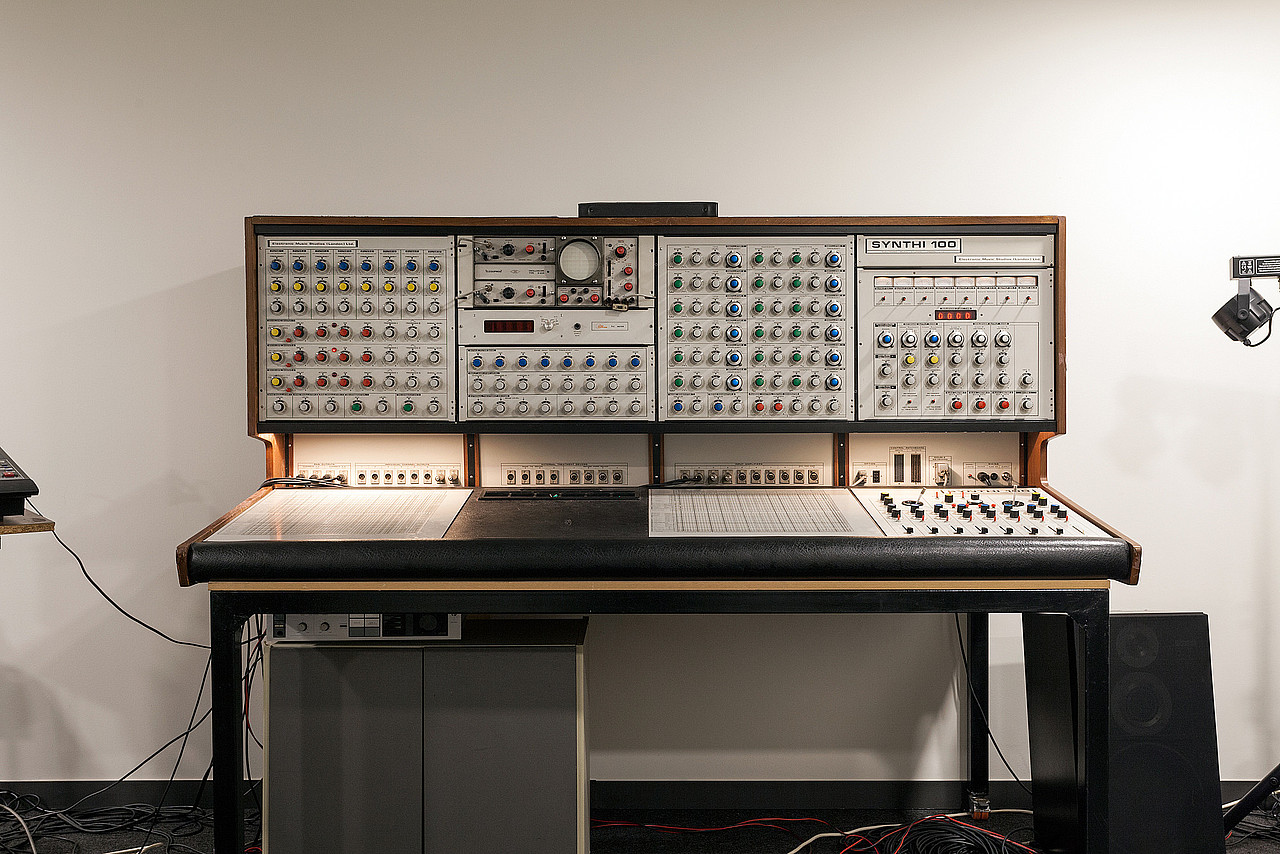
The educational aspirations at the heart of CMRC’s mission statement started coming to fruition as the centre found a permanent home in the Athenian suburb of Cholargos around 1986. Electronic electroacoustic composition at the time relied on obtaining large, heavy, and costly pieces of equipment. Several electronic instruments and music tools found their way into the basement of CMRC in Cholargos. Among them was the EMS VCS-3 synthesiser, several reel-to-reel tape recorders, Xenakis' UPIC system, and the imposing EMS Synthi 100.
UPIC is one of the first electronic instruments that employs a graphic interface allowing the composer to draw volume and pitch envelopes. It was developed by Xenakis in 1977 at the CEMAMu (the research centre he directed in Paris) and had been used by many iconic composers through the years. Although initially designed primarily as an educational tool, it proved to be a unique intuitive instrument which added a visual component to sound creation and allowed for the development of intermedia practices. The UPIC system was used extensively during the first years of the CMRC in both its intended functions as a teaching tool and as an instrument in its own right. Several pieces were created with the aid of UPIC, both by members as well as residents (Katerina Tzedaki, Spyros Faros, Akis Daoutis, Panagiotis Velianitis, Dimitris Karageorgos, Dimitirs Kamarotos, Charis Xanthoudakis). It could be argued that the existence of UPIC had an additional, more symbolic function in the CMRC, reinforcing its connection with Iannis Xenakis himself, who only occasionally visited the Centre, and with Xenakis’ research centre in Paris. Even though by the mid-1990s the UPIC had stopped functioning and is since on display as a historical item, the connection with Paris’ Centre Iannis Xenakis (CIX), as it is currently called, is still very much alive to this day.
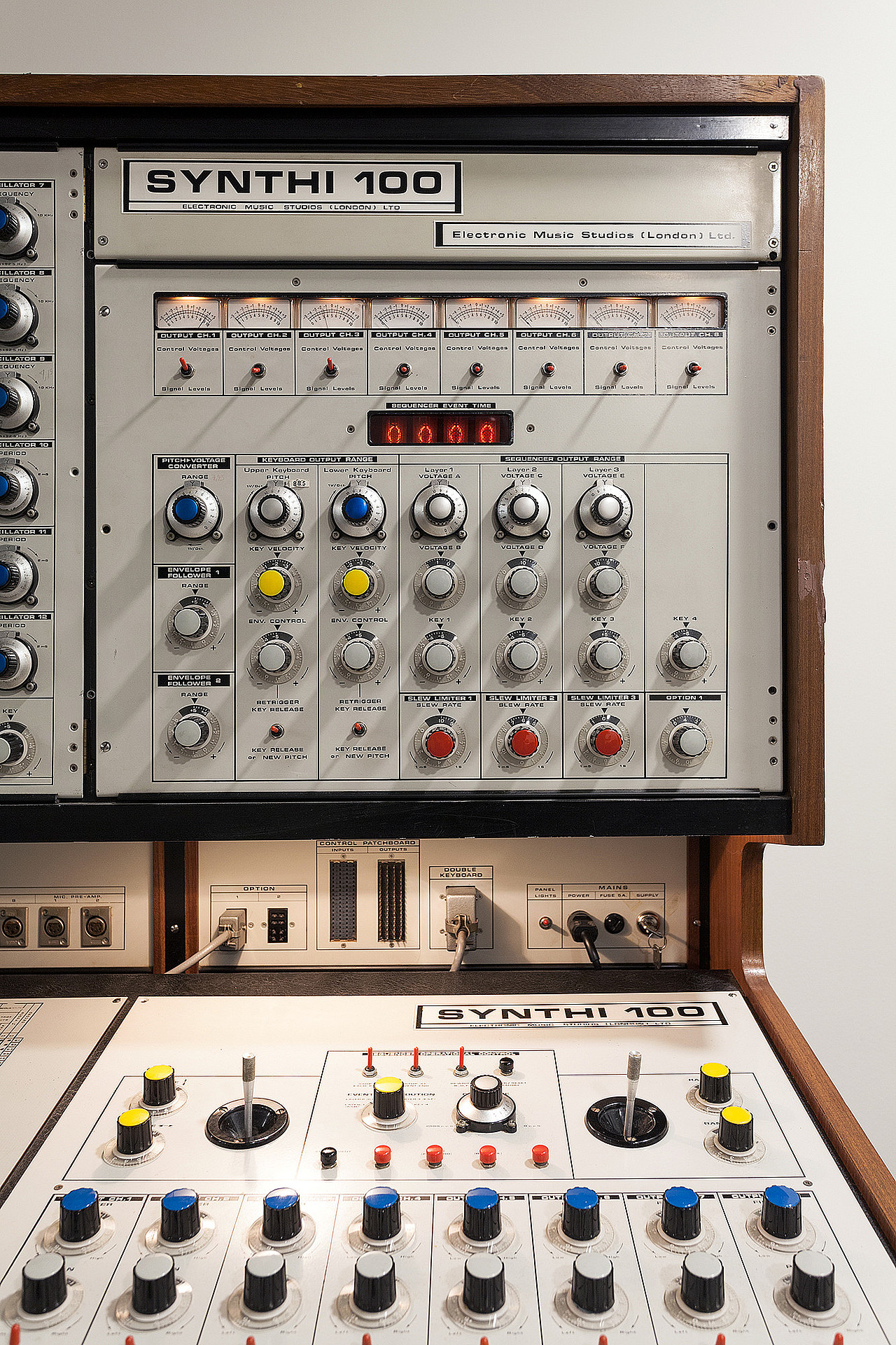
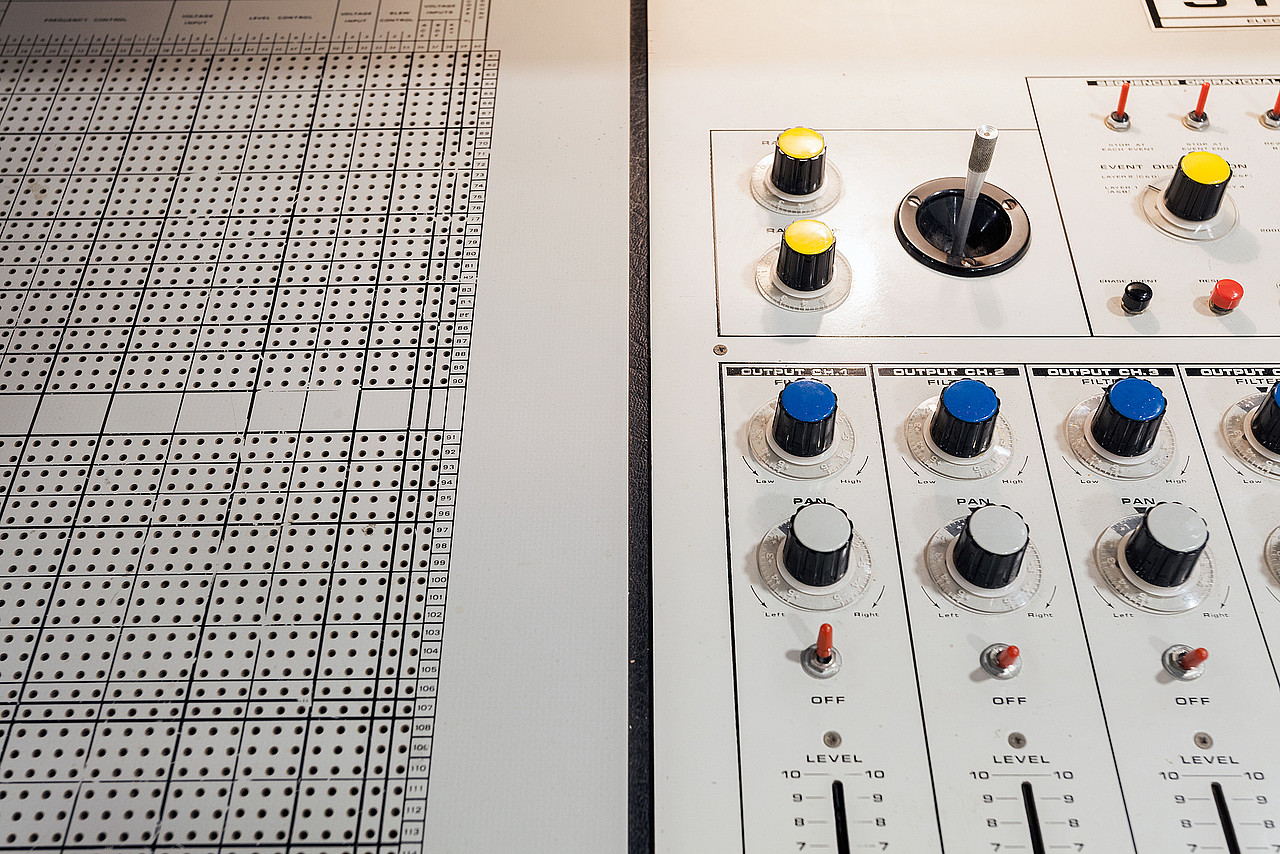
Another instrument, the Synthi100, has an intimidating presence. A digital / analogue hybrid synthesiser, it was EMS’s largest model intended to function as a complete stand-alone production studio. Procured at some point in the 1970s and used briefly in the first years of CMRC, it subsequently fell into disuse and disrepair. In 2016-17 it was repaired as part of a collaborative project between the CMRC and the Documenta 14 exhibition, which took place in Athens. The whole project was coordinated by Marinos Koutsomichalis and culminated in a residency with four musicians that premiered original works using the Synthi100 (Panos Alexiadis, Lisa Stenberg, Jonas Broberg, and Koutsomichalis himself) at the Megaron Concert Hall in Athens. Koutsomichalis recalls how the aspiration behind the refurbishment of the instrument was twofold, to revitalise CMRC activities with artist residencies organised around the Synthi100 and »to really make the most of this unique underused piece of equipment as an instrument in its own right, not just as a sample source.« Since its restoration many international artists have had the opportunity to work with the instrument and record new music as part of an ongoing residency in the new studio at the Athens Conservatory (Anna Zaradny, Zoe Efstathiou Stelios Giannoulakis, Jørgen Teller and Egil Kalman among them). Composer Paul Pignon, who co-designed the Synthi100, visited the CMRC in person and coordinated a workshop/performance in 2019.
Access to compositional tools like these was very rare in the 1980s and 1990s and made the Centre really stand out in Greece. For many young artists and composers during this period the CMRC became the point of entry into the practical aspects of electronic music composition. Sharing technical and compositional knowledge became reality as several pieces of equipment became available to composers that wanted to explore new sounds and techniques. Vassiliadis, Xanthoudakis, Kamarotos, Velianitis, and Karageorgos shared their knowledge and helped interested artists to familiarise themselves with the fundamental functions of this equipment following the example of established electronic music studios of the time, such as IRCAM in France. Stelios Giannoulakis and Nickos Charizanos, who teach and coordinate the current seminar on Electroacoustic Music Creation at CMRC, have a long history with the centre and have been involved in different capacities since the 1990s either as students, members, or teachers. Nickos Charizanos remembers how during those days many different classes were happening at the same time, and all the rooms were full of people working all day on different pieces of equipment.
The diversity of classes on offer throughout the years make the CMRC unique as they extend far beyond education in the purely technical aspects of electronic music-making. Among the more notable educational initiatives was the state-subsidised three-year programme »Chroai« that focused on the use of new technologies to document and archive traditional music and oral traditions. The composer and academic Katerina Tzedaki is among this programme's alumni. The research of Greek folk and Byzantine music traditions was a big part of the CMRC agenda, not only as archiving practice but also as a part of contemporary musical thinking in dialogue with avant-garde practices. Lykourgos Angelopoulos, who was head of CMRC in the 2010s, was a chanter of Byzantine hymns that had also collaborated with the composer Michael Adamis.
Cross-pollination between the centre’s wide array of approaches and subjects was encouraged. Classes on psychoacoustics, choral singing, notation, inter-media, composition, eastern music, and improvisation were on offer and temporary communities of people from diverse backgrounds were formed around the exchange of ideas. These diverse subjects were often taught by people visiting from abroad and the mode of instruction, whether intentionally or not, encouraged a less systematic view of contemporary music, open to different ways of communicating knowledge. An example of this less formal approach was a series of seminars by Papaioannou in the early 1990s, where he played piano works in their entirety, interspersed with his own musicological comments and formal analysis of the pieces. Improviser & music education philosopher Panagiotis Kanellopoulos recounts how powerfully different this educational experience felt at the time.
After a long period of relative inactivity since the late 1990s, the CMRCs educational activity was revived around 2012 when media artist Marinos Koutsomichalis began a series of lectures on composition touching on themes of aesthetics, philosophy, and creative coding. These gradually became known as KSYMEclass and ran until 2017-18. During this final year, the seminars were co-taught with Akis Sinos and Stratos Bichakis, attracting a wide and varied group of younger generation practitioners. With CMRC’s official relocation to the Athens Conservatory in 2018 Nickos Harizanos and Stelios Giannoulakis were appointed as the new course leaders and the seminar was re-launched with its current format and title, »Electroacoustic Music Creation.«
Reflecting on the current iteration of the electroacoustic composition classes at CMRC, Giannoulakis and Harizanos consider the present moment and the different challenges it poses. As access to cheap music-making software and hardware has become very easy, »working with an instrument like Synthi100 offers an insight into how early electronic composition worked in practice and can unlock creativity by the limitations it imposes on the composer.« Also, the notions of structure and musicality keep coming up as necessary tools for young composers from less formal musical backgrounds.
The CMRC acted as an essential springboard for avant-garde electronic music in Greece in the 1980s and 1990s. Many important composers, educators, musicians, and researchers found their footing there and moved on to several different directions. Importantly, it is also an institution that encouraged mixing different artistic media, finding in-between spaces, and sharing practices. Interestingly, even though the beginning of the institution was decidedly in line with »high art« music, a great sense of openness during the centre’s course allowed for the formation of connections with underground scenes and for a distinct and unapologetically weird aesthetic space that sits comfortably between the avant-garde and the underground.
In its current form the CMRC functions primarily as the electronic music department of the Athens Conservatory giving the opportunity to a new generation of musicians and artists to connect with electroacoustic music practices. A tension between tradition and progress, technical innovation and experimentation, remains at the core of this centre’s long course, encouraging and tempting a diverse body of local and international practitioners, researchers, and curious listeners to join its journey.
Bibliography
Danae Stefanou, »Beyond the Stave: Performance Indeterminacy and the Limits of Greek Musical Experimentalism« in Ε. Mantzourani, P. Vouvaris and C. Tsougras (eds.), Perspectives on Greek Musical Modernism (London and New York: Routledge, [2017] forthcoming.
Ioannis Tsagkarakis, »The politics of culture: historical moments in Greek musical modernism«, Doctoral dissertation, Royal Holloway University of London, 2013.
Solomos Makis, Ιαννης Ξενάκης, Το σύμπαν ενός ιδιότυπου δημιουργού, Αλεξάνδρεια, 2008.
Trousas Fontas, »O μεγάλος και άγνωστος συνθέτης της ηλεκτρονικής πρωτοπορίας Στέφανος Βασιλειάδης«, 2.10.2017, https://www.lifo.gr/.
Trousas Fontas, »Γιάννης Γ. Παπαϊωάννου, ένα πολύτεχνο όραμα, που έγινε πράξη μέσα από τις Ελληνικές Εβδομάδες Σύγχρονης Μουσικής« 15.10.2018, https://diskoryxeion.blogspot.com.
Ioannis Kotsonis is a sound artist, electronic music producer, and educator based in Athens, Greece. Active as an independent workshop, residency, and concert coordinator since 2009 he currently teaches Sound at the postgraduate programme of the University of Piraeus and is a researcher at ERC MUTE – Soundscapes of TraA pruma. He produces and hosts several podcasts and radio shows and has released music as Sister Overdrive and under his own name. He is part of the experimental intermedia duo, acte vide.
This text was commissioned as part of Chronotopia, an initiative by Goethe-Institut Athen, Athens & Epidaurus Festival, and CTM Festival.
With special thanks from Ioannis Kotsonis to Stelios Giannoulakis (composer, educator), Nickos Harizanos (composer, educator), Marinos Koutsomichalis (artist, lecturer), Panagiotis Kanellopoulos (professor of music education) – all personal friends involved in CMRC activities in different capacities, who agreed to hold extensive interviews and discussions that greatly shaped the contents of this text.