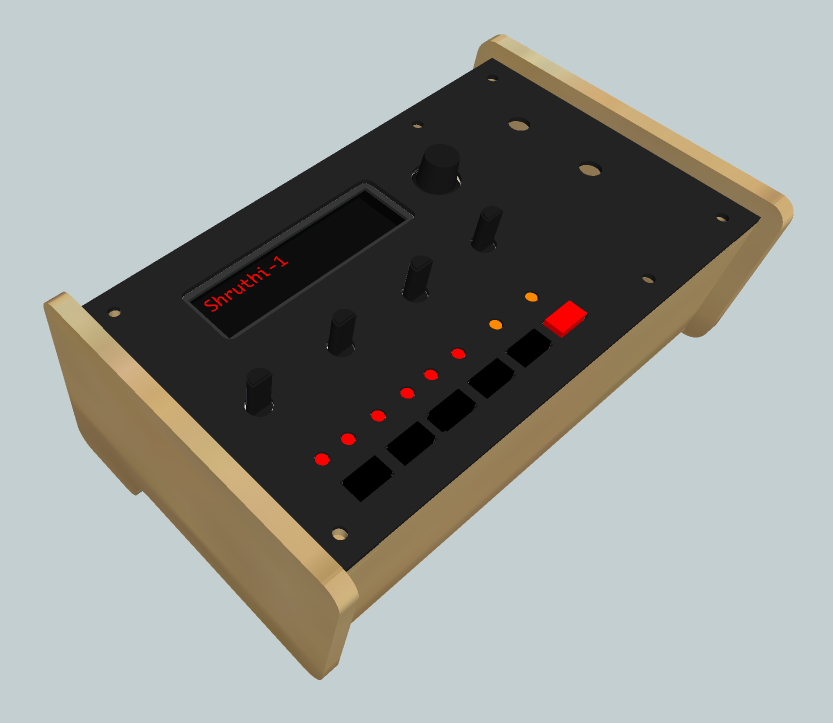
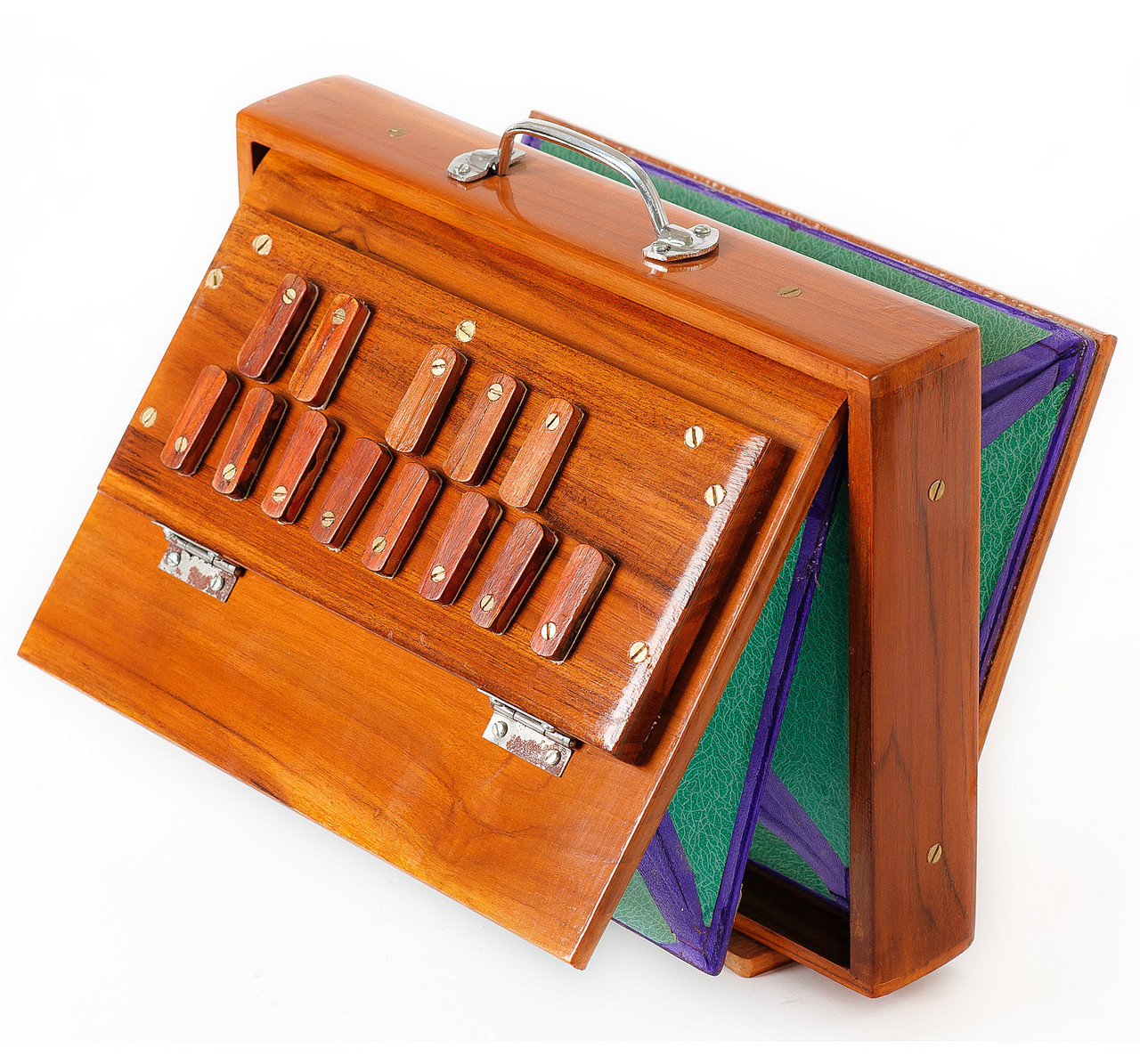
A recent packaged-for-Walmart double CD compilation called Roots of Drone confirmed what I already suspected: that in the last decade or two, drone has become a musical genre, complete with labels like Kranky, Tri Angle, or Important, who all focus on the many iterations of drone. This may seem odd since, after all, a drone is basically a tone (or set of tones) that is sustained over time. For a lot of people, a drone wouldn’t even be called music, just an irritating noise, like the buzzing of a refrigerator, the hum of traffic, the sound of bees in a hive. For others, it is OMMMM, the sound of the universe in Hindu cosmology, or, put in the language of modern physics, an expression of the fact that everything vibrates, everything is a wave. In a consumer marketplace driven by a craving for endless but often trivial kinds of novelty, making the same sound for a long time is a powerful gesture of refusal. Even so, there’s now drone rock, drone metal, drone-based techno, drone within the classical tradition, drone-folk, not to mention a variety of apps like SrutiBox and Droneo that can generate drones on your mobile phone or iPad. And today the varieties of drone are also a part of the drone of the global marketplace.
A drone is simply a sustained set of tones. While drones can be located in the history of music everywhere from the tambura led sound of Indian classical music to the prelude to Wagner’s »Das Rheingold,« drones became important cultural artefacts in their own right in the early 1960s. Whether or not La Monte Young really created the first drone-based musics, he and the circle of people around him articulated a new way of thinking about them. Young contrasted his work to that of John Cage, which can be said to be truly phenomenological, in the sense that it is concerned with the way that sound appears to a particular subject in space and time. In contrast to the »silence« of »4’33”,« Young’s drones fill space and time. They are intensely repetitive, they emphasise a quality of sameness which bifurcates into an experience of difference that is the repetition of the same; in Young’s formula »tuning is a function of time...« meaning that as one tunes into particular groups of frequencies within a particular drone sound, further levels of frequency become audible, as well as a sameness that in some sense is »always there« whether the drone is being played or not. In this sense one could argue that drones represent a structural response to the Cagean phenomenology of sound. This is particularly true when the production of drones is formulated from within a mathematical paradigm of just intonation; in other words, that only frequencies that obey certain rules that are in accordance with the natural harmonics of sound are used for the composition of drones. A drone is a mathematical structure enacted within a particular space by a particular sound-making apparatus, whether musicians or machines.
In a consumer marketplace driven by a craving for endless but often trivial kinds of novelty, making the same sound for a long time is a powerful gesture of refusal.
This picture becomes further complicated by French musicologist Alain Danielou’s work on tuning systems in traditional cultures, which Young and Tony Conrad read in the early 1960s. The upshot of this work is, first of all, that just intonation scales (i.e. scales that can be described using ratios of whole numbers) form the basis of many traditional musics. Furthermore, particular permutations of particular just intonation scales are associated with particular kinds of affect. Thus Hindustani raga music associates each raga, which is a combination of a particular scale, with a particular set of rules for movement around the scale, with a particular mood or feeling. A great raga performance evokes this feeling, which Pandit Pran Nath – mentor of Young, Catherine Christer Hennix, Charlemagne Palestine, and other minimalists – described as a »living spirit« that possesses those who listen to it. This adds important dimensions to the structural nature of just intonation-based musics, since it effectively makes the argument that particular kinds of affect or feeling can be described as particular sound forms that can be mathematically described. In other words, there is a mathematical structure to feeling. In performance, a raga pulls you into its sound world; it evokes a yearning which could be described as the feeling that the sound and mood elicited by the raga are more real than the apparently real world that exists outside of the performance.
But this then raises further questions, which in fact Young, Conrad, and others including Hennix, who worked with drones, did ask, and which formed the basis of their work. If traditional musics can be defined in terms of a mathematics of affect, and the basis of those mathematics is the extrapolation of musical scales based on ratios of whole numbers, to what degree does that offer not only a description of traditional musics, but the possibility of an experimental music, based on hitherto unheard-of scales and pitch combinations? Composers such as Hennix, Radigue, and Palestine have explored many of the possibilities of such a music, often by connecting religious traditions, whether Tibetan Buddhism for Radigue, or medieval Christian church organs for Palestine, with modernist techniques of improvisation. The drone, like drugs or eroticism, cannot be easily assimilated to one side of the divide by which modernism or the avant-garde has tried to separate itself from the world of tradition. Like psychedelics, the drone, rising out of the very heart of the modern and its world of machines, mathematics, chemistry, and so on, beckons us neither forward nor backward, but sideways, into an open field of activity that is always in dialogue with »archaic« or traditional cultures. This is an open field of shared goals and a multiplicity of experimental techniques, rather than the assumed superiority of the musicologist or the naïve poaching of the sampler posse.
There is no necessary connection between just intonation tuning systems and drone music, however. Phill Niblock has been composing and performing drones for decades. Although he is deeply interested in overtones, especially the increasingly rich and complex sets that are produced when pitch combinations are played at high volumes, he has no grand tuning theory and prefers a kind of free experimentation with pitch combinations and permutations. The Movement of People Working is his masterpiece: a collection of films of ordinary people around the world that are performing mostly physical tasks, juxtaposed with Niblock’s drones. Often multiple films are shown at once while Niblock improvises particular tone clusters. The tension between the repetitive, meditative everyday movements of bodies, often seen close-up, and the surging, ocean-deep sound is enigmatic, going against the often Orientalist spirituality associated with drones, yet still evoking a profound sense of mystery concerning what work, time, and the body are. Niblock’s work is a reminder of the synaesthetic quality of drones, the history of their integration into multimedia projects in which sound merges with or clashes against visual or tactile forms.
The drone, like drugs or eroticism, cannot be easily assimilated to one side of the divide by which modernism or the avant-garde has tried to separate itself from the world of tradition.
Drones probably entered the world of popular music through John Cale, who played in the Theater of Eternal Music with Young in the 1960s, and famously brought his cello drone to the Velvet Underground and rock songs like »Heroin.« Certain versions of the blues, notably the North Mississippi style associated with Mississippi Fred McDowell and more recently Fat Possum Records, involve rapid repetitions of single chords or notes that effectively form a drone. From the Velvets through krautrock favorites such as Can, to shoegazers like My Bloody Valentine, or Japanese masters like Keiji Haino, drones have been an important part of rock. Probably the heaviest rock drone can be found on Earth’s classic Earth II. The thirty-minute »Like Gold and Faceted« is pure, surging, barely contained but almost static electric power, the ur-drone or doom metal sound par excellence. Earth gave birth to monstrous progeny like Sunn O))) and Om and more recently to a whole diaspora of dronescaped rock from Robert Lowe’s ecstatic Lichens to The Haxan Cloak.
A trace of drone also runs through disco and its various permutations, beginning with the synthesised hums of Donna Summer’s »I Feel Love,« the »chicken-scratch« single chord guitar runs of James Brown’s guitarist Jimmy Nolen, and Kraftwerk’s minimalist synth excursions, feeding into electro, house, techno, and other styles. The latest intensifications of the drone-disco continuum are coming from musicians associated with labels like Los Angeles’ 100% Silk (and its elder sister label Not Not Fun) and some of the protégés of Brooklyn-based ambient noise drone master Oneohtrix Point Never, notably the amazing Laurel Halo. This music, which harkens back to Moroder and Sylvester producer Patrick Cowley, is sensual, the drone here is the drone of sexual energy, mental energy, building up to peaks, falling back, and building again. Or, like a lot of drone music, it is facilitated, both for performer and listener, by the use of various psychoactive substances that facilitate states of sustained attention and/or pleasure while moving. Which is a whole topic unto itself. From Tom Wolfe’s use of the repeated colon, i.e. :::::::::::::::::::::: to indicate the tripping mind in The Electric Kool-Aid Acid Test, to Coil’s marvelous 1998 side project Time Machines, in which dark, glowing drones are given the names of a variety of psychoactive substances, drones have been used to indicate the hum of psychedelic-revealed Being. One could also track a productive grey zone between noise and drone running throughout the history of industrial music, from Throbbing Gristle and Coil to the bass heavy 1990s techno sounds of Pan Sonic and Basic Channel (whose Mika Vainio and Porter Ricks will be performing at CTM), on to today’s generation of experimental techno artists such as Samuel Kerridge, Holly Herndon, and Russell Haswell, the industrial death noise of Pharmakon, or the queer hauntological sounds of Cyclobe.
It’s intriguing to see that musicians such as Heatsick are drawing connections between the various traditions of drone music and speculative philosophers such as Timothy Morton. If speculative philosophy’s origins can be found in the limits of the linguistic or discursive turn, sound and music obviously arise as matters that are poorly rendered in and as language. Furthermore, in the shift from musicology to sound studies, and from the musical to the sonic, one quickly reaches the limit of correlationism: a world of sounds, frequencies, vibrations that are there, but not necessarily there for us. Having said that, and being wary of claims of being able to leave the correlationist circle, I wonder whether the charm and power of music don’t already and in general consist in the fact that music is simultaneously inside and outside the correlationist circle. And in answering the question of what is the specific power of music, to say that music opens us up onto a vibrational exteriority, a »great outdoors,« an excess or non-knowledge. Indeed, Bataille’s term is useful: non-knowledge is that aspect of the world that cannot be correlated with our knowledge of the world but which nonetheless is decisive for us. Non-knowledge can be the object of a practice that plays with, resonates with that object without knowing it. Music, in this sense, accesses or allows us to access the great outdoors. The drone of the great outdoors could be terrifying, the sound of doom, or ecstatic, as presented in more ambient, minimal, or new age sonic ventures. Analogies with the inhuman, the alien, and the Other abound, as do those of a monstrous imperturbable sameness, always there, always inassimilable. Or is that just the unending drone of global capitalism?
...drones are a great example of what Timothy Morton has called »hyperobjects,« »objects« so vast that we can never perceive them fully, but whose vastness is nonetheless evident to us when we are immersed in one.
How does music connect to the great outdoors? Perhaps here one should speak of Badiou’s hypothesis of a mathematical ontology, and then, noting the relationship of mathematics and music stretching back to Pythagoras and beyond, to observe the connections between a mathematical ontology, a vibrational ontology, and a sonic or even musical ontology. This is in fact the claim that La Monte Young made for his own music, which he called »meta music« in the 1960s – a claim grounded simultaneously in the notion of the syllable »Om« as the sound of the universe, and contemporary physical models of the universe as a wave or vibration. This was also seen in Hennix’s recent work on the Hubble frequency, which she defines as »the lowest possible frequency the universe can sustain at any future time« (Rag Infinity pamphlet). Works of long duration bring up the question of ancestrality. Hennix wrote of her own pieces that they should not be understood as having a beginning and end corresponding to the moment of performance, but that their performance is without end, and is merely suspended or become inaudible at certain moments. In this sense, drones are a great example of what Timothy Morton has called »hyperobjects,« »objects« so vast that we can never perceive them fully, but whose vastness is nonetheless evident to us when we are immersed in one. Which is perhaps another way of saying that a drone is an environment, and that for composers like Niblock, the space in which a drone is played is an important aspect of composition, improvisation, and performance.
A press release from NASA dated 9 September 20031 announces that Astronomers from »NASA’s Chandra X-ray Observatory detected sound waves, for the first time, from a supermassive black hole. The ›note‹ is the deepest ever detected from any object in our Universe...The black hole resides in the Perseus cluster of galaxies located 250 million light years from Earth. In 2002, astronomers obtained a deep Chandra observation that shows ripples in the gas filling the cluster. These ripples are evidence for sound waves that have traveled hundreds of thousands of light years away from the cluster’s central black hole. In musical terms, the pitch of the sound generated by the black hole translates into the note of B flat. But, a human would have no chance of hearing this cosmic performance because the note is 57 octaves lower than middle-C...At a frequency over a million billion times deeper than the limits of human hearing, this is the deepest note ever detected from an object in the Universe.« What does such a drone do? Given that sonic vibrations generate heat, the sound waves emanating from the Perseus black hole potentially contain »the combined energy from 100 million supernovas«, enough, astrophysicists believe, to stop the gaseous matter around black holes from cooling and forming stars. It is thought that this sound wave has »remained roughly constant for about 2.5 billion years.«
Marcus Boon is a writer and Professor of English at York University in Toronto, where he teaches contemporary literature and cultural theory. He writes about music for The Wire and Boing Boing. He is the author of The Road of Excess: A History of Writers on Drugs and In Praise of Copying, both from Harvard University Press. He is currently editing a book of conversations with Berlin-based composer Catherine Christer Hennix, and a manuscript entitled The Politics of Vibration.
This text was originally published in CTM Magazine 2014 – Dis Continuity.
- 1
NASA News from 9 September 2003: »Chandra ›Hears‹ A Black Hole.«
CTM 2015: Between Love and Violence: The Politics of Vibration. Lecture by Marcus Boon by CTM Festival
CTM 2015: Between Love and Violence: The Politics of Vibration. Lecture by Marcus Boon by CTM Festival