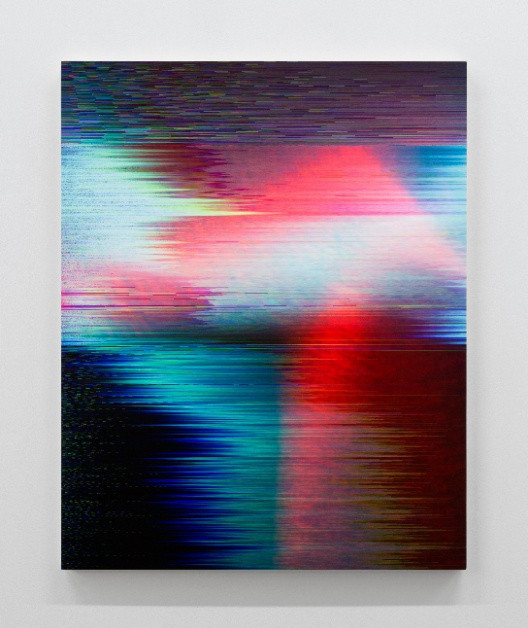
iPhone ringtones have been transformed into glitchy fevers. Even widespread musical genres such as dance music are not immune; in his recent album, Blaster (PAN, 2014), Hoff distills beats composed from 808 drum-machine samples down to their source codes and exposes them to a range of viruses, effectively mutating the genre’s DNA to produce a different musical animal. For his virus paintings, he has infected the file types of monochromatic digital images, producing stunning corrupted images that then get transferred to aluminum or canvas.
While »tuning« refers to the optimisation of systems – with all components interacting in effective harmony – »untuning« addresses the at times destructive, at times liberating effects of disorderly, messy operations. In this sense the agency of malware and viruses, as adopted by Hoff, can be seen through the lens of untuning, breaking up the language of code from within and corrupting its operational performance to produce unexpected artefacts.
The artist’s interest in a world that is filled with code is mirrored in his general fascination with texts, as seen through his co-founding of the Primary Information publishing house as well as his own publications, which are conceived as parasitised »carrying devices.« Hidden within copies his book, Everybody’s Pixellated, for instance, were digital memory cards carrying three gigabytes of hacked code.
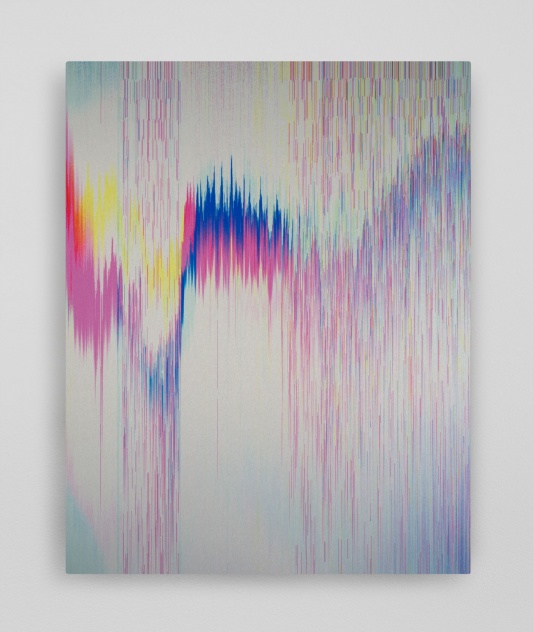
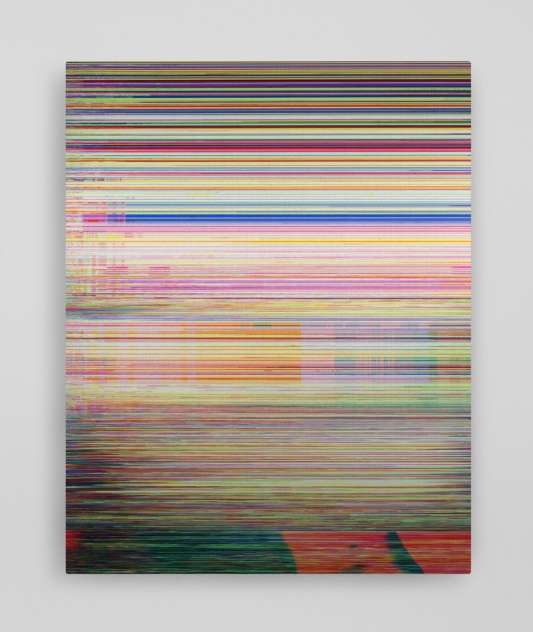
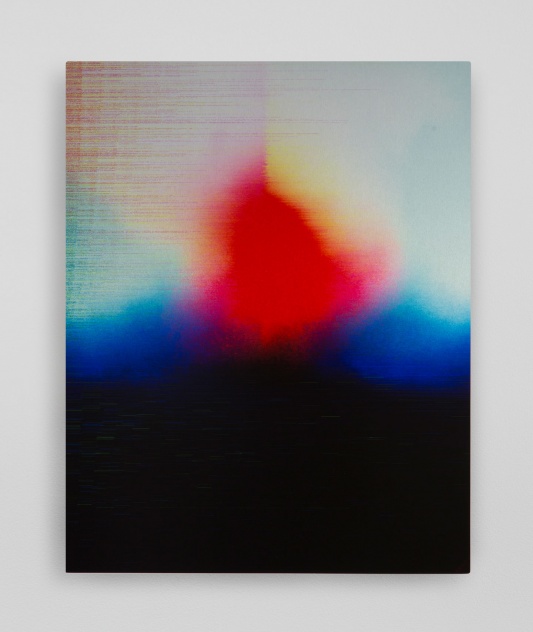
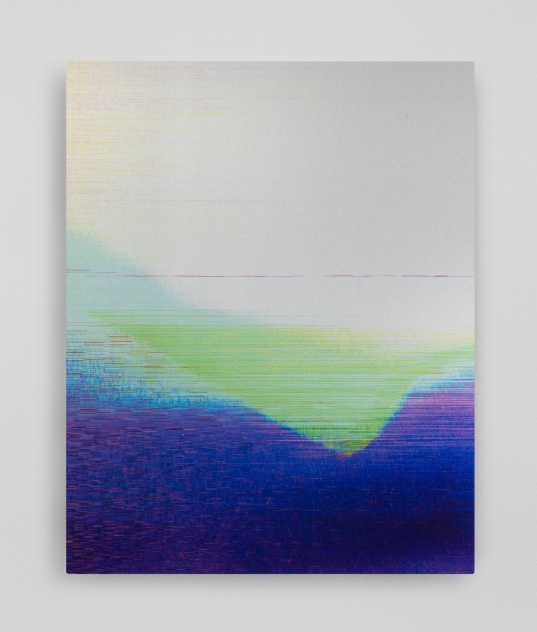
In Hoff’s world no host medium is safe...
Title from an interview with James Hoff by Eli Keszler for Bomb Magazine, No. 129, Fall 2014.
This text was originally published in CTM Magazine 2015 – Un Tune.