»Popular music can be seen as a catalyst for different truths« (Sheila Whiteley and Jennifer Rycenga, Queering the Popular Pitch).1
»Some will say that all we have are the pleasures of this moment, but we must never settle for that minimal transport; we must dream and enact new and better pleasures, other ways of being in the world, and ultimately new worlds« (José Esteban Muñoz, Cruising Utopia).2
How do you respond to a year such as the one we’ve just lived through? Horror, shock, anxiety, and despair are feelings that have become all too familiar. Threats such as rising inequality and increasing anxiety levels multiply, whilst power disparities and social divisions expand. Perils mutate, becoming sophisticated to the point that many of us struggle to grasp their newest iterations. So then, how does music evolve to respond to it? What is the potential of music in these tumultuous times?
»Music is the site where the major symptoms of cultural malaise can be detected;«3 this has long been the case, of course. But beyond detecting symptoms, it’s also long been a vehicle for action, helping us cope, rehabilitate, and even retaliate. To state its ability to provide relief and respite is surely redundant, and beyond that, the weaponisation of music is also nothing new. But as threats mutate, how can music and sound continue to be deployed effectively?
Different musics today not only exhibit symptoms of the current political climate (be they rage, despair, hope, or disgust) but importantly, in concert with one another, they do more than just this. The most recent symptoms of tumult we know all too well, having digested tales across news cycles, social media feeds, and, even still, real-life conversations, and these waves of information often lead to fatigue. For many, this year has been accompanied by despair, and for many, it has been difficult to think of or make art. Thankfully, many persevere, proffering sounds to rustle us out of apathy, providing us with outlets, paths, and communities. These varied sounds insist on a myriad of ways to articulate critique, and to actively disrupt stifling structures and conventions. We must still insist on music to offer much-needed rest, mind-numbing relief, and remedy for our ills, to provoke intense discomfort, articulate discontent, protest injustices, and formulate new futures.
***
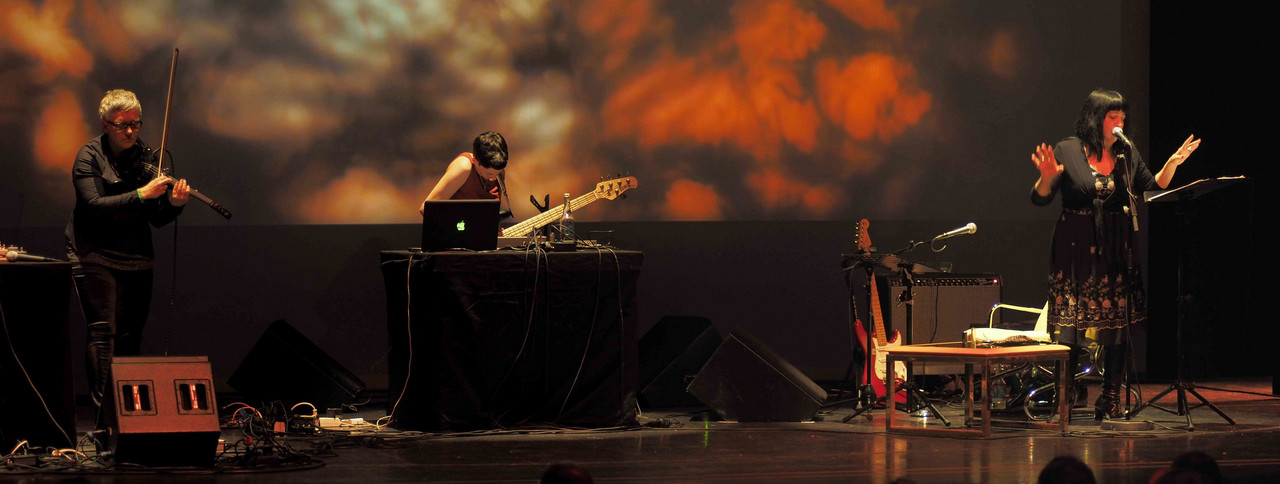
»Art is the salve to the universal wound,« Lydia Lunch tells me. She describes her work as always having »been about rising above whatever has tortured you.« The seminal post-punk figure and founding member of Teenage Jesus and the Jerks needs little introduction. Since the heyday of post-punk, Lunch has become active in self-empowerment work and is also now part of a trio of singular musicians known as Medusa’s Bed. She says of her music that »in all its varied forms, [it] has always been about turmoil, frustration, and anger at the status quo.« All this meets »fury at patriarchal politics and the imbalance of power.« She harnesses the »ability of art and music to rise above the bullshit,« to provide relief and respite, however brief.
Zahra Mani, also of Medusa’s Bed, says that »[d]ark, unsettling music can make people uncomfortable,« adding that it may also work at »psychoacoustic levels of communicating things that are hard to formulate in language alone.« This sentiment is also expressed by bandmate Mia Zabelka: »[w]e don’t want to play happy sounds that lull an audience or fool them. We want to shake listeners up, disturb them and play sounds that get beneath the skin – no surface-level massages. Music needs to move something deep inside listeners. That sometimes might hurt, but only then is positive change possible.« A confrontational approach may be therapeutic, if music can catalyse special emotions. Dark »words and sounds,« in the words of Mani, may »draw audiences into an uncomfortable space that still feels intimate. This discrepancy isn’t a contradiction.
»We are creative protagonists who proffer an alternative to turmoil. Though we embrace turbulence, we also harness it as an energy that propels us towards change and empowerment…art is a salve, but also a mirror. Brutality and beauty, hope, and despair are all part of a continuum, not opposites.«
Art is the salve to the universal wound
Also embracing the multiplicitous ways in which sound may function is Cevdet Erek, the Turkish drummer who was a part of thrash metal band Nekropsi. He recently represented Turkey at the Venice Biennale and also released his debut LP, Davul, on Subtext. Davul is an album built up from the continuous beat of a traditional drum, which he likens to a form of »short-term soul support.« Meanwhile, Erek’s piece for the Turkish pavilion at the 2017 Biennale was titled ÇIN, taking its name from »the root from which the Turkish word ›çınlama‹ is derived. It means both tinnitus (ear ringing) and reverberation.« In a time plagued by fatigue and burn-out, Erek rightly posits that »[t]he cost of listening to the continuous, aggressive, and carefully-engineered rhythmic noise of turmoil that is propagated by mass media and other sources results in a continuous (but not always felt) tinnitus – perhaps not always in the ears.«
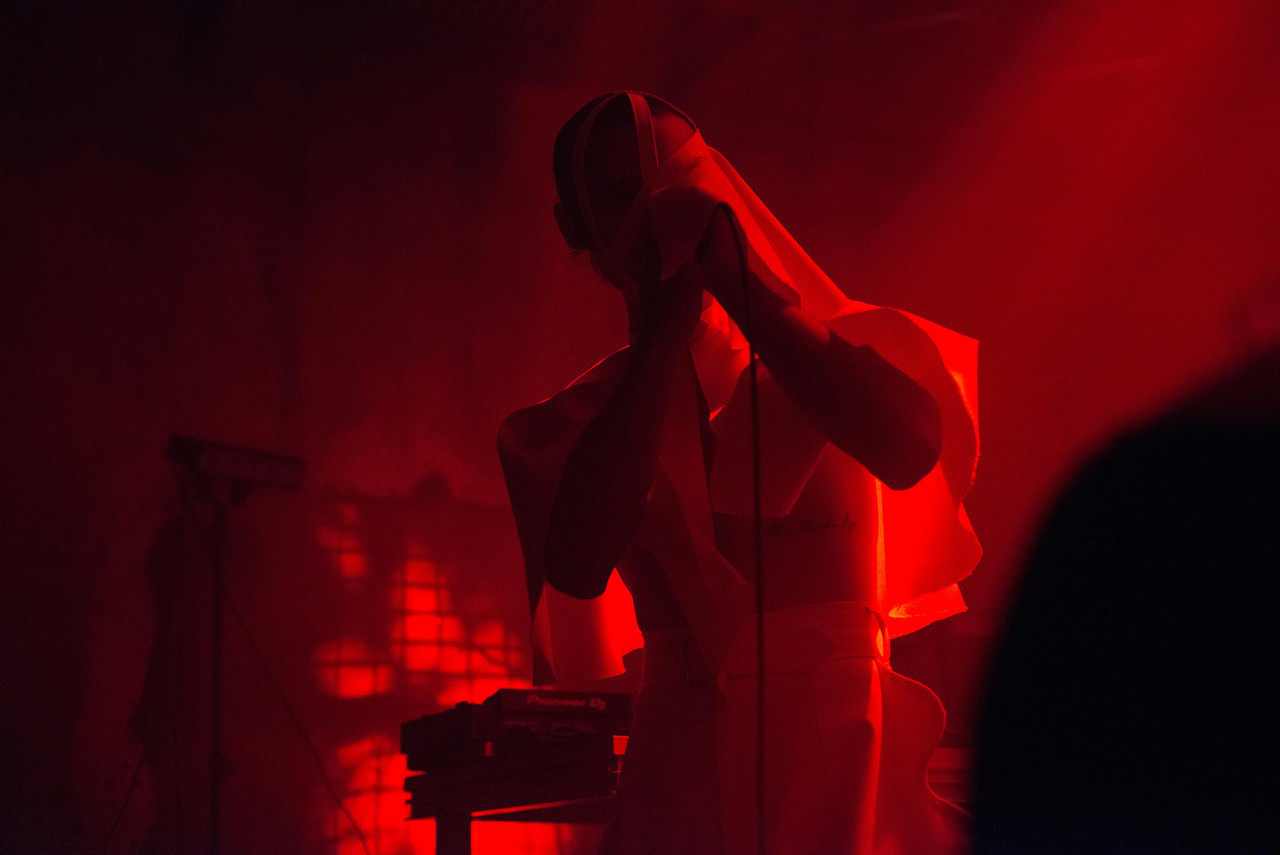
And of course, there can be other costs to listening. The sounds of VIOLENCE, or Olin Caprison, catalyse a range of reactions. Caprison describes their music as »strange… a lot of people find it far too confrontational or painful to listen to – or even stressful.« The artist’s recent release, Human Dust to Fertilize the Impotent Garden, came out on New York’s PTP — or Purple Tape Pedigree – a collective and label who describe themselves as »purveyors of weaponised media and information.«
VIOLENCE’s music prompts a wide range of reactions: »I perform at many different kinds of venues: biker venues, concert halls, rock shows, queer spaces. Sometimes, audience members leave, they try to harass me or make fun of the people that are there in support of me, but at the same time, I get the inverse reaction. I get people that would seemingly hate each other coming together, coming up to me and telling me how I affected them, how I changed their perspective.«
Caprison maintains that »the artist’s role is to inspire people to move, to get up and fight… there is art that is hopeful about the future, and art that drudges in the misery of the now… they are both necessary to create what is to come.«
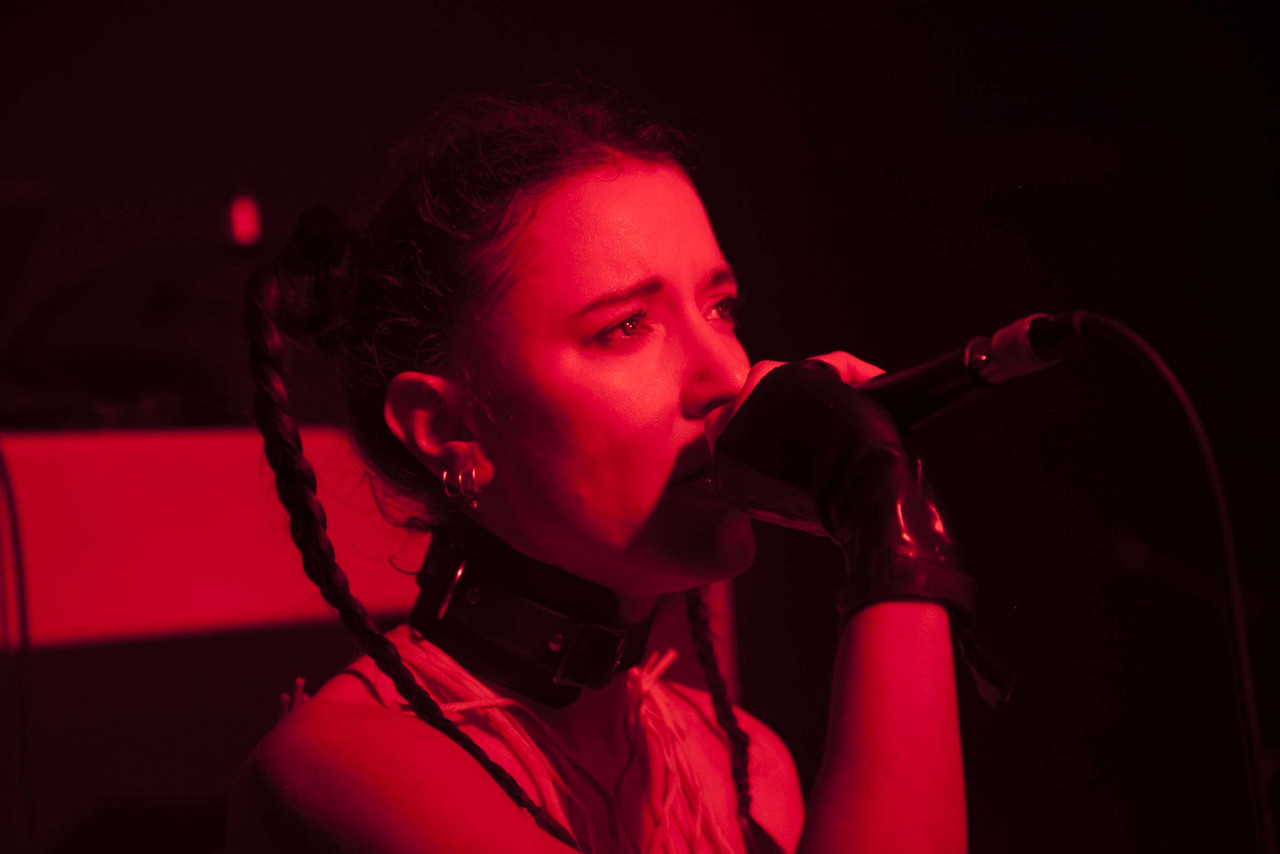
While they might not describe their work as »hopeful,« acerbic noise duo NAKED are motivated by the thought of catalysing movement. Though sceptical of the word »hope,« Agnes Gryczkowska and Alexander Johnston focus more on sparking energy through their work. Their most recent EP, Total Power Exchange, released via Halcyon Veil, examines the pathology of power as well as its potential uses and abuses. The duo found themselves feeling increasingly agitated and anxious in today’s political climate, with these emotions exacerbated to a point where something needed to be done. In Alexander Johnston’s words, »we didn’t want to just criticise, we wanted the release to be more empowering than that… I think when you listen to the tracks, sure, there will be people who just don’t like them, but there hasn’t been anyone who has found it to be devoid of energy. That positive element, to me, is empowering.«
Total Power Exchange is full of blistering textures, saturated with gritty distortion and visceral, bodily sounds. The release is energising, battering, frantic, and raw. »Spit,« the second track off the album, is intensely affective, comprised of the sounds of Gryczkowska vomiting national anthems, and is uncompromising in its searing indictment of the strains of nationalism that plague today. Of the release, Agnes says, »we wanted to create something catalytic, that makes you go for it. There’s no moment of hesitation. Action becomes like an instinct.«
In a few frantic moments during NAKED’s intense performances, we might find a split from a broadly isolating, individualistic society. The duo hope to create something that draws people into a space together, to orchestrate a »physical experience that’s all about the collective. Energy flowing between us as makers and performers to the audience – that embodies everything that’s happening politically out there.
»We played this small gig at Vogue Fabrics at a friend’s launch, and it was really insane – it was full of angsty young people just going for it. Sure, it’s dark and gothy as fuck and it’s depressing, but it’s such a mirror of what’s happening socially and politically. In that moment, it becomes this sheer physical thing.« NAKED pursue affect as a means of uniting people. Transcending language and individual experience to choreograph a collective one, they unite unrest and discontent, mobilising it in a way through which we can glimpse a kind of collectivity, if only for a moment.
»Flow 1 (Naci Tepedelen Remix)« from Cevdet Erek's <em>Davul</em>
»Flow 1 (Naci Tepedelen Remix)« from Cevdet Erek's <em>Davul</em>
Affect is deeply intertwined with the socio-political.4 In the scathing sounds of NAKED, we don’t merely listen to critiques, but feel them on an affective, visceral level. At a time in which burnout is rife, this strain of »protest music« arrives in a generous dose of mind-numbing noise, to re-energise listeners. On the idea of protest music, Agnes says: »I feel like now it might be more difficult to achieve as much as you could in the past.« The two lament that protest often gets co-opted into marketing and woven tightly into neoliberalism, an idea also expressed by Caprison; »I like to believe in the idea of weaponised media and information, but it’s hard to believe it’s possible when every counter-cultural movement is co-opted.«
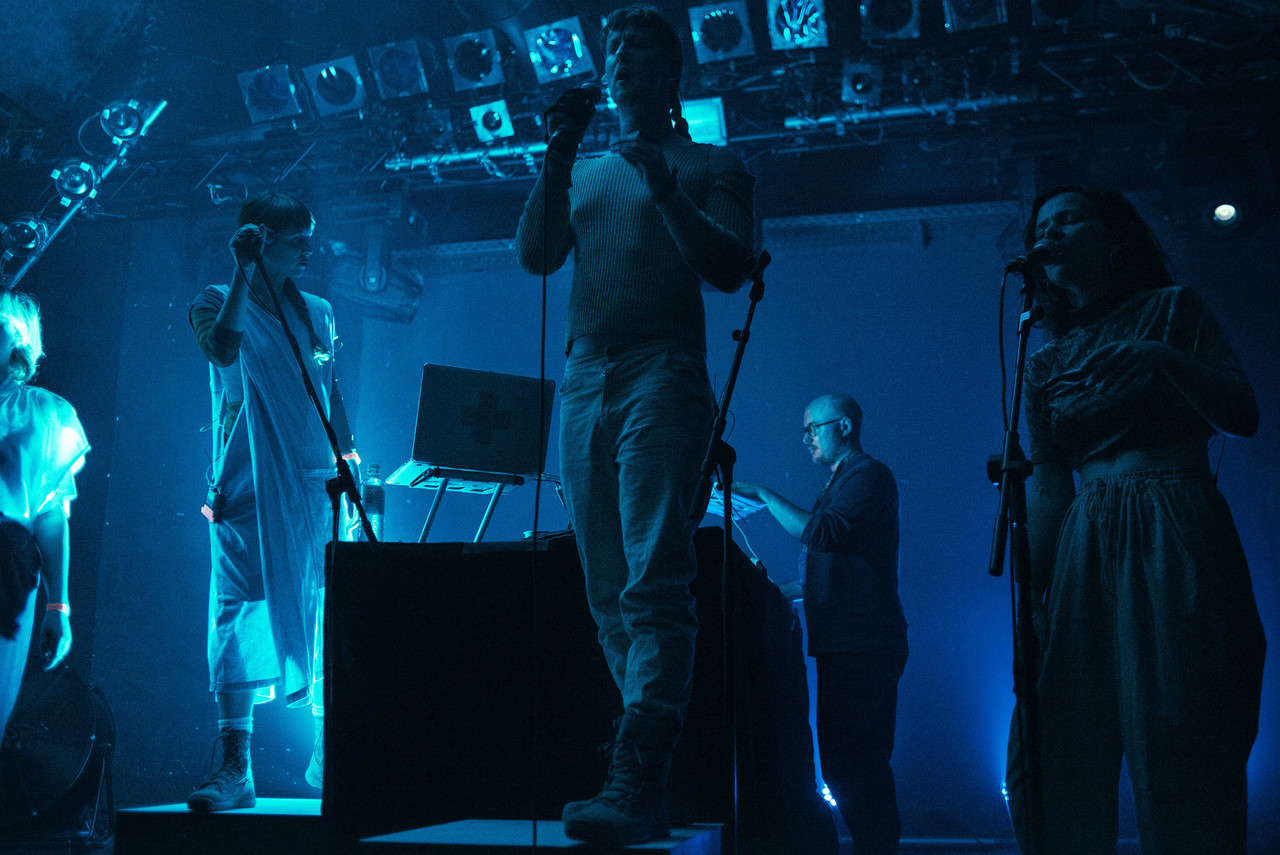
Vigilant in their pursuit of bringing urgent discussions to a pop consciousness are Holly Herndon and Mat Dryhurst. The two are aware that there are »little means of generating the resources required to amass a viable alternative« to »platform monopolies collectively,« though it’s something that they have been thinking a lot about. Dryhurst and Herndon critically approach how pop acts as a carrier signal; »where it carries you is worthy of debate and frequent reconsideration.«
During the making of Platform, Herndon’s remarkable 2015 album, they began to think that »perhaps by opening up the practice to incorporate more populist structural forms whilst still maintaining the core ethical and artistic principles of the greater project, [they] could somehow ›Trojan horse‹ some really compelling propositions into the centre of cultural discourse… pop music’s (and club music’s, for that matter) combination of sine/tuned 808 bass and ›hooks‹ seemed to present this common language that, if spoken, afforded a lot of experimentation around the core fundamentals.«
This in turn, allows them to »stay true to [their] goals of presenting a legitimate alternative logic for seeing and hearing the world,« to focus on »what needs to be discussed now, and what the appropriate channel to convey that meaning through might be.« Catapulting pressing (and evolving) political discussions into the pop lexicon, or a wider music consciousness, their work can be relied on for shrewd analyses and, most importantly, an insistence on change.
During the making of Platform, »it became quite clear that there was a new frontier in the battle of ideas, namely the accelerating legitimisation of social media and other media platforms.« When I ask how music must mutate to stay relevant politically, they answer: »this focus on a new form of independence has weighed heavily on our minds for a few years now, and we have spent a lot of time researching and experimenting at how something special might be built. This is the necessary mutation. Another factor is of course the importance of live music and congregation – so much emphasis is given to the recorded medium, arguably because the scaffolding of music criticism and discussion was built around that economy, however we have always somehow been live performers first, and being in space with people still somehow retains its radical potential.«
In some way, this sentiment mirrors that of NAKED, though of course Herndon and Dryhurst approach this collective way of being with people differently: »[i]t is no coincidence that we have taken the past year to assemble a group of people to sing and grow with, and we are grateful for the role that kind of support has played in keeping our spirits intact. Ultimately, we do what we are doing because it’s how we know how to contribute, for better or worse. If anything, the past year has made us more insistent and uncompromising about certain issues that we have been more accommodating about in the past, as although we have always tried to communicate clearly the stakes of the technical and political issues we care about, the necessity to take alternative strategies seriously and start building on them together feels that much more urgent for what has happened over the past couple of years.«
»Collectively we have a lot more power than it sometimes feels like we do individually. That is a source of hope.« Though these again are the words of Dryhurst and Herndon, a similar idea shapes the differing words, sounds, and approaches of all these artists; that’s what makes them potent in imagining new futures. Mia Zabelka of Medusa’s Bed describes the collaboration: »[o]ur musical backgrounds are different, but not our sense of musicality, nor our political attitudes. We are far more alike than it may seem, and we share an anger over the state of the world.« This, of course, is reflected not just in the »meeting of three individual voices,« as Mani puts it, but also across the discourse of contemporary music and its adjacent conversations.
Herndon and Dryhurst go on to express a sentiment that seems intimately familiar, for myself and I’m sure for many others, in this past year: »[i]t has often been hard to write or establish some kind of creative headspace with the daily affronts to sense and humanity. It has often felt really trivial to think about art. It is also quite difficult to sometimes try and conceptualise a long view, or establish a constructive perspective, when the short-term challenges are so imposing and demoralising.« The difficulties of the past year have spurred them to »spend time offline in communion with people [they] care about, and try and somehow contribute in tangible ways to their lives.«
As we might see at CTM and elsewhere, music not only challenges us to collectively maintain our ability to fear, to feel, and to love, but also to progress. In the words of VIOLENCE, »even inside of this black hole that is capitalism, ideas have more value and power than they would appear to, spreading like poison or cancer. People will internalise an idea…and carry it with them, inadvertently planting seeds.«
To make music critically and hopefully is to move; it is to assert one’s agency, and to insist on more than we are offered by these crushing, turbulent times. Throughout history, music’s threatening potential has been recognised; Jacques Attali famously wrote that music prophesies the future, making audible what is to come, and hence musicians wield a powerful and subversive tool.5 We might turn to these sounds to combat a system in which the arts risk being reduced into exigencies as dictated by corporate and neoliberal interests; we might turn to music to combat turmoil, wielding it as a tool with which to imagine new narratives and different futures.
Ollie Zhang is an artist, writer and musician.
This text was originally published in CTM Magazine 2018 – Turmoil.
- 1
Rycenga, Jennifer and Whiteley, Sheila, Queering the Popular Pitch (New York: Routledge, 2006), xiv.
- 2
Muñoz, José Esteban. Cruising Utopia: The Then and There of Queer Futurity (New York: NYU Press, 2009), 1.
- 3
Broaks, Andrew and Fisher, Mark. »Do you miss the future? Mark Fisher interviewed.« Crack Magazine (last accessed December 2017).
- 4
Thompson, Marie. E-mail interview by author, December 16, 2016.
- 5
Attali, Jacques, Noise: The Political Economy of Music (Minneapolis University of Minnesota Press, 1985), 11.