
»Why are you here,« asks the girl with piercing blue eyes, swaying slightly in the lights outside the lift that carries the audience five floors up to RAGU, a restaurant pressed into service as a nightclub for CTM Siberia. She presses us further, asking: »is it exotic for you to be here? I do not understand. This is a dark place.«
Novosibirsk, founded at the point where the Trans Siberian railway crosses the Ob River, is hosting CTM's first excursion outside of its Berlin base. This two-leg event, the first half of which took place in the city of Krasnoyarsk, 800 kilometres to the east, was the brainchild of the Goethe-Institut, which since the early 1950s has sought to encourage cultural exchange between Germany and the rest of the world. Picking up on a local electronic music scene that seemed to be thriving without much infrastructure, the Goethe office in Novosibirsk worked with CTM to bring artists from Germany and elsewhere, such as Lorenzo Senni, Helena Hauff, Byetone, Muscovite Mujuice, and Rabih Beaini, to play alongside – and this is very much alongside – young Siberians and Tuvan throat singers Huun-Huur-Tu. The majority of the festival production and booking has been done here, and there's a relaxed feeling to it all, with a hope from the German side that people might see things are done and can be done. The locals (if »local« is appropriate in such a vast country) hardly need much encouragement, with the likes of genial sound artist and composer Stanislav Sharifullin working themselves into the ground as they perform, organise, and lead us in a merry dance around the streets of Novosibirsk. »It's the overall feeling, when you feel surrounded by dozens of like-minded people, all this warmth and love and blah blah,« enthuses Sharifullin. »Like a damn Woodstock 69 in the middle of nowhere.«
There is a huge weight of history between Germany and the empty spaces of Siberia. As one of the staff from Goethe-Institut here remarks, »there is a feeling in Germany that Siberia is a place where you go and never come back – most of our grandfathers were sent here as prisoners of war.« The vast expanse of Russia's largest region could gobble people – or non-people – up with ease. As someone I speak to in Novosibirsk explains: »people were forced to walk hundreds of kilometres from their towns to the railway to take them to the Gulags. They were scattered like dust to the wind, and near the tracks in the forests you can find their bones, just under the leaves.«
As I leave England to head to Siberia, the petty argument about whether or not new left wing leader of the Labour opposition party Jeremy Corbyn ought to sing the national anthem is still dominating the news. The »victories« of three world wars, two very hot and one cold, has unfortunately given the British a myopic, nostalgic view of the 20th century, distilled now into jingoism, the horrors wiped away by a »Keep Calm & Carry On« tea towel.
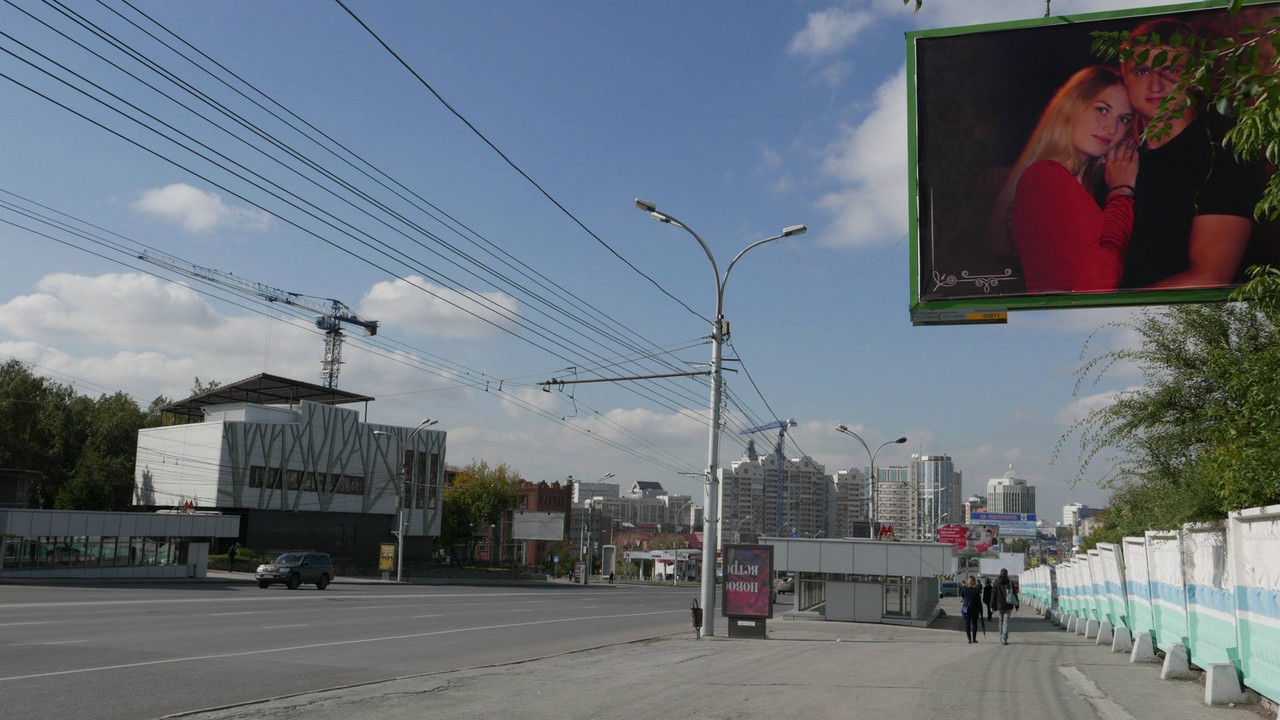
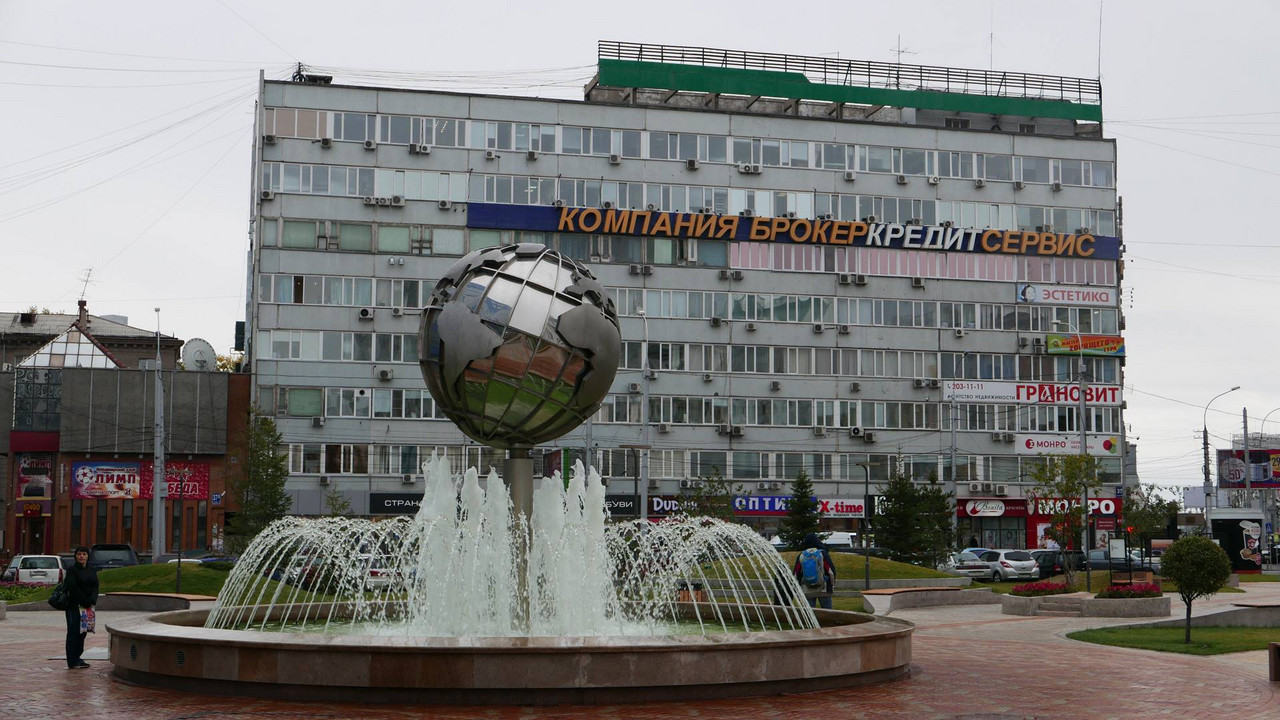
To us in the UK, Siberia is a place of clichés learned from spy novels, an abstract negative space of communism, a belief system that we're told by the media that »we« defeated 25 years ago. In Novosibirsk however, the 20th century is ever present. Indeed, I think it could be argued that, along with the 1917 revolution, 1941 Nazi invasion, and collapse of communism, Russia is experiencing a long 20th century, with former KGB man Vladimir Putin part of a continuum. It's only a smug ignorance that leads us in the UK to believe that we are not a part of it. It's strange at the airport to see all sorts of tacky tourist gear – plates, mugs, t-shirts – covered in the president's enhanced lantern-jaw face. Yet how different is that to Britain's souvenir that is frequently based on red-coated soldier iconography or images of the queen, encouraging a deference that has its roots in war and empire?
One of the artistic projects I hear about in Novosibirsk is the idea of »talking about the weather:« politics are not a safe subject for discussion, so coded descriptions about the human universal's favourite subject for a quick chat are used instead. Discussing politics, or reading political meaning into the work of any of the artists playing, is therefore not only problematic – there are nuances to the way Russians approach political thought that are very difficult for a Western mind to latch onto – but also potentially dangerous.
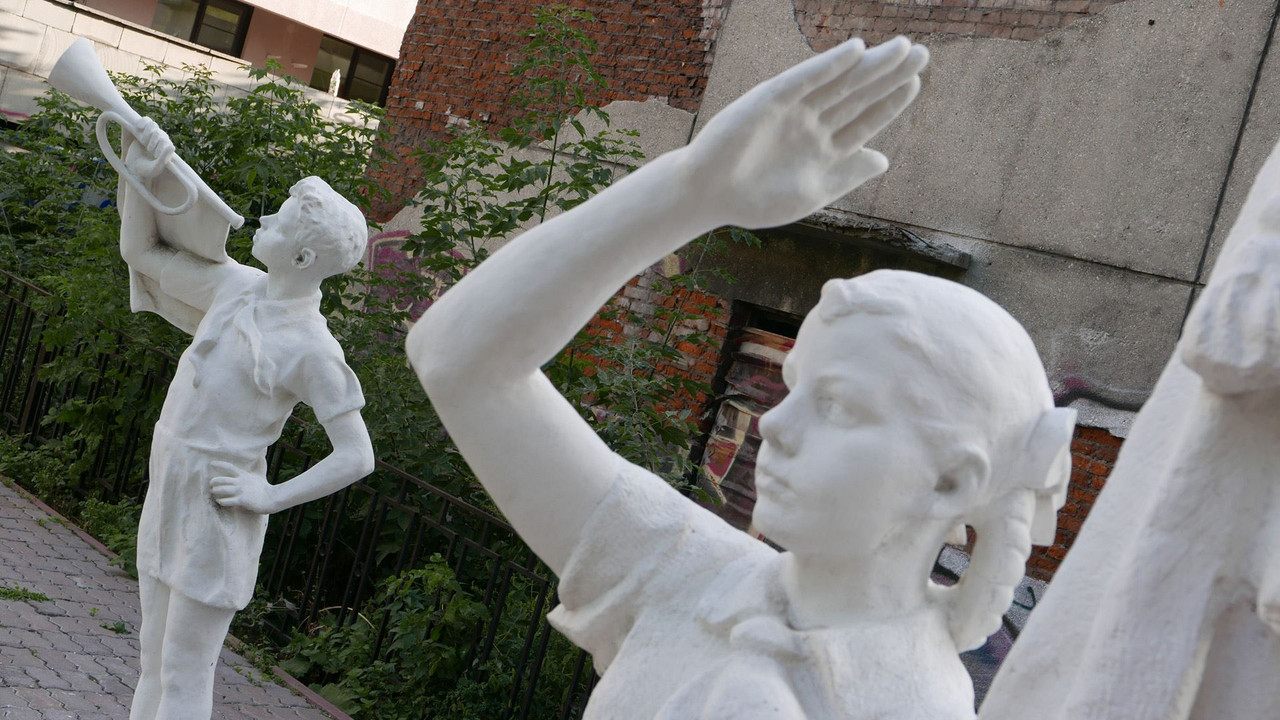
In a forgotten corner of one of Novosibirsk's parks stands a grey monument to the victims of Stalin's purges. It was built during the 1990s after the fall of communism, but now looks neglected – some tiling on its four pillars is splitting, and there are a few tired flowers scattered about. People walk past without giving it a second glance. Just behind it, a huge new apartment block is rising on the site of the former NKVD (the precursor to the KGB) prison, where unknown numbers of local people, including relatives of some I meet, were shot. In the early stages of construction, local journalists started demanding an excavation, but the police shut the site down and the flats went up on the bones of the dead. In Novosibirsk, 30 percent of new apartments are unoccupied, bought as investment opportunities by Russians who made a fortune from oil and gas.
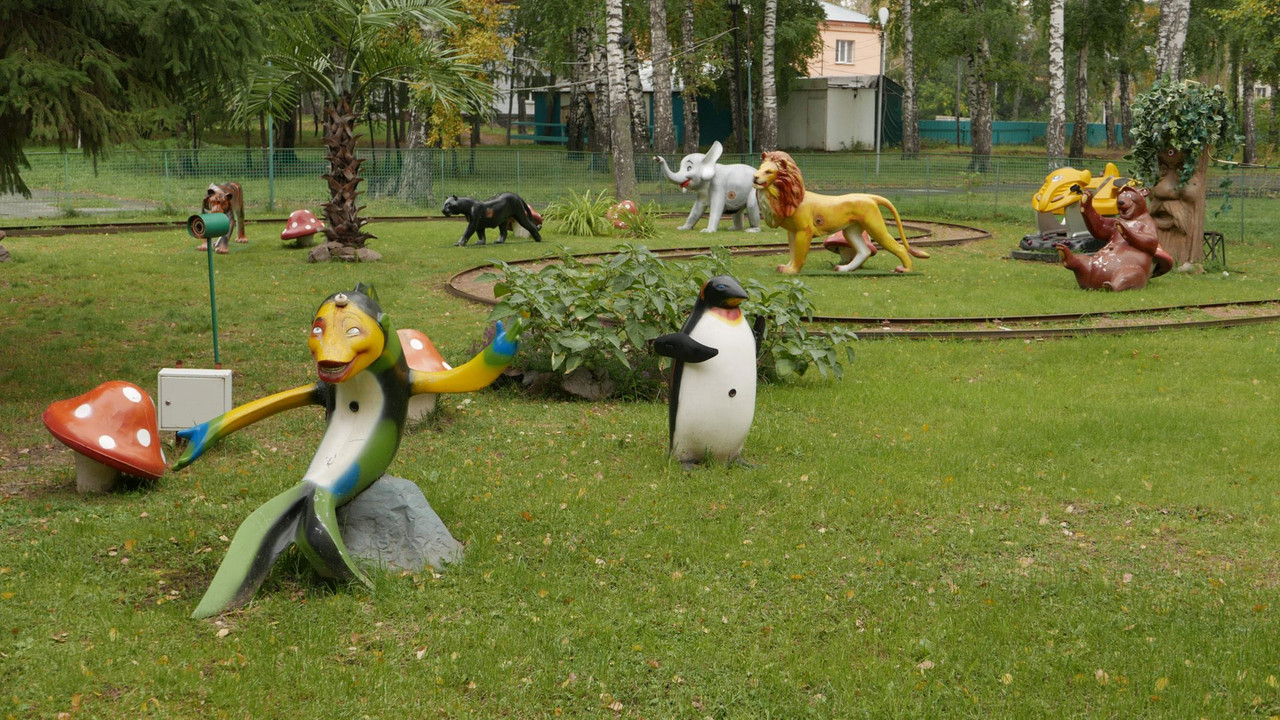
Memories – real, imagined and falsified – shape Novosibirsk. The giant opera house in the city centre was originally designed in the Constructivist style during the late 1930s. Delayed by WWII, it ended up a hulking mass of neo-classical pomp, with gigantic wings extending the backstage into the streets either side to allow cavalry or armoured cars to pour across the back of the set in particularly dramatic scenes. Just behind the opera house is a park, quiet in the early evening and full of decaying children's rides – water rafts, swing boats, a couple of trains, a shooting gallery. A maintenance yard built of shipping containers (»Property of Tiphook Container Rental Bromley, Kent«) sits in a corner, a radio blaring inside, and the only words I hear in English from it come from the actress and frequent collaborator with the great Derek Jarman, Tilda Swinton. This was once called Stalin's Garden, and was built on the site of a former cemetery. Workmen arrived overnight to remove the memorials and the next morning members of the local Jewish community wept as their neighbours danced the foxtrot where the graves of their ancestors had been.
When I learn this, I feel uncomfortable about the touristy photographs I've taken of the decaying rides, Soviet-era apartment blocks and iconography, feeling somehow complicit in shoring up these secrets and forgotten histories. A teacher I speak to tells me that none of his pupils have any idea about Stalin's purges. Under the contemporary regime, which thrives on a potent mixture of nationalism, capitalism, cult of strength, and the resurgent Orthodox church, some histories seem best forgotten.
In a talk on CTM's opening night, Robert Henke remarked that »the beauty of globalisation is that our generation, and the ones to come, have access to the world of sound.« This might read like a rather naive statement, yet after four bewildering, stimulating nights, it reflects the optimism of this strange festival in the back of beyond. Perhaps the flaw of globalisation is that all too often, it can lend itself to a global blurring, a sameness that frequently feels impossible to fly away from. Many of the areas of British, German, Australasian, American, Scandinavian, or Spanish cities where musical, artistic, and creative communities dwell are increasingly indistinguishable, MacBooks glow in the same sorts of bars, cafes, and restaurants. That's even despite the global co-option of these former undergrounds as easy marketing gimmick. In the West, we have access to a world of sound, but increasingly homogenous spaces in which to experience in. At CTM, it's impossible not to be jolted out of this complacency.
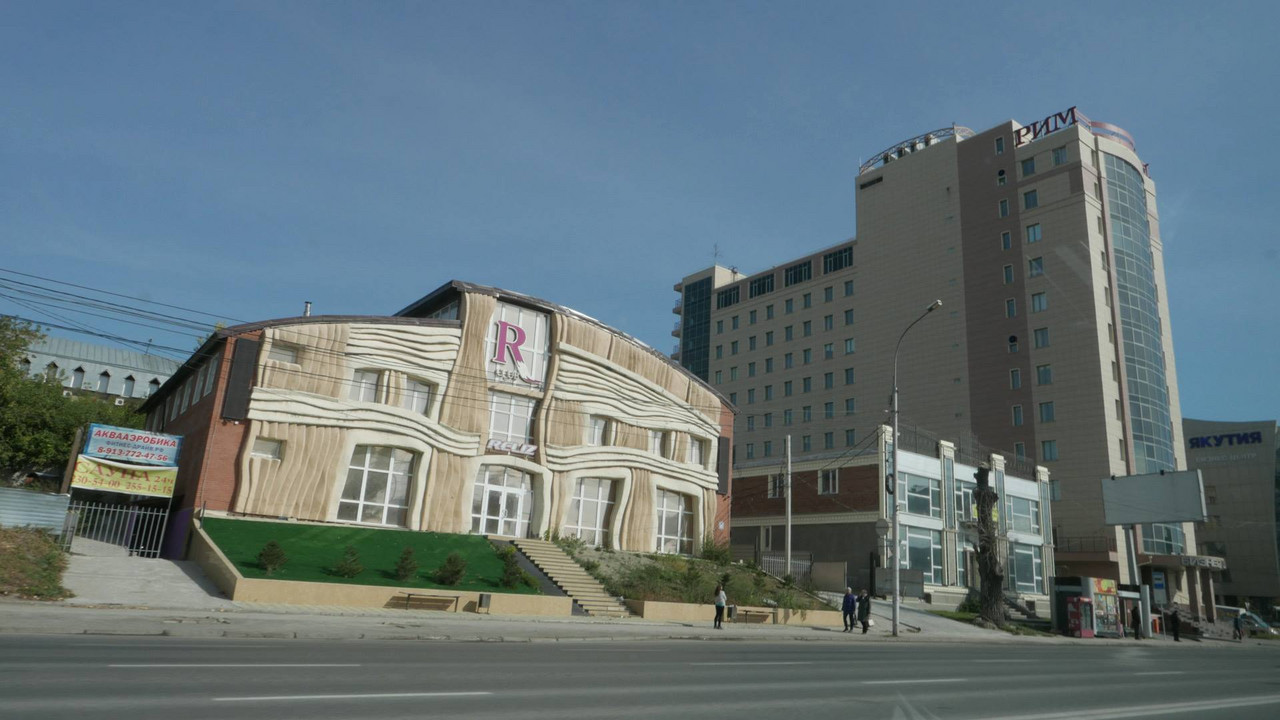
The venue for Huun-Huur-Tu, for instance, is liminal in itself, a giant lobby of the Philharmonic hall that overlooks the former apartment blocks that housed Soviet officials. The Tuvan group's ability to generate different notes and tones within one set of vocal chords undoes the auditory senses' concept of what music can be, more liquid than anything else, flooding into and filling this room with ancient sound. There are so many things in the globalised world that connect us across the continents, like those shipping containers in the nearby park, and some of Huun-Huur-Tu's music reaches beyond the borders of the Republic of Tuva to hint at sounds from further afield. I pick up on African desert blues, and even some of our own folk traditions – perhaps throat singers once wandered to ancient trackways of England. On the flipside, RAGU is a glass venue that bulges in the middle of its eight stories like a vertical slice of London's Gherkin, and a curious place to host a nightclub. Usually it's a dinner party place, and at one point I notice I'm dancing next to a stack of thick menus bearing the slogan »Racy & Glorious Union Since 2013.« The windows look down on the St Nicholas Chapel, which had a gold dome, and once conveniently marked the centre of the Russian Empire. Most of the crowd here are incredibly young. There's a kid with a Confederate flag wrapped ‘round his head and a flat cap on losing his shit.
CTM Siberia is an inspiring and hopeful experience, where a new generation of Russian artists, internationally connected, are creating their own futures and narratives in a way that's at once very familiar and unlike anything I've seen in the UK or wider »West.« Credit should be given to the Goethe-Institut for such a hands-off approach (one that contrasts with the aggressive commercialism of most European music »export« bodies) that seems to have blown oxygen onto already glowing sparks of what might well become one of the most exciting electronic movements around.
Yet it's all very well, from my perspective sat in London under a constant email barrage of new music from around the world, both brilliant and utterly appalling, to use words to pigeonhole Siberian artists into a scene that doesn't exist, or perhaps even patronise them in doing so. By focusing too intently on certain artists, performances, or a few crazy nights in Novosibirsk, does one risk removing the equal dialogue that these events ought to be about? Speaking after CTM Siberia, Ivan of Love Cult says that though an international event hosted »in the middle of nowhere« might superficially give an impression that a scene is »approved,« he and his fellow musicians have some qualms. »We really don't like to think that way,« he says. »Siberia had been considered an electronic music mecca in Russia before CTM – but it certainly is nice to experience collaboration, to dive deeper into the situation.« Indeed, are we in danger of getting the wrong end of the stick about what's happening in Siberia, and wider Russia? Ivan says that the current »scene« in Karelia is »a couple of like-minded people making tunes in the middle of a forest« and that it's arguably in decline: »there used to be significant gigs and events four to five years ago and a lot of free noise activity eight or nine years ago but that era is over. Petrozavodsk is a town with good musical heritage, but that's it.« This, he argues, provides Love Cult with a terrific autonomy. »It simply allows us to be whoever we want,« he says. »With no scene, no media and infrastructure you're left on your own as an artist. We like that. Our education was making all the possible mistakes and enjoying the process, then sending the results to faraway countries.«
Ivan admits that this geographical isolation can be frustrating, but adds that »on the other hand it makes perfect sense The Wire is covering a lot of UK stuff and Pitchfork is super US-centred, for example. Why wouldn't they be like that?« I can't help feeling, though, that this is where American and British... arrogance? complacency? privilege? ought to be undone. As Ivan astutely observes, »the problem is that the little pockets on the other side of the language barrier tend to be ignored. But it seems like it's the English-speaking listener who should feel sad really – they're missing out on some great music. Some Asian shoegaze and black metal, some Russian twisted electronics.«
Perhaps there's a conflict here in a »Western« approach assuming that our experiences of how a music scene is organised and functions is applicable to the Russian situation. There's arguably a danger in internationalist thinking that assumes everything works the same way around on a global scale, that different communities can meet, relationships form, and collaborations happen like different parts of a machine being bolted together.
Sharifullin agrees that it's a fairly complex and nuanced situation. »I mean – come on, all this ›Siberian musical community‹ is just a small bunch of weirdos, totally unknown – and myself as well,« he says, remarking that certain rivalries have been given an added frisson thanks to inclusion (or otherwise) on the festival bill. He's also very aware of how Siberian experimental music is far more of an outlier here than it might be elsewhere. »Maybe in one's imaginative world he or she is a key figure in the regional (or even Russian – or worldwide!) cultural scene, but there's also the damn reality. There's one simple fact in this reality – we are nothing. I mean, we all need to work a lot to become something – and yes, it is just another great thing, an inspiring one. The scene is growing, so just please let it grow organically.« And what of preconceptions some might have over glacial drones over the icy frozen trees etc. etc.? »I love to keep things ironic,« Sharifullin says. »If one imagines Siberia as a huge empty space filled with snow and ice and nothing else – why not? Why get bothered with other people's delusions when you can play with it?«
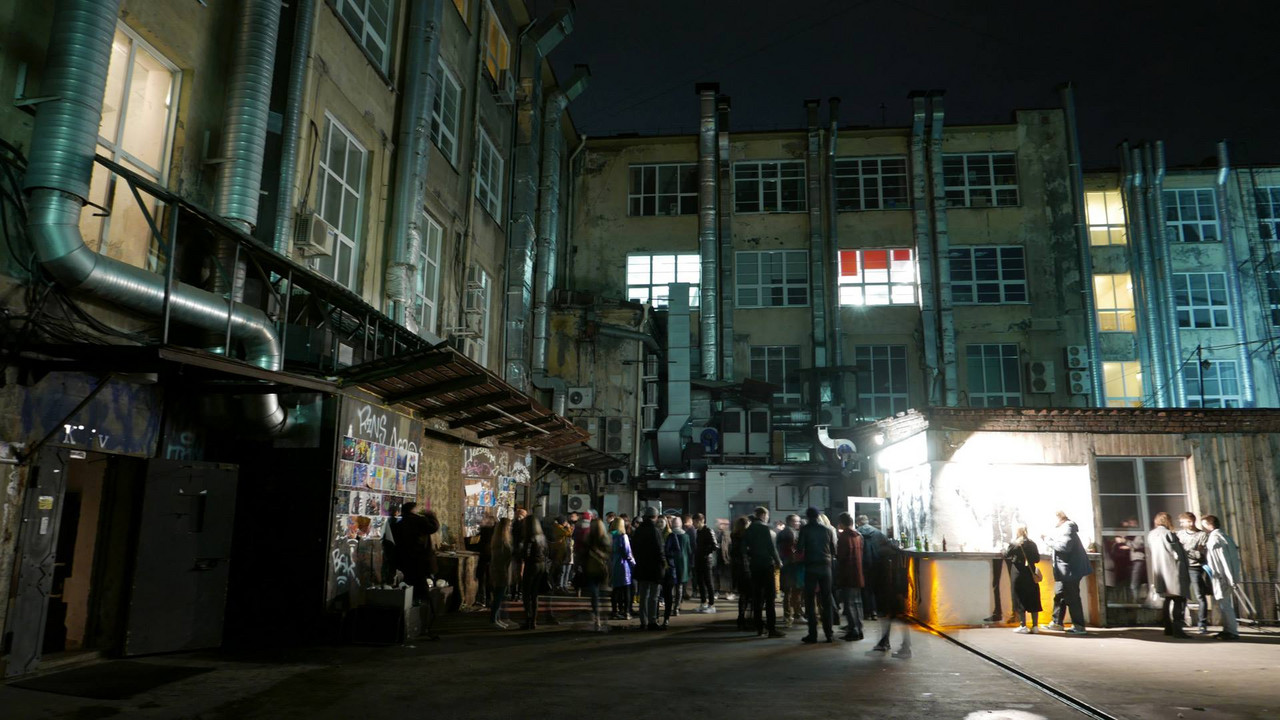
On Sunday night, there's a closing party in Novosibirsk's first nightclub, a square box of a room plonked as if from above in the middle of a courtyard, surrounded by offices. It's a remarkable party unlike anything I've seen before. It's unclear whether this is a noodle restaurant (people wander around with steaming cartons of foods as others hammer down shots), chi-chi bar (the walls are covered with righteous quotes from musicians) or a simple box that, to be frank, rivals any venue in London, a city where live and club music venues are falling victim to property developers at an alarming rate. Rabih Beaini unleashes an absolute collision of music, liquid rumblings, as if the skein of wires that connect all Novosibirsk's buildings at various heights (I keep tripping over one cable that someone is using to leech a phone connection) had picked up short wave transmissions from across the globe – uncountable voices, all discussing the weather. He plays what I am imagining must be a field recording of a folk song, the language of which I can't catch over a hulking bastard of a track, a rhythm by a thousand drums. He keeps pulling that in and out of the mix, then flies into some mind melting jazz drowning in shards of drums, something else that sort of might be The Ex. This is true freak-out music, God's own record collection falling on your head, and the sounds we'll be broadcasting to aliens should the peoples of the earth ever decide that they can get along.
It's certainly working in the room. Sharifullin has organised a whip-round, with everyone asked to contribute 500 roubles towards a fund to purchase a synth for one of the Siberians, struggling to afford to buy the equipment he needs to move his music forward. Just before Helena Hauff plays, the venue empties and we all gather in the courtyard under the gathering dusk for a presentation, a speech, cheering that buoys everyone through until the very small hours of Monday morning. Yes, this might be a dark place with tensions and issues that are difficult for the Western European mind to unpick. But the spirit here is not exotic at all – it's honest, very real. What's more, everyone emerges steeped in a conscious internationalism that feels more and more needed in these strange times.
Speaking afterwards, Sharifullin is cautiously optimistic about the impact of the festival and feels, rather excitingly, that it's just the beginning of what will hopefully be an ongoing process. »You can't change the whole game in one day, it requires years, even decades,« he tells me. »The ice has broken though and there's no way back.«
Luke Turner is an editor for British online music magazine The Quietus.
Graw Böckler is the joint project of Berlin-based artists Ursula Böckler and Georg Graw, who together and independently work across the popular formats of video and still photography.
This text was commissioned as part of CTM 2016 – New Geographies.