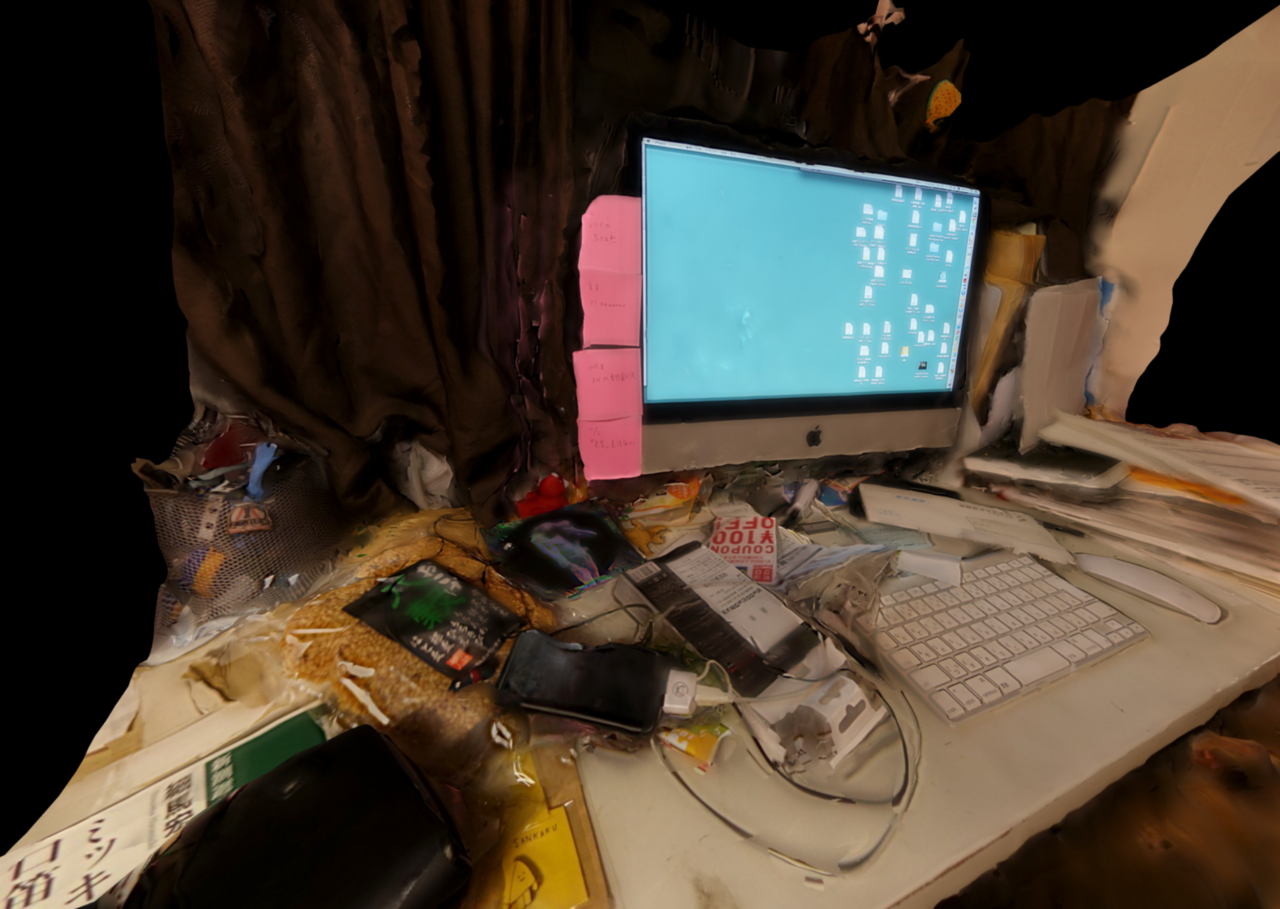
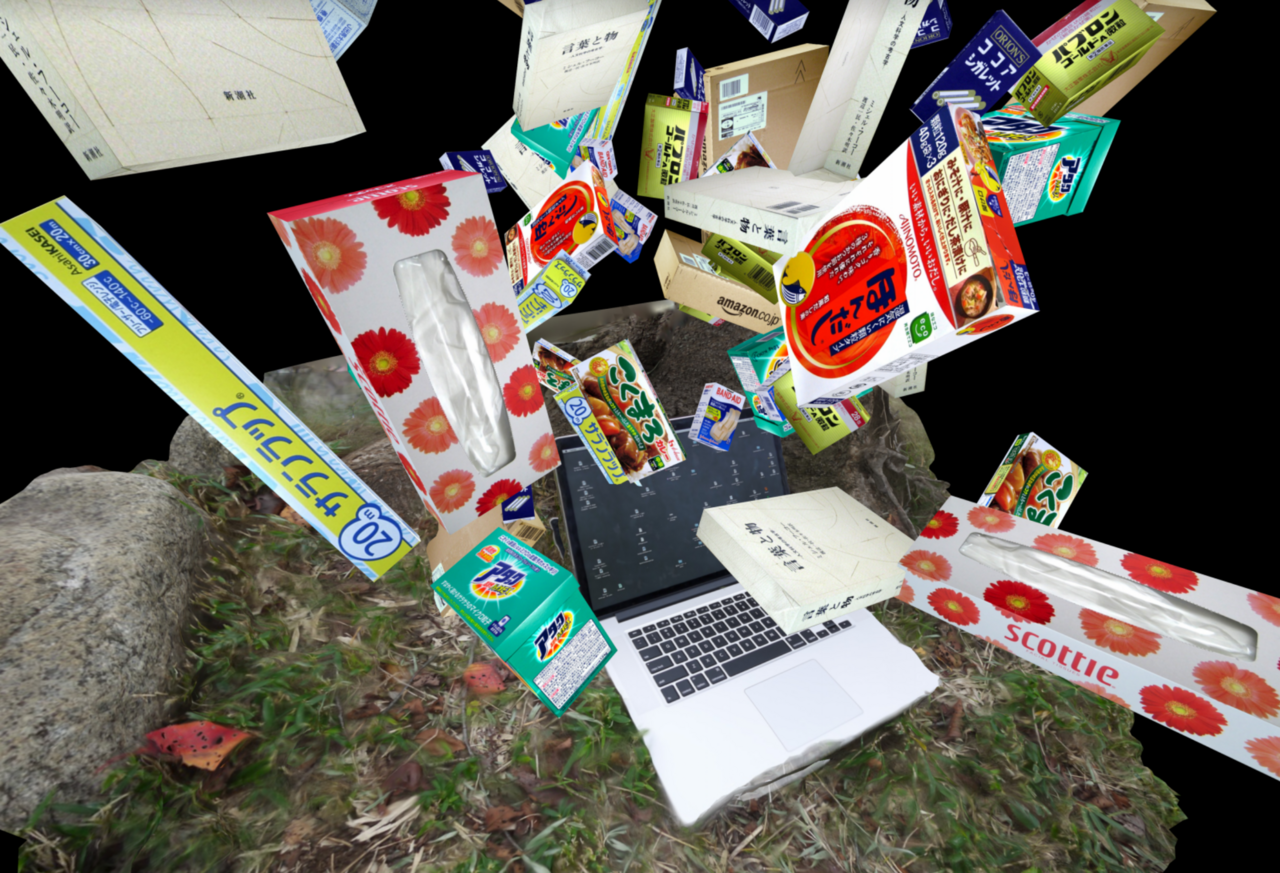
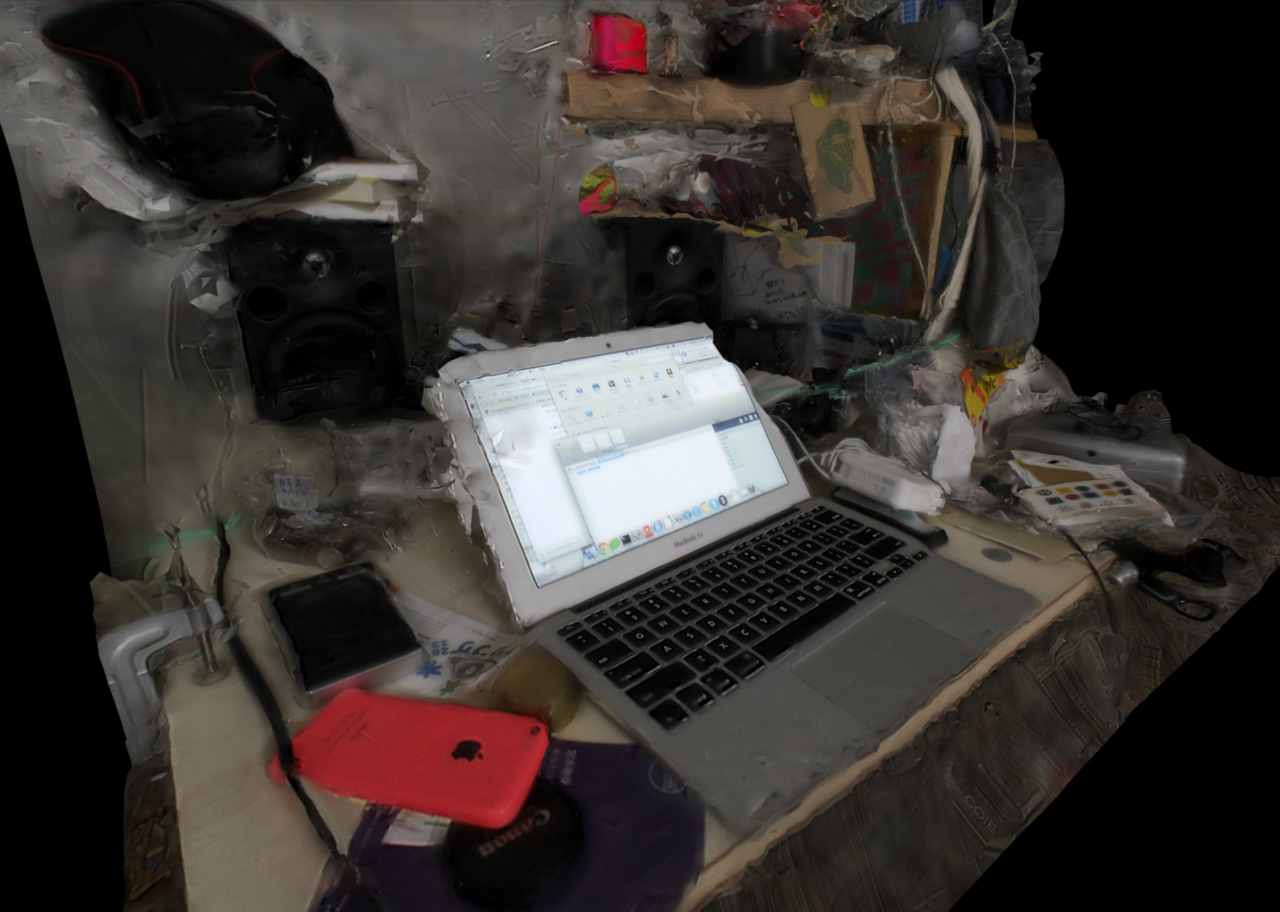
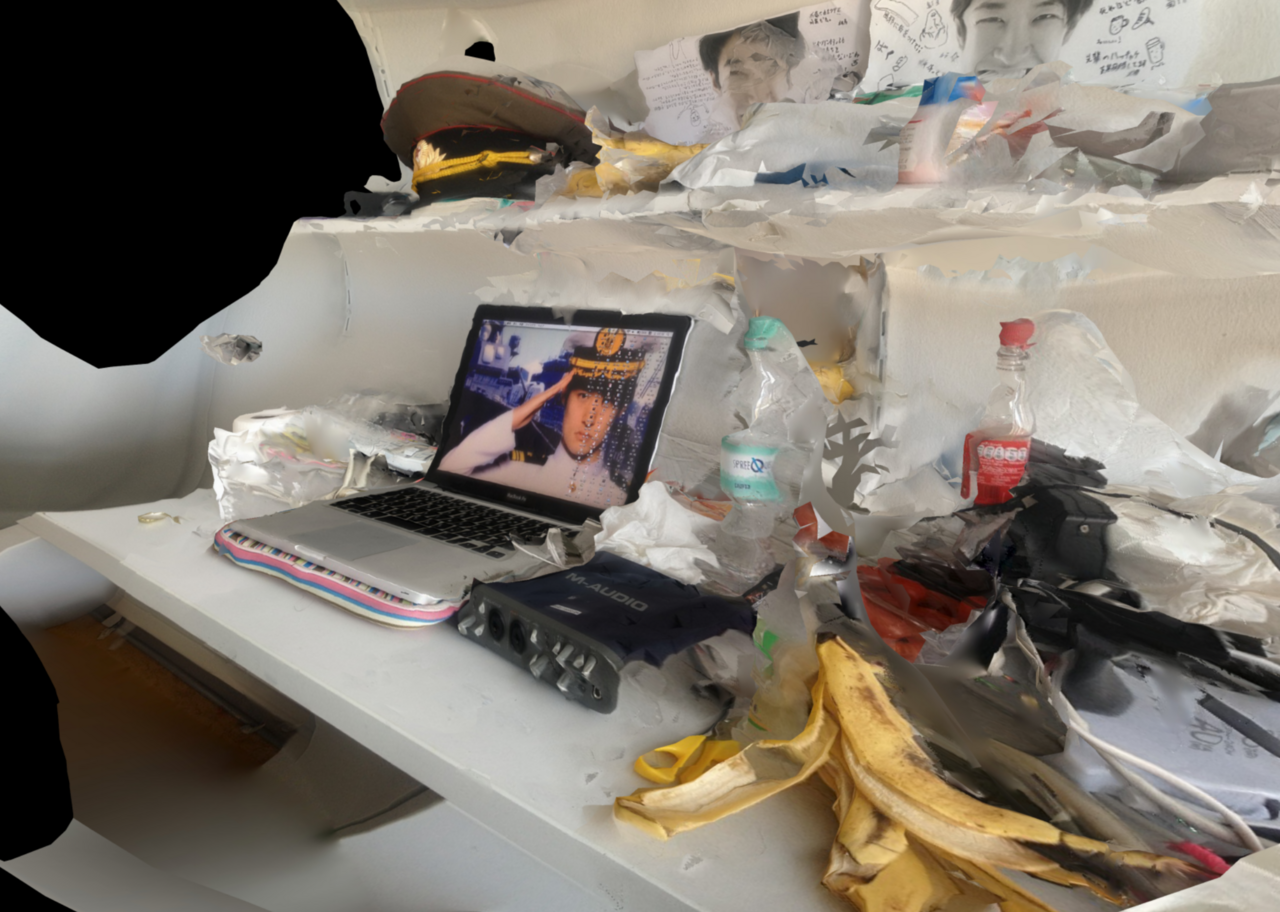
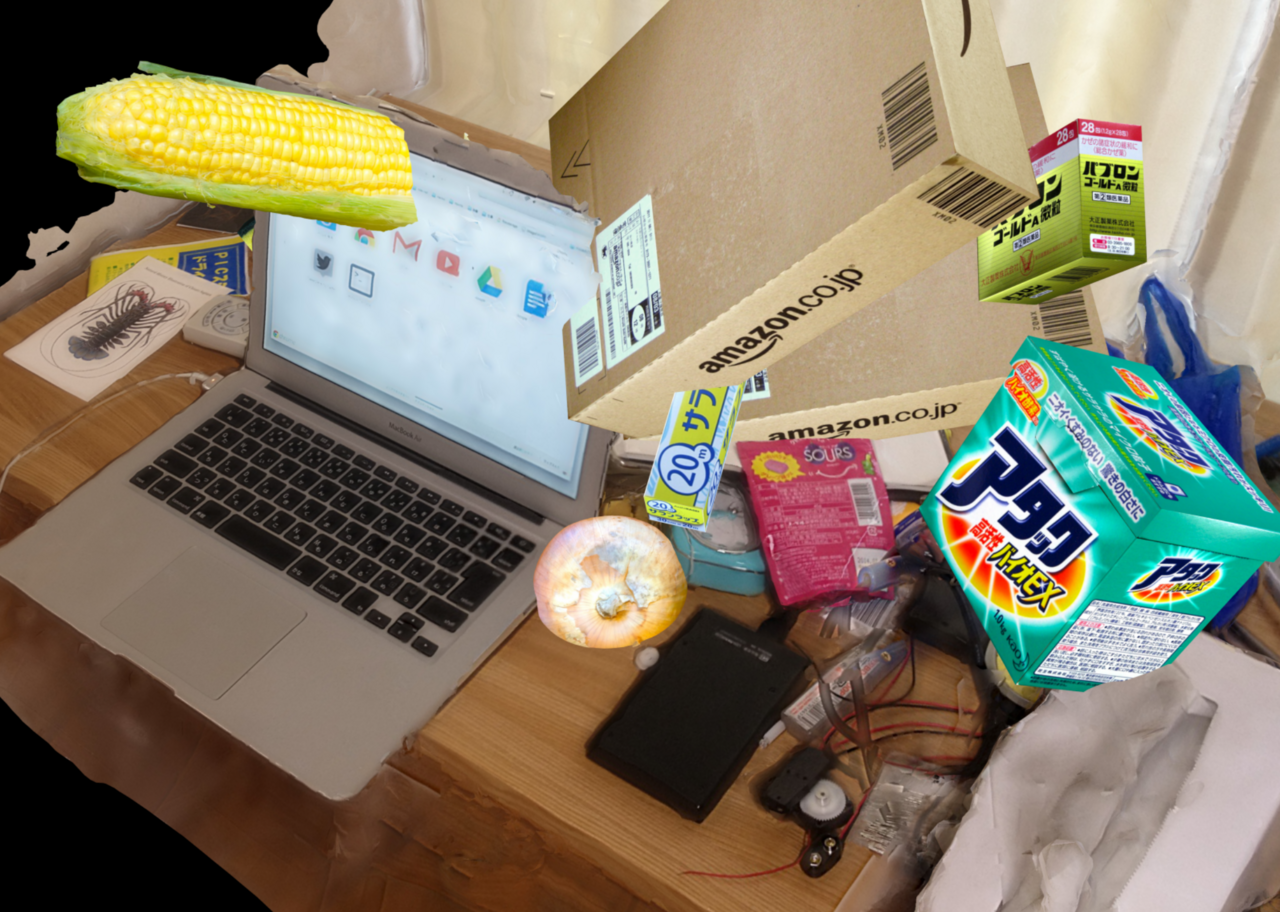
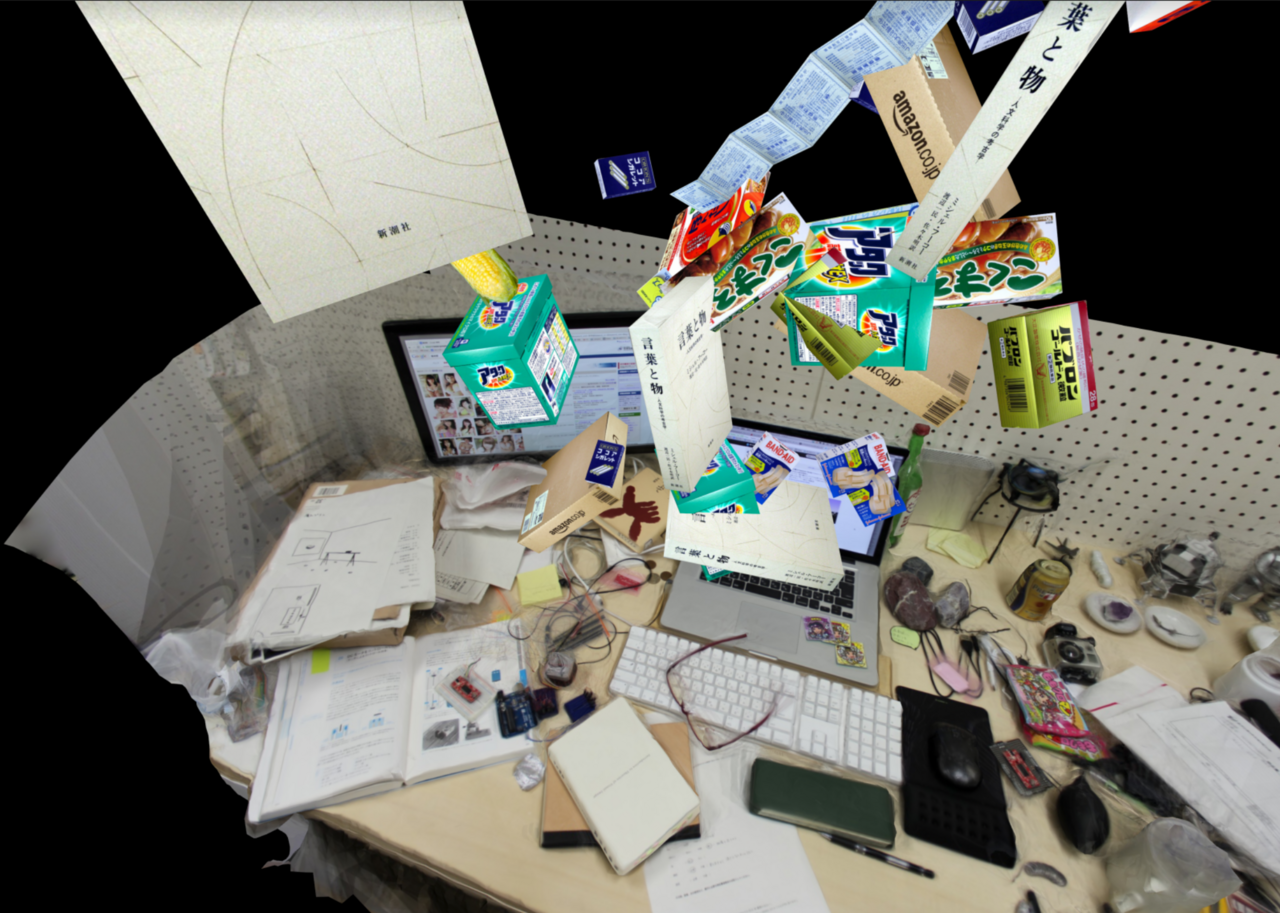
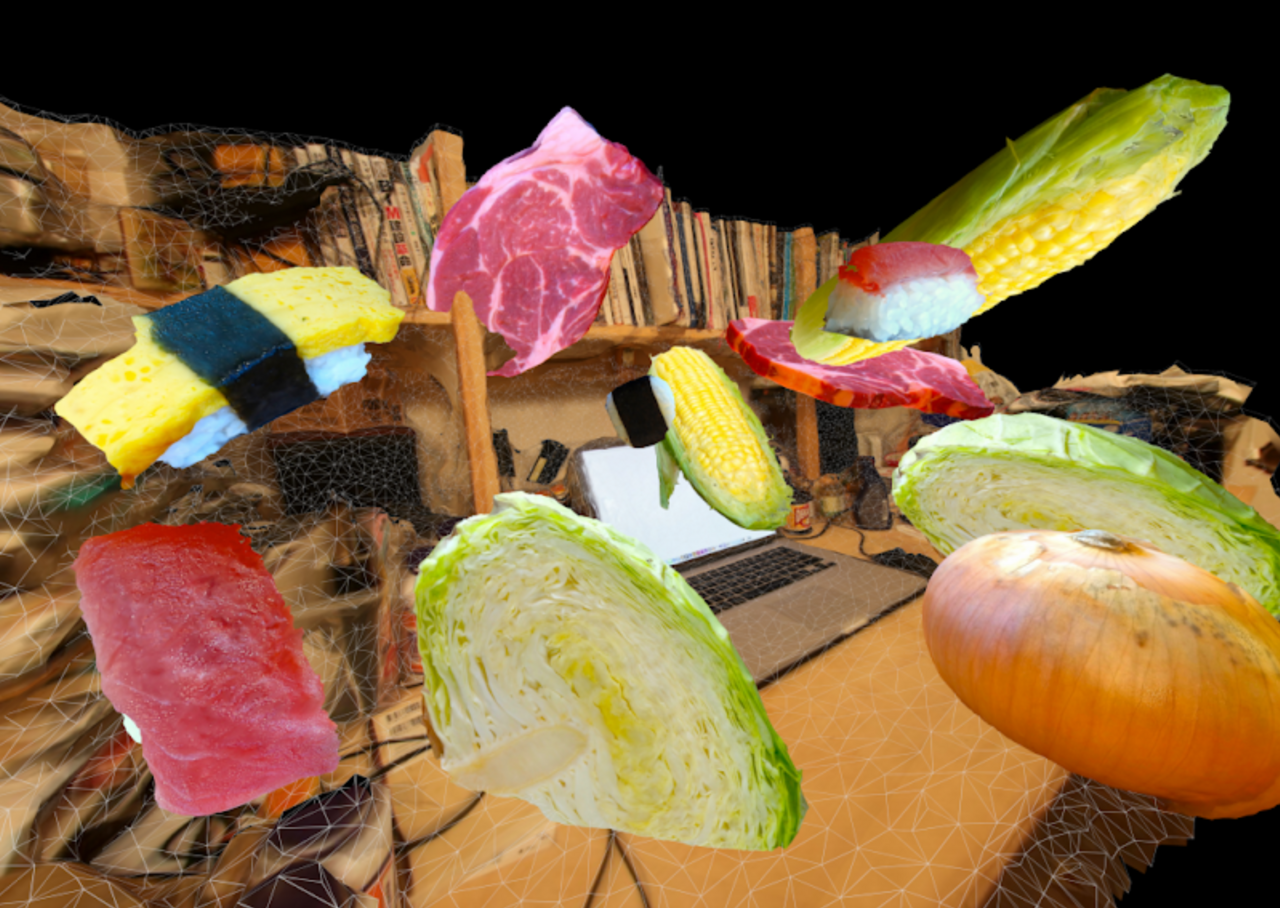
Akihiko Taniguchi produces installations, performances, and video work using self-built devices and software. His practice is concerned with investigating the increasingly quotidian and boundless roles of technology and the internet in our lives, a focus that both Holly Herndon and her frequent collaborator Mat Dryhurst also both share. In his original series manipulating »everyday images« of domestic interiors in »parents' homes,« 2D photographic images of laundry room shelves, bathroom sinks, and other nooks and crannies are processed by a 3D scanner and converted into haphazard, fouled-up renderings. Dryhurst and Herndon first reached out to Taniguchi in 2013 to learn about a system he'd developed for live 3D visuals (it's this system that creates Herndon's characteristic depictions of sashimi, bandaids, cough drops, and sponges floating and rotating in space). Shortly thereafter, Taniguchi collaborated with Herndon and Dryhurst on the music video for »Chorus,« the centrepiece of Herndon's acclaimed 2015 album Platform.
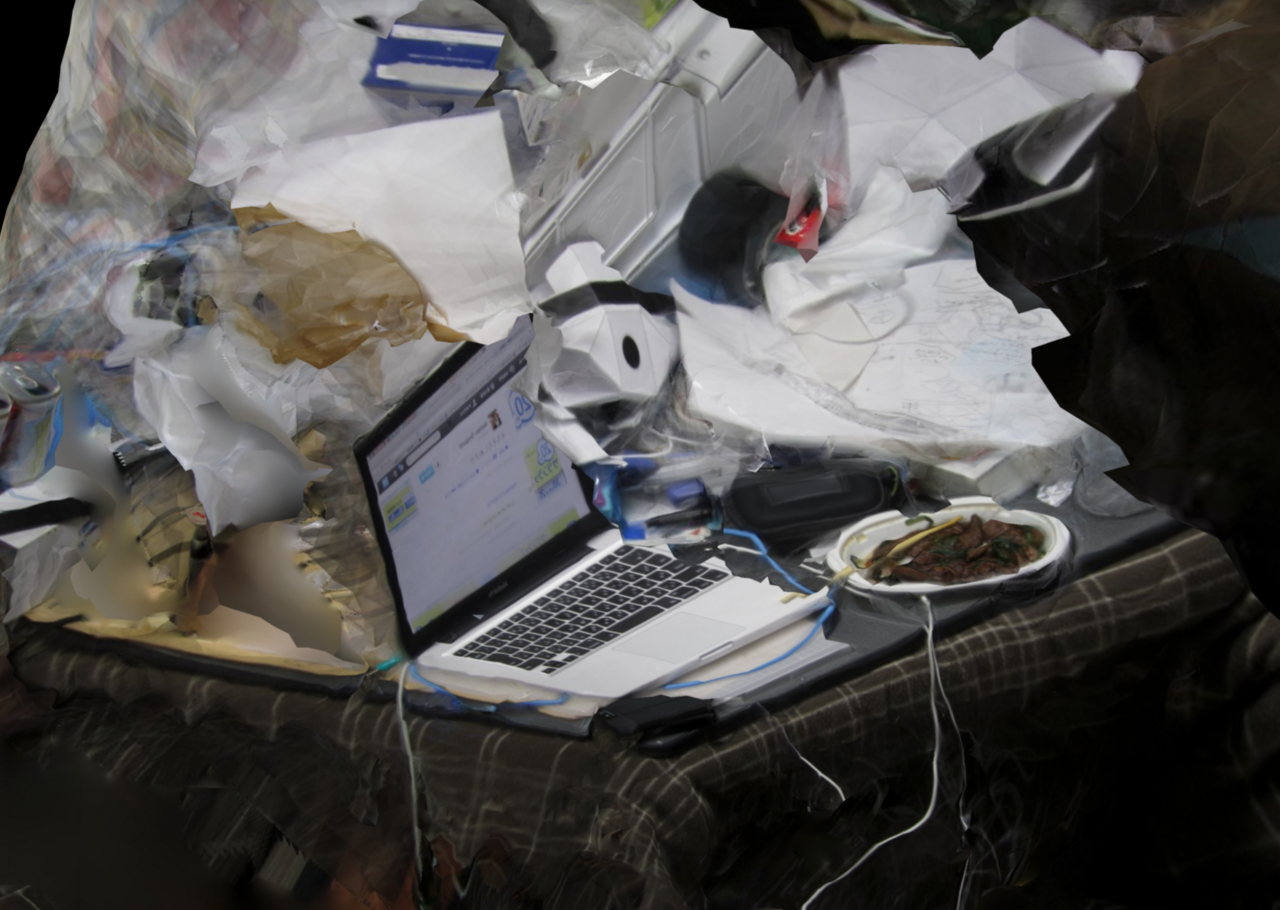
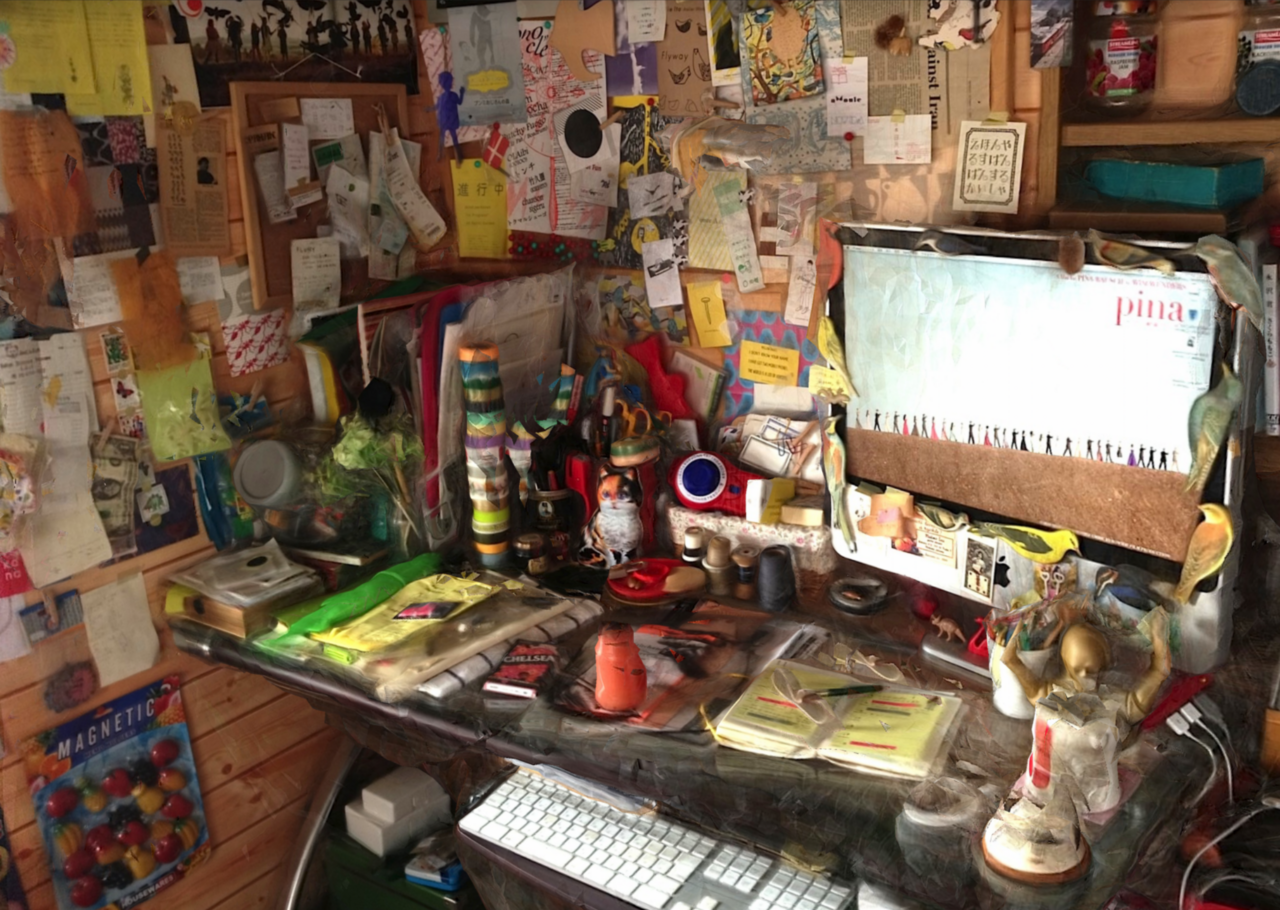
Both »Chorus« and the duo's recent live performances, including a concert organised by CTM in November at Berlin's Haus der Kulturen der Welt, combine the capabilities of Taniguchi's 3DVJ program and a cooperative version of his »everyday images,« this time of computer-centred home desk spaces. Four hundred people, mostly located in Tokyo, responded to an open call for photo submissions. The devices stand as dormant gateways amidst clutter and chaos, both incorporated and incorporating. These portraits infer that the mere sight of a device has the power to provoke disassociation and mental hustle, and the effort at translation speaks as loudly as the original photographic information itself. Most notable is the disparity between ideal and ability; the 2D version leaves informational black holes that the 3D software then fills in with its own cryptic imagination. In an attempt to augment or complete the originals, the program warps and mangles them until they look like flakes of ash left to hover in the cosmos.
As much as these images are familiar and likeable, they also instil a sense of discomfort: who is documenting or surveilling, and how? NSA revelations suggest that as devices are drawn more intimately into our lives, welcomed into our most private and exposed spaces, we make ourselves more vulnerable. Akihito, Herndon, and Dryhurst hold this shining, double-edged sword in the limelight.
Annie Garlid is a classically-trained viola player, singer, writer, and translator devoted to experimental, electronic, and early music. She grew up in New England, USA but has found a home for the past five years in Cologne and Berlin. In 2015 she participated in an opera by composer Martin Hiendl that explored the use of prepared vocals and Auto-Tune, and performed at CTM 2015 in collaboration with Claire Tolan in the Radio Lab project focused on ASMR.
This text was originally published in CTM Magazine 2015 – Un Tune.