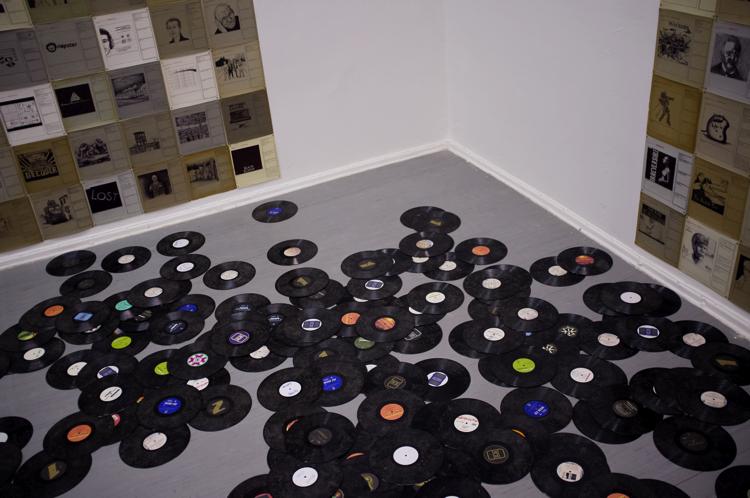
Prelude by Anke Eckardt
The HSS (Hypersonic Sound System) H450 loudspeaker operates in a frequency range five times higher than the upper limit of the human hearing range. The ultimate audible useful signal is modulated to an ultrasonic frequency of 100 kHz. The higher a frequency is, the more directed the sound wave is propagated in space. The speakers’ extremely vectored output – namely at a radiation angle of just three degrees – is often compared to a pocket lamp’s light cone. Ultrasonic technology was developed originally by the military for the purpose of psychological warfare. With the aid of ultrasonic speakers it is possible to expose target individuals or small groups of people to an onslaught of sound, even over a considerable distance.
One of the first associations people make with regard to ultrasonic loudspeakers is the topos of sonic warfare. However, that is not the main topic of the following conversation. Here, we explore instead how perspectives on auditory perception and its various cultural applications have shifted, or will shift in the future, owing to the recent and/or prospective uses of ultrasonic loudspeakers, and in particular to:
»the LRAD Corporation’s production of the »High Intensity Directed Acoustics« (HIDA) system (an offshoot technology of the HSS) and a microwave weapon called »MEDUSA« (Mob Excess Deterrent Using Silent Audio), which — echoing the objectives of the HSS — beams sound directly into a subject’s cranium.«
— Heys, 2011
Woody Norris, who holds a patent on the use of hypersonic sound as a non-lethal acoustic weapon, has spoken about the eight years and 40 million dollars invested in its development by the ATC — American Technology Corporation (YouTube NORUSCAI, 2013). The most famous product or outcome of the ATC’s research was Long Range Acoustic Devices (LRAD, 2013). In the early days, marines deployed during the second Gulf War tested these against the feeble resistance of Iraq (Chaudhuri, 2012). LRADs are also used by the military for coastal surveillance and against pirates: »[s]ince 2005, LRAD systems have proven to be an integral tool in a scaled EOF protocol, starting with the thwarted attack on the cruise ship Seabourn Spirit. The use of LRAD as a deterrent in the Horn of Africa region continued with its use by a Japanese Navy destroyer in preventing the hijacking of a Singaporean tanker in April 2009« (Safety For Sea, 2013). American police used LRAD technology against protesters at the G20 protests in Pittsburgh in 2009 (Allen & YouTube G20, 2009) as well as against the Occupy Wall Street Movement in New York in 2011 (Parascandola and Connor & RT news, 2011). Just recently, LRAD technology was ready for use at the London Olympics in 2013 (Thomas, 2013). I would like to add, with regard to their loudness, that the LRAD 500XTM / LRAD 500X-RE systems which can be recognised on photos of these events, can reach maximum levels of 149dB at one meter (LRAD Product Overview, 2013), whereas pain starts at 120dB. It is also insightful to note that the ACGIH (American Conference of Governmental Industrial Hygienists) defined 145dB as the legitimate ceiling values for 31.5kHZ, 40kHz, and 50 kHz (highest reference frequencies) in their 1998 report, while countries like Japan, Canada, and Russia designated 110dB for the same frequencies (ACGIH, 1998).
»One can see that the American industrial hygiene limits for ultrasound are somewhat more lenient than limits from other nations or bodies.«
— ACGIH, 1998
In his thesis, Toby Heys writes about another aspect of ultrasonic weapons, one which I believe marks a paradigm shift:
»...non-lethal weapons are relatively new. In the 1960s U.S. police forces had employed rubber bullets and chemical sprays in order to deter and subdue rioters. During the first Gulf War a second wave of non-lethal weapons including lasers, sticky foams, caustic solutions, and a range of »acoustic« weapons (that utilise any frequencies, including infrasonic technologies that cause debilitating nausea and sickness) were introduced into conflict zones. Non-lethal weapons have been developed and introduced into theatres of conflict with their media representation in mind. Governments and military leaders around the world realise that their public support can quickly decompose via empathetic repercussions to observed violence and pain. They have learnt how to play the media game that Marshall McLuhan spoke about in the 1960s, leading them to »research the ›bio effects‹ of beamed energy ... searching the electromagnetic and sonic spectrums for wavelengths that can affect human behaviour.« (Pasternak, 1997) In fact, they have not so much learnt how to play this game as they have re-imagined it by changing the locations on which it focuses — from the observable battlefield to the non-visible theatre of operations, from the zone reverberating with screams and explosions to the non-sound environment, to a spatiality where one cannot hear or locate the presence of the enemy. The movements that transfer the military from noise to silence, from the perceptible to the non-perceptible are ideologically composed from the age-old scores of camouflage. It is only recently, however, that weapon systems have caught up with the martial desire to out-manoeuvre and damage an enemy without having to make oneself or one’s armaments overtly present in the process. Dr. John Alexander, former member of the U.S. Army’s Special Operations division and advocate of non-lethal technologies, supports such asymmetric and abstracted types of conflict because ›there is a misconception that war is about killing ... War is about the imposition of will. Non-lethal weapons fit in the spectrum of this.‹ (BBC News, 2003) As noted by Steve Wright (2000), non-lethal techniques in the form of acoustic weapons are being used in both military environments and in civilian contexts such as hostage rescue, crowd control, and urban combat precisely because they do not articulate the old language of observable pain. The empowering of agency through waveforms has now reached a point where the instrumentality of a weapon is defined as much by its capacity to negate its own violent identity as by its potential to forcefully extend one’s political beliefs or geographical preoccupations.
»As outlined in a paper given by the Arms Division of Humans Rights Watch (1999): ›There are indications that acoustic weapons are also being developed for secret ‘special’ missions and covert operations such as counter-terrorism. Acoustic weapons are also being developed with commercialization in mind, for civil law enforcement, border control, and internal prison use ... The existing military literature indicates that acoustic weapons — across the entire frequency spectrum, from infrasound to ultrasound — have the ability to cause severe pain, loss of bodily functions, and bodily injury. Depending on the frequencies, intensities, and modulations employed, acoustic weapons could cause permanent or temporary physical damage, including damage to internal organs, interference with the workings of the central nervous system ... tissue destruction, haemorrhaging, spasms, acoustic fever ... significant decrement in visual acuity, incontinence, postexposure fatigue, and diffuse psychological effects.‹ Sonic weapons force us to re-think violence and its affects, pain and temporality, and geography and extension of the self because the taxonomy of conflict we have come to know and understand is being re-recorded by techniques and tools that refuse the history of perception. Instead they orchestrate a future of non-presence.«
— Heys, 2011
Our everyday actions, relationships,and movements are all modified by sonic, infrasonic, and ultrasonic frequencies.
I. Imagined worlds
Anke Eckardt: This is where the prelude ends and the door to imaginative worlds opens. In his essay collection, Electronic Revolution (1970), William S. Burroughs wrote:
»I consider the potential of thousands of people with recorders, portable and stationary, messages passed along like signal drums, a parody of the President’s speech up and down the balconies, in and out open windows, through walls, over courtyards, taken up by barking dogs, muttering bums, music, traffic down windy streets, across parks and soccer fields. Illusion is a revolutionary weapon. [SOUND] AS A FRONT LINE WEAPON TO PRODUCE AND ESCALATE RIOTS. There is nothing mystical about this operation. Riot sound effects can produce an actual riot in a riot situation. RECORDED POLICE WHISTLES WILL DRAW COPS. RECORDED GUNSHOTS, AND THEIR GUNS ARE OUT.«
Toby, you begin Chapter 4 of your thesis, »Out of Earshot: A Ventriloquistic Ontology of Directional Ultrasound,« by listing examples of waveformed armaments in the arts:
»The fictionalised projection of waveformed armaments over the past century has been commonly narrated through films, books, and music (in terms of literature there is Ayn Rand’s novel Atlas Shrugged. In film there are numerous examples including Alfred Hitchcock’s Foreign Correspondent (1940), Sherman A. Rose’s Target Earth (1954), and Edward L. Cahn’s Invisible Invaders (1959)...«
— Heys, 2011
In my research I came across sonic beams in early comics, for example in Classic Star Wars by Russ Manning (1979); in Marvel Two-In-One by Mark Gruenwald, Ralph Macchio, and John Byrne, with regard to the character Songbird (1979); in Frank Miller’s Daredevil, with regard to the characters Punk and Stick (1982); or, to use a more recent example, in the comic Uncanny X-Men by Carlos Pacheco, with regard to the character Emma (2011). Do you see some kind of larger vision embedded in the examples you listed? What do waveformed armaments stand for in these books and films? Where do these imagined worlds lead us?
Toby Heys: In Japan, anime is also a fertile cultural environment for the representation of sonic, ultrasonic, and infrasonic technologies and weapons. In Trinity Blood (2005) for example, an organ (not unlike Gavreau’s fabled infrasonic organ) controls bells that produce silent noise strong enough to flatten a city. Generally speaking, the sonic weapons in early science-fiction animations, films, books, and comics seem to represent an otherworldly power – a capacity to go beyond the physical, beyond the basic concept of debilitating and destroying physical matter. This »futuristic« transgression manifests itself as a power over the ephemeral, the vibrational, and ultimately in human terms, the neurological. This is interesting as it points to a desire within Western military thought to target control over that which is difficult or implausible for humans to perceive because of the bio-mechanical limitations of the sensorium. In this way the presence of frequency-based weapons in cultural productions tells us about the projection of the military-entertainment complex into a future where modes of colonisation and conflict are channelled in the vibrational fields that are currently beyond perceptive comprehension.
II. The inner voice
AE: In most of the comics I listed, sonic beams are used as a means of secret communication. The character Songbird silently sends out a spoken message: »Chen, I’m using a directed sound beam to talk to you.« In Daredevil, the character Stick talks to the character Punk, who lies in a tank, sleeping: »You can leave the tank any time you want, Punk.« »Stick, I told you. It’s the radiation. It’s made every sound so loud.« In Uncanny X-Men Emma’s part is taken over: »Emma’s telepathy is out. Mimic it and communicate a message, then switch to helping any civilians out of the area.« Frederic Myers first used the word »telepathy« (from the ancient Greek τηλε, tele meaning »distant« and πάθη, pathe or patheia meaning »perception, experience«) in December 1882, in the first volume of the Journal of the Society for Psychical Research. According to the Paranormal Encyclopedia (2013), Myers wrote: »We venture to introduce the words Telesthesia and Telepathy to cover all cases of impression received at a distance.« In The Free Dictionary (2013), this is translated as: »communication between minds by some means other than sensory perception.«
It has come into general use in place of the earlier term ›thought transference‹ (Carrington, 1930). In the scientific context, this phenomenon is investigated within the discipline of parapsychology. Directional ultrasound seems to feature at least two of the characteristics of a telepathic channel. Firstly, with regard to other people: sound can only be heard inside of the sonic beam. If a person does not remain physically within the sonic beam and if conditions are perfect (i.e. if sound does not bounce back off nearby architecture), then sound transmission is inaudible. And, secondly, there is the phenomenon of hearing voices, i.e. a person’s perception of what seems to them to be an inner voice that originates in their own head, even though the sound comes from an external source such as a loudspeaker. I want to add now the technical explanation of how the HSS loudspeaker can simulate this phenomenon. All actual audio signals played by this model are in fact far too high to be heard: the carrier frequency (static 100kHz) and the modulated signal (varying between circa 100kHz and 110kHz) are outside the range of human hearing. In fact, what can be heard is just the difference tone, ranging in this case from 0–10kHz. It is a physical effect caused by wave interference in the air, and a psychoacoustic effect caused inside of the listener’s head. In Section 2 of your dissertation, »The Story of the Whispering Parasite and Siamese Consciousness,« you intensively investigate the phenomenon of the inner voice from another, non-phenomenological perspective:
»The HSS’s facility to not just speak to the inner voice, but more precisely, to create another internally occurring articulation will be considered a central objective of the technology...Techniques harnessing audible overload for affect reached their nadir in the torture cells of Guantánamo. By applying acoustic repetition and excess, the detained subject was pressured by sound into deteriorating rhythms of psychological collapse and breakdown, in the hope that his inner voice could be located and amplified. As already suggested, the ultrasonic beam represents a whole new way of thinking about perception, excess, and agency. Instead of perceptible sonic pressure, we have an imperceptible channelling of externalised agency to consider, one that negates the efficacy of the sonic as an effective force. As an instrumental modality, the power of excess no longer resides in the external production of sonic dominance and its reverberatory politics. In ultrasonic terms, the operative properties of excess are now re-assigned to directly manifest and propagate themselves within the internal cognitive facilities of the subject, as voices are beamed into a target’s head. The extension of one’s voice into the mind of another, without it being perceivable by the sensorium, circumvents all rational practices of defining the self’s relationships to the world at large. This transmitted voice is not identified as emanating from an external source, however. Rather it is deceitfully projected as an internally occurring presence. In an act of acoustic double-cross, the HSS ultrasonically simulates a secondary essence of the self — a whispering parasite that engages with a target’s inner voice to spawn a Siamese consciousness.
»Whereas philosophers such as Deleuze and Guattari (1987) have conceptualised the historical, behavioural and socio-political dynamics of the contemporary schizophrenic subject through the fractured voice, the consciousness being discussed here is represented by the congealing proliferation of excessive vocal channels. Hence the HSS takes measure of the notion that ›inner speech is an almost continuous aspect of self-presence‹ (Don Ihde, 2003) and, by increasing its cadence, orchestrates a surfeit of presence within the self. Anonymously supplementing the subject’s audible and inner articulations, the ultrasonic beam plants another third voice directly into the head, covertly disassociating it from its source. More than any other mode of sonic reference, the voice and more specifically, speech — especially when it is perceived as being disembodied — has the potential to create a debilitating range of corollary states, from fear and terror to insanity.«
— Heys, 2011
What interests me is to know whether you see a connection between the phenomena you wrote about or the phenomena that you experienced while listening to ultrasonic loudspeakers and telepathic practices?
TH: I find the experience of listening to HSS speakers a difficult one because I have tinnitus (ringing in the ears) and the frequencies of the HSS tend to exacerbate the condition; I have what might be called a strained relationship with the technology.
With regard to telepathic practices, I can see this speaker dynamic being refined and improved over the short-term future to the point where it is so accurate that there will be little spillage in terms of its targeted spatiality. Given that it is a nascent system, this means that its capacity to deceive the human sensorium has not yet been fully realised. What is interesting about the HSS is where it points to and what it signals in terms of the military-entertainment complex’s agenda regarding the colonisation of the perceptual hinterlands. The creation of the HSS is the realisation of such aspirations, for it is a technology that can elide architectonic relations and allow military and policing organisations to directly do what they have always wanted to do, namely, »to get into another person’s head.« The aim of getting into someone else’s head has been with us since humans were cognisant of the fact that the head is the place that gives us aims in the first place. Throwing a voice into the skull of an unsuspecting subject will disorient the self’s inner articulation and interrupt its system of waveformed association by disconnecting the locus of perception from the point of transmission. In terms of fight or flight responses, for example, the network of decisions an individual makes every day about presence, movement within space, and possible routes of escape is based on an ability to differentiate the dangerous from the quotidian. If one cannot determine where a voice is coming from, or why it is audible at all, it disrupts the essential causal relationships with which one composes rationality and survival instincts. This aim, to get into another’s head, has, it seems, always been with us; and it will persist until there are technologies that allow us to do so in a way that is as regular as the way we might use a mobile phone. This does not seem like science-fantasy to me at this point; rather it seems like the next logical step, one that builds upon the trajectory of technologies (the gramophone, the telephone, the internet) that allows us to connect with one another over distances beyond those which the human voice can overcome through projection by the lungs, larynx, and the articulators. It was only in March 2013 that two rats, located thousands of miles apart, were able to cooperate telepathically via brain implants (Heaven, New Scientist, 2013). Currently the same system is being experimented on with monkeys (Pais, The Guardian, 2013) and it’s fairly obvious that the implantation of this technology into human subjects is the desired outcome.
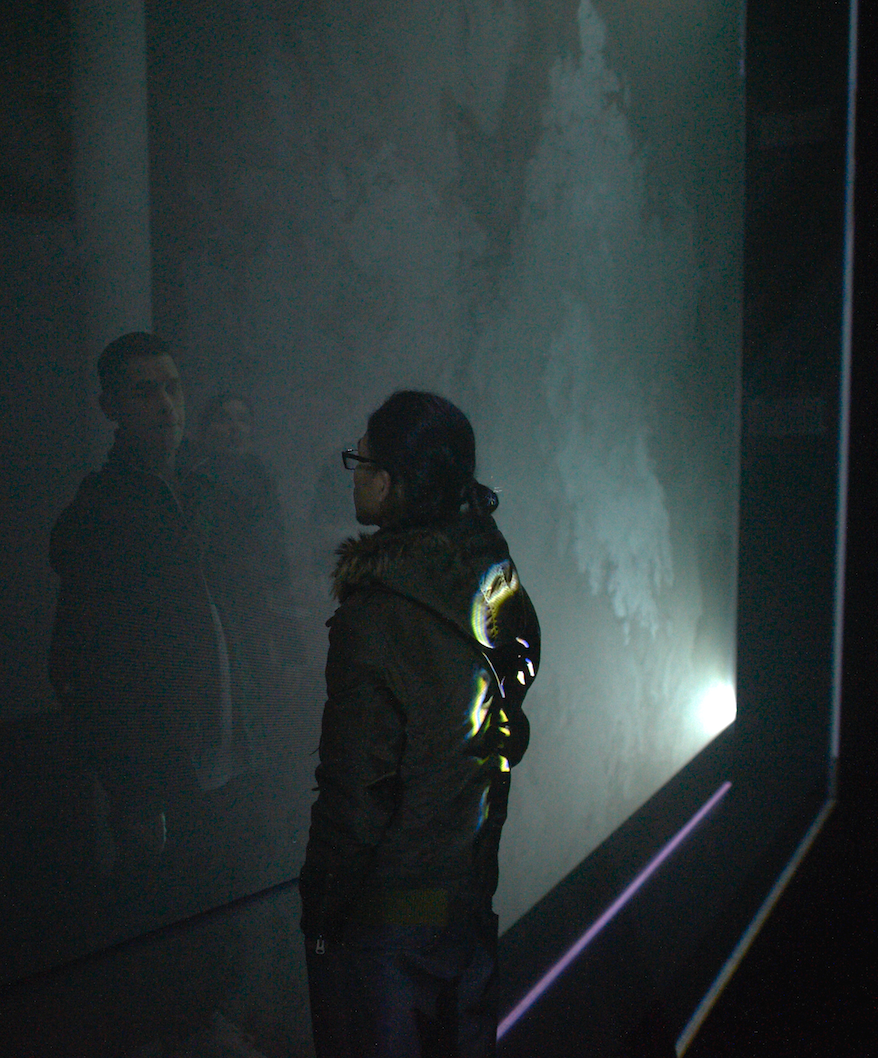
III. Commercial use
AE: In his 2003 TED lecture in the USA, Woody Norris said: »ABC and Sony have devised this new thing, where when you step in the line in the supermarket — initially it will be at Safeways (supermarket chain); it’s at Safeways they are trialling this right now, in three parts of the country — you’ll be watching TV. And hopefully they’ll be sensitive to the fact that they don’t want to offend you with just one more outlet — but what’s great about it, from the tests that have been done, is that if you don’t want to hear it, you take about one step to the side and you don’t hear it. So we create silence as much as we create sound.«
Let me state the obvious first, which is the manipulative character of the last phrase. Who creates silence/sound for whom, and for which purpose? Going beyond that — and also putting aside the fact that the fantasy of ABC, Sony, and Michael Norris fortunately does not yet seem to be the standard in the USA — what still interests me here is the potential of hyperdirectional ultrasound with regard to its commercial uses by industry. If one can be touched by sound then the logical question, from the industrialists’ perspective, is: why not establish auditive channels to promote products? Why not use sound to add atmosphere (i.e. emotive information), as a supplementary dimension of visual advertisements, such as the billboards we see in public space? One could even argue that to address not only visual perception but also additional senses for promotional purposes does not, in fact, mark a paradigm shift. What I am thinking about here, concretely, are the challenges involved in continuously shaping and designing acoustic public space against the shifting backdrop of the apparently differing understandings of the functions of acoustic public space such as occur in our broad variety of cultural situations and contexts. How does adding directional ultrasound intersect with that?
TH: The notion of an ocular public space is very different from that of an audible public space in terms of what is admissible, what is marginalised, and what is deemed to be transgressive. Our everyday actions, relationships, and movements are all modified by sonic, infrasonic, and ultrasonic frequencies. We know how to articulate and define those that are sonic because they occur within the realm of our perceptual mechanisms; but we have little notion of those that fall outside it – ultrasound and infrasound – when it comes to sharing our experience of their utilisation, their affect, and their effect.
As the incoherent rationale of ultrasonics compels us to construct new ways of thinking about waveformed location and situation, it concurrently articulates the language of an age-old struggle. The conflict over public space and over territory (whatever its formulation) has been resonant within human and animal kind ever since environments could be traversed, as Edward Said pointed out in Culture and Imperialism (1993), when he claimed that we are never outside of this negotiation of geography and, by extension, of spatiality. In 1977, Virilio intoned that »[s]ocial privilege is based on the choice of viewpoint (before attaching itself to accidents of fortune or birth), on the relative position that one manages to occupy, then organise, in a space dominating the trajectories of movement, keys to communication, river, sea, road, or bridge.«
One of the compelling aspects of directional ultrasound in a social context is that the speculations around it as a technology are predominantly dystopian ones.
From the perspective of those utilising the ultrasonic beam, the ocular viewpoint is still significant, as targets need to be sighted in the first instance so that the HSS can be trained upon them. But it is the waveformed channel that privileges them with the key to discrete communication. As the linear transmission of the frequencies opens up hermetic corridors of latitude and longitude, it transgresses the mapped logics of distance and vehicular transportation by generating concealed passages. In this way the ultrasonic beam renders the connection between space and distance tenuous; for, at the centre of its calibrating system is the targeted subject’s cranium, whilst its circumference embraces the cerebral amplitudes of sanity and insanity. The only metering of distance that matters here is the one dependent on the direction of a technology that equates the rationale of the compass with the extension of the self into another body.
IV. Potential
AE: Last but not least, I would like to ask: can you imagine there being any positive potential in directional ultrasound technology? Of course, there is the wide and wild field of the arts. Apart from that, I was thinking about the acoustic ecology approach, which addresses the relationship between living beings and their environment as mediated through sound. One of the major concerns of the acoustic ecology approach is the question of how »(to design and create) healthy and acoustically balanced sonic environments.« (World Forum for Acoustic Ecology, 2013).
This brings us to the issue of how to retain meaningful acoustic information yet reduce overall noise. So what do you think, for instance, about guidance systems in airports or train stations realised through the use of ultrasonic frequencies, or about the use of ultrasonic loudspeakers in exhibition design? Do you know any other examples of applications you would consider to be life-enhancing?
TH: One of the compelling aspects of directional ultrasound in a social context is that the speculations around it as a technology are predominantly dystopian ones. In terms of its utilisation within fields such as sonochemistry or medical sonography, for example, it has proven to be a very effective technique; yet when the beam's target happens to be made of flesh and blood, our cultural response tends to harken back to examples of its usage in the sci-fi films, books, and animations of which we spoke earlier. Some of the original concepts for the Hypersonic Sound System speakers in particular foresaw their use by the Navy for ship-to-ship communication, whenever electronic systems were compromised by unforeseen incidents. In a downloadable pdf (ATCSD, 2013), it is also stated that there is a possible use within automobile safety design, namely the ability of the »HSS announcement device in the dash to ›beam‹ alert signals directly to the driver.« Even with such »functional« possibilities that could improve the travel experience, for example, it is problematic to think of ultrasound beams in an overtly favourable manner. Rather than try to think of positive outcomes, maybe it would be more apt to recall J.G. Ballard’s darkly satirical take on an ultrasonic future in The Sound-Sweep, in which he extended and expanded the notion of the beam into a world where:
»since the introduction a few years earlier of ultrasonic music, the human voice — indeed, audible music of any type — had gone completely out of fashion. Ultrasonic music, employing a vastly greater range of octaves, chords and chromatic scales than are audible by the human ear, provided a direct neural link between the sound stream and the auditory lobes, generating an apparently sourceless sensation of harmony, rhythm, cadence and melody uncontaminated by the noise and vibration of audible music.«
— Ballard, 1960
»The extension of one’s voice into the mind of another, without it being perceivable by the sensorium, circumvents all rational practices of defining the self’s relationships to the world at large.«
This short story, first published in Science Fantasy in 1960, is played out in an ultrasonic world, where »noise, noise, noise...[is] the greatest single disease-vector of civilization« (1960: 52); a scourge that is collected (swept) in a fashion similar to the way we pick up and dispose of garbage today. Through this parody of a sonically sanitised environment, Ballard effectively champions that which is outside of, and thus that which haunts, the vector of clean, unfettered communication. Describing the violent cacophony created by noise, he describes the soundscape in which the refuse collector of excess sound operates (a world in which Canadian composer R. Murray Schafer – the founder of the World Soundscape Project and one of the early proponents of acoustic ecology – would later academically achieve what the soundsweep does in pulp form):
»Occasionally, when super-saturation was reached after one of the summer holiday periods, the sonic pressure fields would split and discharge, venting back into the stockades a nightmarish cataract of noise, raining on to the sound-sweeps not only the howling of cats and dogs, but the multi-lunged tumult of cars, express trains, fairgrounds and aircraft, the cacophonic musique concrète of civilization.«
— Ballard, 1960
In the sales pitch that comes with the HSS, we are told that it is these kinds of cataracts that the HSS promises to cut through with surgical precision. With a sharpness of a different nature, Friedrich Kittler, the author of Discourse Networks, informs us that the »very channels through which information must pass emit noise,« (1990: 183—4). Thus, maybe it is not so much that directional ultrasound eradicates noise, but that the dynamics of noise and of sonic excess change their spatial parameters and therefore their expression. From an externalised location of surfaces to an internalised terrain of flows, a whole new politics of perception is being orchestrated. And it is technologies such as the HSS, technologies that work at the edges of the senses, that are involved in this remapping: systems that modulate the cacophonic musique concrète of cognition.
Further Reading
ACGIH (1998), »Damage to human hearing by airborne sound of very high frequency or ultrasonic frequency.« Prepared by the Institute of Sound and Vibration Research for the Health and Safety Executive, pp. 5 (Table 2) —9.
Allen, D. (2009), »LRAD Sound Cannon Used on Pittsburgh G20 Protesters«, Gizmodo (online); www.gizmodo.com/5369190/lrad-sound-cannon-used-on-pittsburgh-g20-protesters (last accessed August 30, 2013).
Arms Division of Human Rights Watch (1999), »Acoustic Weapons: Memorandum For Convention on Conventional Weapons (CCW) Delegates«, First Annual Conference on CCW Amended Protocol II, The United Nations, Geneva, December 16.
ATCSD (2013), »An Overview of American Technology Corporation’s HyperSonic™ Sound Technology«, ATCSD (online); www.atcsd.com/pdf/HSSdatasheet.pdf (last accessed August 30, 2013).
Ballard, J. G. (1960), »The Sound-Sweep«, Science Fantasy, 13 (39).
BBC News (2003), »The Weapons of Bloodless War«, BBC News (online May 13, 2003); www.news.bbc.co.uk/go/pr/fr/-/2/hi/technology/3021873.stm (last accessed 15.3.2010).
Burroughs, W. (1970), Electronic Revolution, Essay Collection, Göttingen: Expanded Media Editions.
Cahn, E. L. (1959), Invisible Invaders, US movie.
Carrington, H. (1931), Story of Psychic Science, New York: Ives Washburn.
Chaudhuri, A. (2012), »When weapons are to be tested, the Gazas become the casualty«, The Sunday Indian (online); www.thesundayindian.com/en/story/when-weapons-are-to-be-tested-the-gazas-become-the-casualty/44225/ (last accessed August 30, 2013).
Deleuze, G. and Guattari, F. (1987), A Thousand Plateaux — Capitalism And Schizophrenia II, Minneapolis: University of Minnesota Press.
Gruenwald, M.; Macchio, R. and Byrne, J. (1979), Marvel Two-In-One, Nr. 54, New York: Marvel Comics.
Heaven, D. (2013), »First mind-reading implant gives rats telepathic power«, New Scientist (online); www.newscientist.com/article/dn23221-first-mindreading-implant-gives-rats-tele-pathic-power.html#.UmQMVOtGXbl (last accessed February 28, 2013).
Heys, T. (2011), »The Utilisation of Waveforms as Weapons, Apparatus for Psychological Manipulation, and as Instruments of Physiological Influence by Industrial, Entertainment, and Military Organisations,« unpublished PhD Thesis, Liverpool John Moores University, UK.
Hitchcock, A. (1940), Foreign Correspondent, US, movie.
Ihde, D. (2003), »Auditory Imagination«, In: Bull. M and Back. L (eds.), The Auditory Culture Reader, Oxford: Berg, pp. 61—66.
Kittler, F. (1990), Discourse Networks 1800 / 1900, California: Stanford University Press.
LRAD (2013), www.lradx.com (last accessed August 30, 2013); »LRAD Product Overview«; (online), www.lradx.com/site/content/view/15/110/ (last accessed 30 August, 2013).
Manning, R. (1979), Newspaper Strips 1979—1980, Collected in: Classic Starwars, (1990) Oregon: Dark Horse.
Miller, F. (1982), Daredevil, Nr. 182, New York: Marvel Comics.
Norris, M. (2003), »TED Lecture Michael Norris« (online); www.ted.com (last accessed March 20, 2010).
Pacheco, C. (2011), Uncanny X-Men, Nr. 1, New York: Marvel Comics.
Pais-Vieira, M., et al. (2013), »Brain-to-brain interface transmits information from one rat to another«, The Guardian (online); www.theguardian.com/science/neurophilosophy/2013/feb/28/brain-to-brain-interface (last accessed 28 February, 2013).
Parascandola, R. and Connor, T. (2011), »Occupy Wall Street: Police use military megaphone to amplify their point to protesters«, NY Daily News (online); www.nydailynews.com/new-york/occupy-wall-street-police-military-megaphone-amplify-point-protesters-article-1.979585 (last accessed August 30, 2013).
Paranormal Encyclopedia, (2013); www.paranormal-encyclopedia.com/t/telepathy/ (last accessed August 30, 2013).
Pasternak, D. (1997), »Wonder Weapons: The Pentagon's quest for nonlethal arms is amazing. But is it smart?«, U.S. News (Online, 29 June); www.usnews.com/usnews/culture/articles/970707/archive_007360.htm (last accessed February 5, 2010).
Rand, A. (1957), Atlas Shrugged, US: Random House.
Rose, S. A. (1954), Target Earth, US, movie.
RT news (2011), »NYPD blast LRAD sound cannons at OWS« (online); www./rt.com/news/ows-police-sound-canons-603/ (last accessed August 30, 2013).
Safety For Sea (2013), »Protecting yourself before, during and after a pirate attack«(online); www.safety4sea.com/page/10834/4/protecting-yourself-before,-during,-and-after-a-pirate-attack (last accessed August 30, 2013).
Said, E. (1993), Culture and Imperialism, London: Vintage.
The Free Dictionary (2013): www.thefreedictionary.com/telepathy (last accessed August 30, 2013).
Thomas, G. (2013), »Sonic device deployed in London during Olympics«, BBC News (online); www.bbc.co.uk/news/uk-england-london-18042528 (last accessed August 30, 2013).
The Omega Foundation (2000), »Crowd Control Technologies: An Assessment of Crowd Control Technology Options For the European Union«, EP/1/IV/B/STOA/99/14/01, presented to the LIBE Committee of the European Parliament, August 29.
Trinity Blood (2005); www.myanimelist.net/anime/27/Trinity_Blood (last accessed August 30, 2013).
Virilio, P. (1977), Speed and Politics: An Essay on Dromology, New York: Semiotext(e).
World Forum for Acoustic Ecology (2013); www.wfae.proscenia.net (last accessed August 30, 2013).
YouTube (2009), »Long Range Acoustic Device (LRAD) G20 Pittsburgh« (online); www.youtube.com/watch?v=QSMyY3_dmrM (last accessed August 30, 2013).
YouTube (2013), »NORUSCAI« (online); www.youtube.com/watch?v=k7r-V6rDOpA. (last accessed August 30, 2013).
Toby Heys is an artist and current Digital Research Fellow at the Manchester School where he leads the Media Research Centre of Art. He is also an active external member and researcher within Hexagram/CIAM (Centre for Research-Creation in Media Arts and Technologies at Concordia University/Université du Québec à Montréal, in Québec, Canada).
The work of Berlin- and Cologne-based artist Anke Eckardt encompasses installations and sculptures, teaching, and theoretical work that contributes to the discourse on the phenomenology of sound.
This text was originally published by Berlin’s Revolver in Anke Eckardt’s monograph Sonic Spaces: Ground — Wall — Verticality in 2013, and again in CTM Magazine 2015 – Un Tune.