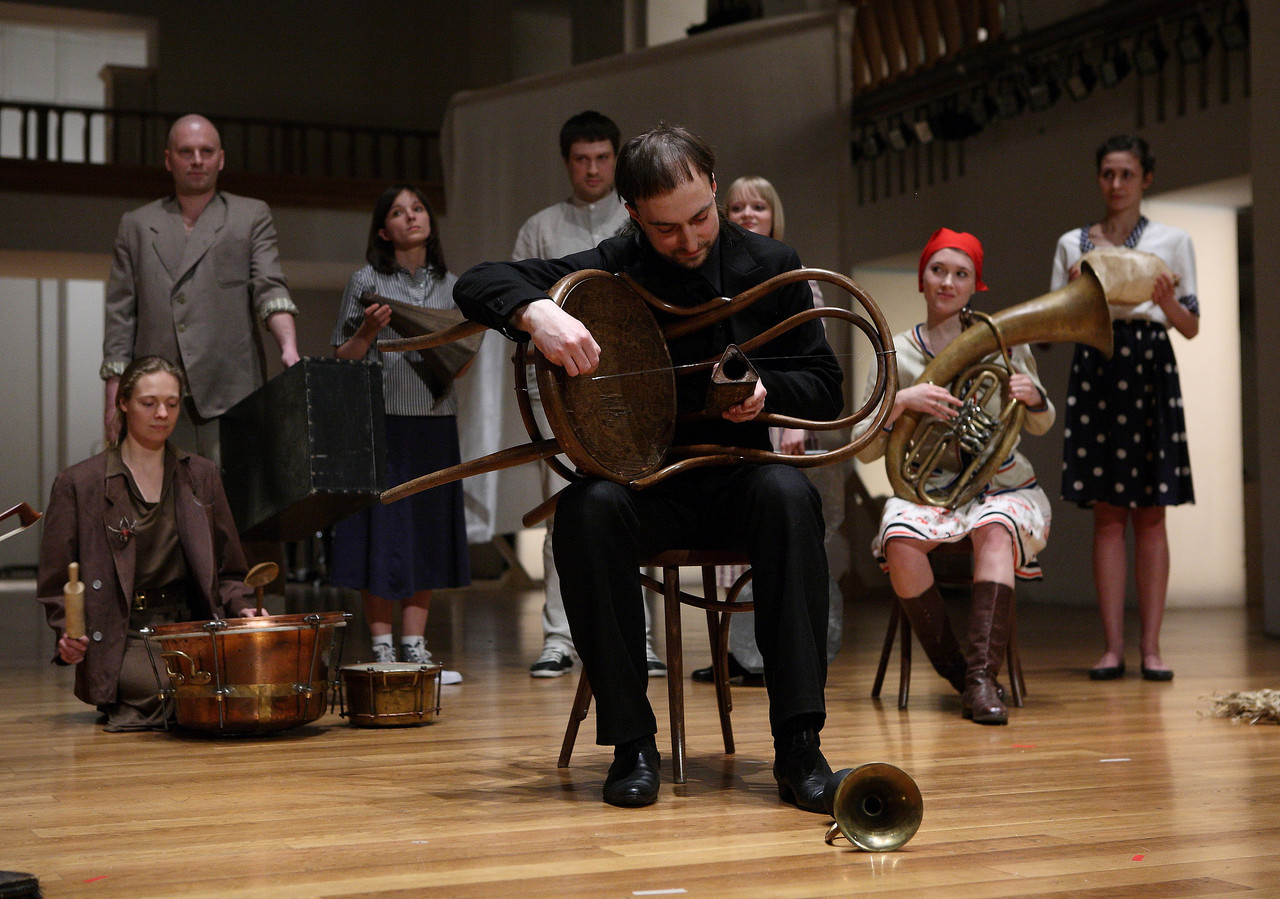
Probably one of the most distinct features of the Russian noise movements of the time is the absence of a single predominant tendency, whether rooted in Futurist ideas or other schools. One may refer to Constantin Stanislavski’s autobiography, My Life in Art, in which the theatre director recalls a production titled The Snow Maiden from 1900, which featured a backstage noise orchestra consisting of »whistles, castanets, and other machines, many of them invented by ourselves for the purpose of making peculiar noises.« This and other references to stage practices at the turn of the 20th century reveal that theatre in particular made increasing use of noises. Yet the case of The Snow Maiden shows a fascinating correspondence with noise accompaniment not uncommon in medieval Russian folk traditions. Relics of the vast skomorokh tradition, which is characterised by the use of unconventional self-made instruments or just ordinary objects, have partially survived in the practice of musical eccentrics. Many such traditions, employed by musical clowns at the turn of the century, shifted to avant-garde theatrical circles in the early 1920s. Within the exhibition Generation Z: ReNoise, a number of such eccentric musical devices, reconstructed by The Music Laboratory group1 will be exhibited: a bottlephone (a percussion instrument with hanging bottles), a pig bladder and vein »string« attached to a mop, a saucepan drum, and others.
Although it is difficult to trace the origins of Soviet noise orchestras, they seemingly first appeared in 1921 as part of small agitational theatre troupes. Others, such as the nearly obscure Poekhma – who played brooms, doorbells, car horns, sticks, etc., imitating steam engines or the soundscapes of metropolises, and even held concerts in the Saratov Conservatory – stayed closer to the late Futurist scene and to Proletkult (proletarian culture movement) in particular. The year 1922 saw the further emergence of noise orchestras that performed as a part of the Moscow Proletkult Theatre and Mastfor (the workshop of Nikolai Foregger). Under Sergei Eisenstein’s guidance, the Proletkult comic noise band was set up along with a project that strove to create »orchestras of the separate industry sector,« where the instruments should have represented particular types of (industrial) production. Foregger’s orchestra, according to some recollections, must have represented a comic trait as well as an industrial one, especially when accompanying the machine and electrical dances for which Mastfor was renowned. Even though Mastfor soon disbanded and Eisenstein became more and more involved in motion picture production, the practice of noise orchestras, combining harsh noises with imitations of standard instruments, spilled over into other theatrical groups, particularly in the genre of a »Living Newspaper,« of which The Blue Blouse group attained the most fame. Das Rote Sprachrohr and Rote Fahne, two allied agitprop groups in Germany, had similar noise initiatives.
...routed through ancient folklore and musical clownery, avant-garde sound art, and, in some ways, a taste for jazz, noise music entered the terrain of Bolshevik mass education.
These eccentric noise orchestras survived until the mid-1930s. However, they gradually shifted from small avant-garde theatres and agitprop brigades to larger proletarian masses, and appealed especially to the younger generation, for whom noise bands served as the initial step to musical education. It is remarkable that Eisenstein’s former colleague and Proletkult actor Boris Yurtsev contributed greatly to this shift. In his plays for Proletkult and other pioneering theatres of the mid-1920s, he insisted on using the same instruments and adhering to Eisenstein’s approach. According to Yurtsev, noise music as a simple organisation of sound that requires merely everyday objects and work tools, and can even be made using trash, provides the best entrance into musical education. Thus, routed through ancient folklore and musical clownery, avant-garde sound art, and, in some ways, a taste for jazz, noise music entered the terrain of Bolshevik mass education. It fell on fertile ground, since rural traditions of amateur music-making had survived until that day. Another reason for the rapid growth of proletarian noise ensembles was the deficiency of professionally manufactured instruments, especially after World War I and the Civil War. Amateur instruments meant to substitute for professional ones coincidentally conformed to the Marxist concept of overcoming the alienation from the products of labour, caused by specialization and division of work. Even more importantly, these amateur practices advanced »art into life,« by making no distinction between everyday life and art, production and culture, work and leisure, musical instruments and working tools. In this regard, the amateur noise movement partly satisfied what was proclaimed in 1923 by the productivist theoretician Boris Arvatov, »that for the first time musicians hadn’t a desire to organize artificial non-vital sound material, but material of life as such (street and factory noises etc.), noises of everyday life.«
The late 1920s saw the peak of these rural and urban amateur noise ensembles, whose repertoire might have included revolutionary marches, folklore songs, or even imitations of approaching trains or an iron factory, as took place in Moscow in the First Experimental School in honour of Karl Marx. Throughout the second half of the 1920s, some musical educators published a small number of handouts for those involved in amateur noise activities. These hard-to-get brochures remain a basic resource on instrument construction. Some of the most exotic and acoustically advanced are presented in the version of the Generation Z: ReNoise exhibition presented at CTM 2014.
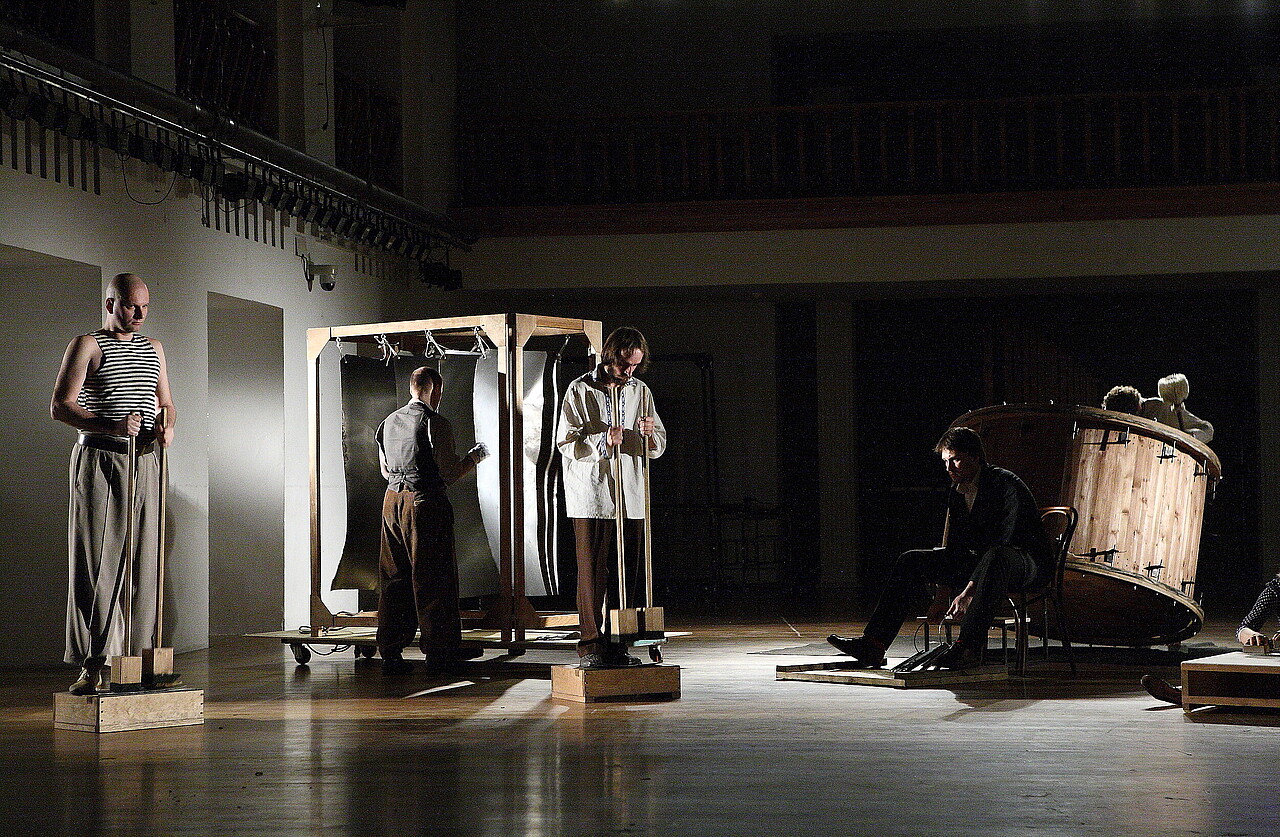
The evolution of noise practices in the first years of the Soviet Union, however, would not be considered accomplished had there been no revival of the early Proletkult projects, a revival that occured with the advent of sound in film in the early 1930s. Apart from Dziga Vertov’s field recordings (particularly his recordings of industrial sound sources, best represented in his celebrated 1930 film, Enthusiasm), another noise method, which became quickly outdated, was to create soundtracks by theatrical means resembling a more complex version of Foley art. In the »Generation Z: ReNoise« exhibition, this method is demonstrated in two movies: Boris Yurtsev’s An Elegant Life and Alexander Macheret’s Men and Deals (both 1932). Acoustically, Yurtsev and Macheret attempted to restore the noise utopias of the early 1920s. It is thanks to their efforts that we may still witness today how noise orchestras (especially the industrial ones) might have sounded in Proletkult, Mastfor (in which Macheret acted), or The Blue Blouse (where Macheret supervised one of its groups in the mid-1920s).
There is no doubt that the experiences of Yurtsev and Macheret in avant-garde and agitprop theatres laid the foundation for their »industrial symphonies,« admittedly impossible without contributions from one of the leading experts in theatrical sound design – Vladimir Aleksandrovich Popov (1889–1968). Throughout his career as an actor in the MKhT (Stanislavsky Moscow Art Theatre), Popov was encouraged by Stanslavski to invent various devices that could give more vivid sound impressions on stage as early as 1908. Throughout the next decade, the number of his inventions increased, so that by the 1920s they shaped the sound of plays presented by MKhT-2, Vakhtangov Theatre, or Gabim Jewish Theatre. Popov not only brought existing devices up to scratch, but also worked as a true originator of hundreds of machines, from simple handy devices to complex machines such as pipe organs, which produced sounds through factory and steam engine whistles. What is perhaps more important is that special brigades, supervised by Popov himself, staged the »noise symphonies« for each production, so that they were regarded not as mere sound effects, but as characters onstage. His thorough approach to noise production made Popov’s undertakings indispensable for sound movies, particularly where rich and complex soundtracks were needed, as the natural environment in those days could by no means be reproduced perfectly through sound recordings. Moreover, since »noise symphonies« had to be composed rather than recorded, versatile sound textures were created, such as the one from the »Battle on the Ice« scene in Eisenstein’s Alexander Nevsky.
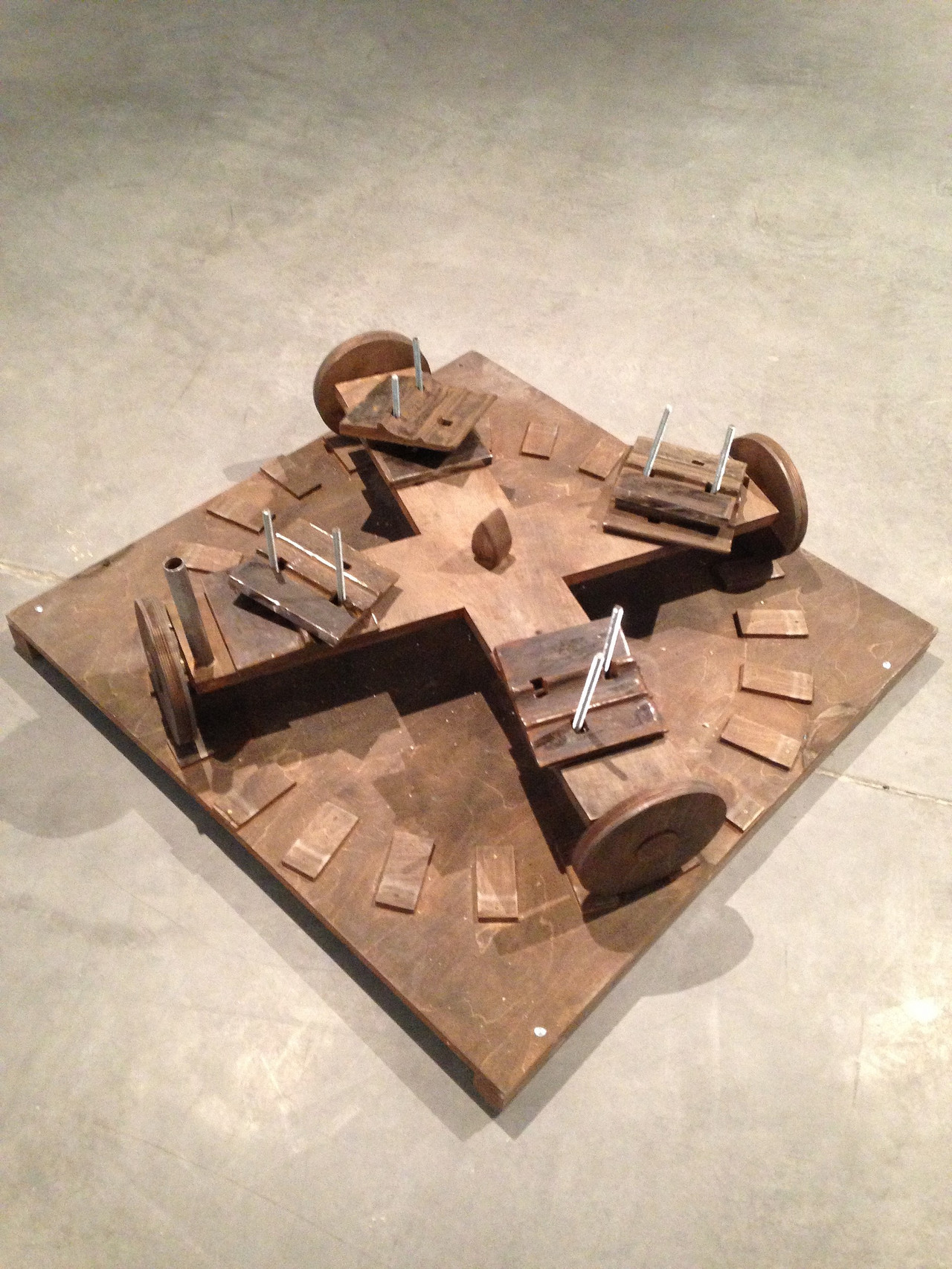
The »ReNoise« section of the Generation Z exhibition offers an opportunity to examine some of these devices that were mainly constructed to reproduce industrial and machine noises, and also try them out. As was the case at the major exhibition at the Polytechnic Museum in Moscow in 2012 as well as other venues, visitors are invited to compose their own soundtracks. Screened performances by The Music Laboratory and a workshop leading to a live performance exemplify contemporary usages of these machines. Such performances connect both amateur and »professional« noise making, thus making them historically and aesthetically coherent. Unexpectedly, early Soviet noise machines recreated by the group of musicians, stage designers, and researchers resemble modern sound installations, demonstrating the continuity of utopias of the past and contemporary sound practices.
ReNoise is a project by Peter Aidu, Konstantin Dudakov-Kashuro, and Evgenia Vorobyeva.
Peter Aidu is a musician, curator, and head of The Music Laboratory. A laureate of several international contests, he teaches piano, harpsichord, and chamber orchestra groups at the Moscow Conservatory. In 2007 he established The Piano Shelter – a collection of specially conserved pianos. In 2009, Aidu with The Music Laboratory initiated the revival of »PerSimfAns – Symphony Orchestra without a Conductor.« He is the director of the performance project »Reconstructing Utopia,« and co-curator of the »ReConstruction of Noise« exhibition, which was shown in Moscow, St. Petersburg, Vladivostok, and other Russian cities.
Konstantin Dudakov-Kashuro is a scholar, assistant professor at Lomonosov Moscow State University, member of The Music Laboratory, and DJ. In 2006 he completed his Ph.D. in Cultural Studies, comparatively studying Italian Futurism and German Dada poetics. His main research interests – cultural philosophy, modernism, and avant-garde aesthetics – motivate his involvement in PerSimfAns, »Reconstructing Utopia,« and »ReConstruction of Noise« (together with Peter Aidu). He is a member of the European Network for Avant-Garde and Modernism Studies and The Centre for Avant-Garde Studies at the University of Iceland, and writes on the history of early Soviet noise music.
Evgenia Vorobyeva studied at the P. I. Tschaikovsky Conservatory in Moscow, where she holds the position of director of the Department of Foreign Affairs. Since 2010 she has been active as producer, manager, and curator of various projects, a.o. the exhibitions Noise Orchestras of the 1920s. Unkown Proletarian Music at the Moscow Jewish Museum, and Reconstruction of Noise at the Moscow Polytechnical Museum.
- 1
»The Music Laboratory« is a group of musicians and researchers in Moscow, who, over the past five years, have been studying various early Soviet sound ventures, reconstructing instruments, and performing the music of the time.