
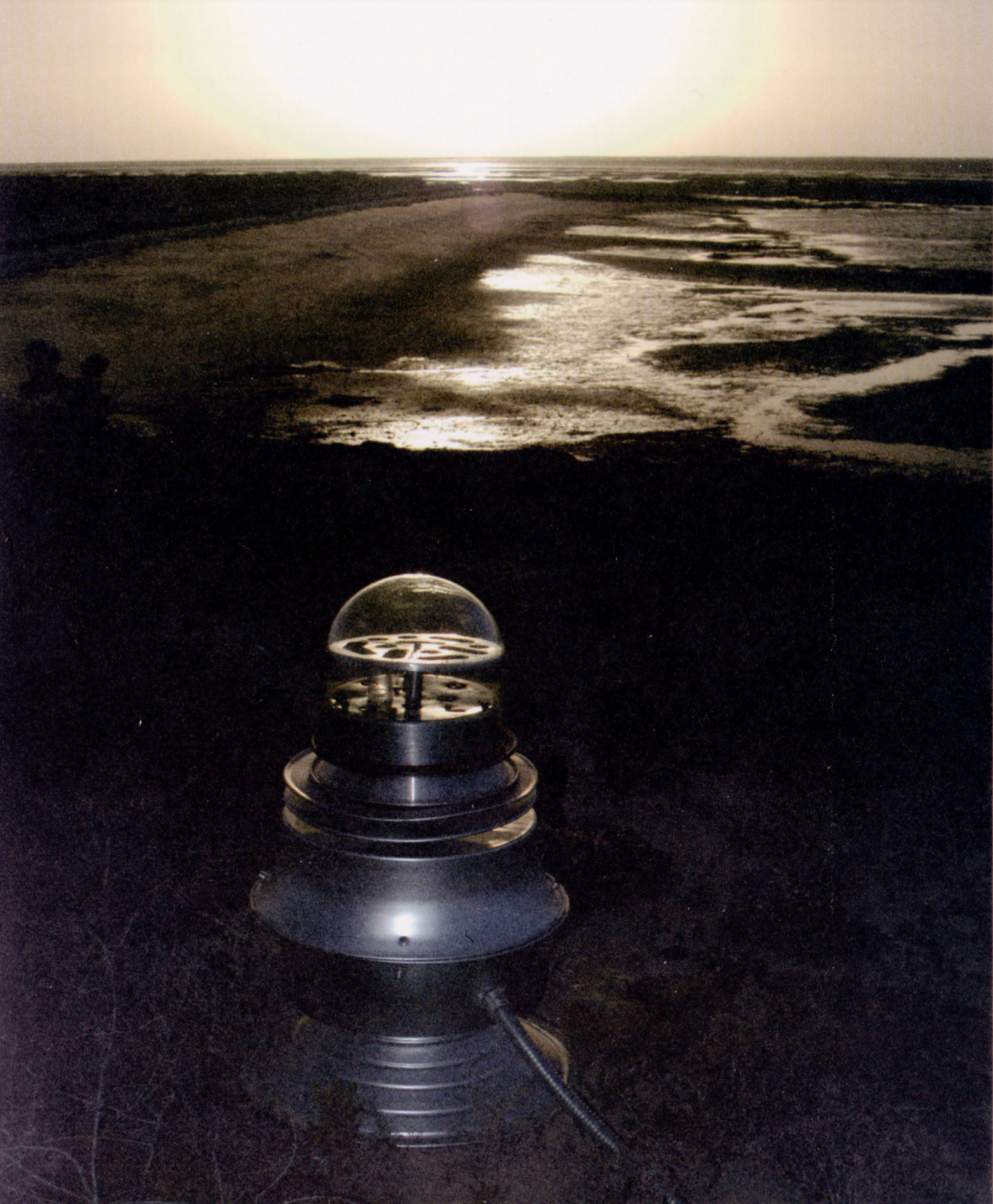
The text »Remnants« serves as a poetic embryo for a project he has been pursuing for more than a decade now. In it, he imagines and researches ways to establish contact and communicate with whales and dolphins. Guzik’s experimentation is rooted in aspects of chaos theory and expands on the observation that the perception and communication of cetaceans are, in essence, instances of a single circular process of emitting and receiving sound waves. His long-term goal is the construction of »The Narcissus Ship,« a manned submarine equipped with underwater musical instruments. Such a ship would enable encounters between humans and cetaceans as inhabitants of parallel civilisations, without hierarchies or intentions of domination and devoid of utilitarian or practical research interests. Both the ship and the preparatory text are manifestations of Guzik’s desire to confront the human consciousness with an unknown outside where rules and systematic projections have no value. The fathomless open ocean is analogous to the imminent and undetermined white field – in both, humans find themselves without topography, without routes or maps.
In the phase preceding the construction of this vessel with no rudder, this text on the residual sparks of life serves as a sort of ontological vignette in prose. In it, Guzik shares his electrifying vision about the white, magnetised field from which life sprouts and which he uses to create a unique, reflexive foundation where he can place his creations and artefacts, whether they be concepts or machines.
Remnants
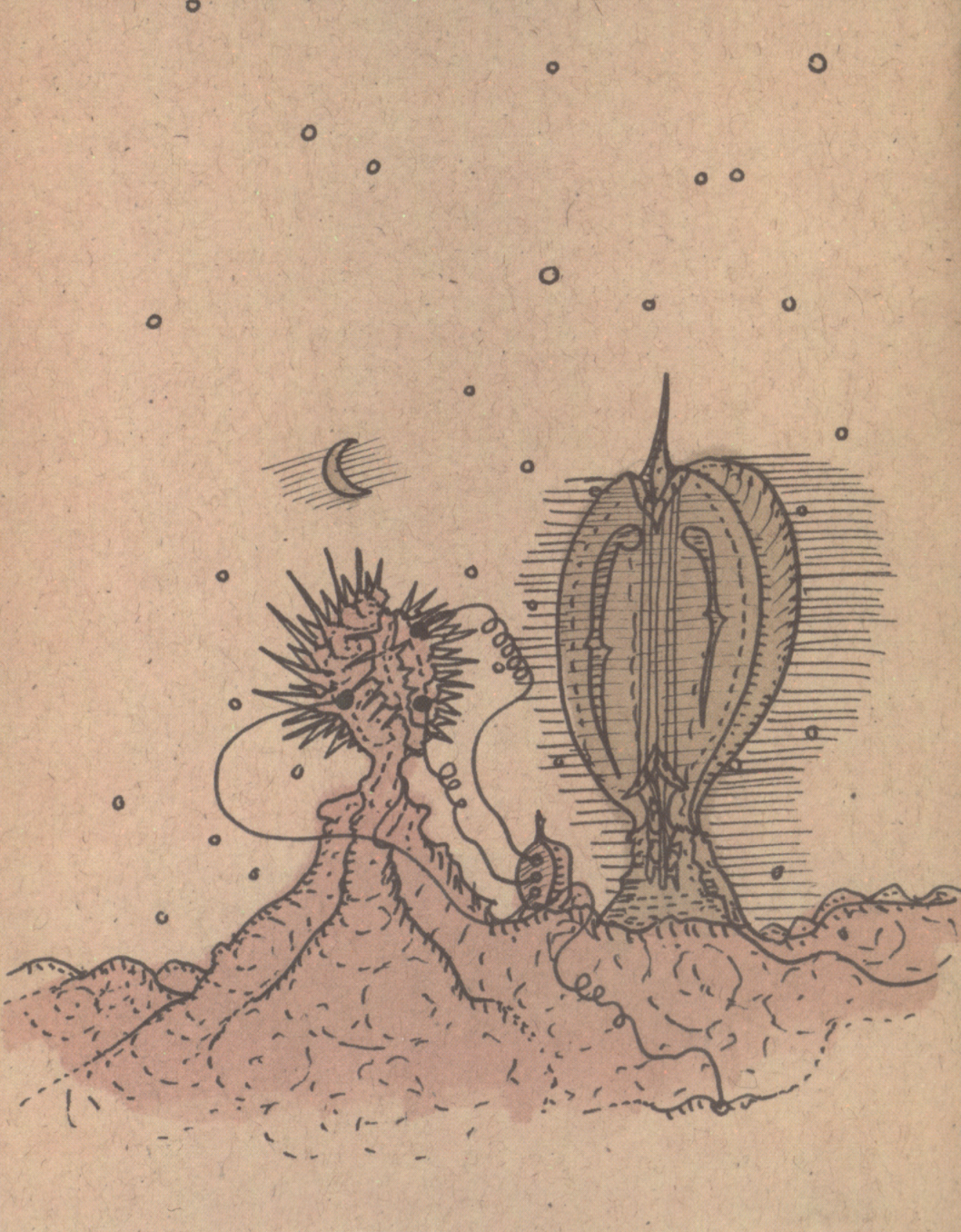
The white field is a place from which myriads of agglomerations and mounds can be observed on its periphery. Some of these protuberances accumulate the surplus fragments from every process of creation. In others, countless particles settle after being scattered when something explodes or is destroyed. In yet others lies the remaining dust from everything that once had life or movement. The closer these sinuosities converge at the threshold of the white field, the more atomised and compact are the particles that form them.
Once at that threshold, where the light is blinding and the heat is unbearable, the corpuscles are infinitely small and luminous; an innumerable amount of particles and vibrations can be found. Seen as a whole, the animate specks form a white, homogenous glow – but if observed separately, each is peculiar and unique. To the ear, the sum of all vibrations is perceived as an endless »S« sound, and every grain of dust constitutes a primordial signal. This white light is the sum of every light and its sound, the sum of all sounds, just as the sun implies every gleam and the murmur of a waterfall embodies the song of every one of its droplets.
However, all of this is perceptible only at the borders of the white field. The place itself is inaccessible, not because it cannot be entered, but because there seems to be no apparent return, and because the field has already been described – not in simple words but with hard laws, one of which forecasts no more and no less than the end of the universe.
Chaos reigns inside the white field: its repertoire of particularities is of such extent that it spreads beyond the limits of our sensorial capacity of classification, and can only be grasped by imagination and mathematical minds. Entropy, it has been called: a measurement of all residual scrap from every work process; the inverse of certainty; the paradoxical outcome of the universal quest for equilibrium which, in turn, leads to a progressive, dull homogeneity that sooner or later will end with it all. So dictates the second law of thermodynamics.
Nonetheless, some of those remnants – animated by a whirlwind of miraculous craft that persistently, rebelliously, turns every smidgen into a fresh possibility — fly out of the white field to re-encounter the lattice, where a prodigious weave shall bring forth life anew.
Ariel Guzik’s work is included in the CTM 2017 Exhibition: Critical Constellations of the Audio-Machine in Mexico, curated by Carlos Prieto Acevedo.
This text was originally published in CTM Magazine 2017 – Turmoil.