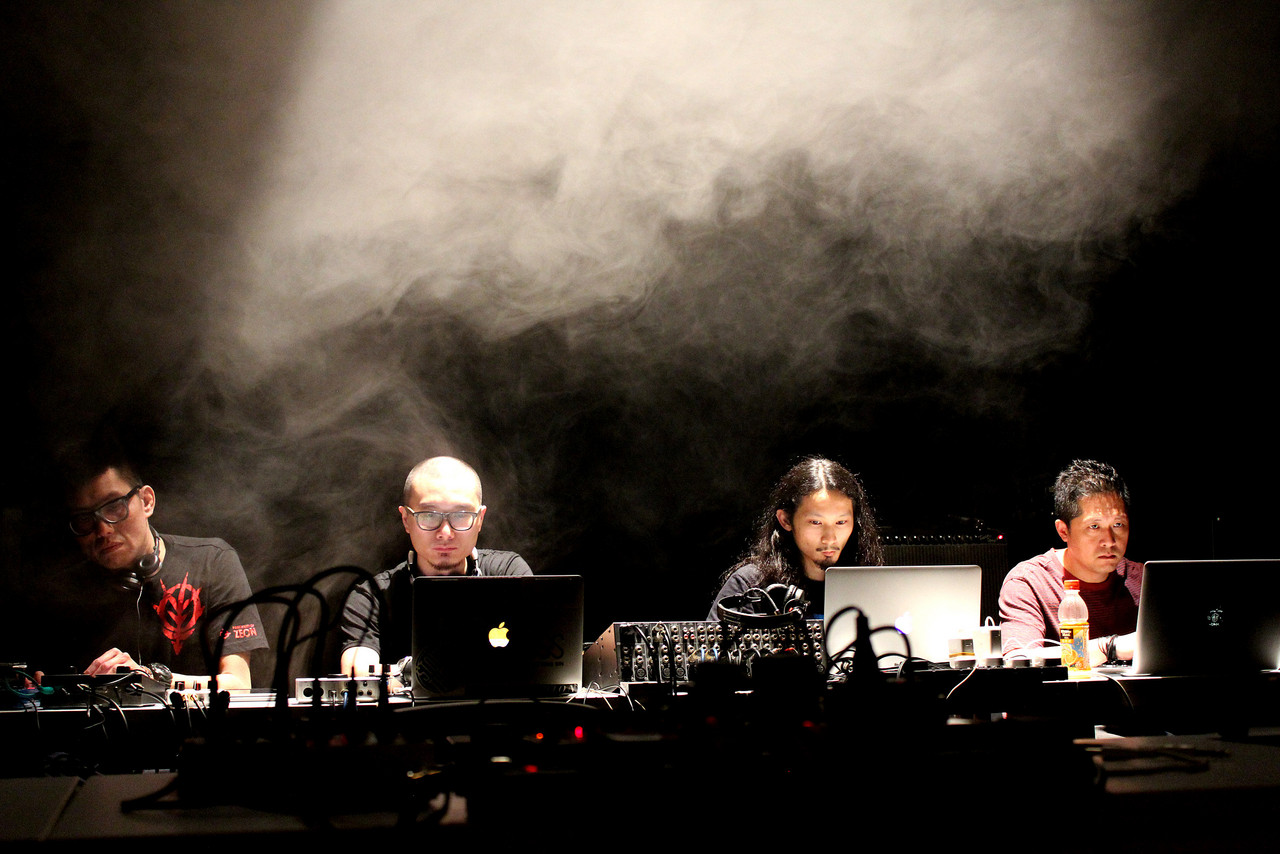
The internet is a vast, perpetually growing space. It is a place where users can find impressive amounts of information, and it should be a place where anyone interested in topics relevant to history and art could easily find answers that provoke further interest and engagement. Unfortunately, regarding music, at least (whether popular or academic), knowledge sharing still often goes in one main direction: from the navel-gazing Western world and Japan to the non-Western world, with a few small exceptions concerning traditional music.
To put it simply, knowledge exchange commonly takes place between three groups: the knowledge producers (in this case musicians and composers), intermediaries (labels, magazines, organisers, and other media) and those who receive and/or use that knowledge (listeners). Obviously and especially at the present time when musicians and artists tend to be their own managers, concert organisers, and publishers, some take part in all three groups at once. The producer is also a listener and tends to receive a certain amount of information that can be seen as influence, conscious or not.
In January of 2005, I left Europe for six months to tour across various Southeast and East Asian countries. My goal was to perform, meet musicians and organisers, share CDs, buy as many records as I could, and bring all that back to Europe to show all my European »detractors« that, yes, there are experimental and electronic music artists in Asia, too. Throughout the tour, I noticed that there was an enormous lack of networks between the local countries. This was one of the facts that pushed me to publish a first global compilation (Beyond ignorance and borders, Syrphe, March 2007) to include various musicians from Asia (and Africa). It also motivated me to go back several times to explore more of that part of the world to build networks; collaborate; create a database for artists, labels, magazines, and venues; and to dedicate most of my label's work to Asian and African alternative electronic music and sound art.
The opening track from the <em>Beyond ignorance and borders</em> compilation, »Distor-Summer« by Hùng Nguyễn Mạnh.
Label: Syrphe, 2007.
The opening track from the <em>Beyond ignorance and borders</em> compilation, »Distor-Summer« by Hùng Nguyễn Mạnh.
Label: Syrphe, 2007.
Back then, I remember some Chinese artists wondering what I had done in Vietnam and telling me they were surprised to hear that there were noise musicians in Hanoi, or Singaporean musicians laughing at me when I asked them for info about the Indonesian experimental music scene – they had never heard of such a thing. Many of those artists and organisers would refer to Japanese, North American, Western European, and, to a lesser extent, Australian musicians, and had no or few connections with their neighbours. The situation was similar half a century earlier, even though a handful of composers and musicians have had the will or the opportunity to travel from abroad to Asia and vice versa.
Ever since the 1950s and 1960s, most, if not all, East Asian electronic and experimental music composers have primarily been influenced by the European or American schools due to the fact that electric, synthetic, electronic, experimental, and tape music was first developed and established in countries such as the Soviet Union (which unfortunately remained isolated for a long period), Germany, the USA, etc. The first formative electronic music and musique concrète studios that arose after the Second World War were in France, Italy, Germany, and the USA. Post-war avant-garde composers began to present their works and new ways of composing around the world, and as a consequence, some Asian composers who showed interest in electronic, tape music, and musique concrète got the opportunity to study in various Western schools or to gather information from Western sources; for example, the publication Technische Hausmitteilungen des NWDR – Sonderheft über elektronische Musik (Technical Proceedings of the NWDR – Special Issue on Electronic Music) from 1954 was translated into Japanese by a group of technical engineers from Japan's public broadcasting service NHK.
I remember some Chinese artists wondering what I had done in Vietnam and telling me they were surprised to hear that there were noise musicians in Hanoi, or Singaporean musicians laughing at me when I asked them for info about the Indonesian experimental music scene – they had never heard of such a thing.
Studying in foreign countries was surely not a novelty. For hundreds of years, artists travelled abroad to improve their skills and study new techniques: Japanese artists have studied in foreign countries since at least the 8th century, when painters, craftsmen, and sculptors working for the imperial court travelled to China to study the advanced styles of the Tang civilisation. Colonisation affected not only the colonised citizens but also the colonisers' cultures (see Debussy's use of the ostinato and the pedal in compositions inspired by the Javanese gamelan, for example).
Post-war Japan recovered much more quickly than any other East Asian country, and some original musical concepts sprouted a few years after the Japanese Instrument of Surrender was signed: in 1948, Japanese composer Toru Takemitsu conceived of a music in which he could use technology to »bring noise into tempered musical tones,« and in 1949, another Japanese composer, Minao Shibata, wrote that »someday, in the near future, a musical instrument with very high performance will be developed, in which advanced science, technology and industrial power are highly utilised. We will be able to synthesise any kind of sound waves with the instrument.«
It should be noted that post-war Japan was an exception: while all countries occupied by Japanese forces and most of those occupied by European countries and the US were quickly freed after the war and often turned to nationalism and/or various forms of dictatorships, Japan continued to be occupied by the USA and influenced by its military, political, economic, and social reforms from 1945 until 1952. In other words, the USA made a partly successful attempt to transplant its culture onto a very traditional and conservative country, and had a bigger influence on Japan than on any other neighbouring country.
Radical political and cultural movements emerged on the archipelago, among them the Nihon Avangyarudo Bijutsuka Kurabu (Japan Avant-Garde Artists Club, 日本アヴァンギャルド美術家クラブ), founded in 1947 by Shuzo Takiguchi and Jiro Yoshihara. Yoshihara also co-founded Gutai Bijutsu Kyokai (Art Association of Gutai, 具体美術巨魁), a multimedia performance and theatrical art group, in 1954, and meanwhile, Jikken Kobo (実験工房, Experimental Workshop), a group of mixed-media projects and performing arts artists coming from various backgrounds (audio, visual art, poetry, etc.) saw the light in 1951. Unsurprisingly, Toru Takemitsu took part in it.
In 1955, composer Makoto Moroi visited the electronic music studio of the Nordwestdeutscher Rundfunk (NWDR) in Cologne, West Germany and met electronic music pioneers Herbert Eimert and Karlheinz Stockhausen. Following his visit, he and Toshiro Mayuzumi guided the NHK to build the first Japanese electronic music studio. Korean-born Nam June Paik also visited the NWDR studio, where he met the composers Stockhausen and John Cage as well as various conceptual artists like Joseph Beuys. This inspired him to compose experimental music, including the piece »Hommage À John Cage,« as early as 1958–59. In 1962, he also became a member of Fluxus.
Meanwhile, Filipino composer and musicologist José Maceda, who had studied in Manila and Paris before the war and in the USA afterwards, worked with the Groupe de recherches musicales (GRM) in Paris in 1958. In spite of his knowledge of Western classical music, Maceda took an original direction. While he was inspired by French musique concrète, he also remained influenced by folk music and developed a particular approach in contemporary music with compositions such as »Ugma-ugma — Structures« (1963), which mixed various traditional music instruments from Southeast and East Asia, »Cassettes 100« (1971) for 100 tape recorders and »Ugnayan — Atmospheres« (1974) for 20 radio stations broadcasting pre-recorded tapes.
Another artist worth mentioning is Indonesian composer Slamet Abdul Sjukur, who received a scholarship that allowed him to go to France, where he studied at the École Normale de Musique de Paris (1962–67) with Olivier Messiaen. In 1968, he had the opportunity to study briefly with Pierre Schaeffer at the GRM. Sjukur had also already experimented with tapes in 1963 in Indonesia with the composition »Latigrak.«
In 1960, Taiwanese composer Lin Ehr began to study computer music at the University of Illinois in Urbana-Champaign with guidance from the father of computer music, Lejaren Hiller. In 1968, he composed »Computer Sonata.« He and Lee Tai Hsiang remained two of the very few Taiwanese composers to create such music in these early times, yet he himself remained more famous for his pop and classical music compositions.
Through the 1950s and 1960s, very few connections between East Asian countries had been made, but the late 1960s and early 1970s saw a watershed of change. In 1969 South Korean artist Seok Hee Kang, who had studied in Berlin, founded the Pan Music Festival, where he and Byeong Ki Hwang performed a piece for daekum and tape. Four years later, in 1973, the Asian Composers League (ACL) was founded in Hong Kong with the aim of fostering contemporary music that incorporated both Western and Asian Pacific instruments and influences through conferences and festivals. It also promoted mutual exchange between these countries.
Following its first meeting in Hong Kong, almost yearly meetings took place in various Asian capitals and expanded to other countries such as Singapore, Indonesia, Vietnam, and even Israel.
While its earlier network was pyramidal and Western-centric, East Asia is slowly adopting a rhizomatic network not only focused on the West but conscious of its own realities, identities, and future possibilities.
But the league, as most conservatories and electronic music centres were and are still today, was an essentially closed circle. It was often related to the middle and upper classes, which above all tend to exclude so-called popular music and popular approaches to experimental music. The gap between the academic and non-academic world in Asia and anywhere else on Earth remains, even though there are some attempts to improve the situation.
Taiwanese composer Dajuin Yao stated in a 2003 interview that »serious music is no longer monopolised by the academy, as it certainly was several decades ago.« Indeed, a few initiatives tend to fill the gap, such as what the private school DomDom did in Hanoi in its past activities. The school taught methods of improvised and experimental music to students, whether they came from an academic background or not, and organised concerts and workshops to spread knowledge. The aforementioned Dajuin Yao moved to the mainland and co-founded the Chinese Computer Music Association (CCMA), which sponsored the 1999 International Computer Music Conference in Beijing, in 1999. He is currently a professor in sound art and the director of Open Media Lab at the China Academy of Art in Hangzhou.
Due to various factors such as the expanding mail art and tape trading networks and the slow democratisation of the island from 1986 on, including the first direct presidential election in the history of the island in 1996, Taiwan saw the birth of a radical experimental music scene in the early 1990s. This wave was led by artists such as noise and industrial band Zero & Sound Liberation Organization (零與聲音解放組織) in 1992 and experimental punk band Loh Tsui Kweh Commune (濁水溪公社) in the same creative period, and was followed in 1993 by Taiwan's first industrial and noise music label, Noise, which published numerous cassettes and other media by Japanese and Western artists. The country's first noise and experimental performance festivals, Broken Life Festival and Post-Industrial Arts Festival, took place in 1994 and 1995, respectively, and included various Taiwanese artists (Z.S.L.O., L.T.K. Commune), Japanese noise artists (Killer Bug , C.C.C.C., etc) and European artists (Swiss noise performers Schimpfluch-Gruppe and British power electronics performer Con-Dom).
Small underground connections also arose: in 1994, the Canadian label Somnus released a compilation called Eternal Blue Extreme: An Asian Tribute to Derek Jarman that included artists from Japan (Merzbow, C.C.C.C., Otomo Yoshihide, Aube), Hong Kong (Juno, PNF, I.666) and Taiwan (Z.S.L.O.). In 1998, US label Auscultare Research published a compilation curated by Randy H.Y. Yau that featured noise artists from Hong Kong (PNF), Taiwan (Ching Shen Ching, Z.S.L.O.), and Japan (Government Alpha MSBR, Kazumoto Endo, etc.).
Unfortunately, the enthusiasm diminished relatively quickly. Few artists remained active after the mid-1990s, and the Taiwanese scene only re-emerged later, in the early 2000s, once the Chinese DIY scene had expanded and spread into neighbouring countries. Indeed, even though the first electro-acoustic music concert in China took place in 1984 at the Central Conservatory of Music in Beijing following an initiative by Zhāng Xiǎo Fú, Zhū Shì Ruì, Tán Dùn, Chén Yí, Zhōu Lóng and Chén Yuǎn Lín (who founded the first studio at the Central Conservatory of Music in Beijing in 1986 after studying at the State University of New York), an independent experimental music scene didn't emerge until 1999. This emergence happened partly thanks to sound artist and concert organiser Yan Jun, who published on his label Sub Jam, as well as to DIY pioneers Wang Fan, Pandwa Twin and Ronez, to mention a few.
In the mid- to late 2000s, musicians from major mainland cities had developed a real network for electronic musicians playing electro-acoustic, noise, breakcore, or electronica. Concerts would take place in major centers such as Beijing, Shanghai, and Guangzhou, but also in Guilin and Changsha, for example. Musicians from South Korea, Japan, Hong Kong, Australia, Belgium, Canada, and other countries started to tour China. Japanese, Taiwanese, Hongkongese, and other foreign artists were published on Chinese labels such as Sub Jam, Doufu Records, Shasha Records, and Shànshu. Some print and online press dedicated to underground music began to regularly publish news and reports about electronic, noise and experimental music. Examples include Rock in China, a database and news platform focusing on underground music in China since 2004; Gothic Age, a magazine publishing articles and interviews about the dark ambient, industrial and gothic scenes; and more recently, White Fungus, a New Zealand magazine published in Taiwan.
Now, in 2015, a decade later, the whole landscape has drastically evolved. It has its ups and downs, of course, but nevertheless constitutes a very impressive change, thanks to the following factors: the increased interconnectedness between knowledge producers and intermediaries; the expansion of the internet; political changes such as the rapprochement between Taiwan and China; and the semi-democratisation of Myanmar (Burma), which shares some similarities with the end of the Orde Baru (the Indonesian New Order) in 1998. From that point on, as censorship drastically decreased, artists could express themselves more freely and radical art forms openly appeared. The advent of personal computers and other increasingly affordable technologies such as tablets, smartphones, free software, and digital recorders as well as the vast possibilities to build DIY synthesisers and effects has led to creative music composition by talented young artists in most South and East Asian countries.
We must also take into account the fact that travelling is cheaper and more convenient for the middle class today than ever: besides the train and bus networks that have been modernised in many countries, a few low-cost airlines are covering a major portion of East Asia.
Cultural and linguistic connections also play a role in this network development. Because some countries share common or similar languages, relationships between artists and organisers develop more quickly and easily: Malaysia, Singapore, and Indonesia share a lot of linguistic similarities. Malaysia, Singapore, China, Taiwan, Hong Kong, and Macau also share similar languages (above all Mandarin, but also some others like Cantonese and Hokkien, in various proportions and regions).
It isn't only informal networks that exist today in Eastern Asia: some perennial international groups of artists are currently building important bridges, among them the improvised music group FEN (Far East Network), which was born thanks to Otomo Yoshihide (Japan), Ryu Hankil (South Korea), Yan Jun (China), and Yuen Chee Wai (Singapore). As they have described, »[w]hile FEN is a[n] improvisational music group it is at the same time an idea or concept which hopes to maintain unique aesthetics and sustainable relationships in diverse Asian cultures. FEN's activities explore aesthetic possibilities in new forms of music which are different from the Western world.«
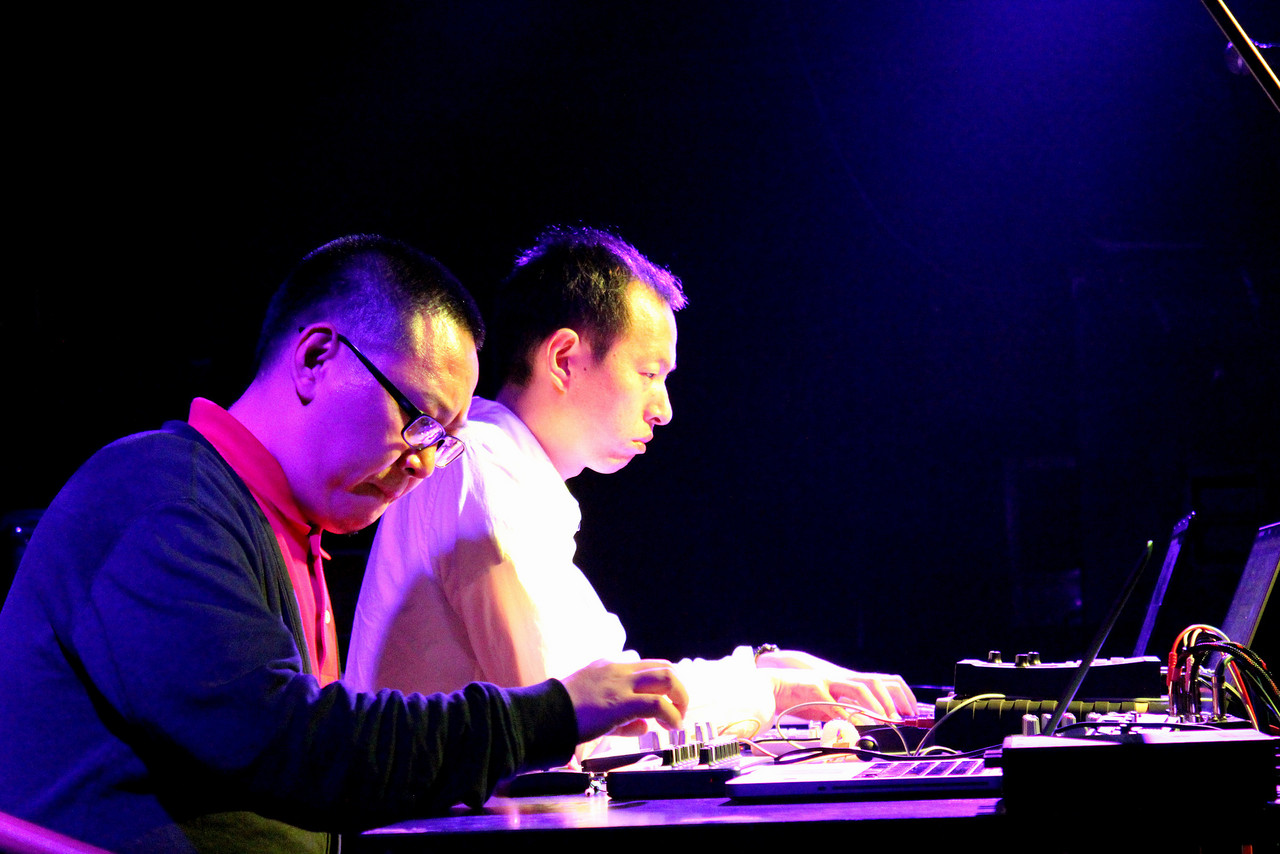
A second group, the Asian Meeting Network, was created by Otomo Yoshihide, Yuen Chee Wai, and DJ Sniff (Japanese and living in Hong Kong), and is divided into three sections: the Asian Meeting Network itself and its Asian Meeting Festival; the Ensembles Asia Orchestra; and the Asian Sound Research (ASR). The first Asian Meeting Festival that took place in 2015 included the following artists: DJ Sniff (Hong Kong & Japan), Bin Idris (Bandung, Indonesia), To Die (Yogyakarta, Indonesia), Iman Jimbot (Bandung, Indonesia), Kok Siew Wai (Kuala Lumpur, Malaysia), Leslie Low (Singapore), Yuen Chee Wai (Singapore), Yui-Saowakhon Muangkruan (Bangkok), Nguyễn Hong Giang (Ho Chi Minh, Vietnam), Lu’o’ng Huê. Trinh (Hanoi, Vietnam), Sachiko M (Tokyo, Japan), Yonago Tadashi (Osaka, Japan), Yamamoto Tatsuhisa (Tokyo), Sato Kimiya (Tokyo), Kawai Shinobu (Tokyo), Fumitake Tamura (Tokyo), KΣITO (Tokyo), Watanabe Ai (Tokyo), Ono Ryoko (Nagoya, Japan), and Otomo Yoshihide (Tokyo).
Ensembles Asia Orchestra is a project launched in 2014 and directed by Otomo Yoshihide and Arima Keiko with the mission of creating a free-form orchestra that engages with non-professional musicians. The project is organised by the Japan Foundation Asia Center with musician Otomo Yoshihide as artistic director. Ensembles Asia Orchestra aims to uncover new and unprecedented ways of making music and connecting with people by sharing the joy of music and fostering communication with people from elsewhere in Asia.
Asian Sounds Research is led by Japanese sound artist Sachiko M and also organised by the Japan Foundation Asia Centre. It is a research project that focuses on the sound of the ASEAN region.
Other festivals, experimental music events, and organisations connect Australasian countries and incorporate artists from the rest of the world: 2pi Festival in Hangzhou, China; Lacking Sound Festival, a monthly experimental music event in Taipei, Taiwan; Mini Midi Festival in Beijing, China; Hanoi Sound Stuff and Experimen.TET in Hanoi, Vietnam; the temporary art space 7000 Padauk in Yangon, Myanmar; Switch On Mini Festival in Kuala Lumpur, Malaysia; WSK in Manila, the Philippines; CHOPPA Experimental Music Festival in Singapore; EESE (sound art Electronic South East) in Thailand; and many more in Indonesia: Jakarta Noise Fest; Melawan Kebisingan Kota in Surabaya; Jogja Noise Bombing Festival; Kill the Silence Festival in Hong Kong and Macau; etc.
While its earlier network was pyramidal and Western-centric, East Asia is slowly adopting a rhizomatic network not only focused on the West but conscious of its own realities, identities and future possibilities. Much is in store for the future of electronic music and sound art in Asia.
Born in Zaire (now Democratic Republic of Congo) and currently based in Berlin, C-drík Fermont is a musician, activist, curator, DJ, and author. He runs the label Syrphe with a special focus on publishing contemporary electronic and noise music from Asia and Africa. Together with sociologist Dimitri della Faille, published Not Your World Music: Noise in South East Asia, a book and CD about noise music in Southeast Asia in all its aspects, covering topics from art, politics, and history to identity, gender, and global capitalism. He is also co-curating Pekak! Indonesian Noise 1995—2015: 20 Years Of Experimental Music From Indonesia, and has released an audio DVD that comprises almost nine hours of noise, electronic and experimental music by 123 Indonesian artists.
This text was originally published in CTM Magazine 2016 – New Geographies.
CTM 2016: An Introduction to Electroacoustic Noise and Experimental Music in Africa and Asia by CTM Festival
CTM 2016: An Introduction to Electroacoustic Noise and Experimental Music in Africa and Asia by CTM Festival