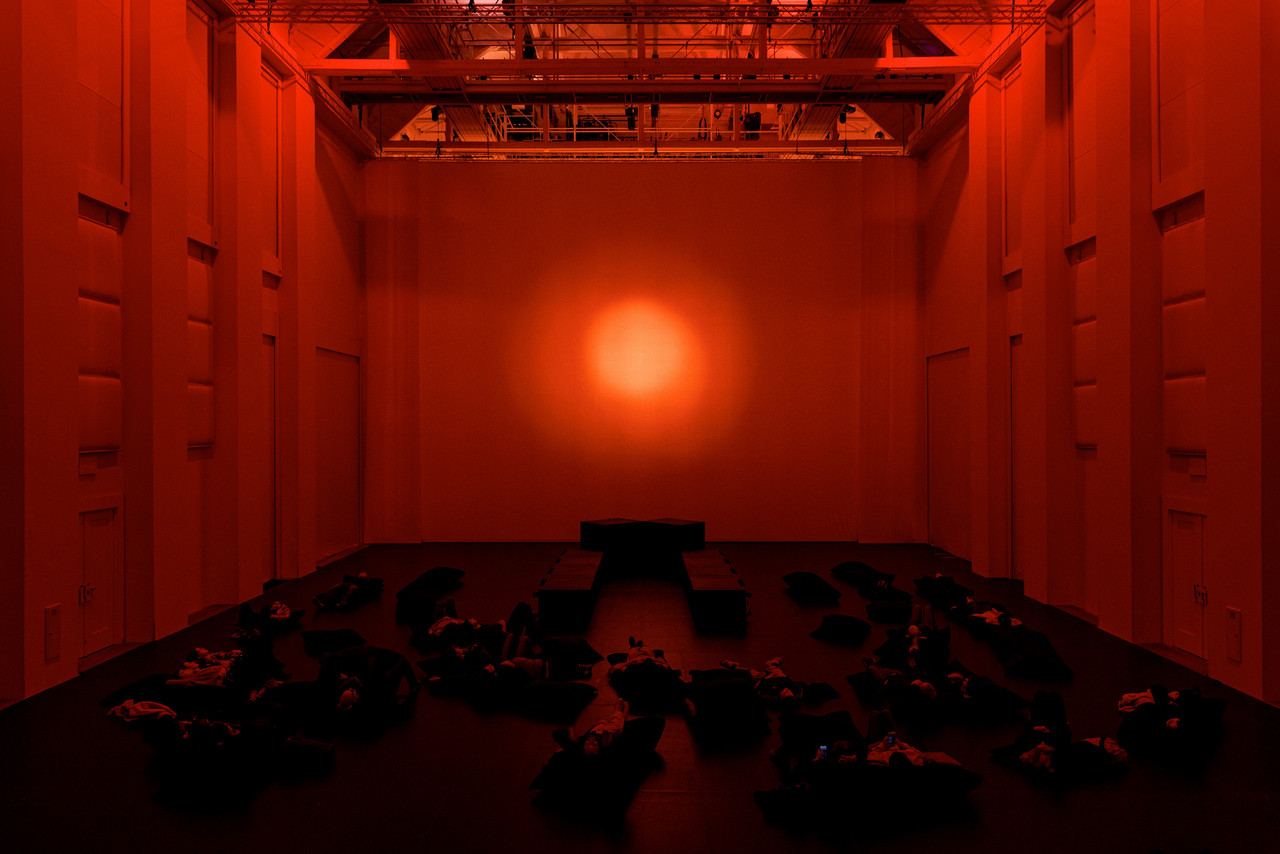
This article explores the possible relationships between low-frequency sound (LFS), human and architectural bodies, subwoofers, and spaces. How do LFS and subwoofers shape our understanding and experience of sound as a tactile and therapeutic medium?
Drawing from my work »BODIES AND SUBWOOFERS (B.A.S.)« – which is simultaneously a research framework and a body of work at the core of my artistic practice – in this article I will explore the possible interactions between LFS, subwoofers, and bodies as co-creative agents in sensory and spatial dynamics, repositioning subwoofers as tools that transcend traditional playback functions to mediate spatial, sensory, and mental experiences. The goals are threefold: to analyse how LFS generates tactile, embodied, and therapeutic experiences that go beyond auditory perception; to investigate how subwoofer-driven vibrations mediate interactions between sound, space, and the body; and to explore the role of the body as a decision maker in both the compositional and experiential dimensions of this work.
The study demonstrates that low-frequency sound, mediated through subwoofers, transcends auditory perception to engage the body as a sensory receptor and actor. Integrating artistic experimentation with scientific studies on the effects of vibrations advances the understanding of sound as a tactile and spatial phenomenon, contributing to vibroacoustic studies, sound art, and Post-Music practices.
Situating Low-Frequency Sound
Low-frequency sound (LFS) refers to audio waves with frequencies typically ranging from 20 – 150Hz, situated at the lower end of the human auditory spectrum. This study primarily focuses on sub-bass frequencies (20 – 63Hz) and infrasound (1 – 20Hz).
LFS are characterised by longer wavelengths and slower vibration cycles. They are often associated with somatosensory perception – the body’s ability to sense stimuli such as pressure, vibration, and movement through the skin, muscles, and internal structures – rather than purely auditory sensations. Due to their ability to generate significant acoustic pressure (the deviation from ambient atmospheric pressure caused by sound waves), resulting in quantifiable fluctuations in atmospheric pressure that can directly interact with and affect physical bodies and structures, LFS are more often perceived somatosensorially and kinesthetically. This creates resonant and/or vibratory effects.
LFS are also defined by their spatial behaviour: they are omnidirectional, radiating uniformly in all directions, and tend to travel farther and penetrate solid materials more effectively than higher-frequency sounds.
The characteristics of LFS facilitate their interaction with sensory and spatial perception, particularly through subwoofers, which are loudspeakers designed to reproduce these sounds. Subwoofers operate by moving significant volumes of air through large diaphragms (components in speakers, headphones, and microphones that vibrate to convert electrical signals into sound waves), generating the acoustic pressure necessary to produce extended low-frequency responses. Producing sound waves with long wavelengths requires substantial air displacement to generate sufficient acoustic pressure for audibility and physical impact.
A critical aspect of the interactions between LFS, subwoofers, and bodies is the role of space, architectural bodies, and materials in shaping the propagation of sound waves and the tactile perception of low-frequency sound vibration. Architectural structures, surfaces, and materials influence the amplification, attenuation, or redirection of low-frequency vibrations, resulting in variable resonance patterns and localised vibrational distributions.
Bridging artistic experimentation and scientific inquiry, my research is situated within the discourses of sound studies, vibroacoustic therapy, deaf studies, sound art, performance, and the emerging discourse on Post-Music. This interdisciplinary approach provides a framework for understanding how subwoofer-based vibrational dynamics reshape the relationships between sound, space, the human body, conceptualised here as a co-creative medium, and the human mind.
In my research, I conceive of sound, the organised sonic material, as a transformative medium that shapes both spatial environments and bodily perception. Drawing on foundational works such as Alvin Lucier’s »I Am Sitting in a Room« (1969), my work aims to shift the focus from how sound modifies space to how it alters the human body and its emotional and cognitive experience of sound. Low-frequency vibrations bypass traditional auditory pathways, directly engaging the body and creating tactile and spatial experiences that challenge conventional modes of perception, especially listening and its emotional and cognitive processing. Vibroacoustic studies have established that LFS activates mechanoreceptors in the human body, fostering physical engagement, relaxation, and therapeutic effects (Skille et al., 1989).
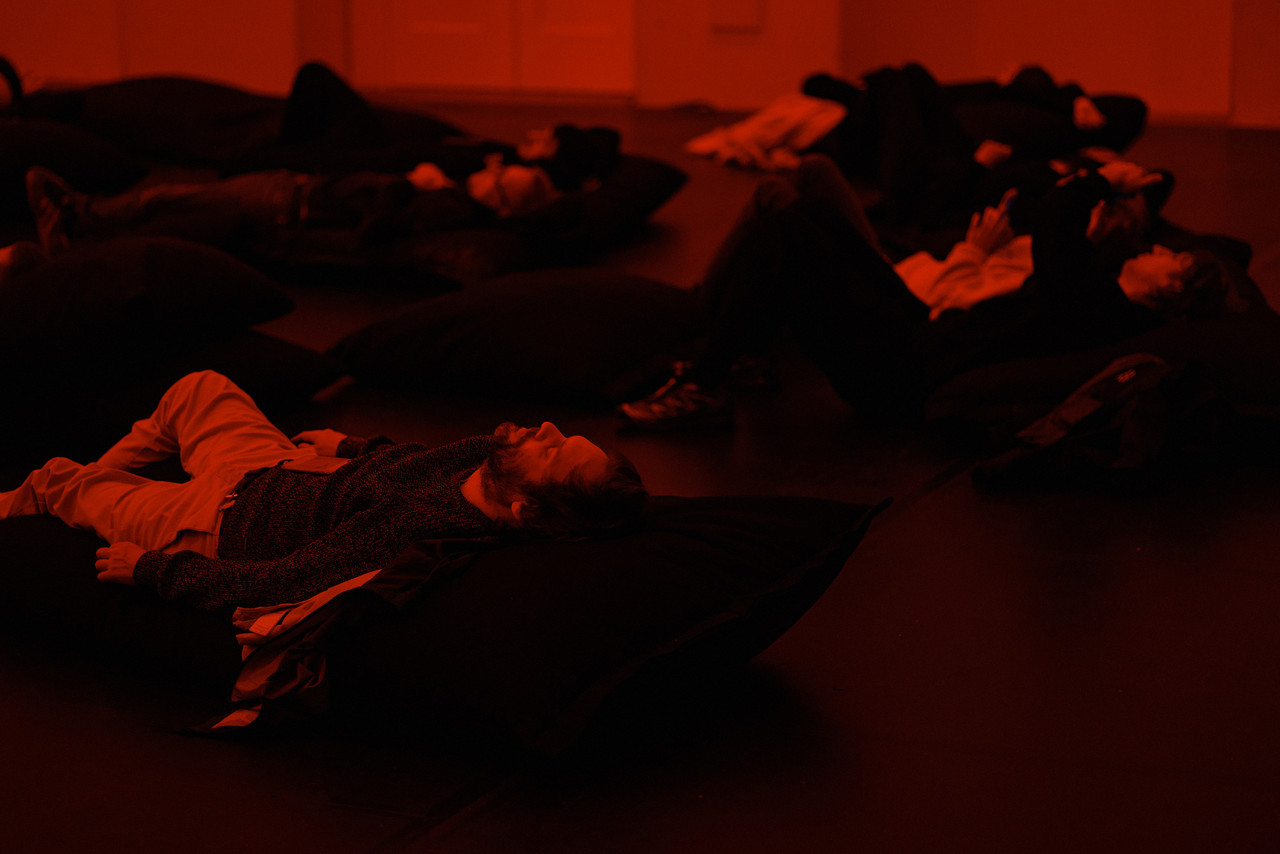
But what happens with LFS exactly? Lying down in a room, untouched by anything, one feels something with the entire body. It is like a sonic massage – not a traditional one. The sound waves act like hands, disturbing the air molecules and gently caressing the skin. One is reminded of Alvin Lucier’s sound art piece »I Am Sitting in a Room,« which works with resonances of a space. Yet, sonic massage is not about how sound reshapes itself in space – it is about how it reshapes someone. The sound not only moves through the room, it moves through you, bypassing the ears and connecting directly to the body, the bones, and the flesh.
The Emotional and Cognitive Therapeutic Effects of Low Frequencies
Low-frequency sound demonstrates therapeutic potential by engaging the somatosensory system and its mechanoreceptors – specialised sensory cells that detect mechanical stimuli such as pressure, vibration, and stretch, translating these into neural signals for the brain to process – thereby potentially inducing states of relaxation and alleviating stress. Research in vibroacoustic therapy highlights that exposure to LFS, particularly within the 30 – 60Hz range, activates mechanoreceptors such as Pacinian corpuscles and Merkel cells, eliciting physiological responses that enhance mental clarity, reduce anxiety, and promote physical ease (Skille et al., 1989; Wigram, 1996). These responses have been linked to improved circulation, vasodilation, and reductions in cortisol levels, aligning with broader applications of vibroacoustic therapy in clinical and wellness contexts.
A review published in the multidisciplinary open-access medical journal BMJ Open (Kantor et al., 2022) systematically explored the characteristics and outcomes of vibroacoustic therapy (VAT) in adults with chronic pain. The review found that VAT was particularly effective in alleviating pain and muscle tension, with patients reporting reduced discomfort and improved physical function. The review emphasised the potential utility of VAT as an adjunct treatment for chronic pain management, particularly for individuals who have not responded to traditional therapies. Furthermore, the study identified the importance of frequency range, duration, and therapy protocols, suggesting that further research is needed to optimise these parameters. The findings also pointed to the need for longitudinal studies to assess the long-term efficacy and safety of VAT in diverse clinical settings. The study suggests that this type of therapy holds promise as a non-invasive and effective approach to pain relief, offering a new dimension to pain management strategies in clinical practice.
Furthermore, Kasearu, Rüütel, and Kasearu (2015) conducted a study published in Holistic Nursing Practice that examined the impact of vibroacoustic sound therapy on pain management. Their findings highlighted the therapy’s effectiveness in reducing pain levels, promoting patient well-being, and enhancing psychological relaxation. The study also noted significant improvements in stress reduction, with patients reporting increased comfort and a sense of calm after treatment sessions. VAT was also shown to contribute to a more therapeutic environment by fostering a calming atmosphere that supported overall healing. These results suggest that it can be a valuable adjunct in clinical settings for managing pain and improving patient outcomes. Mechanoreceptor activation through low-frequency vibrations is further associated with enhanced blood flow and reduced stress biomarkers, supporting its efficacy in relaxation therapies and stress-related interventions (Yamada et al., 2008; Wigram, 1996).
Several studies have examined the therapeutic implications of 40Hz sound – a frequency that emerged as central to my early explorations of low-frequency sound (LFS) back in 2016, due to the subwoofer’s frequency response I had available at that time, which could clearly, with precision and enough sound pressure level, reproduce 40Hz. Vibroacoustic research (Buzsáki & Draguhn, 2004; Herrmann et al., 2016) has linked 40Hz vibrations to the stimulation of gamma brain waves, which are associated with cognitive functions such as memory consolidation, focus, and attention. Experimental studies (Skille et al., 1989; Wigram, 1996) have demonstrated that exposure to 40Hz sound can elicit therapeutic effects, including reductions in cognitive load, heightened somatic awareness, and profound relaxation. Prolonged exposure to this frequency has further established it as a foundational parameter in the systematic exploration of LFS for its potential to influence mental clarity and promote physical ease.
When interacting with the somatosensory system, LFS can evoke emotional and cognitive resonances by stimulating mechanoreceptors such as Pacinian corpuscles, which detect vibrational stimuli and transmit signals to the central nervous system (Skille et al., 1989; Wigram, 1996). This process bypasses auditory pathways, directly engaging tactile perception to influence emotional and cognitive states. Emotional resonance refers to the body’s processing of vibrational input as affective stimuli, where physical sensations are translated into neural signals that engage the somatosensory cortex and limbic structures, including the amygdala and hypothalamus, regions critical for emotional regulation (Craig, 2002; Buzsáki & Draguhn, 2004). Affective stimuli are external physical inputs, such as vibrations, that can trigger emotional responses by interacting with sensory and neural pathways. These tactile inputs enable low-frequency vibrations to elicit emotional and cognitive responses such as relaxation and introspection through the integration of somatosensory input and neural activity (Herrmann et al., 2016).
Unlike conventional sound experiences that rely primarily on auditory pathways, LFS engages the somatosensory system, eliciting physical and emotional responses. Building on Salomé Voegelin’s concept of »embodied listening« (Voegelin, 2010), which positions sound as a relational and multisensory phenomenon, LFS situates the partaking body as an active participant in the auditory process. This interaction between bodily perception and emotional and cognitive processing underpins the therapeutic and introspective applications of LFS, where sound functions as both a medium for sensory engagement and a tool for emotional and cognitive exploration and regulation.
Artistic Research – Systematic Frequency Cataloguing
In 2017, over fifty-three days, I devoted myself to exploring and cataloging the bodily effects and spatial behaviour of sub-bass frequencies during an artistic residency in São Paulo. When asked what tools I would require, I requested a subwoofer as the instrument I would use for my research and received a single 18-inch omnidirectional QSC, model KS118. With the subwoofer, I began systematically cataloguing frequency by frequency, starting at 35Hz (the lowest response of that speaker) and working my way up to 63Hz.
The very low-end range extends beyond the range commonly emphasised in music designed for standard playback systems. In such standard systems, low-end frequencies are typically between 40 – 100Hz to ensure compatibility. Sub-bass frequencies below 40Hz are rarely utilised because most consumer audio equipment cannot reproduce them effectively. Standard playback systems, such as smartphones, headphones, home speakers, or non-enhanced car audio systems, are equipped with smaller speakers (drivers) that lack the capacity to generate the powerful vibrations required for very low frequencies. Only larger systems, like professional-grade subwoofers, are designed to move enough air to create the physical vibrations necessary for these frequencies to be felt by the body.
Through my residency research in São Paulo in 2017, I categorised low-frequency sound into three distinct tactile-spatial effects: Omni – frequencies that resonate throughout the body and environment; Focal – targeted activation of specific bodily regions; and Basal – ground-based vibrations felt predominantly through the feet, skin, and surfaces in contact with the body. Drawing an analogy to the layered experience of perfume in Fragrance Studies (top, heart, and base notes), these categories delineate the sensory characteristics of LFS. This taxonomy provides a structured framework for exploring how frequencies interact with the body and space, highlighting their potential in tactile and spatial composition. It also considers direct sonic and tactile engagement with the body within compositional techniques, utilising the three frequency taxonomies alongside traditional musical methods.
My research showed that Omni frequencies, which cause the entire environment and body to resonate, align with findings in vibroacoustic therapy. These studies demonstrate that low-frequency vibrations (30 – 60Hz) induce whole-body sensory effects by stimulating deep-tissue mechanoreceptors, fostering relaxation, and creating immersive spatial experiences (Skille et al. 1989).
Focal frequencies, which primarily activate specific regions such as the pelvis and legs, are supported by research indicating that low-frequency sound vibrations, particularly in the range of 30 – 50Hz, can elicit targeted physiological responses. Studies have shown that these frequencies influence localised muscle relaxation by stimulating mechanoreceptors such as Pacinian corpuscles, which are sensitive to rapid vibrations (Rossi et al., 2018). This stimulation enhances circulation by promoting vasodilation and improving blood flow in specific body regions, as demonstrated in applications of vibroacoustic therapy (Alves et al., 2020). These effects highlight the ability of focal frequencies to interact with the human body beyond auditory perception, providing a basis for integrating these vibrations into site-specific compositions that emphasise physical engagement and sensory activation.
Basal frequencies, referring to ground-based vibrations, engage the soles of the feet, skin, and the surfaces in contact with the body. These frequencies align with studies on mechanoreceptor activation, particularly Pacinian corpuscles and Merkel cells, which are highly sensitive to mechanical stimuli such as vibrations (Kandel et al., 2013). Pacinian corpuscles respond to rapid, high-amplitude vibrations (above 40Hz), creating sensations of grounding and stability, while Merkel cells contribute to detecting sustained pressure and texture. Research has shown that vibrations transmitted through solid surfaces at low frequencies can produce distinct tactile sensations, enhancing body awareness and spatial perception (Quindlen et al., 2015). This principle is utilised in vibroacoustic therapy, where low-frequency vibrations are applied to the body to promote relaxation and alleviate pain (Skille, 2007; Skille & Wigram, 1995).
My classification system offers a framework for understanding the distinct and measurable ways low-frequency vibrations interact with the human body and its environment. By applying these three frequency categories, one can compose works that extend beyond the auditory domain, treating the participating body as an integral part of the sonic experience. By structuring a composition around how the body responds to different vibrations, physical sensations become a key element in a composition’s overall sonic design. The ability to activate tactile and spatial perceptions transforms the subwoofer from a playback device into an instrument capable of reshaping the body’s relationship with sound and space. To go a step further: the participating body itself turns into an instrument, which is played by the subwoofer.
Redefining the Subwoofer as an Instrument
This section explores the technical approaches and conceptual shifts that position subwoofers as central tools in »B.A.S.«
My work aims to reconsider subwoofers, traditionally regarded as playback devices, as instruments that enable tactile and spatial experiences and thus enable a new way of composing. Through bespoke arrangements and site-specific configurations, subwoofers function as agents that facilitate direct engagement with low-frequency sound. Having explored how low-frequency sound interacts with humans and structures – everything material – and its spatial dynamics, the next step in my research was to build a subwoofer.
Searching and asking around for the right person to collaborate with, I connected with Rafael Lins, known as the »Master of the Subs,« and went to Niterói, on the outskirts of Rio de Janeiro. Lins is the owner of MTX Audio Pro, a speaker manufacturing company. In addition to designing high-performance speakers, he specialises in subwoofer placement, focusing on amplifying and optimising sound in churches and large halls.
Combining theoretical insights from foundational texts like Rossing’s The Science of Sound (2002), Cox’s The Sound Book: The Science of the Sonic Wonders of the World (2014), Sachs’ The Wellsprings of Music (1965), and Thompson’s The Soundscape of Modernity (2002) with practical knowledge learned from Rafael Lins, I immersed myself further in low-end research.
Within the frequency spectrum – the complete range of sound frequencies audible to humans, typically spanning from 20Hz (the lowest edge of human hearing, often associated with deep sub-bass vibrations of low frequencies) to 20kHz (the highest, sharpest pitches perceptible to the ear) – I came to understand that low frequencies must be composed and arranged based on their interactions with the body, rather than focusing on the space or relying solely on auditory perception. In this process, the body becomes the primary decision-maker in determining whether a tone is included in a piece. Each tone is approached by asking: In what way does this sound touch someone? Does it feel like a positive sonic touch, defined as a sound that elicits sensory satisfaction? This means to promote relaxation and avoid sensory discomfort by maintaining a balance between intensity and frequency – strong enough to be engaging but gentle enough to remain calming and agreeable on the body. Or is it activating a resonance in the room that creates unwanted, negative effects – such as vibrations that are overly harsh, leading to irritation?
This bodily engagement shapes my compositional choices by guiding the selection and arrangement of frequencies based on their tactile and spatial effects. For example, a 40Hz tone creates a deep, resonant vibration that interacts directly with the chest cavity, inducing a sense of grounding and calm through physical resonance rather than auditory processing.
In another context, I explored how low frequencies could interact with materials in the environment by channeling 35Hz vibrations through a wooden platform. Participants standing barefoot on the platform described sensations of grounding and stability as the vibrations traveled through the structure and directly into their bodies. This approach further highlights how low frequencies can transform objects into extensions of the sonic experience, allowing sound to be felt in ways that enhance physical awareness and sensory perception.
Microtonal Tuning for Low Frequency Sounds
Micro-tuning refers to the precise adjustment of pitch or frequency within a musical system to achieve intervals smaller than those found in Western equal temperament tuning. In this context, I am investigating the application of micro-tuning in the reproduction of LFS through subwoofers, focusing on its role in generating bodily and spatial effects.
The interaction between LFS and the body benefits from precise control over tonal characteristics to elicit targeted, sculptural tactile sensations. Microtonal adjustments and custom-built tuners support the refining of tonal precision, producing subtle frequency shifts that create a complex vibrational experience, just like a layered cake composed of different textures.
Alongside the principle of minimal tonal characteristics – frequencies dominated by fundamentals (the main frequency of a sound, without additional overtones or harmonics) with microtonal variations (small pitch adjustments that fall between Western equal temperament musical intervals, creating subtle shifts in tone) – I introduced a custom-built micro-tuner into my existing setup. The setup further includes a Quad-Analog Synthesizer by the German brand Vermona (model Performer MKII) and an Octatrack MKII by Swedish brand Elektron.
The micro-tuning device became essential when, through a conversation with Holger Lund, one of my mentors, I realised the need for more precise micro-tuning to achieve the subtle yet precise tonal shifts required for low-frequency compositions. Custom-built by Berlin-based audiovisual artist and electronic musician Robert Heel, the microtuner allows for detailed fine-tuning of these microtonal adjustments, enabling the crafting of frequencies that bypass traditional auditory perception. The precisely tuned sounds engage the body through tactile sensations felt on the skin and vibrational energy experienced internally through bones and tissues. This approach is central to achieving what I describe as »auditory inaudibility« – a state where sound is perceived primarily through physical resonance rather than usual auditory recognition, culminating in what I call the prime form of low-frequency sound: an invisible, non-auditory sonic massage.
Non-auditory Sonics in Bodily Composition
Low-frequency sound enables non-auditory sonic massage, bypassing traditional ear-centered listening to engage the body physically, akin to Marshall McLuhan’s idea of media reshaping us. The concept of the non-auditory sonic massage resonates with McLuhan’s book-title formula that The Medium is the Massage, which emphasises how media act as extensions of the human senses, shaping perception and altering how we engage with the world (McLuhan, 1967).
McLuhan highlights how different media reconfigure sensory balance, amplifying some senses while bypassing others. Similarly, the non-auditory sonic massage uses LFS as a medium that bypasses traditional auditory pathways to engage directly with the body through tactile and vibrational sensations. This approach elevates sound into a multisensory experience, creating a physical somatosensory dialogue between sound, the participating bodies, and their environment. By focusing on bodily sensations, the non-auditory sonic massage expands the role of sound beyond the auditory, becoming a medium for sensory engagement.
Realising that the experience of sound through the body – rather than just the ear – served as both a sonic and compositional tool, I understood its potential to produce relaxation effects. This understanding aligns with existing practices in bass-heavy music genres such as techno, house, dub, ambient, drum & bass, and reggae, which tend to use low-frequency sound to create immersive and bodily experiences, often amplified through sound system culture (Henriques, 2011). These music genres and sound system cultures demonstrate how bass frequencies are designed not only to be heard but also felt, engaging the body and transforming listening into a tactile and spatial experience.
Perception theories from Deaf Studies further underscore that sound is not exclusively auditory. Vibrations and tactile sensations can serve as primary modes of sonic experiences, emphasising the body’s role as an active receptor (Sacks, 1990) or, more specifically, a participant. In the text Open Your Eyes: Deaf Studies Talking, L. Bauman highlights the body as a critical site for sensory and communicative experiences, demonstrating how tactile modalities expand the frameworks through which sound is perceived and understood (Bauman & Murray, 2014).
Deaf Studies is an interdisciplinary field that examines the cultural, social, linguistic, and embodied experiences of deaf individuals, challenging medicalised views of deafness as a deficit, herewith being part of the ableism discourse (Maskos 2023). They reframe deafness as a distinct and rich perspective that broadens our understanding of human diversity (Bauman & Murray, 2014; Padden & Humphries, 1988). Central to this field is the recognition that deafness fosters alternative modes of engagement with the world, such as heightened tactile and visual sensitivities, which significantly shape interactions with sound, space, and the environment.
Within the broader context of Sound Studies, Deaf Studies offers valuable insights into how sound can be experienced beyond auditory perception. According to Salomé Voegelin, the relational and corporeal nature of sound emphasises that its perception extends beyond the auditory realm to include vibrational and tactile dimensions. This perspective within Sound Studies aligns with Deaf Studies and forms the basis for reflections on low-frequency sound, which engages the body as a resonant medium, offering multisensory modes of perception accessible to both hearing and non-hearing individuals. By foregrounding embodied and vibrational listening, Deaf Studies contribute to the ongoing discourse in Sound Studies, challenging traditional auditory-centric paradigms and fostering inclusive approaches to sensory engagement.
While sound is traditionally defined in acoustics as a sensation detected by the auditory system, these reflections build upon these theoretical and practical foundations to extend this definition to include bodily perception, bodily participation, and spatial interaction.
BODIES AND SUBWOOFERS (B.A.S)
Low-frequency sound waves, particularly in the sub-bass range (20 – 60Hz), are unique in that they are not only heard but also physically felt as vibrations. While other frequency ranges (like mid and high frequencies) may elicit tactile sensations to a lesser degree, the sub-bass range is particularly effective due to its ability to generate large, consistent pressure waves that interact directly with the body.
This phenomenon occurs due to the already mentioned mechanoreceptors. Different receptors are tuned to specific sensations: some respond to slow, steady pressure, such as holding an object, while others are sensitive to rapid, repetitive vibrations, like the buzzing of a phone or the deep, consistent vibrations produced by low-frequency sound waves. Additionally, the trigeminal sense, which detects air movement, pressure, and temperature, plays a crucial role in perceiving sound waves as tactile sensations. When air molecules are set into motion by these sound waves, mechanoreceptors and the trigeminal system translate the vibrations into tactile feedback, allowing the body to »feel« the sound. This process, where vibration becomes a sensation of touch, is what I define as sound touch. Here, the metaphor of massage turns into reality, giving the term »bodily composition« a sense of realness.
Back in 2016, I began performing concerts with low-frequency sounds and creating installations in São Paulo that exclusively used a subwoofer as the primary instrument, such as the ones at Sesc Pinheiros, Sesc Ipiranga, and the Museu da Imagem e do Som. These performances and installations provided a platform for direct engagement with the physical and spatial effects of low-frequency sound.
I observed how vibrations interacted with architectural elements, generating resonance patterns that transformed the perception of space. For instance, I noticed that specific subwoofer configurations amplified tactile feedback in certain areas, enabling audiences to »feel« the sound more intensely in their bodies. This real-time on-site experimentation revealed that low frequencies function not primarily as auditory phenomena but as tactile and spatial agents, capable of shaping physical sensations and affective responses.

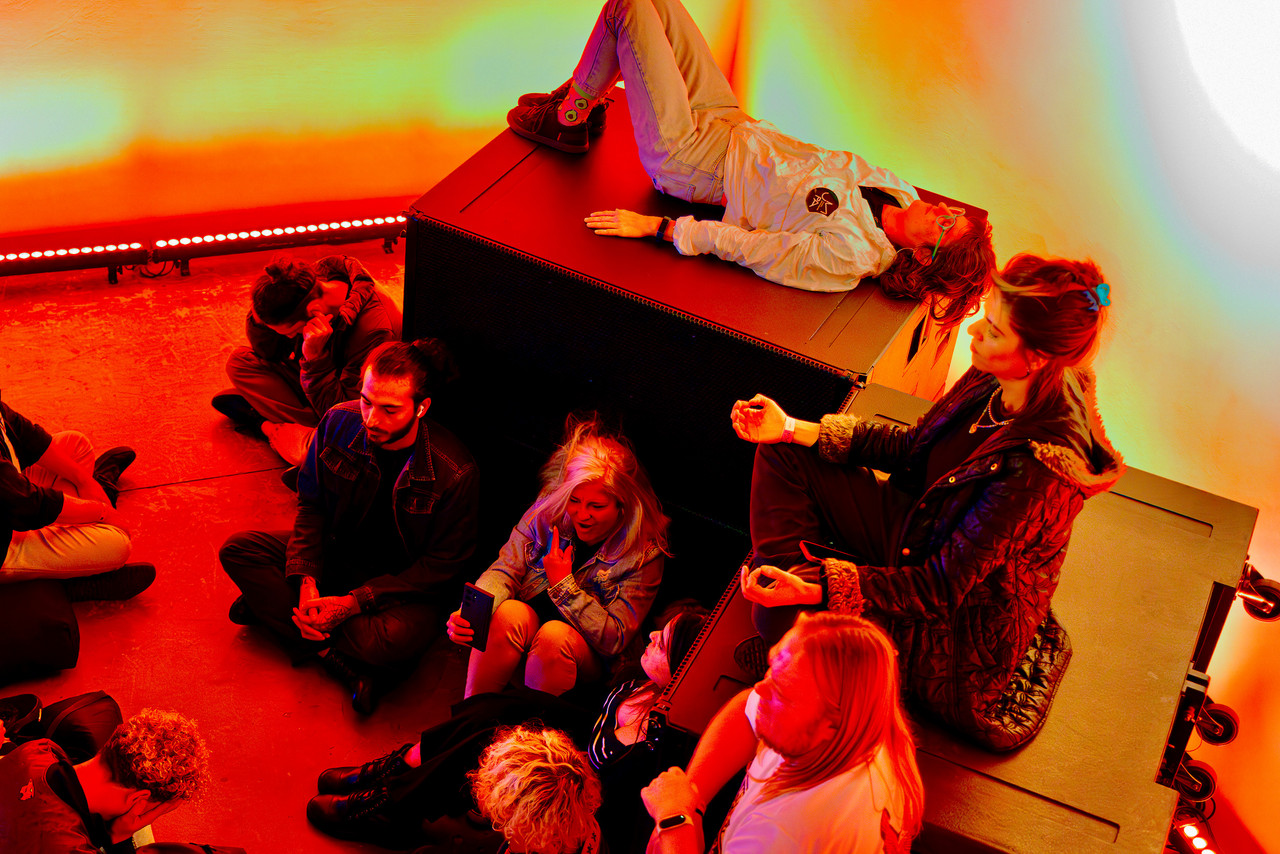
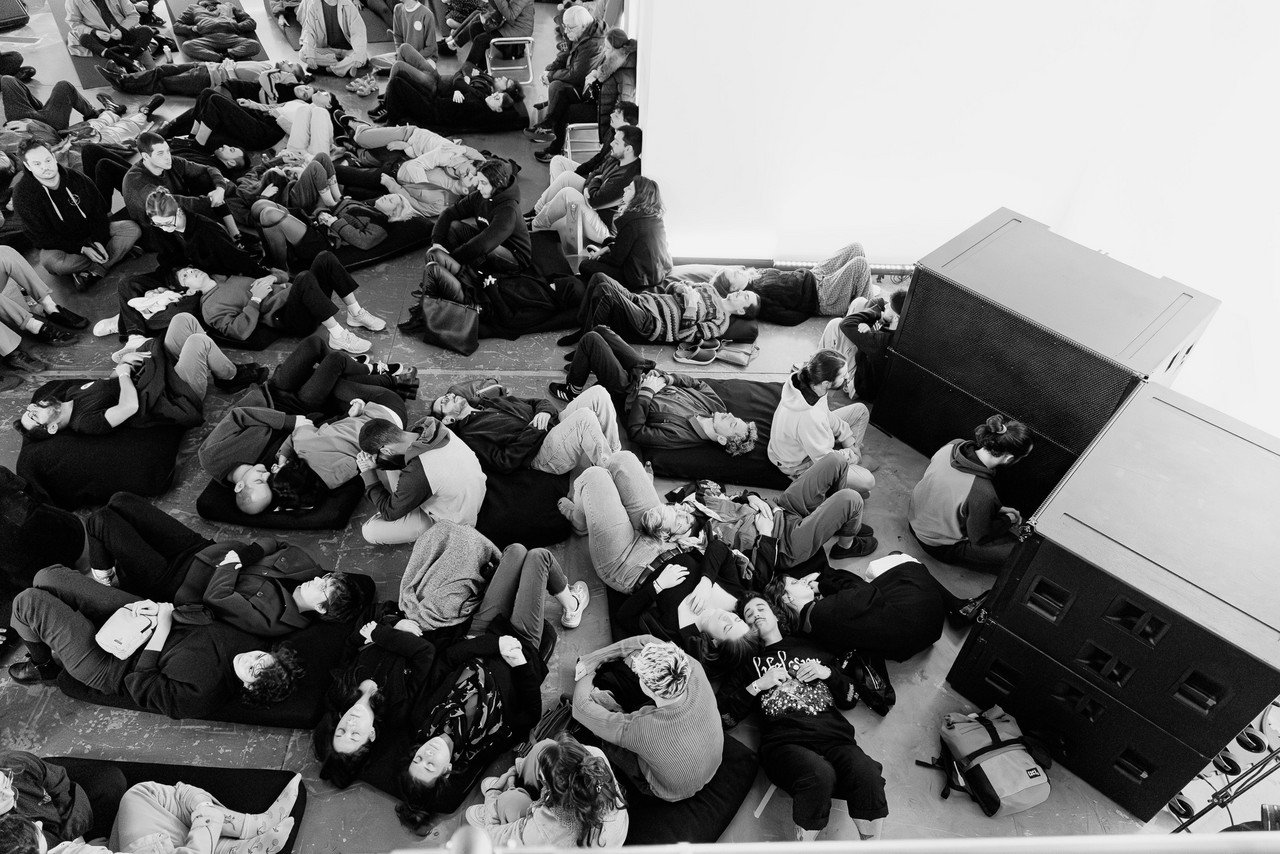
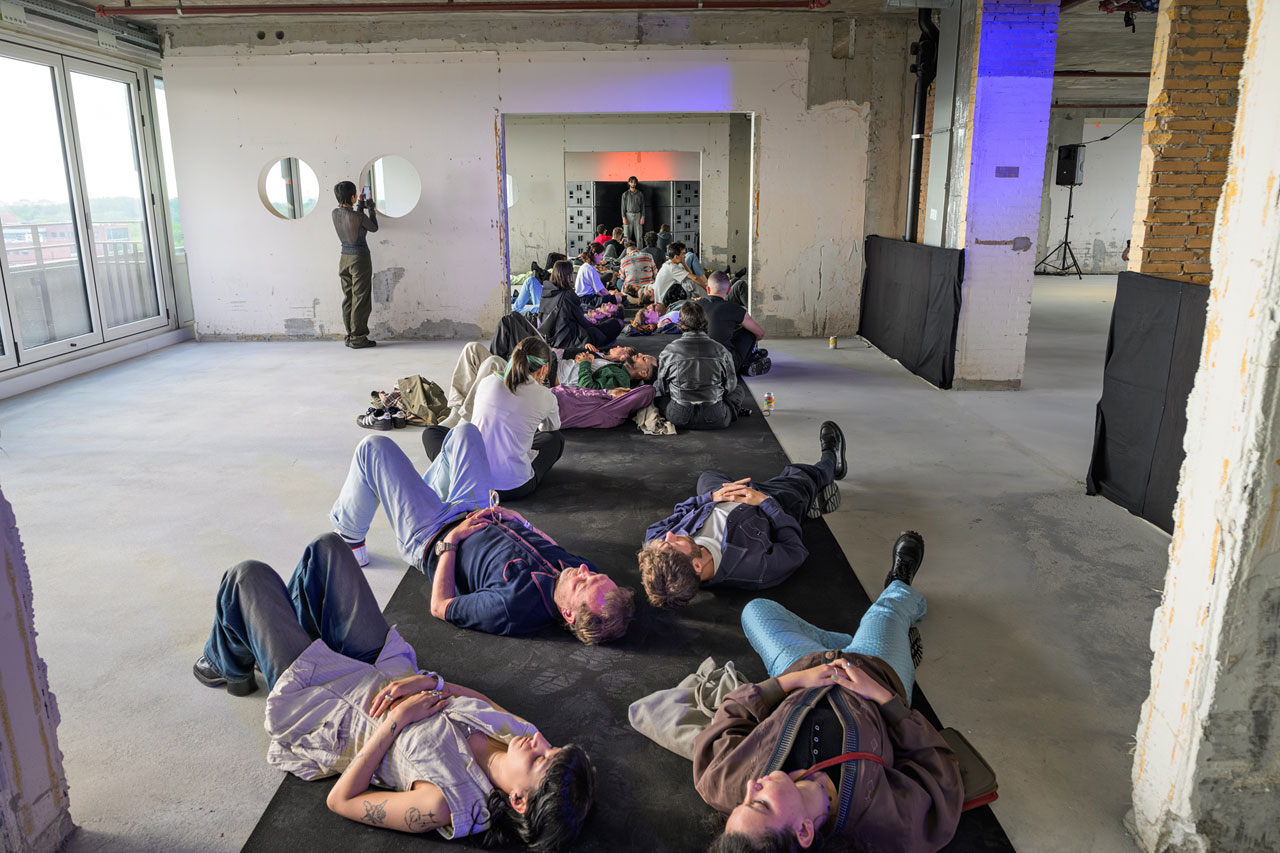
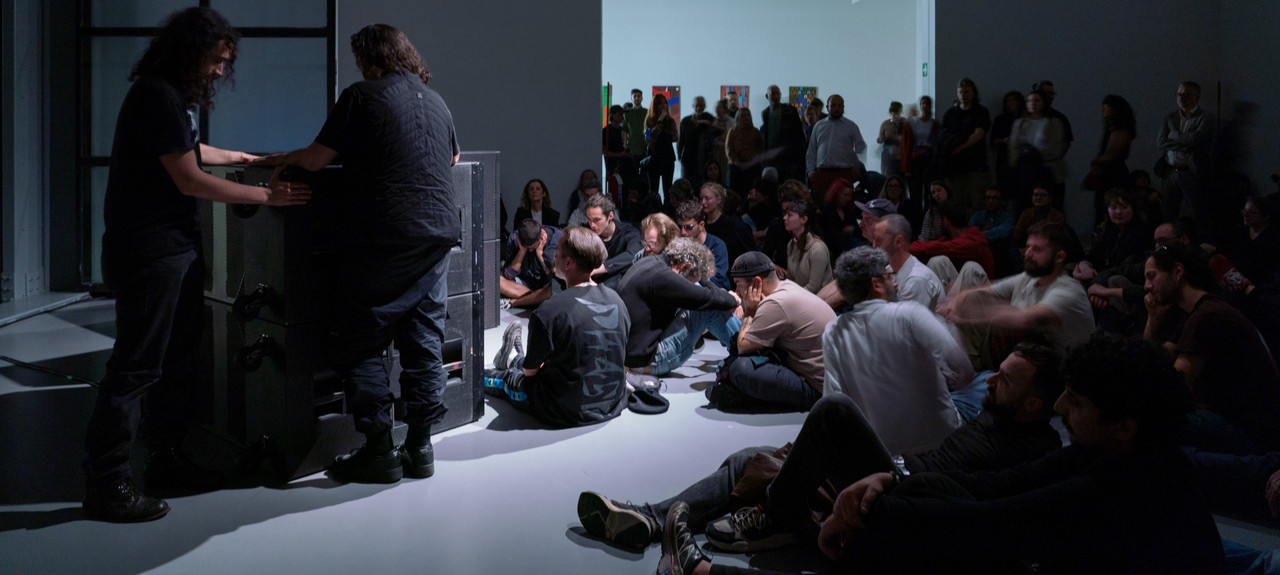
The approach to using subwoofers as the primary instrument also draws inspiration from traditions of sound system culture, particularly in reggae and dub music, where subwoofers are used to create immersive and bodily experiences through low-end frequencies. Scholars such as Julian Henriques have explored how sound systems in Jamaican dancehalls transform listening into a tactile and communal event, emphasising the role of bass as a physical, spatial, and social medium producing »sonic bodies« (Henriques, 2011). The concept of sonic bodies highlights how sound systems use low frequencies to foster a multisensory experience, making bass an active force that shapes both the environment and the participant’s physical and social engagement. Steve Goodman’s Sonic Warfare: Sound, Affect, and the Ecology of Fear (2010) also expands on the ways low frequencies influence bodily perception and collective experience, illustrating how bass operates as an affective force that transcends auditory perception to impact and connect bodies directly. This theoretical foundation highlights the capacity of low-frequency sound to engage participants physically, spatially, and socially.
Feeling constrained by formal musical structures and the conventional requirements of mixing and mastering, I began to develop techniques for playing the subwoofer, informed by the above-mentioned traditions. These techniques included a) frequency isolation, focusing on the sub-bass range (20 – 60Hz) to maximise tactile and vibrational effects; b) spatial resonance mapping, strategically positioning subwoofers to interact with architectural elements and create zones of varied vibration; and c) harmonic minimalism, prioritising fundamental tones while minimising overtones to maintain low-frequency vibration definition. By concentrating on low-end behaviour and subwoofer dynamics, I created compositions designed to achieve a »non-auditory sonic massage« – a sound with reduced tonal characteristics that bypasses auditory perception to engage the body through tactile and vibrational pathways.
One can observe that the same tone sounds different in a different room due to variations in room acoustics, including factors such as size, shape, and the reflective or absorptive properties of surfaces. These differences create unique standing wave patterns and room modes, altering how frequencies are perceived by the ear and felt by the body. Additionally, the placement of subwoofers within the space significantly impacts how vibrations propagate, amplifying or canceling frequencies in certain areas, thereby shaping the experience of sound.
By employing »bodily composition« – a practice that centers the body as both a sonic and a compositional tool – alongside bespoke subwoofer placement and site-specific compositions, I developed a creative methodology. This methodology consists of three core components: a) frequency sculpting, to isolate and refine low-frequency tones for optimal tactile and spatial engagement; b) resonance mapping, to determine how subwoofer placement interacts with architectural and material elements of the given room; and c) bodily tuning, using physical feedback from the body to guide compositional decisions, dynamic spatial placement, and harmonic minimalism.
The first step involves analysing the room’s acoustics, materials, textures and dimensions to understand how sound and space influence each other. I use specialised acoustic analysis software (d&b’s ArrayCalc) to model sound distribution, simulating how low-frequency waves propagate and interact with surfaces. This software identifies key acoustic parameters such as resonant frequencies, standing waves, dead zones, and areas of amplification, which are critical for determining subwoofer placement. Additionally, the room’s architectural and material properties, including textural, reverberation, and absorption characteristics, are evaluated to reveal how the environment influences sound propagation and perception. This analysis ensures that both the physical space and the sound it shapes are integrated into the compositional process, highlighting the reciprocal relationship where sound alters the perception of the environment and vice versa.
Secondly, I design a subwoofer arrangement based on the unique acoustics of the room or space and the type of bodily interaction with the subwoofer that I want to propose – whether inviting the participants to physically enter the speaker installation, sit within its resonance, or lie down directly on the speaker, while considering the different ways bodies might engage with the vibrations and speakers.
In step three, I select frequencies within the sub-bass range, typically between 20 – 60Hz, to create a bespoke composition and establish a non-auditory sonic massage. These frequencies are selected based on their capacity to engage the body’s mechanoreceptors and trigger tactile and vibrational sensations, focusing on fundamental tones with minimal harmonic content to prioritise vibration and tactile experience over traditional audibility. The process shifts the focus from traditional music composition to composing a sensory interaction where sound is experienced through the body rather than just the ears. The composition is designed to engage with the body’s somatosensory system (responsible for processing touch, pressure, and vibration), ensuring that sound functions as an immersive and physical medium.
The Socio-Musical Context of »BODIES AND SUBWOOFERS« (B.A.S.)
B.A.S. can be considered a criticism of the pressures of neoliberal capitalism – characterised by stress, acceleration, and relentless senseless productivity (Vallelly, 2021) – by creating space for deceleration, restoration, self-perception, and tactile engagement. Drawing on criticism from Dardot and Laval (2014) as well as Ullrich and Quezada (2024) – who framed criticism of neoliberalism as a system of constant competition to execute power on people, which transforms every aspect of life into commercial commodities, exploiting both producers and consumers – B.A.S. proposes an antipole framework that prioritises rest, sensory immersion, and social bodily experience through low-frequency sound and subwoofer environments.
Building on this foundation, B.A.S. creates tactile sonic environments designed to engage bodies directly, using low-frequency sound waves to address symptoms and causes often linked to neoliberal capitalism, like stress, anxiety, fear, the permanent acceleration of data production and information processing, as well as the expectation of constant availability and immediate response.
In an era defined by relentless productivity and a »burnout society« described by Byung-Chul Han, the significance of rest as a countercultural act cannot be overstated. Han critiques the exhaustion caused by constant self-optimisation, arguing that it erodes the capacity for reflection and genuine presence (Han, 2015). Rest, or non-availability as Hartmut Rosa calls it (Rosa, 2020), emerges not only as a physiological necessity but also as a political and existential gesture, challenging the hyper-acceleration and commodification of life in the contemporary neoliberal system. Adding to this criticism, Paul Virilio’s concept of dromology highlights the need to reclaim stillness as resistance against the relentless accelerated pace of contemporary life.
B.A.S. builds upon and tries to expand these perspectives, framing rest as a form of embodied deceleration. By employing low-frequency sound to create environments that foster restorative and reflective states, B.A.S. integrates the concept of relaxation within rest. These tactile soundscapes encourage immersive states where body and sound converge, offering an alternative to hyper-acceleration and emphasizing the importance of sensory presence in resisting neoliberal norms. B.A.S. extends these ideas into practice through a bodily compositional process. The work’s process is built on techniques that guide how I interact with bodies, sound, space, and the physical environment. The techniques – frequency sculpting, resonance mapping, bodily tuning, dynamic spatial placement, and harmonic minimalism – form a framework for creating compositions.
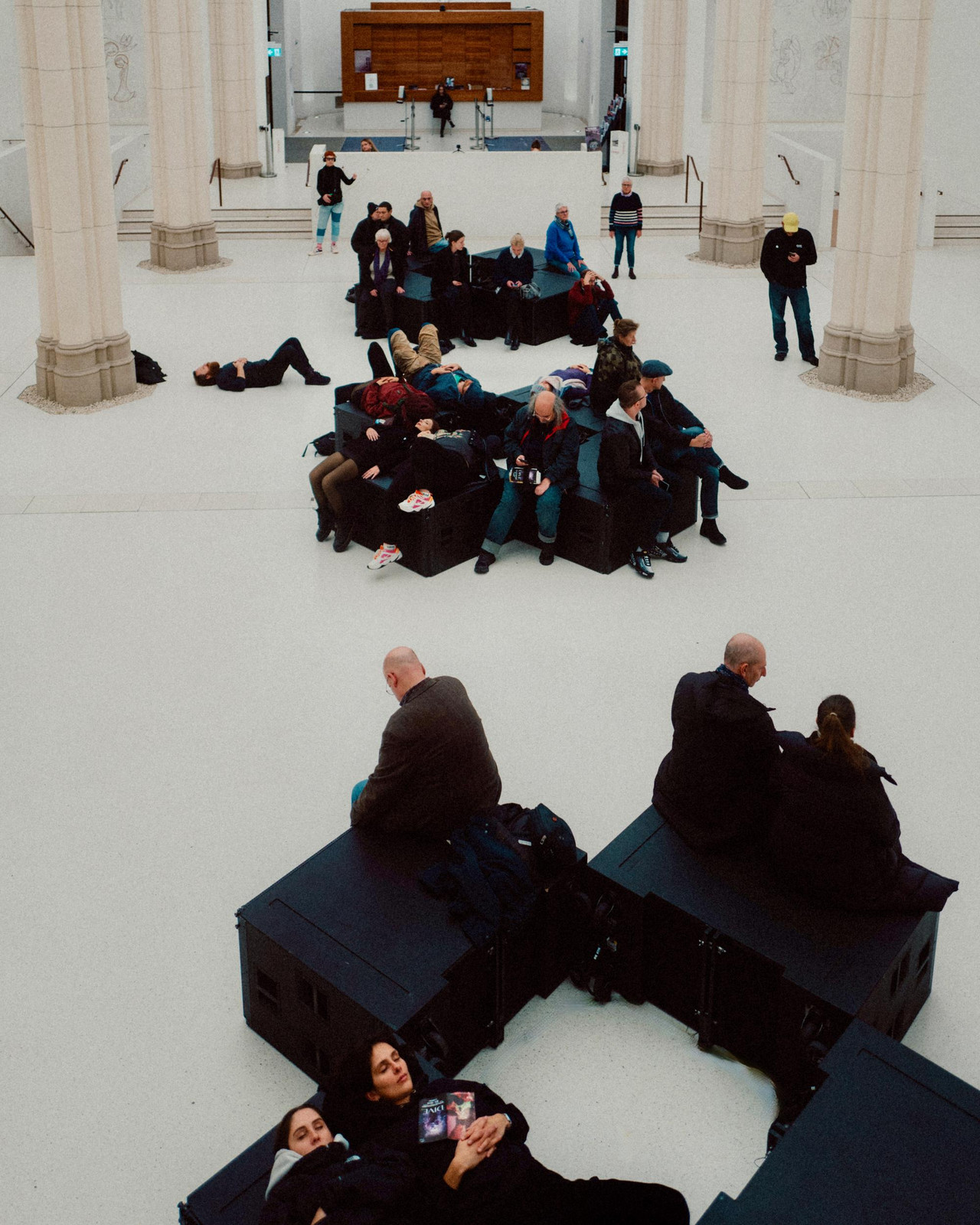

Building on the explorations of artists such as John Cage and Alvin Lucier, who explored the dynamic relationships between sound, space, and perception, B.A.S. promotes the dialogic interaction of these elements by emphasising the role of the body. This emphasis on interaction across sensory modalities situates B.A.S. within a lineage of sound art practices that explore the interplay of auditory, spatial, and bodily dimensions. For instance, Lucier’s »Music for Solo Performer« (1965) used brainwave activity to activate percussion instruments, directly connecting sound production to the body, while Marianne Amacher’s installations emphasised vibration and spatial resonance as experiential forces that blur the boundaries between space and listener. Éliane Radigue’s »Adnos« (1973-1980) explored the meditative potential of low frequencies, emphasising their immersive and physical qualities. Christina Kubisch’s »Electrical Walks« (2003-present) and Carsten Nicolai’s »wellenwanne lfo« (2012) extended these ideas to the imperceptible, translating electromagnetic waves and low-frequency vibrations into tangible, sensory experiences. Jan-Peter E.R. Sonntag’s sonic wave installations (1990s-present) relate sonic waves to spatial construction and spatial distribution (Sonntag et al. 2019).
The present reflection critically engages with existing theoretical frameworks in sound art by investigating the role of subwoofers as instruments for creating tactile, embodied sonic pressure environments, with low-frequency vibrations as the primary compositional focus alongside the idea of the body as a co-creative medium and decision maker in the compositional process. Building on Salomé Voegelin’s concept of »embodied listening« (Voegelin, 2010), which positions sound as an inherently relational and multisensory interaction, this analysis foregrounds the interplay between auditory and somatosensory engagement, thus offering an examination of both the compositional and experiential aspects of B.A.S.
Voegelin’s framework highlights how sound is not merely an auditory phenomenon but a dynamic, embodied experience that extends beyond traditional sensory modalities. In parallel, Brandon LaBelle’s (LaBelle, 2015) theory of sound as a »material and relational practice« and his concept of »social acoustics« as formulated in the frame of the social acoustics research project introduces a further layer of analysis by conceptualising sound not only as a medium that occupies space but as an active agent that reconfigures spatial perception as well as bodily and social awareness.
This intersection of Voegelin’s embodied listening and LaBelle’s material and social relationality in B.A.S. provides a critical framework for understanding how low-frequency sound can reconfigure the participant’s relationship to space. Therefore, B.A.S. extends these theoretical models, utilising low-frequency sound to re-imagine the relationship between sound, space, the body, and the social, ultimately proposing a model of listening where the body’s somatic responses are central to both the creation and communal experience of sound environments.
While Voegelin emphasises the relational nature of sound, LaBelle pushes this argument further by asserting that sound, particularly when considered through the lens of its materiality, shapes both the physical body and the spatial environment in ways that are profoundly sensory. In the context of B.A.S., this relational and material practice becomes especially relevant as low-frequency vibrations operate on the body directly, penetrating through one’s tissue, and activating tactile sensations that reframe our comprehension of how sound interacts with space and the body.
The sonic environments explored in B.A.S. emphasise the agency of the individual in assessing, even if subjectively, how they will experience sound, positioning the body as both a receptor and a co-creator within the sensory landscape. Each individual has the freedom to navigate the installation space, either by moving through the room in search of resonances and reflections or by reclining, opting to disconnect from the structured, logical demands of reality and instead attuning themselves to the feeling of sound as a tactile and immersive medium. This mode of engagement highlights a shift from passive listening to an active, embodied experience where the body is not merely responding to sound but, in fact, becomes a co-source of sound itself. As low-frequency vibrations pass through the body, they provoke internal responses that resonate back into the environment, turning the body into a dynamic participant in the creation of the sonic and social experience. This active co-creation extends beyond the mere physical response to sound and engages with alternate modes of experiencing space and time and being in space and time with other humans.
In these moments, the individual’s somatosensory system shifts their perception, reconfiguring the experience of reality in ways that bypass logical cognition and instead amplify the body’s capacity to »feel« the present. The act of feeling the sub-bass becomes the guide – also in interconnection with other participants. This mode of perception often induces an altered sense of time – either through the dilation or contraction of time – along with sensations of invigoration, excitement, or even the relief of pain. By reorienting the individual’s experience of reality away from rationality, B.A.S. opens up a space where time and bodily and social sensations intermingle, enabling a deeply personal and transformative encounter with sound. In this context, low-frequency sound does not simply stimulate the auditory system; it becomes a conduit for a multisensory, embodied re-imagining of space and time, emphasising the body’s central role in shaping subjective experiences of a commonly shared reality.
On the Way to Post-Music: Epilogue by Holger Lund
Since its first use, the term Post-Music – a parallel to Post-Art in the art world – has been connected with the work of Stefanie Egedy. The writer duo Y7 established the term and connected it with Egedy’s work in their 2024 article in 32c titled »Post-Music: Apocalypse Soundcheck.« In the article, Y7 suggest that Egedy’s work offers a shift to a next level in music through »the imagining of a framework for sonic culture based not only on what sound sounds like, but what sounds feel like [...] and what sounds have the capacity to move.« The term »move« is meant literally, referring to the capacity of sound waves to move not only bodies but objects, and even architecture. Focusing on »stimulations of exteriority, of tactility,« Y7 also address the »visibly warping [of] surrounding buildings.« They attest: »Her practice approaches the vibrational tactility of sound as equal to the more typical considerations of how sound sounds.«
Egedy developed the idea of a transparent sound, with very low frequencies on the edge of tonality below 40Hz. She summarises her intention in conversation with Y7: »I want it to almost be a transparent force, this thing that you don’t really listen to directly; rather you listen to it interacting with the walls... you feel it, it’s present, it’s there.« This notion of hers leads Y7 to connect with an idea that echoes Marshall McLuhan: »What’s striking is your use of terms such as ›transparency‹ and ›massage,‹ to accommodate the idea that it’s not just about hearing, but also about feeling.«
And indeed, McLuhan’s famous mistitled 1967 book, The Medium Is The Massage (instead of The Medium Is The Message), and its »translation« onto a vinyl record by the same title (McLuhan et al. 1967) re-sound here and point to the same area where Egedy’s work is found: sonic media. During her interview with Y7, Egedy herself draws a distinction regarding sound art: »Sound art is an attempt to use sound beyond music« which does not necessarily cover the concept of »sound-as-vibration« which is beyond this musical ecosystem and its expectations.« She concludes it is »this spatial aspect that we believe will be a consistent theme in future audio cultures.« And the spatial aspect leads to sound as sculptural material, to »experience a Post-Music landscape built around a sculptural nature of sound,« as Y7 puts it. They foresee the rise of a new music, a Post-Music, where »the music of the future may be so loud that in order to enjoy it we have to wear industrial ear defenders and feel it move us.«
However, if we take a closer look at art, we can get more ideas about Post-Music. Parallel to Post-Music, the term Post-Art is emerging in the context of new developments in art. The term is not to be confused with post-internet art, which has been accepted and established for more than a decade and belongs to a different, internet-related development in recent art contexts. In their article »Kunst im Kapitalozän« (2023), Isabelle Fremeaux and Jay Jordan did not yet use the term Post-Art, but they describe a phenomenon that is essential for the term, that is the concept of activism as art in contrast to an often more or less commercial concept of art as activism. The authors criticise in their text the latter as a kind of pseudo-activism or commercial use of activism. In contrast, they propose an activism, which uses art as an activist instrument, being aware that art allows for more freedom and offers protection from the juridical side (artistic freedom is guaranteed by law in many countries).
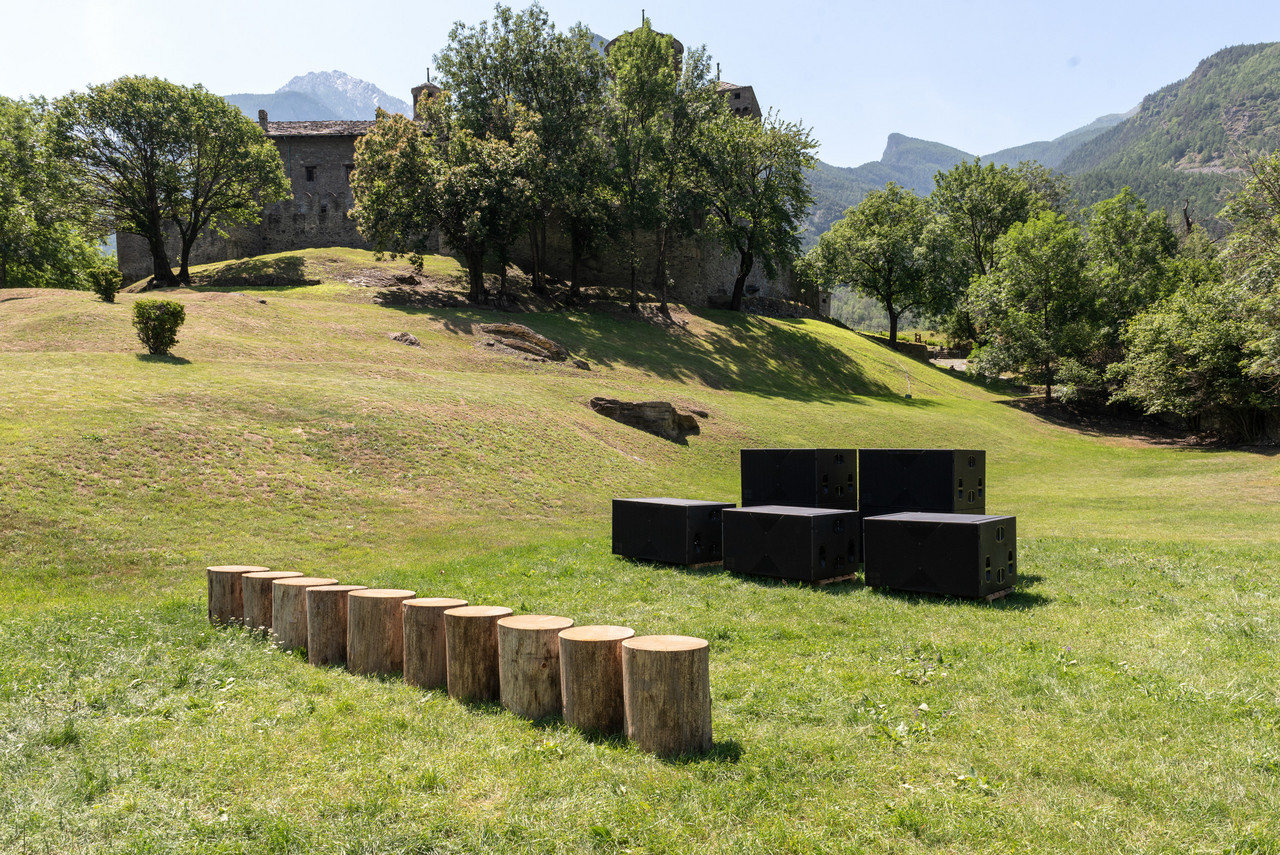
Whereas the history of art as activism spans centuries (thinking, for example, of Francisco de Goya’s »Los desastres de la guerra«), the inverse concept of activism as art can be traced back not only to activists but also to artists. The renowned German artist Joseph Beuys developed his concept of »Social Sculpture« (Soziale Plastik) in the 1970s and prominently realised it, for example, with his 1982 action where 7000 oak trees were planted as part of the documenta exhibition in and around Kassel to draw attention to environmental issues. Beuys himself was not only an artist but also a founding member of the Green Party (die Grünen) in Germany. His newspaper article »Aufruf zur Alternative« (Call for an Alternative) contributed to the formation of the party’s early programmes at the end of 1978. In March 1979, he ran for election to the Council of Europe in Frankfurt am Main for the civic-ecological list alliance »Sonstige Politische Vereinigung/Die Grünen« (Ursprung 2021).
Yet, Egedy’s Post-Music is not embedded in direct political activism. It is much more a deep and practical media activism, making sonic media itself the object of her activity and reflection. What she does is not tonal enough to be conventional music, not sculptural enough in a traditional material sense to be art, and too spatial, visceral, and vibrational to be conventional sound art. Therefore, Post-Music may be a term appropriate to apply to her work. Yes, the medium provides the – sound-vibrational – massage and the massage is the message, in the anti-neoliberal sense developed above.
Coming back to music, the recently published book, Popular Music in Brazil (Tupinambá et al. 2024), includes an outlook on future developments. In this outlook the term Post-Music is used as well. This mention of Post-Music brings us back to a key feature of Egedy’s work as bodily composition – connecting media, the body, the social, and the political. In the book, these paragraphs can be found:
»As the struggle on the part of social movements for the recognition of historically subaltern groups gained ground on the public agenda, artists who built their careers around supporting political causes – through their sound, lyrics, and, above all, their bodies – began to emerge. These are artists who do not hesitate to publicly take a stand in favor of feminist, LGBTQIA+, and black movement agendas, or, also, the rights of indigenous peoples. More than making engaged music as in the 1960s, it is about the artists using the image of their bodies to promote a revolution in the microphysics of power [...]. These artists use the aesthetics of contemporary pop music to convey messages that address their struggle for social recognition. This may bring about a discussion of a post-musical genre era [...], which means that music starts to be completed by performances that politicize every-day existence.« (Tupinambá et al. 2024: 60)
It is enlightening to see how sound, bodies, politics, and Post-Music, as a call for something »other than music,« are intertwined in this publication. Although Stefanie Egedy has a different starting point, a sonic media-centered one, what she does sonically is so visceral that it not only touches but transforms bodies, into instruments, into ensembles of instruments. Here, another political aspect enters: the aspect of altering bodies, not in the realm of the commercial beauty industry, but in the realm of media. This is done by making them a medium for the transgression of sonic matter, exercising a power play over the participating bodies that at the same time empowers them to be a transgressional medium, politicising them as interconnected, ensembled media, as a Beuysian communal sculpture in sound.
References
Amacher, M. »Sound Characters (Making the Third Ear).« Tzadik, 1999
Bauman, H.-D. L., & Murray, J. J. Deaf Gain: Raising the Stakes for Human Diversity. University of Minnesota Press, 2014.
»The effectiveness of vibroacoustic therapy in the management of pain and related conditions: A scoping review,« BMJ Open, 12(4), e046591. https://doi.org/10.1136/bmjopen-2020-046591
Beuys, J., »Aufruf zur Alternative», Frankfurter Rundschau,« (1978)
http://www.wilfried-heidt.de/pdf/aufruf-zur-alternative.pdf
Cox, T. The Sound Book: The Science of the Sonic Wonders of the World. W. W. Norton & Company, 2014.
Dardot, P., & Laval, C. The New Way of the World: On Neoliberal Society. Verso Books, 2014.
Fremeaux, I., Jordan, J., »Kunst im Kapitalozän,« Bildpunkt, (2023)
https://igbildendekunst.at/bildpunkt_/kunst-im-kapitalozaen/
Goodman, S. Sonic Warfare: Sound, Affect, and the Ecology of Fear. The MIT Press, 2010.
Henriques, J. Sonic Bodies: Reggae Sound Systems, Performance Techniques, and Ways of Knowing. Bloomsbury Publishing, 2011.
Kandel, E.R., Schwartz, J.H., Jessell, T.M., Siegelbaum, S.A., & Hudspeth, A.J. Principles of Neural Science (5th ed.). McGraw-Hill Education, 2013.
Kasearu, M., Rüütel, E., & Kasearu, K., »Vibroacoustic sound therapy improves pain management and more.« Holistic Nursing Practice, 29(2), 73-80 (2015) https://doi.org/10.1097/HNP.0000000000000087
Kantor, J., Campbell, E. A., Kantorová, L., Marečková, J., Regec, V., Karasová, K., Sedláčková, D., & Klugar, M., »Exploring vibroacoustic therapy in adults experiencing pain: A scoping review,« BMJ Open, 12(4), e046591, (2022)
Kubisch, C. (2003–present). »Electrical Walks.« Self-published artistic practice.
LaBelle, B. Background Noise: Perspectives on Sound Art. Bloomsbury Academic, 2006.
LaBelle, B. Sonic Agency: Sound and Emergent Forms of Resistance. Goldsmiths Press, 2018.
Lucier, A. »I Am Sitting in a Room.« Lovely Music, Ltd, 1969
Maskos, R., »Ableismus und Behindertenfeindlichkeit: Diskriminierung und Abwertungbehinderter Menschen,« Bundeszentrale für politische Bildung, (August 28, 2023) https://www.bpb.de/
McLuhan, M. The Medium is the Massage: An Inventory of Effects. Bantam Books, 1967.
McLuhan, M., Fiore, Q., Simon, J., Agel, J. The Medium is the Massage, Columbia Stereo CS 9501, Mono CL 2701, 1967.
Nicolai,C.(2012), »Wellenwanne LFO,« Galerie EIGEN+ART.
Padden, C. & Humphries, T. Deaf in America: Voices from a Culture. Harvard University Press, 1988.
Quindlen, N., et al., »Vibroacoustic Therapy: The Therapeutic Effect of Low-Frequency Sound on Specific Physical Disorders and Disabilities,« (2015): https://www.academia.edu/82033414/
Radigue, É. »Adnos« Experimental music release, (1973–1980)
Rosa, H. Unverfügbarkeit. Suhrkamp, 2020.
Rossing, T. D. The Science of Sound (3 ed.). Addison-Wesley, 2002
Sachs, K. The Wellsprings of Music. Martinus Nijhoff, 1965.
Sonntag,J.-P.E.R., Christ, H. D., Dressler, I. & Döring, S. Rauschen, m. Schallplatte. Merve, 2019.
Skille, O., Wigram & Weekes, L., »VibroAcoustic therapy: Applications and effects,« Journal of Music Therapy, 26(2), 34–46 (1989).
Skille, O. »VibroAcoustic Therapy. Reports.« https://vibroacoustic.org/FrequencyInfo/Research%20Articles/Reports.Olav%20Skille.pdf (2007)
Skille, O., & Wigram, T. (1995). »The effects of music, vocalisation and vibration on brain and muscle tissue: Studies in vibroacoustic therapy.« In T. Wigram, B. Saperston, & R. West (Eds.), The Art and Science of Music Therapy: A Handbook (pp. 23–57). Harwood Academic Publishers.
Thompson, E. The Soundscape of Modernity: Architectural Acoustics and the Culture of Listening in America, 1900–1933. The MIT Press, 2002.
Tupinambá de Ulhôa, M., De Marchi, L., Borges, R. P. T. Popular Music in Brazil. Identity, Genres, and Industry, Elements in Popular Music, edited by Rupert Till, Cambridge University Press. DOI: 10.1017/9781009357180, 2024.
Ullrich, V. L., Quezada, E.O. Marx’s Others: Bodies, Affects and Experience. Transcript, 2024.
Ursprung, P. »Joseph Beuys und die Grünen.« Heinrich Böll Stiftung. (2021)
https://www.boell.de/de/2021/05/07/joseph-beuys-und-die-gruenen
Vallelly, P. Futilitarianism. Goldsmiths Press, 2021.
Virilio, P. The Aesthetics of Disappearance. Semiotext(e), 1991.
Voegelin, S. The Sonic World: On Sound and the Body. Routledge, 2018.
Voegelin, S. Listening to Noise and Silence: Towards a Philosophy of Sound Art. Continuum International Publishing Group, 2010.
Voegelin, S. Sonic Possible Worlds: Hearing the Continuum of Sound. Bloomsbury Academic, 2014.
Voegelin, S. The Political Possibility of Sound: Fragments of Listening. Bloomsbury Academic, 2019.
Voegelin, S. & Furlong, L. Sonic Thinking: A Media Philosophical Approach. Bloomsbury
Academic, 2019.
Yamada, M., Kawamura, H. & Nakagawa, K. »Effects of Vibroacoustic Therapy on Circulation and Relaxation,« Journal of Applied Physiology, 104(3), 763–770 (2008)
Y7. »Post-Music: Apocalypse Soundcheck.« 32c. (2024)
https://032c.com/magazine/post-music-apocalypse-soundcheck
Stefanie Egedy is a Berlin-based low frequency sound artist who has performed at Berghain, Centro Pecci, CTM Festival, FIBER, MIT, Harvard and many more. Her primary body of work, BODIES AND SUBWOOFERS (B.A.S.), explores the interaction between sub-bass, bass, infrasound, human & architectural bodies, and subwoofers.
Holger Lund is an art, design, and music researcher at DHBW Ravensburg, as well as a curator and DJ. He is co-director of the platform fluctuating images and participates in the record label Seismographic Records.
This text is based on writing originally commissioned by Sound Art Lab in Struer, Denmark. It has been edited for CTM Magazine.