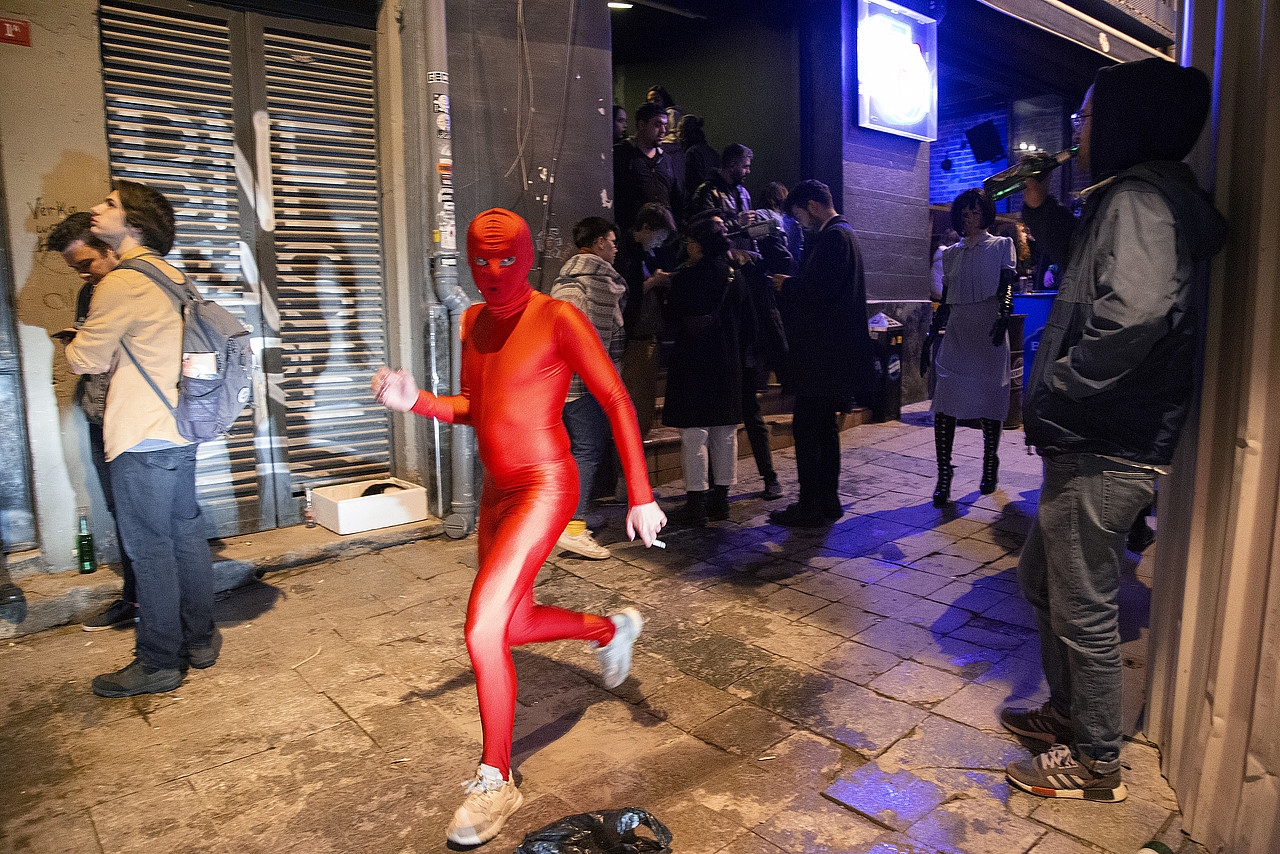
The night forms close relationships and creates feelings of unity, even when things seem unclear or uncertain. On the dance floor, lights cut through the fog, mesmerising the darkness. What does the night hold for us? History is often illuminated by light, which captures and blinds us with its brilliance. But what about the darkness? It is in darkness that alternative lights get to roam freely; darkness carves out a realm for unconventional approaches and fresh discoveries. Can the night offer possibilities of freedom? Is it possible to see colours in the dark? How do we establish the night for self-expression, and expand its potential into the day?
When you enter the night, the feeling is that of a sanctuary, and a political statement. Istanbul’s nightlife has been functioning as a form of resistance for the queer community, especially in the face of political shifts and the oppressive climate of the past 20 years. In this context, the word »sustain« signifies more than endurance; it's a testament to the community’s unwavering existence amidst societal upheavals. The night sustains the living as well as the strength to express identities. The resilient nature of queer musicians, performers, and operators of nightlife has been inspiring in terms of solidarity for many others working in different fields.
In the 19th century, Istanbul's nightlife culture transformed significantly due to Westernisation. As Western influences grew stronger, new entertainment venues such as cafes, casinos, and café-chantants emerged, especially in districts like Galata and Pera. These Western-style venues became prominent social hubs, reflecting a shift towards European customs and lifestyles. Previously, traditional coffeehouses and taverns were the main social and entertainment spaces for the public. However, these venues also evolved, incorporating modern elements influenced by Westernisation, thus changing the city's social dynamics and nightlife. Today we are still observing the ongoing impact of Westernisation in Istanbul.
Over the last 20 years, Turkey's socio-political changes have affected every field, and while spaces for freedom of expression or breathing have gradually diminished, nightlife has somehow managed to continue. While trying to read the nostalgia of Istanbul in the 1990s through a narrative of entertainment, it is also essential not to forget the wave of murders and human rights abuses that happened during the same period in other parts of the country also in Beyoğlu.1 In the 2000s and 2010s, with the hopes of joining the European Union and being selected as the European Cultural Capital, Istanbul became one of Europeans’ favourite destinations despite the conservative policies that appeared liberal at that time.2
Istanbul’s »general« club scene is very commercial. There are many venues organising raves and techno events. However, these are not safer spaces, oftentimes requiring equal numbers of men and women within a group in order to enter. Many clubs on the Bosphorus shoreline have high entrance fees, and beverages are overpriced. Mainstream music keeps the night going, and many groups prefer hiring private boxes to open bottles of expensive champagne. These venues are often visited by a large number of tourists.
Another unfortunate aspect of Istanbul’s commercial nightlife scene is that due to the lack of venues with professional sound and lighting, when well-known DJs are booked for Istanbul gigs, they usually perform in the halls of shopping malls such as Zorlu Center or Unique. For example, the popular festival Sonár also took place at the Zorlu Center, offering an awkward experience of going through a shopping mall to reach the stage and possibly walking back through the same corridors at 2 in the morning. Areas such as the Zorlu Center are criticised for privatising previously public land, which limits genuine public access and control; despite claims of creating »public spaces,« these areas are regulated by private security, undermining their public nature. The project reflects broader issues in Turkey's neoliberal policies that prioritise private development over public good, resulting in urban spaces that favour commercial interests.3
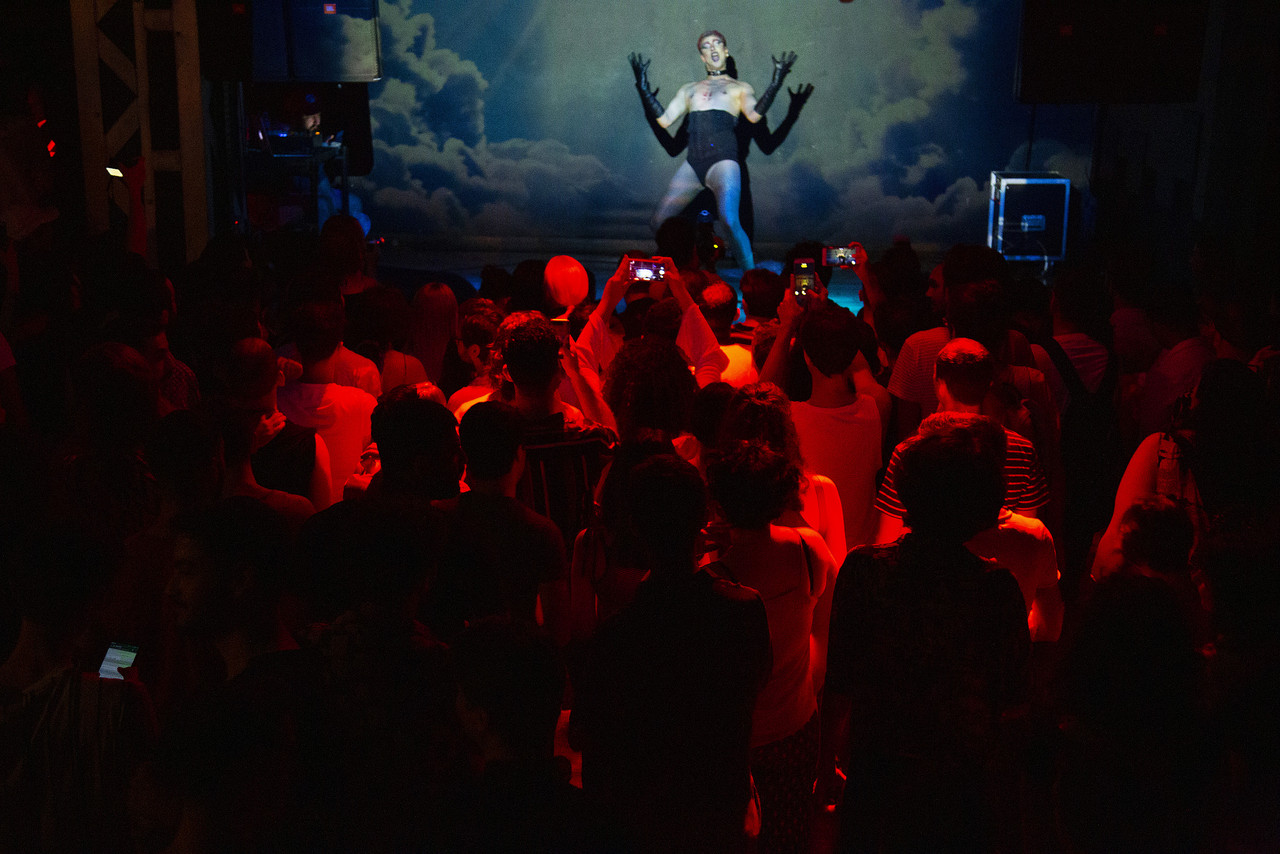
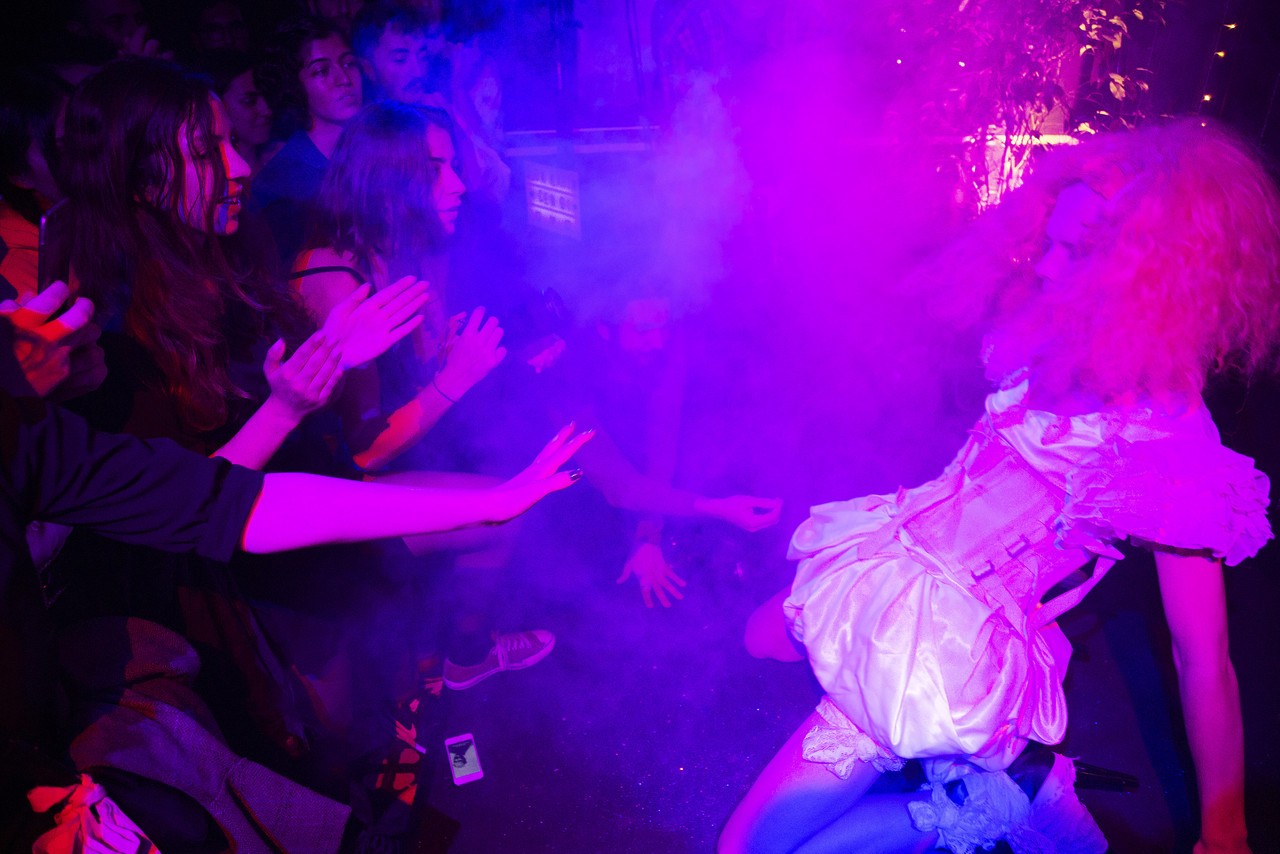
In recent years, particularly since the 1990s, the nightlife and rave scene have shown significant growth. However, this article focuses more on the queer party and nightlife scene which exists within this bigger complex picture.
In large metropoles like Istanbul, it is not easy to talk about a homogenous nightlife; when the night gets thicker, it encapsulates more and more, taking on different forms. As the night progresses, the boundaries between strangers blur, crafting a sense of unity and shared experience that is ephemeral yet profound.
The Beyoğlu neighbourhood has long been at the heart of the city, and also of its nightlife. The diversity of its local population, which includes many immigrants, and its status as a tourist hub allows for a variety of nightlife experiences. Its diverse nightlife attracts both locals and international tourists, offering a range of experiences from traditional music venues to modern nightclubs. People from different cultural backgrounds coexist in Beyoğlu, and this diversity is reflected in both day- and nighttime. Beyoğlu is also a hub for culture and arts, with art events bridging the gap between day and night and contributing to the liveliness of the nightlife.
Turkey’s political changes are always evident in Beyoğlu, for example at Gezi Park, where pivotal events took place. Urban planning decisions regarding the square where this park is situated are highly political.4 Situated next to Gezi Park, Taksim Square is also an important symbol for the government, and one of the areas where migrants reside, on top of being a preferred tourist area. Consequently, it is full of entertainment venues that cater almost exclusively to tourists, alongside a significant presence of venues rooted in local culture such as »pavyons« and »türkü« bars. The rich tavern culture and the tradition of people spending their nights out have a long history here, and can be considered integral to local nightlife. The taverns are local establishments where alcohol is consumed with mezes, often accompanied by traditional music, leading to dancing.
Recent local elections in Turkey, which took place on 31 March 2024, resulted in the opposition party CHP (The Republican People's Party) winning in major city municipalities. The current Istanbul municipal president, Ekrem İmamoğlu, brought his party to power in Beyoğlu district for the first time in history. The new municipal government might positively impact nightlife in Beyoğlu, though it is hard to predict what effect this will have on queer communities. While İmamoğlu has made statements supporting LGBTQ+ rights, we will only see clear support with time.
The queer community's sanctuary within the night emerges within this political and geographic landscape. Nightlife in Istanbul is at times only entertainment, but at others a battlefield for freedom; for some a breathing space, and for others, something beyond their wildest dreams.
As Turkey has gone through a period of increasingly restricted freedom of expression, the number of events where the LGBTQI+ community can come together has decreased. As a result, the spaces enabled by the queer community are disappearing, and queer nightlife, in a way, is refocusing on its origins of providing spaces of gathering and being together.
Nightlife has become increasingly restricted with the current national AKP (Justice and Development) government coming to power in 2002. This government has banned the pride march,5 imposed bans against queer organisations in different fields, and cancelled film screenings and festivals. Today, the night’s spaces, bars, and clubs respectively are having a hard time enduring the restrictions, and most of them have closed down. Most festivals, cultural events or exhibitions which are not aligned with AKP’s politics are no longer present and those that are trying to survive in opposition have been recurrently forced to cancel their programming by municipalities in the past couple of years.6
As Turkey has gone through a period of increasingly restricted freedom of expression, the number of events where the LGBTQI+ community can come together has decreased. Queer visibility in cultural and artistic events is in particular being reduced or obscured. As a result, the spaces enabled by the queer community are disappearing, and queer nightlife, in a way, is refocusing on its origins of providing spaces of gathering and being together. Melis Nots, one of the founders of Queerwaves, says: »Ten years ago, I wasn't organising this many events within a year, but nowadays I'm trying to organise events more frequently to bring people together because we have fewer opportunities to spend time with the community, to meet and share. In the past, there were more film festivals and a lot more queer events that everyone attended. Now, more collectives emerge from nightlife because connections can be made there, and we can generate ideas together.«
Queerwaves is an initiative that has been organising queer events in Istanbul for about 10 years and has expanded its following, especially through the parties it organises. The parties don't have a specific venue; they take place in different locations. To create safer spaces, the venue is only announced to ticket-holders. Apart from parties, Queerwaves also organise various events such as markets where queer designers can sell their products, exhibition tours, and workshops. Operating within DIY culture, where every aspect from decor to sound system, from bar to door, is taken care of by the team, Queerwaves is truly a valuable organisation for those who want to dance in a safer space until the morning. It is one of the crucial groups that contributes to nightlife as resistance in Istanbul.
Recently, another organisation that improves the dialogue about safer spaces in nightlife is Sirän, an Istanbul and Berlin-based collective, founded by the artists and DJs Nene H and Y.Unan, that provides space for marginalised people, cultural exchange, and genre-bending rave experiences. Sirän doesn’t settle for the rave experience only, but also strives to develop cultural connections in the music field, to provide a platform for queer musicians, and to contextualise the rave scene through workshops and talks.7
It is also important to mention XSM Recordings, a collective that has been a significant part of the scene since 2020, organising parties and operating as a record label. XSM exemplifies the different ways people can come together around music. Their events often combine parties with exhibitions and solidarity activities, highlighting their multifaceted approach to empower the community. The collective, which began as a partnership between Mx. Sür and Kübra Uzun, embarked on a journey to provide a nurturing space during the pandemic; their aim was to create a space for the releases of queer producers living in Turkey and to explore ways that the queer community can coexist and thrive.
Although these organisations may not be anchored at specific venues, they may focus on certain venues that are considered as safer spaces for queer communities, for example Ziba, a bar frequented by those working in cultural and artistic fields, or Şahika, a space popular with its alternative parties. Noh Radio, Bigudi, and Gizli Bahçe have been contributing to the scene for years, with the recently opened Noh Extended coming in as a recent addition. The venue Mecra is known as the address for queer parties on the »Asian side« (all the other venues that are mentioned in this article are found on the »European side« of Istanbul). Queer parties often function as solidarity events for the community as well: Income through entrance tickets become funds to help those in need of financial support.
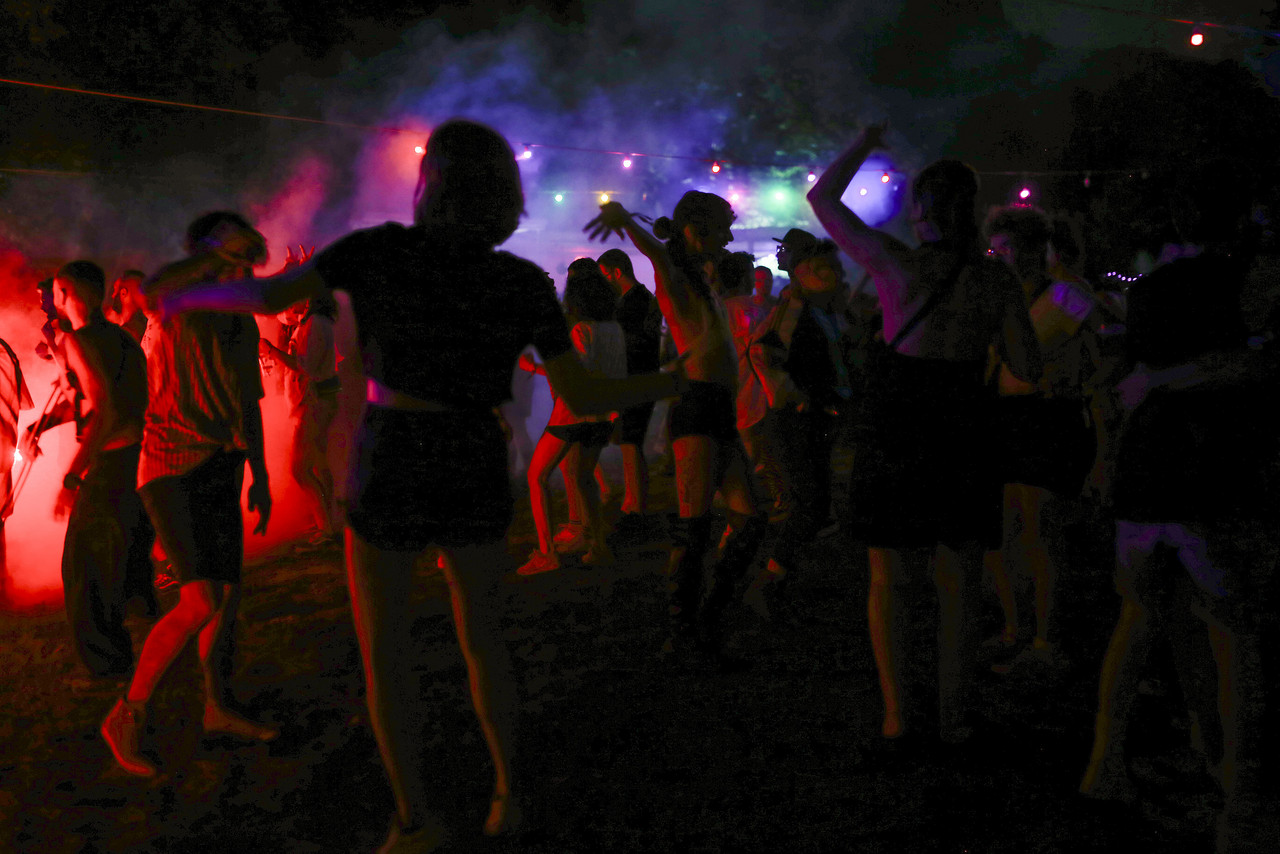
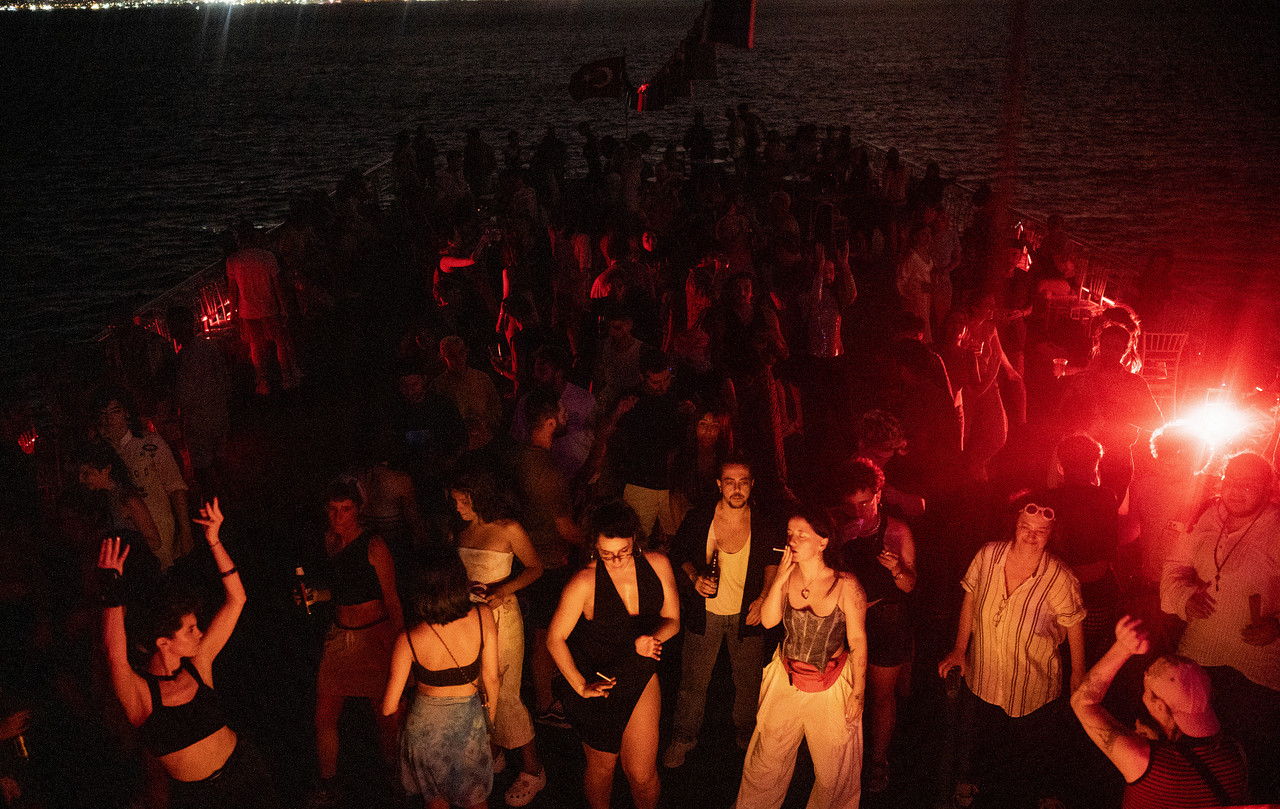
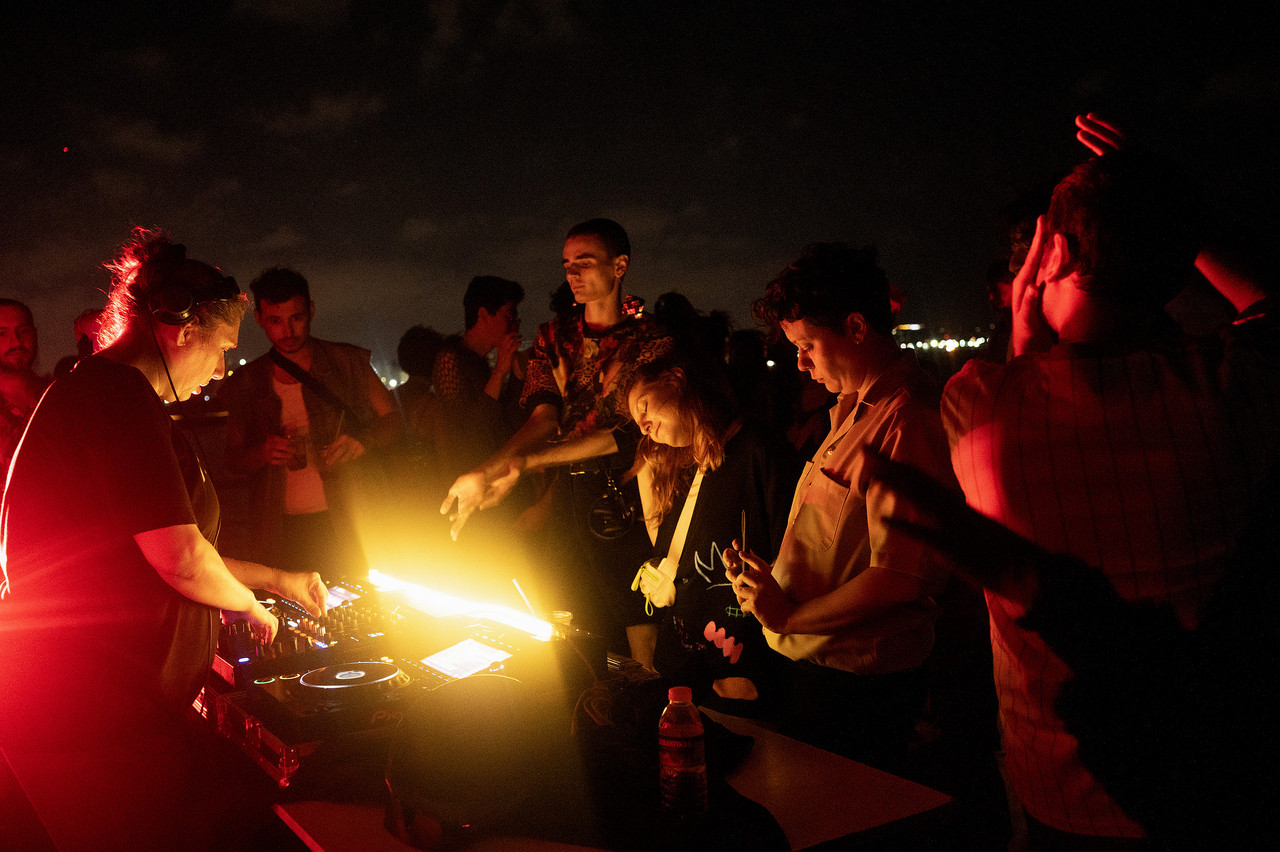
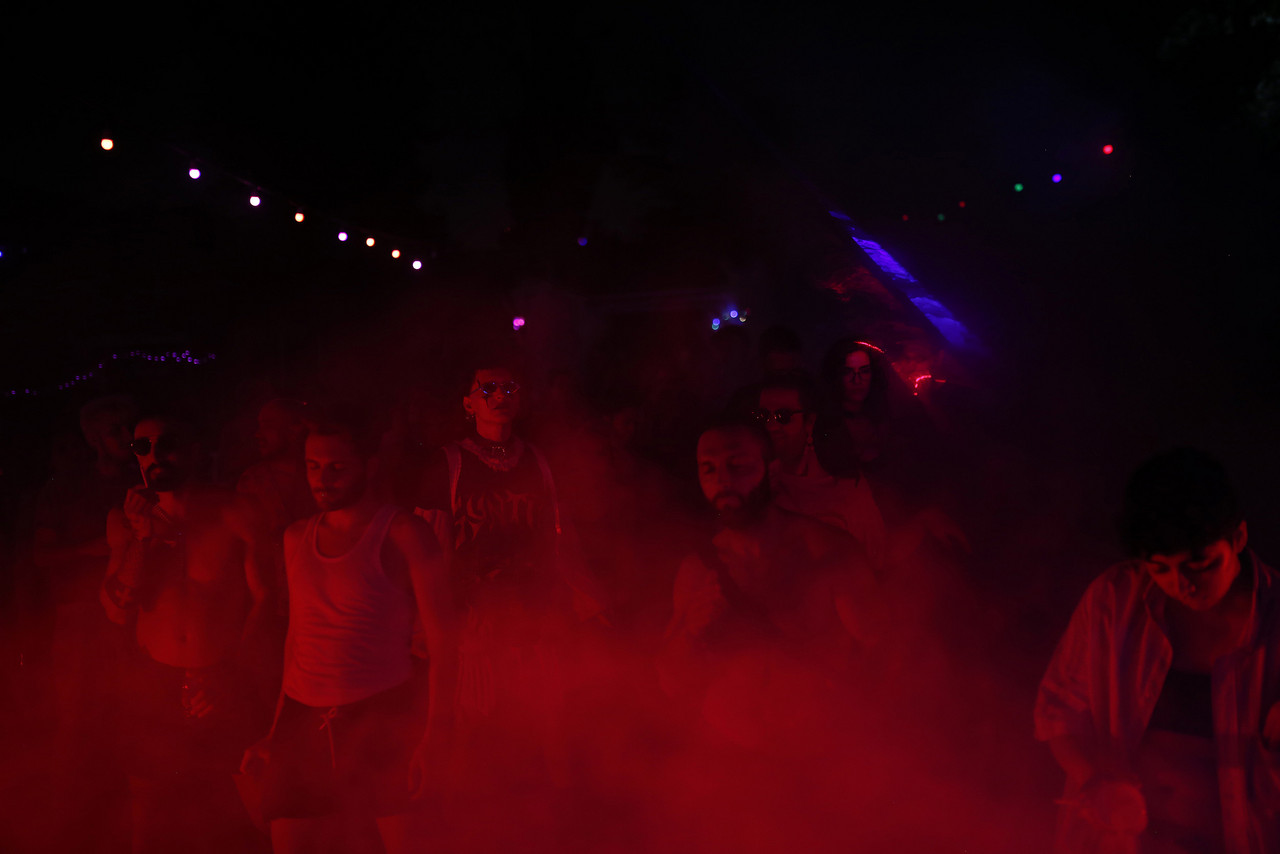
The sustainability of physical venues depends on the way they interact with their customers, and their political stances. In a crowded and large city like Istanbul, with a population of around 15 million, the close relationships between these venues and their customers are very valuable. While it's relatively easy to create safer spaces where everyone knows each other, creating such an environment in a massive and crowded city like Istanbul is much more challenging. In a way, Istanbul's queer nightlife thrives on this strange duality. Since the queer night scene is not vast, there is some ongoing connection between its organisers and venues, which usually arises through personal relationships. If organisers are happy with the manager and the crowd of the venue, they usually continue organising nights regularly. However, it is not surprising to witness connections fall apart when a venue manager is changed.
Although Istanbul’s scene is smaller than, for example, Berlin's, different queer communities do not tend to mix much. For example, it is not very common to see the community of male-dominant gay clubs such as Love, Cheeky Club, or Tekyön attend more inclusive queer events, and vice versa. That’s why each community is quite tight and it is easy to get to know the community members in a short period.
It is not easy to spot the age range of the queer scene: although younger generations are more heavily represented, the impact and presence of the older generations are definitely felt. In terms of artists, again, there is a wide age range. Older artists/performers transfer knowledge and experience to their younger counterparts, and there is a strong intergenerational solidarity. The scene might almost be defined as age-natural. The younger generation often brings new energy and ideas, while older generations provide a historical perspective and continuity. This generational mix leads to a difference in approach, with younger individuals typically more experimental and influenced by global trends.
Knowledge transfer between long-time producers/organisers and emerging generations also occurs, often through mentorship and collaboration on events and running venues The evolution of Istanbul's club scene since the 1990s, with venues like Club 20 and Club 19,8 reflects a history of adapting to new social dynamics and influences while maintaining a connection to the past.
Unfortunately, like many other major cities, Istanbul's nightlife has been heavily affected by the Covid-19 pandemic in recent times. Many venues had to make the difficult decision to close. Club Coweed, which organised gatherings during the pandemic period, set a good example of online events. However, in the physical world, the jobs of venue managers and nightlife workers have become increasingly difficult. During the pandemic, the ban on music in venues after midnight, on top of curfews, rendered many establishments non-functional. This music ban, for some reason, still persists today, even though all pandemic measures have been lifted. Of course, many venues find ways to keep the music playing until morning.
As trans activist and DJ Şevval Kılıç explains: »The pandemic has been somewhat defining for businesses and nightlife. It took time for venues, artists, musicians, and performers to recover afterwards. Nightlife in Istanbul continues despite the high cost of living. Istanbul nightlife has never really suffered at any time. I can say that I have witnessed the past 30-35 years of it. For example, in the 1990s, there were 17 »trans clubs,« or »trans bars« in Beyoğlu specifically for trans people – not just gay bars but exclusively trans bars. They are no longer there, which I think is a sign. But despite this, nightlife in Istanbul has never really suffered. Except for major crises, economic crises, earthquakes, etc., it is a sector that bounces back quickly, I believe. In recent times, artists are carrying the burden of the economic crises: DJs and performance artists are demanded to make concessions. Big venues are asking the artists to cut their shares.«
Hyperpop and Y2K sounds are popular among the younger generation, and thus some venues are inclined to identify with that as well as industrial techno. However, some places prefer softer sounds and more popular tunes, so one might hear Turkish pop or arabesque at a club played by a DJ in the middle of the night.
Üzüm Derin Solak, queer trans feminist activist and artist who has been managing venues for many years similarly discusses the negative effects of the pandemic and the subsequent economic crisis on nightlife, noting that nightlife, which used to be experienced every day, is now reduced to certain days of the week. Even during significant crises that the country goes through, we see that nightlife somehow manages to recover and continue from where it left off. How can the resilience and sustainability of nightlife be explained?
Nightlife, and more broadly, the cultural, arts, and entertainment sectors are usually the first to be abandoned. But despite this, nightlife manages to overcome many obstacles and sustain itself. Üzüm states: »Rooted establishments have a community around them, and can mutually support each other with their customers. Sustainability is key for venues and various factors determine this. Taking a stand on social issues in Turkey is important. One of the main ways to create this continuity is to develop people's sense of belonging. This is right at the heart of the idea of safer spaces. Our venues are like our homes where we experience the most glorious, sparkling moments of our lives, our loves, our freedom, our happiness, our anger, our sorrows, and many more emotions. Yes, you need capital to stay afloat, but how will you build this capital? Or what kind of continuity do we want? Just to make money? Or to embrace a community and this organic partnership? If you act with political consciousness, that is, if you can witness processes and analyse them well, it contributes to the venue’s sustainability. I believe that we can sustain the concept of safe entertainment anywhere. It's a mutual exchange within a capitalist system, but what we mean by customer satisfaction is not just about good alcohol, comfortable spaces, and quality service. It’s also about creating a safer space with dignity and creating venues that are free from a culture of violence.«
Artists, especially musicians, producers, and performers play a key role in sustaining spaces. Most venues are frequented because of the artists’ followers. The sonic range is quite wide and it is hard to tell if there is a tendency towards a certain sound. Hyperpop and Y2K sounds are popular among the younger generation, and thus some venues are inclined to identify with that as well as industrial techno. However, some places prefer softer sounds and more popular tunes, so one might hear Turkish pop or arabesque at a club played by a DJ in the middle of the night. Drag performances have been quite popular, and are usually featured in more independent smaller venues like Mecra, as well as in very commercial venues such as Cahide.
Asena Hayal, a producer, art director, and curator, initiated the Istanbul Night Life Project that speaks to the transformation of night and entertainment culture from the 1990s to the present day, defining the contemporary nightlife culture of Istanbul across generations. According to Asena, communities are now more organised than they were a decade ago, with safer spaces taking precedence over music. She states that the creation of these spaces is driven by the desire to feel safe, to become a regular, and to see people who are familiar and similar to oneself.
No matter what happens, nightlife in Istanbul goes on, and the queer community remains just as diverse. Even when clubs open and close, or when there are big problems like economic or political crises, nightlife always finds a way to keep going.
Queer communities are at the forefront of making sure these places are safe and continue to exist. This effort could also make the queer community more visible during the day and build stronger bonds for the future. The knowledge being built by Istanbul’s queer communities at night can open more areas for solidarity during the daytime. The friendships that are being built and the communities that are being formed at night are paving the way to safer environments during the day. Perhaps we can speculate and hope for more room for freedom of self-expression when it is not dark outside. These spaces can influence the importance of respect, acceptance, and celebrating diversity, which can be valuable in workplaces, schools, and public institutions. The dance floor offers a lot of possibilities and brings together people who aren't usually represented.
Ulya Soley is a curator at Pera Museum. She completed her MA in Culture, Criticism and Curation at Central Saint Martins, and her BA in Art History and Psychology at McGill University. Her recent curatorial projects include »Souvenirs of the Future« at Pera Museum, »all familiar, all foreign« at Versus Art Project, and »How shall we dress for the occasion?« at 601 Artspace in New York. She was recently a fellow at Kültürakademie Tarabya.
Yelta Köm is an artist who brings together architectural, artistic, and spatial practices to discuss social and political issues. He completed his master’s degree at the Städelschule Academy of Fine Arts, and has exhibited work at the Istanbul Biennial, Venice Architecture Biennale, Istanbul Modern Museum, MAXXI Museum, and The Art Institute of Chicago among other. He was recently a fellow at Kültürakademie Tarabya.
This text was commissioned as part of CTM 2024 – Sustain.
- 1
In the 1990s, Turkey was engulfed by a wave of unresolved political murders and human rights abuses particularly in the southeastern regionso of country where the majority is the kurdish population. The widespread belief in the state's complicity in these crimes was exacerbated by the government's apparent inability to address them. This period is characterised by a sense of legal impunity and deep societal trauma, with the numerous unresolved cases coming to symbolise a dark era of political violence in the country's history. Also, there is a need to mention about Süleyman Ulusoy, known as "Hortum Süleyman," was notorious for his severe abuse and mistreatment of LGBTQ+ and transgender individuals during his time as a police chief in Istanbul in the 1990s. He led numerous police raids on LGBTQ+ gathering places, including nightclubs and meeting spots, where he and his officers subjected individuals to physical violence, harassment, and humiliation.
- 2
In 2005, Newsweek's cover story on Turkey read: »Cool Istanbul. Europe’s hippest city might not need Europe after all.« Turkey had started membership negotiations with the EU that same year.
- 3
A deeper analysis on the role of development projects in controlling public space can be found in the article, »Make it too Public and the Police will Arrive: Turkey's Construction Boom as Opportunity and Publicness as Medium of Subversion«: leidiniu.archfondas.lt/en/alf-04/eray-cayli-make-it-too-public-and-riot-police-will-arrive%E2%80%9D-turkey%E2%80%99s-construction-boom-opportu
- 4
The Gezi Park resistance in 2013 was a major civil movement against the Turkish government's plans to redevelop a public park in Istanbul. Initially focused on environmental issues, the movement quickly expanded to protest against the authoritarian tactics of the governments.
- 5
In 2019, the Istanbul Governor's Office yet again banned the LGBT Pride Parade, citing security concerns and public order.
- 6
Art İstanbul Feshane was targeted by allegations of LGBT terrorism, sexuality, Gezi celebration: https://kaosgl.org/en/single-news/criminal-complaint-against-the-exhibition-which-was-attacked-under-color-of-lgbt-terrorism
- 7
See the article »XSM annelerinden kulüp kültürünün direngen tarihine saygıyla« (XSM mothers pay tribute to the resilient history of club culture) by Ekin Sanaç: bantmag.com/xsm-recordings-roportaj/
- 8
Club 20 and Club 19 played pivotal roles in shaping Istanbul's nightlife in the late 1980s and early 1990s. Ceylan Çaplı, a notable figure in the city's club scene, opened Club 20 in 1989, tailoring it to well-to-do younger male customers with a preference for minimalist techno. The club had a door policy that largely restricted women, aiming to create an exclusive atmosphere. Due to its popularity and the ensuing conflicts among patrons, Çaplı opened Club 19 next door later the same year. Club 19 and Club 20, along with the earlier Club 14, which Çaplı opened in 1986, became experimental grounds for different door policies and social formations. These clubs contributed significantly to the emergence of Istanbul's gay scene by creating spaces where well-to-do young men could socialise away from the public eye. Sourced from Williams, Samuel. »Politics in the Piyasa: Marching, Marketing and the Emergence of Gay Identities in Istanbul.« Anthropology of the Middle East, vol. 13, no. 2, winter 2018, pp. 95+. Gale Academic OneFile: https://go.gale.com/ps/i.do?p=AONE&u=anon~5f4a5815&id=GALE|A583654209&v=2.1&it=r&sid=googleScholar&asid=39534a22. Accessed 27 May 2024.