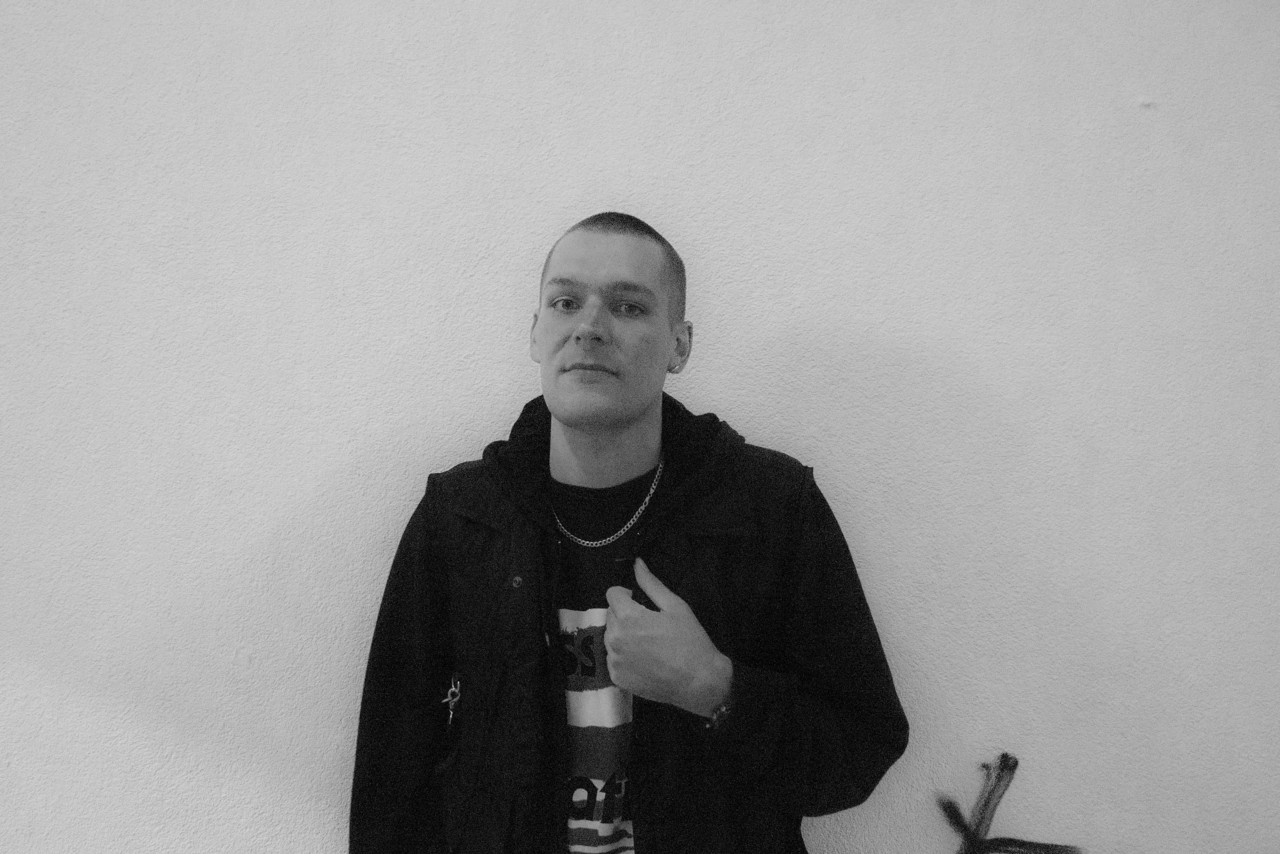
zweikommasieben: You are a co-founder of Bala Club. How did that come about? And do you have a special role within the collective?
Endgame: We were all hanging out, doing parties, and making music, and I guess it was just a way to put a name to what we were doing. It made sense to call it something, to invent our own thing and create a scene where there wasn’t one already. We all felt quite alienated from the club scene in London. This is why we felt that we needed something of our own and on our own terms without having to fit into someone else’s idea of what club music is. Bala Club started out with just a few of us. Over time it has grown and evolved. There aren’t specific roles or anything. With the compilation and the three EPs released so far, we tried to show what we’re all about – even if not all the people on it were strictly part of the collective. Everyone could and can give input.
ZKS: What was it exactly that was missing in dance music and in the clubs that led you to start your own thing?
E: There was a lack of vulnerability and emotion in dance music. There was no space for weird stuff that didn’t fit in. Especially in grime nights, it can become quite macho and far removed from what we are about and from the environment we want to be in. I wanted a space where anyone can do anything and everyone is welcome.
ZKS: We understand Bala Club as one of the most visible signs of a general trend towards reggaeton throughout various scenes in the last years. Would you agree with that?
E: Initially that was definitely a lot of what we were playing in the clubs and what inspired the first release, the Blaze Kidd mixtape, Exclusivo. We were writing beats for that and it made sense, but we were never trying to fit into a certain reggaeton genre. Reggaeton was only part of the inspiration. It was a South American type of thing, but through London sounds. Since then it has kind of shifted to something more influenced by the new wave of rap music in the US.
ZKS: Where did the fascination for reggaeton or Brazilian funk come from?
E: Kamixlo, Uli K and some others grew up with that music, so it was always very natural for them. And I was super influenced by them. I’ve also spent a lot of time in Jamaica – my dad lived there for a long time. But I find it very difficult to keep track of the local music scene remotely. The only way to really understand it is to be there. The output of that country is insane. My interest in Brazilian funk came mainly from DJing – the energy in it as dance music is next-level. It’s the hardest I can find. That’s what I’m into: energy. If I hear shit that’s hard as fuck, I play it – it doesn’t matter where it’s from or who made it, even if it’s some Soundcloud producer with ten followers. It’s changing slightly now, but the beauty of Soundcloud is that it’s an unfiltered chronological feed. You get shit as soon as it comes out. There’s no one saying that this one is better than the other one. You just hear it as it comes.
ZKS: Soundcloud is a limitless resource.
E: Yes. That’s why to me this is the most exciting time that there’s ever been for music. The way that sounds travel, and the way people can collaborate – it’s amazing and inspiring. We’re living in the future, in a way – that’s what keeps things fresh and exciting. That’s why it’s so crazy that anyone would play only one genre of music and be like, »this is me.« I don’t know, I find that whole attitude kind of dry, and it’s not relevant to me, actually. The world isn’t like that. It’s messy and there are people from everywhere. Music should reflect the messiness of the world.
ZKS: Has a funkeiro or a reggaetonera ever come up to you or gotten in contact with you because of the music you produce?
E: Honestly, I think those scenes are too good. The producers, the MCs – they’re too on point. The stuff they’re doing there is like ten times better than I could ever attempt. They would probably hear my music and think it’s weak. And the mad thing is that these producers, who’re like 19 years old and make ten beats a week, are all amazing but no one gives a shit because it’s impossible to sell over here. And they don’t really care because they’re already stars in Brazil.
I think everything we do with Bala Club is heartfelt and sincere. It’s never ironic. That’s 100% what we are into. I’m interested in what a London sound is like. And that’s interesting because London is the most multicultural place on earth.
ZKS: So what happened with bossa nova in the 60s, when all the US-Americans came in, took over and the people from Rio got pushed out, won’t happen because these producers are already superstars.
E: In a way maybe they want to be big in the USA or elsewhere, but they don’t need it. I was supposed to play a show with MC Bin Laden in New York, but he couldn’t even enter the country. So it’s impossible for those guys. They’re too real, in a way. A friend in Lisbon put me in touch with the people from the tarraxa scene and – rightly so – there was a lot of suspicion from their side. They were kind of like, »why do you care? This isn’t your scene.« And I totally get that. I also wouldn’t like it if I created something and then felt like someone was trying to exploit it. But still, I’m desperate to work with them. And I hope that they see with the music I release that I’m genuine about it and not just trying to rip them off.
ZKS: You are kind of opposing a hegemony of standard dance music in Europe by mixing it with reggaeton and baile funk. Do you think these kinds of crossovers could lead to a further popularisation of electronic music in Latin America?
E: That could be, but a lot of these local scenes are so good already they don’t need people from London trying to get involved. That happened with the footwork scene in Chicago – suddenly all these UK dudes are doing it too. But it doesn’t mean the same thing. References are fine, but don’t try to be part of their scene – they’ve got their own thing. Same for us: we’re super influenced by funk, reggaeton, and other styles of music, but we don’t want to be part of any scene other than our own. We want to have our own thing.
ZKS: There are two ways of looking at it: either it could critically be understood as cultural appropriation or, in a kind of naïve way, as an acknowledgment of a »Latin« part of the electronic music scene at large.
E: Cultural appropriation would be the usage of these elements without understanding what they are. That’s what I was getting at with the footwork hint. People weren’t understanding the cultural references of anything – they were just purely ripping a drumbeat. I think everything we do with Bala Club is heartfelt and sincere. It’s never ironic. That’s 100% what we are into. I’m interested in what a London sound is like. And that’s interesting because London is the most multicultural place on earth. You have friends from all around the world constantly around you. They influence you and you want to make music that reflects that, rather than trying to block it out and trying to do what is expected.
ZKS: Do you see the use of dembow rhythms and similar reference points as something new in the electronic music continuum / in electronic music?
E: What’s really interesting and lucky about it is that there isn’t really a scene for it. As soon as there is a scene and a name for it and a thing that you can pinpoint, it takes the energy out. But there are a few people who are starting to work with similar stuff – Moro from Argentina, for instance. Or the flex style from New York, which has been a massive inspiration to me. And there are all those crazy things from Lisbon and the suburbs of Paris. Those are their own things as well. You hear something like that and think, »that’s next level and I need that.« It’s really emotional music. The way they write melodies reminds me of how people used to write grime melodies back in the day – they’re raw, claustrophobic, and melancholic.
»Felony Riddim« by Endgame
Label: Hyperdub, 2016
»Felony Riddim« by Endgame
Label: Hyperdub, 2016
ZKS: »Deconstructing« or »experimental« are key words connected to reviews of your music. Do you see yourself as an experimental artist? Or what do you see as the central focus or feature of your work?
E: I don’t know, actually. I wouldn’t say that the music is very experimental in terms of its structure – in that way it’s kind of basic. I guess it’s only experimental in its approach and points of reference. But I wouldn’t say it’s musically experimental. One thing that’s consistent through what I do is my work with vocalists who are unexpected and unusual, like Uli K, Organ Tapes, and Rules. They are all similar in having a wide pool of reference and never trying to be just one thing.
ZKS: Do you speak Spanish or Portuguese?
EG: I’ve never spoken Spanish. In a weird way, though, I also have no clue what Young Thug is saying but I still fuck with it. The emotion comes from somewhere else. Even before you hear his lyrics you get what he’s saying. It’s the same with Organ Tapes: you barely understand a word he’s saying, but you don’t really need to. I don’t want to sound pretentious, but lyrics are only really needed once you understand the music. Listen to any hardcore group. I want music to move people without them having to think about it too much, or to deconstruct it. It feels so relevant now: the new generation of rappers are taking this to new extremes, being really experimental with vocals, almost saying nothing in terms of actual lyrical content but saying so much musically.
ZKS: It’s interesting that emotion seems to be quite important to you. Some people might just understand your music as functional club music.
EG: I grew up with dance music but also with emo, hardcore – stuff that is cathartic, I guess. And that’s what I’m into. The thing is that I never want it to be boring. The worst thing would be if someone were to listen to my music and just be indifferent. I’d so much rather that they hate it. And emotions are what make it real, made by a person rather than a machine. I’m not interested in a Kraftwerk approach. I want to be vulnerable and as human as possible. It definitely helps to work with a vocalist to achieve that, but that’s also what I’m trying to get at with instrumentals – sometimes successfully, sometimes not. Kid D, a grime producer who’s kind of been forgotten, wrote stuff where you could understand what he was thinking…or Burial. It’s about using electronic tools to convey something human.
zweikommasieben magazine is devoted to documenting contemporary club- and sound landscapes. The collective around it also organises concerts, club nights, matinees, raves, and other fun events throughout Europe.
This text was originally published in zweikommasieben 14, and again in CTM Magazine 2017 – Fear Anger Love.