
Christian de Lutz and Jan Rohlf: You were one of the first people to work at the SymbioticA artistic lab at the University of Western Australia and are still based there. Your artistic practice is one of constant collaboration with scientists as well as engineers, musicians, and other artists. How does this interdisciplinary collaboration, alongside working primarily in a lab, alter your artistic practice?
Guy Ben-Ary: I’m not sure if »alter« is the right term. I would say »inform.« SymbioticA is a very enriching environment. Artists and resident researchers from multiple disciplines, scientists, clinicians, and bio-medical engineers are all located in close proximity. I’m constantly »bombarded« with new ideas and techniques and made aware of various research projects. After fifteen years of being there, I’m still learning a lot every single day. The idea of my work »In-potentia,« started in the lab when I saw a PhD student culturing foreskin cells; and the idea for »cellF« was born during a lecture I attended, which was given by a stem cell biologist as part of the school’s weekly seminar series. The main benefit is that there is (almost) always someone »that knows« and can direct, assist, or provide useful information.
CdL and JR: When your medium is a cell culture in a lab, how is the result defined as art, as opposed to pure scientific research?
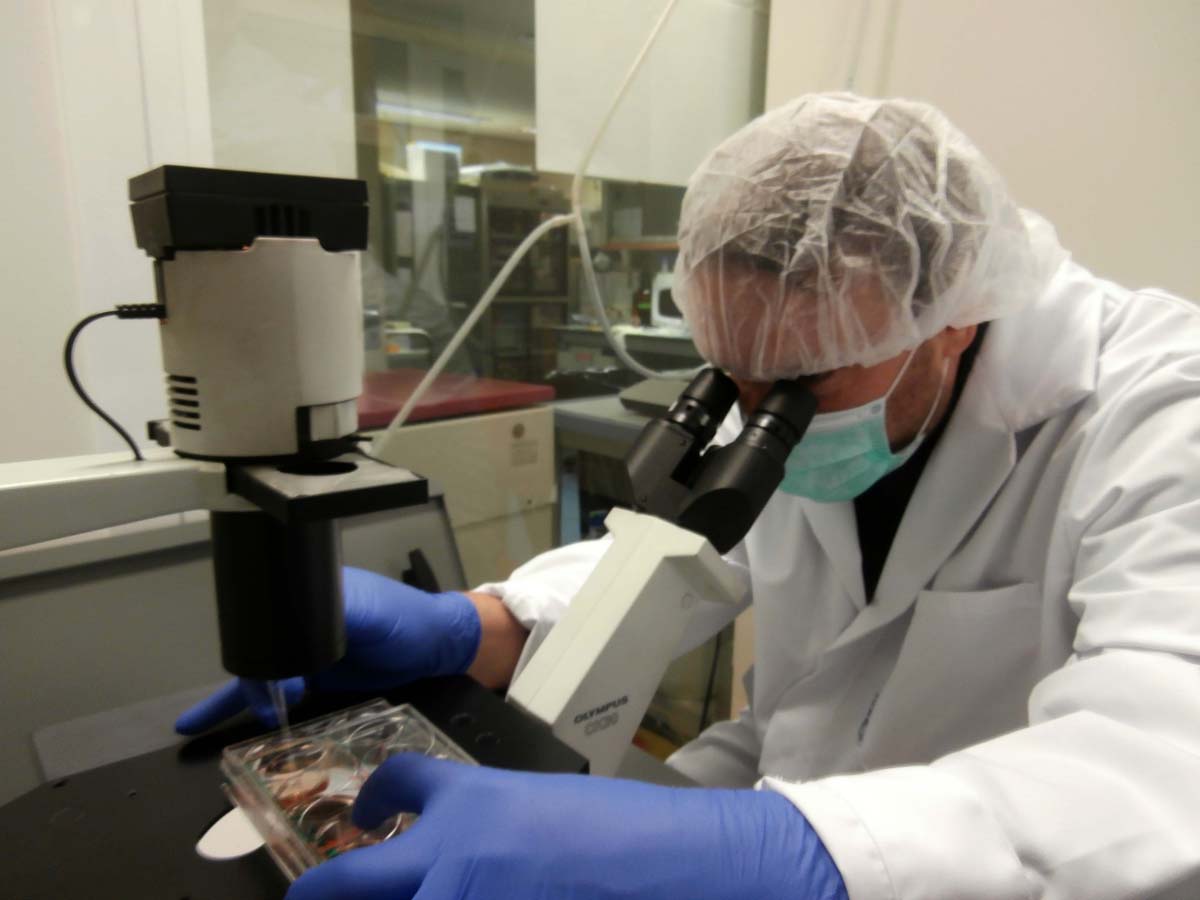
GBA: As to cell cultures as art objects, I think this is one of the biggest challenges for so-called »bio-artists.« Once I figure out the protocols in the lab and thoroughly understand the material I’m working with, I ask myself questions related to visual or aesthetic language. In past years I developed various environments/technologies that allowed me to take the living cultures into the gallery. A good example is »cellF« as an object that not only has very particular aesthetics and functions as a musical instrument, but is also a fully functioning biological lab that consists of a high-precision tissue-culture incubator and a Class-1 sterile hood, which allows us to keep the neural networks alive in field conditions.
CdL and JR: And conversely how do your scientific collaborators feel about devoting resources to a project whose results may not fit into traditional modes of scientific research?
GBA: Scientists collect data, but we bring the cultures into galleries and ask questions to generate a cultural debate. It’s totally different. I think the scientists that work with us are as aware of the importance of cultural research as much as they are of scientific work – otherwise they wouldn’t be working with us.
CdL and JR: The modern era has stressed the individual over the collective. In cultural production this has led to the myth of the artist as genius, positing the act of artistic creation as uniquely individual. Yet your work, and a lot of new art connected with science and technology, is very much about complex collaboration across fields. Have we reached a paradigm change in what it means to create an artwork in the twenty-first century?
GBA: I wouldn’t go as far as to call it a »paradigm change.« There are still quite a lot of art forms that don’t require collaborations. However, when it comes to projects that involve technology, and definitely in my area of research of art, biology, and robotics, collaborative work is very common. The reason for this is the complexity of the projects and the wide range of skill sets that are needed for the development of the work. »cellF« is my self-portrait, and in its early days I thought it would be appropriate to develop it by myself. But that was very naïve of me. Its final outcome involved the following areas of research/production: tissue culture, tissue engineering, neuroscience, cell biology, stem cell technologies, molecular biology, electrophysiology, microscopy, electrical engineering, material engineering, engineering, design, sound, music technology, and more… I could never have done it without my collaborators. They all joined the project as equals despite it being my self-portrait.


...when the creation of artificial consciousness takes place in an atmosphere of conflict and profit-driven competition, the results might be very much disturbing and unwanted.
CdL and JR: You initiated »cellF,« which is run from a neuronal culture containing your DNA. Yet this colony is fully autonomous. Its reactions to input from various musicians demonstrate agency on a cellular level. The culture (of approximately 100,000 neurons) is still one-millionth the size of the human brain, without the complex structure of the latter. We can surmise that, as far as we know, it has no »consciousness.« But considering that cellF acts and reacts to the human musicians, can we talk about a »neuronal subjectivity« here?
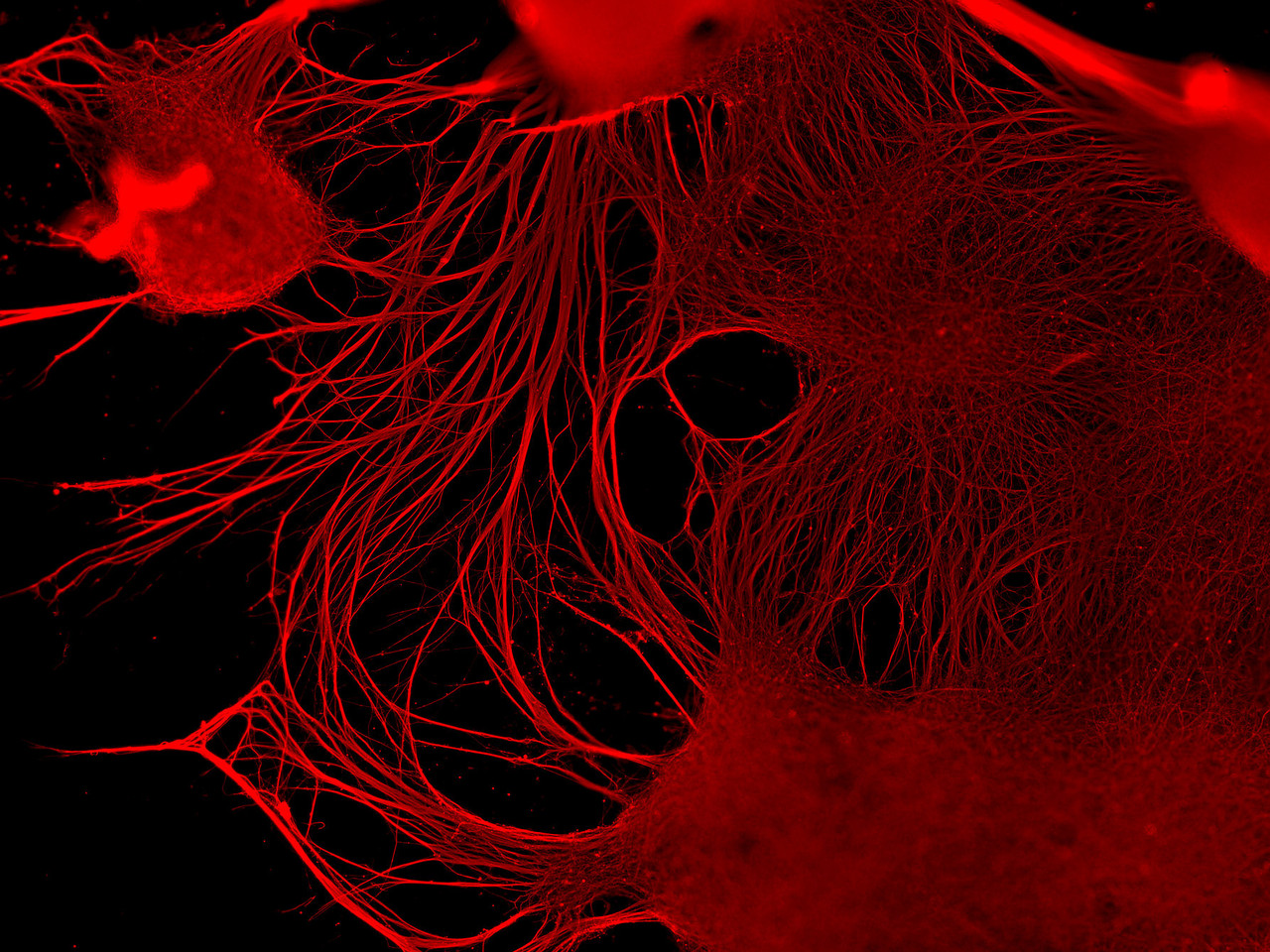
GBA: That’s a very interesting question and very hard to answer. The short answer is that I don’t know. I agree that there is no point in talking about consciousness or intelligence. These cultures are not complex enough. But after experiencing »cellF« live I have a feeling that maybe we can talk about simple forms of emergence. I think that these neural cultures are active and responsive – but even more interesting is that they show vitality, which is what directs them to do what they do. These neural networks are very simple (made up of only 100,000 neurons and growing in 2D). However, I use living neurons deliberately, as a way to force the viewer to consider future possibilities that neural engineering and stem cell technologies present, and to begin to assess and critique technologies not commonly known outside the scientific community. However simple or symbolic these brains may be, they do produce quantities of data, they do respond to stimulation, and they are subject to a lifespan.
CdL and JR: Speculating further on such future possibilities, do you think we will one day witness the emergence of synthetic, non-human consciousness?
GBA: I think that first we have to define what consciousness is. Consciousness is a spectrum from deciding to move organs, for example, to being sentient, self-aware, able to think critically, consider morality, ethics, and more. If we are considering the latter, I think that we are far from it. The central problem remains: we have no real understanding of how the brain gives rise to the mind and how neurons or their activity create consciousness, and without a clear idea of how this works I do not believe we will be able to create consciousness. Consciousness is a biological phenomenon. Brains contain analogue cellular and molecular processes, biochemical reactions, electrostatic forces, synchronised neurons firing at specific frequencies, and unique structural and functional connections with countless feedback loops – and then the »magical leap« from very complex computation to consciousness. I find it hard to believe that we would be able to replicate something similar, at least not in my lifetime.
CdL and JR: If we were to witness the emergence of forms of non-human consciousness, what kind of relationship do you think humanity could develop towards those forms?
GBA: We live in a very anthropocentric world where humans treat other living entities (conscious or not) with superiority and arrogance. I think that we have to start thinking and establishing some ethical consideration regarding the treatment of those new living entities, especially if they show some sort of emergent behaviour, signs of intelligence, or even a low level of consciousness.
CdL and JR: Why do you think humanity would wish for the development of artificial consciousness in the first place?
GBA: I don’t think that we should wish for the development of artificial consciousness. I think that this would open a »Pandora’s box« that we as a society are not ready to cope with. Artificial consciousness could be part of our lives in any mode or way possible – social, cultural, medical, and more… but when the creation of artificial consciousness takes place in an atmosphere of conflict and profit-driven competition, the results might be very much disturbing and unwanted.


CdL and JR: You see »cellF« as an effort to raise debate about the ethical controversies embedded in new biotechnologies. But couldn’t it also be argued that works such as »cellF« contribute to normalising the application of such technologies by pushing the boundaries of the as-yet acceptable – and also pushing aside the fundamental question of whether we should go after these technologies at all before such a question has even been raised?
GBA: I think that one of the roles of art is to propose scenarios of »worlds under construction« and destabilise the technologies in question for the purpose of creating contestable artworks. This role makes the emergence of cellF and other similar works as evocative artworks and the multi-levelled exploration of their use relevant and important.
CdL and JR: »cellF« has already taken part in seven concerts, and it performed its European premiere at the Haus der Kulturen der Welt with Schneider TM and then Stine Janvin. What has surprised you most about the ability of neuronal cultures to interact with and create music with human musicians?
GBA: Every performance is different, and all the performances we have given have been interesting in a different way. But when the neurons respond to the human musicians, I get excited. I’m very much interested in human/nonhuman communication. It is when there is a clear sense of communication between human musicians and the neurons that my mind is blown. And this has happened in most performances up until now. I hope we will experience a bit more of that. These neural networks represent our fears and hopes as we enter an unknown future. They illustrate, in a highly visceral manner, popular ideas around disembodied consciousness and intelligence. However, although the neural entities I create might instil a sense that we are close to actualising the manufacture of intelligence or consciousness, in reality, the existence of these creatures is intended to be absurdly vicarious.
Guy Ben-Ary is an Australian artist and researcher investigating cybernetics, soft-robotics, and the cultural articulation of bio-technologies. He currently works at SymbioticA, an artistic laboratory located within the University of Western Australia and dedicated to research, learning, and hands-on engagement with the life sciences.
Christian de Lutz is a curator and the co-founder of Berlin Art Laboratory, a platform for contemporary art at the meeting point of art, science, and technology.
Jan Rohlf is one of the founders and artistic directors of CTM Festival.
This text was originally published in the Haus der Kulturen der Welt’s journal, 100 Years from Now, in 2017, and again in CTM Magazine 2018 – Turmoil.
Technosphärenklänge #3 | Talk by Guy Ben-Ary by CTM Festival
Technosphärenklänge #3 | Talk by Guy Ben-Ary by CTM Festival
Technosphärenklänge #3 | Panel with Guy Ben-Ary, Nathan Thompson, Schneider TM by CTM Festival
Technosphärenklänge #3 | Panel with Guy Ben-Ary, Nathan Thompson, Schneider TM by CTM Festival