Sometimes all it takes is for one fortuitous fuckup to make something wonderful happen. The history of music is full of these magical mythtakes – legendary moments in which a seeming blunder cleaves open whole new realms of sonic potential. Hit by a cab, hospitalised and bedbound, Brian Eno was inspired to create his early ambient works as he heard harp music being played almost inaudibly through a broken speaker in his ward. While cutting a reggae dubplate for Rudolph »Ruddy« Redwood, engineer Bryon Smith accidently left the vocals out, giving rise to the Jamaican instrumental »version« in the late-60s and, by extension, dub music. And then there’s bubbling…
It was 1988 when, while playing out live, Dutch Antillean DJ Moortje accidently spun a dancehall track at 45 rpm (rather than the correct 33 rpm) to delirious and devastating effect. The crowd went wild and in that moment a new hyperactive, happy accident music was unleashed. Bubbling had been born.
Bubbling was more for people who were into rap music, it was the only club music that those kind of urban audiences would listen to, so popping pills wasn’t popular. It was just music for a different crowd.
But bubbling, in its initial incarnation, was very much a creature of the immediate post-rave era. The genre’s creation coincided with the height of the acid house raveolution, and sonically it was similar to early-90s hardcore with its combination of propulsive 150-ish bpm tempos, helium-like chipmunked vocal chatter, sped-up breakbeats, and funfair-for-the-ears aesthetics. As the 2000s rolled around, bubbling invariably became in need of a new, more contemporary sound.
That’s where De Schuurman steps in. In the late-2000s, he was among the young, hungry artists who revamped and revitalised the genre, ridding it of many of its 90s hallmarks while transforming it into a music fit – in terms of its techy timbres and synthetic sound pallet – for the decade of crunk and grime. Gone were the squeaky dancehall DJ samples and reggae-esque instrumental arrangements, De Schuurman made austere, instrumental-driven beats in many ways more akin to Lil Jon and Waifer than to his predecessors like DJ Moortje.
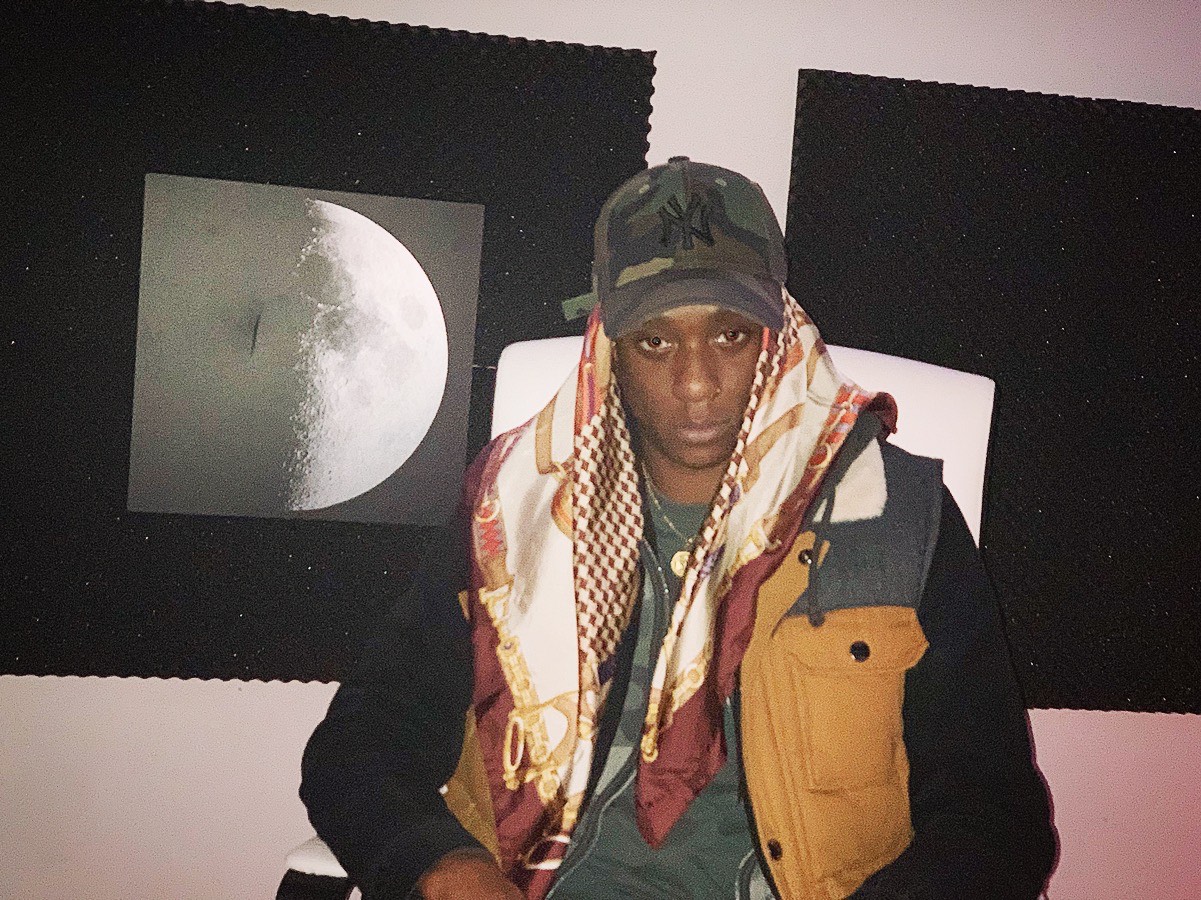
We spoke to De Schuurman about Bubbling Inside – a recent compilation of his essential tracks spanning 2007 to the present day, released last year via Nyege Nyege Tapes.
Kit Mackintosh: Firstly, would you like to give us a bit of background on what Dutch bubbling music is and where you fit into its history?
De Schuurman: We call the kind of bubbling I make »third generation« bubbling. So the first generation is Moorjte; he invented it when he accidently sped up a dancehall track and made it more frantic. Then you had the second generation which we called »bubbling battle« that revolved around a dance we called »butterfly,« which was like a combination of footwork and popping and locking. Musically, second generation bubbling had way more sampled drum breaks, so it was almost like breakbeat.
KM: So how did your sound, the third-generation sound, come about then? What makes it different to what came before?
DS: When my generation came along and we wanted to make bubbling beats so bad, we couldn’t find a lot of the right sounds to sample – we didn’t know where to find vocal samples or how to cut them. We were young kids, like 15 or 16 years old, so we just improvised by using the pre-set sounds in our music production software. We made it as simple as possible by focussing on these electronic synth melodies. DJ Chuckie’s »Partycrasher Part 1« was hugely influential in that respect, it inspired us third generation producers to turn to more electronic sounds.
KM: Culturally what does bubbling represent in Holland? Who’s the music for?
DS: Bubbling represents a kind of Caribbean lifestyle. It’s tropical vibes, you know? When I was growing up, whenever you were in a playground, you’d always hear a car nearby blasting Caribbean music out of it. That Caribbean lifestyle is really prevalent over here in the Netherlands. The music also represents Dutch Surinamese and Antillean people. My track »Brass« for example was inspired by the very rhythmic Surinamese and Antillian brass band stuff you’d hear at summer carnivals. But I suppose all these influences are filtered through us being in the Netherlands. Bubbling was created here and it wasn’t played in other countries, so it represented us as Black people specifically in Holland.
KM: Do these different cultural inputs influence bubbling then?
DS: Bubbling is defined by two things really: the chopped up vocal samples and the rhythms. You get these very syncopated rhythms that are like the Antillean and Surinese rhythms that Afro-Dutch people grow up with, and they’re also like Carribean dembow rhythms – but sometimes played over three different snare drums in one track. So those influences are definitely a big part of the music.
KM: Usually, we associate dance music and club music as going hand in hand with a kind of drug culture, is that the case with bubbling?
DS: No, there wasn’t really a drug culture in bubbling. I was even too young to even do drugs when I was getting into it – I was 13, 14, 15 so I didn’t drink or smoke. Bubbling was more for people who were into rap music, it was the only club music that those kind of urban audiences would listen to, so popping pills wasn’t popular. It was just music for a different crowd. There was a bit of weed, but that was incidental really, it wasn’t much of a thing.
KM: Right. What’s the impetus for the music then? What’s its social function?
DS: I don’t want to say there was a »sex culture« around bubbling because that sounds weird, so don’t get me wrong about that. But it was good for hooking up because the dancing and the music’s so sexual. My alias, De Schuurman, translates to the »grind man« and that’s what the music does – it incentivises people to grind up on each other in the club. When I make beats I’m thinking about being in the club and how I can intensify that kind of grinding feeling, I’m visualising people going crazy on each other. Take my track »Pier Je Bill!« for example, the name translates to something like »show off your ass« – it’s asking girls to really throw it back.
My alias, De Schuurman, translates to the »grind man« and that’s what the music does – it incentivises people to grind up on each other in the club.
KM: So what’s your musical background? What kind of stuff were you hearing from your family when you were a kid for example?
DS: My parents used to listen to soul, traditional Surinamese music (like Kaseko and Kawina, which had African drumming in it), gospel, and jazz. It was a lot of Black music and African cultural music. I also had an uncle who used to listen to orchestral music on the radio, which I didn’t really feel at all at the time but eventually came to appreciate a little bit. So now when I make hip hop beats I like to combine them with those kinds of orchestral sounds and instruments.
KM: And how about the music you were listening to when you weren’t with your family?
DS: As a young kid with my friends, I was listening to a lot of rap music – Lil Wayne, 50 Cent, and Dutch rappers like DHC. In high school, me and my friend were always flexing to Mike Jones’ »Still Tippin’,« which you can hear sampled in my track »Fermina Style,« which I actually named after that friend.
There was also bubbling, of course, and a genre called dirty house – DJs like Chuckie, Vato Gonzalez and Afrojack. It was harder than other house, so if you were a young kid who listened to hip hop and some kind of house music too, it’d be dirty house.
KM: Aside from, I think, two tracks, the music on Bubbling Inside was all made over a decade ago when I guess you were still a teenager. Can you hear your youth reflected in these old tracks at all?
DS: Well, there’s a naivete to some of them. »Urban Gunz,« for example was me trying to make bubbling but not fully being there yet in terms of the samples. I was young and I was just rushing to put music out there. These days I can go to my studio and be as loud as I like and really spend time focussing on mixing a track, but back then I’d have my mum in the other room and I’d be trying not to wake her up by making my beats too loud. So now it’s coming from a completely different place than when I was a teenager.
I like the rawness of Playboi Carti or Young Thug. Their music doesn’t sound logical, but that’s good because creativity isn’t supposed to be logical – it comes from the right hemisphere of the brain.
KM: There’s also a kind of boyish sense of humour in a lot of it, wouldn’t you say?
DS: At the time I was downloading loads of Comedy Central stuff off of LimeWire and then making music using samples from South Park or Chappelle’s Show; that’s where the track »I’m Rich Bitch« comes from. My track »Nu Ga Je Dansen« was important in setting me on that more fun path, I think. It revolves around this sample of someone speaking in this completely over-the-top Dutch Antillean accent and it went viral. So it was really like »this music’s supposed to be fun, it’s supposed to give good vibes.«
KM: And do you think your older music actually gains something from the relative naivety or inexperience you were talking about?
DS: Yeah, definitely. The old tracks from Bubbling Inside are raw and underground; they’re not mixed how I’d mix them now but it’s the rawness I like. It’s the same thing I like in hip hop right now, I like the rawness of Playboi Carti or Young Thug. Their music doesn’t sound logical, but that’s good because creativity isn’t supposed to be logical – it comes from the right hemisphere of the brain. Young Thug’s more fixated on how he presents and forms words than what he says, whereas Kendrick Lamar would be an artist who’s more logical. That more illogical side of rap reminds me of how I approached making beats.
KM: But there are a couple of tracks on Bubbling Inside that were made in the last few years. How would you describe your musical evolution over that 10 year period between these old and new tracks?
DS: My new style has these frantic hard drums, but with ambience over the top, which is what I like in trap at the moment. I love that dynamic of hard drums paired with smooth, soothing, ambient, sparkling, spacious sounds. You can hear me experimenting with that kind of idea on the track »Poenka,« which is like my older track »Poeng Ka Poeng Ka« but in a modern jacket. So between those two tracks you can hear the evolution of my sound in a way.
KM: Trap’s been a big influence on your newer stuff then?
DS: Oh, completely. There’s this track on the compilation, »Domina,« which I feel is my masterpiece, really. Initially, »Domina« came about because I was trying to make a trap beat, but I couldn’t really get normal trap drums to work on the track, so it eventually evolved into this sort of trap-bubbling hybrid.
De Schuurman's »Domina« from <em>Bubbling Inside</em>
Label: Nyege Nyege Tapes, 2021
De Schuurman's »Domina« from <em>Bubbling Inside</em>
Label: Nyege Nyege Tapes, 2021
KM: Well that sort of leads me to my last question – where do you see bubbling going now? What’s the future of the genre going to look like?
DS: I’d like bubbling to become internationally recognised as a proper genre. EDM has its roots in underground Dutch music. In the same way that EDM’s now international, I’d like to see the same with bubbling. I wonder if the fashion industry could be a bit of vehicle for that. Burberry used my track »Nu Ga Je Dansen« in their runway show for London fashion week and I know underground electronic genres get a lot of exposure through the fashion industry, so maybe bubbling could be a part of that. This music comes from Holland and it reflects the way we live over here, but I’d love for it to have international reach. I hope it goes out and makes an impact across the world.
Kit Mackintosh is the author of Neon Scream: How Drill, Trap and Bashment Made Music New Again, available now from Repeater Books.
This text was commissioned as part of CTM 2022 – Contact.