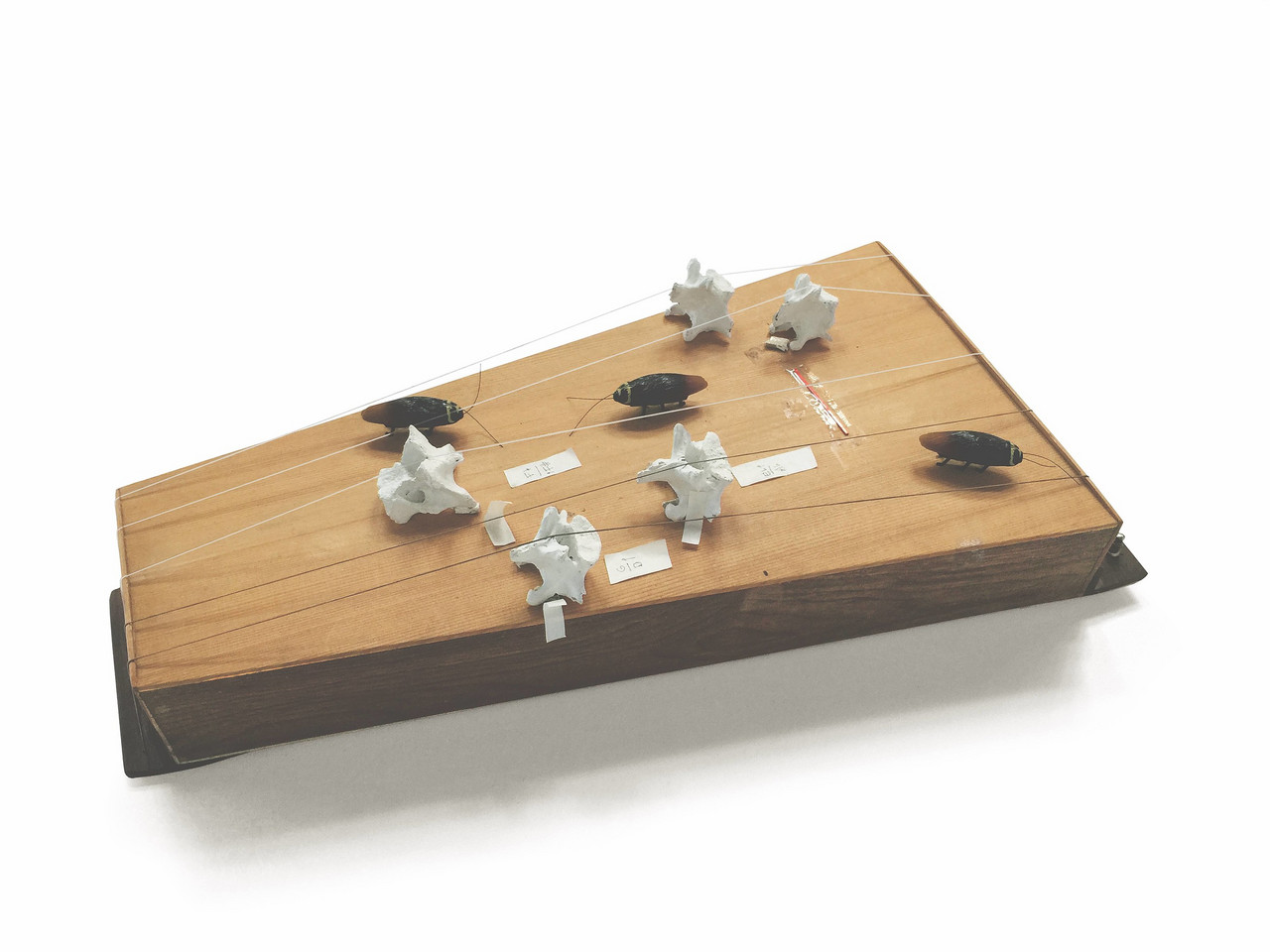
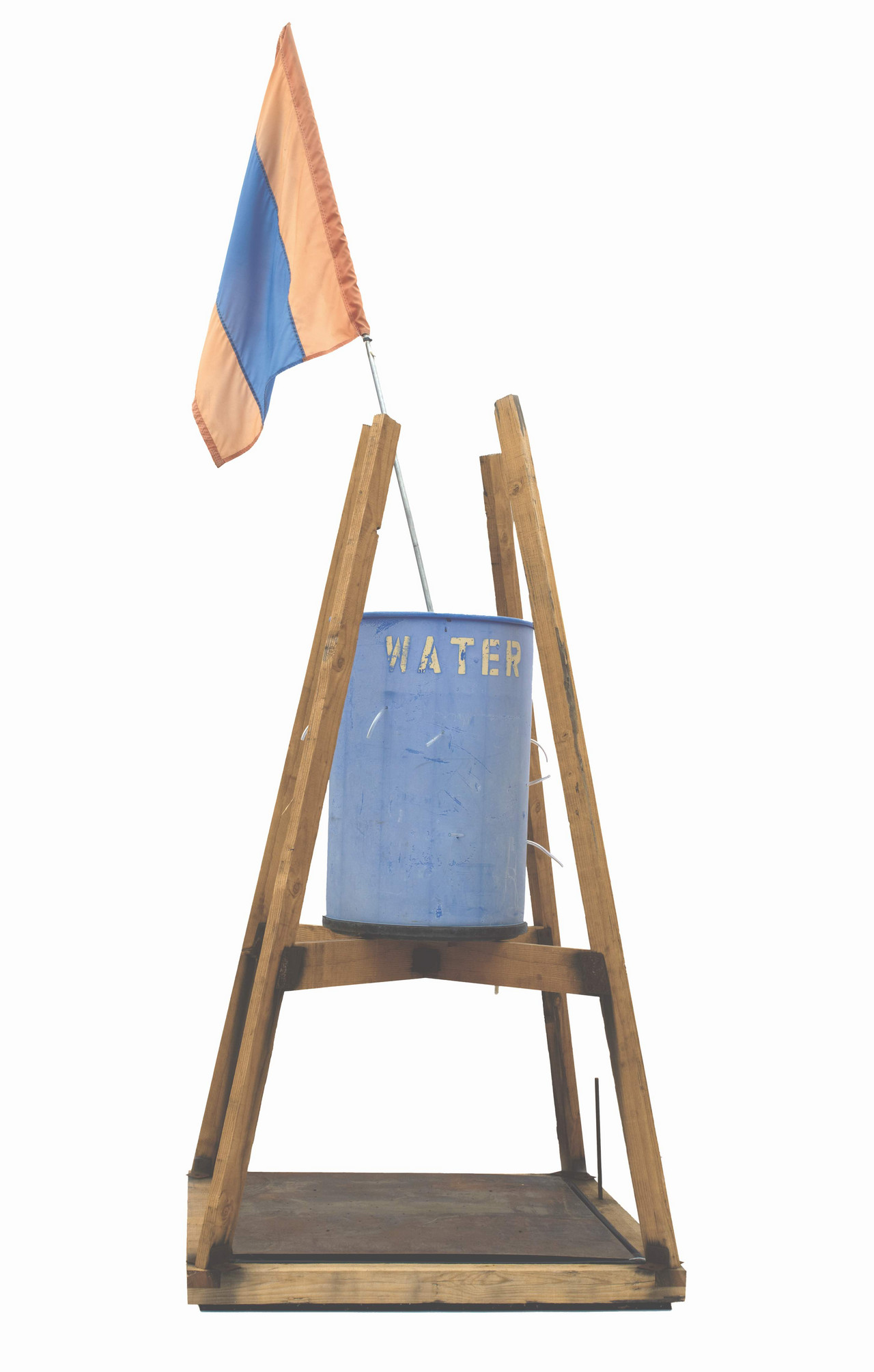
Many of my instruments are one of a kind. Others are derived from designs that already exist in different cultures. Because of the heterogeneity of the materials they are made from, their sounds cover a wide range of different and interesting tones and pitches. All of them, in one way or another, offer me opportunities to discover new sounds and invent performance techniques. When designing instruments, my goal is not to obtain the perfect or most beautiful sound, but to allow the materials to sing in their own voices. There are many reasons why I refuse to consider my pieces as recycled art objects. The instruments for the Cantos project are meant to enable the invisible victims of immigration to speak though their personal belongings. Using their own narrative, these instruments tell us imaginary stories about places and people that may or may not still be alive. Other instruments for this project came from the apparatus of division itself. These objects of aggression were also given a new life and an opportunity to speak in their own terms.
During my process I followed primordial and universal traditions. Nothing that we found in the terrain was excluded. All of the objects were part of a carefully crafted, complex landscape that comprises the border.
In the pre-Columbian world, there was an intimate connection between an instrument and the material from which it was made. For pre-Columbian cultures, there was no separation between the spiritual and the physical world. Mesoamerican instruments were talismans between worlds, and the sound of each instrument was never separate from its essence, its origin, or its meaning in the world. When the Aztecs were conquered, Spanish Catholicism merged with the old Mesoamerican traditions and incorporated older European practices, including the veneration of relics (from the Latin word reliquiae, meaning »remains,« or from the verb relinquere, meaning »leave behind«). Relics consisted of clothing, personal objects, or any physical remains of a spiritual leader or saint to be worshipped after death. Similar practices incorporating objects belonging to ancestors existed in Buddhism and Hinduism.
Afro-Caribbean musical traditions incorporated the daily objects discarded by slave owners into musical instruments. Clay jars that once held olive oil were covered with shells to make the »shaker,« called shekeré. The wooden boxes that brought goods from Europe became the percussion instrument known as cajón, and a couple of spoons hit against each other became an instrument still used in carnival music today. The tradition of reutilising disposed objects and giving them alternative uses has been around for a long time. Reappropriation, renaming, and reusing have always been important strategies for cultural survival for the conquered and oppressed. Imagining the world and recreating it in one’s own terms is the first step for self-acceptance and liberation.
For Chicano artists, the survival practice of mending and making things last longer was turned into the modus operandi underlining the nonlinear, exploratory, and unsolemn vision of rascuachismo (a word of Nahuatl origin). Rascuachismo is a »nonintellectual, visceral response to the ›lived reality‹ of the underdog where ›things are not thrown away but saved and recycled often in different contexts‹ (e.g., automobile tires used as plant containers, plastic bleach bottles becoming garden ornaments...),« writes Tomás Ybarra-Frausto.
All of these personal objects from immigrants now have a second life as musical instruments. They are the evidence of an ongoing human tragedy that is happening before our eyes. These musical objects sing to us about their invisible owners.
A musical score can be defined as a set of codified symbols written on a piece of paper or any other readable surface, to be translated into sound events and reproduced in real time. For many years, my interest in the evolution of musical scores, particularly those written in the last half of the 20th century, has turned into a fascination with symbolic language, visual data, codification, and the interpretation of arrays of data into other media.
In the 20th century, traditional Western notation broke from the limitations of the five-line staff. Traditional ways to indicate pitch, dynamics or volume, duration, the placement of events in time, tempo, and many other parameters had to accommodate new ways to conceive and perform music. These scores allowed broader options, both for instrumental interpretation and for visual experimentation. The creation of new music symbols, often invented by the composers themselves, made it common practice to include a key explaining the symbols in the first pages of each score. Many symbols were later standardised and became more familiar in composers and performers’ repertoires alike. Nonlinear and modular scores allowed the composer to express new ideas and alternative ways of looking at graphic representations of real time, thus allowing the performer a better understanding of the concepts behind the score and even alternative choices for interpretation.
The instruments for the Cantos project are meant to enable the invisible victims of immigration to speak though their personal belongings.
The score for John Cage’s Variations II (1961), in which physical measurements are translated into musical events, consists of eleven transparent sheets: six lines and five points to be arranged randomly. Perpendiculars are dropped from points to lines to determine sound characteristics. In the 1970s, composer Iannis Xenakis completed the UPIC (Unité Polyagogique Informatique CEMAMu), a computer-aided graphic design tool for composers. By the 1980s, graphic scores had evolved so much that composers such Sylvano Bussotti and Earle Brown nearly blurred the lines between music and visual art.
Looking back in history, graphic music notation is as old as the need for humans to express ideas with symbols. Cuneiform tablets found in today’s Iraq and dating from 2000 BCE represent fragmentary instructions on how to perform music. The Aztec and Mayan pre-Columbian codices (Mexihcatl qmoxtli) were iconographic maps of elaborately detailed histories of events meant to be read in sequence and in very specific ways. Codices were a poem, a song, a story, a painting, and a detailed account of objects and food present at a particular scene, at a particular time – all in one.
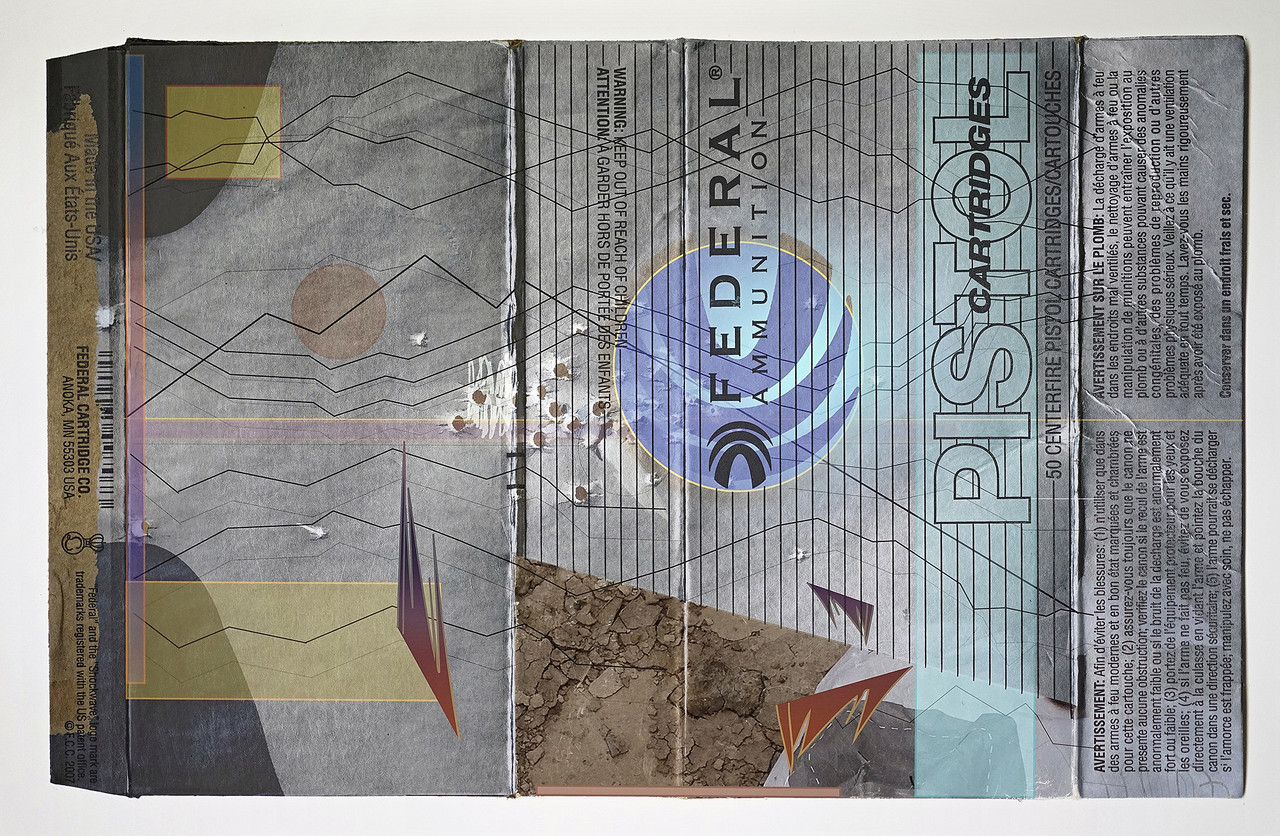
The first time I saw Richard Misrach’s photograph of a Border Patrol tire drag, with the lines on either side of a sandy desert road, I thought about diagonal staff lines in motion, pulling the viewer into the picture and/or the listener into a sonic sequence. From the beginning, I thought of the process of translating the data in the photographs into scores, in the same way that a computer converts arrays of zeros and ones into pictures, music or words. In my scores I also tried not to exclude the emotional elements, the narrative and the archetypal symbolism: people behind bars, a flock of birds, an empty sky, a surveillance tower, gun shells, etc. Translating photographs into scores also allowed me to challenge the traditional Cartesian tradition of reading music from left to right. These photographs inspired me to think of unexpected events coming from all directions all at once or at different times: a polycentric universe where anything can happen at any given time.
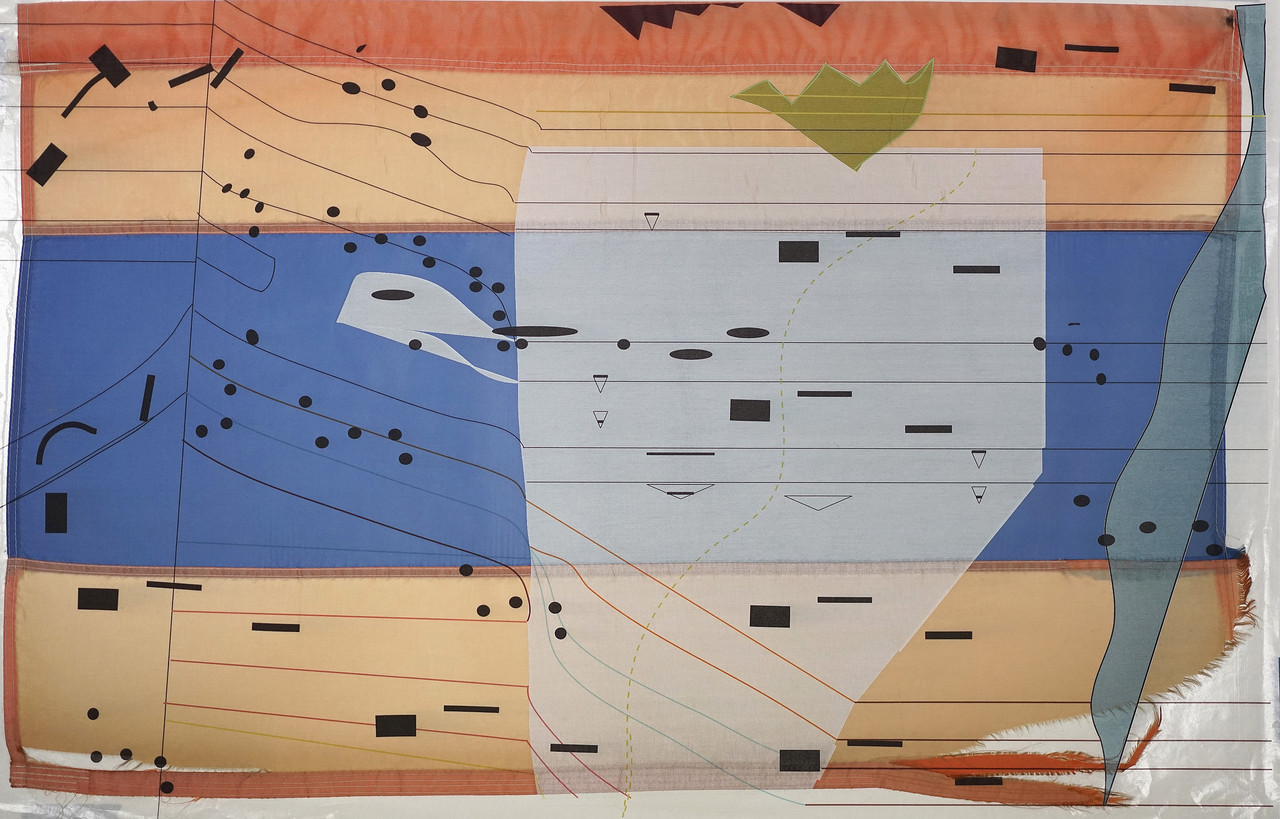
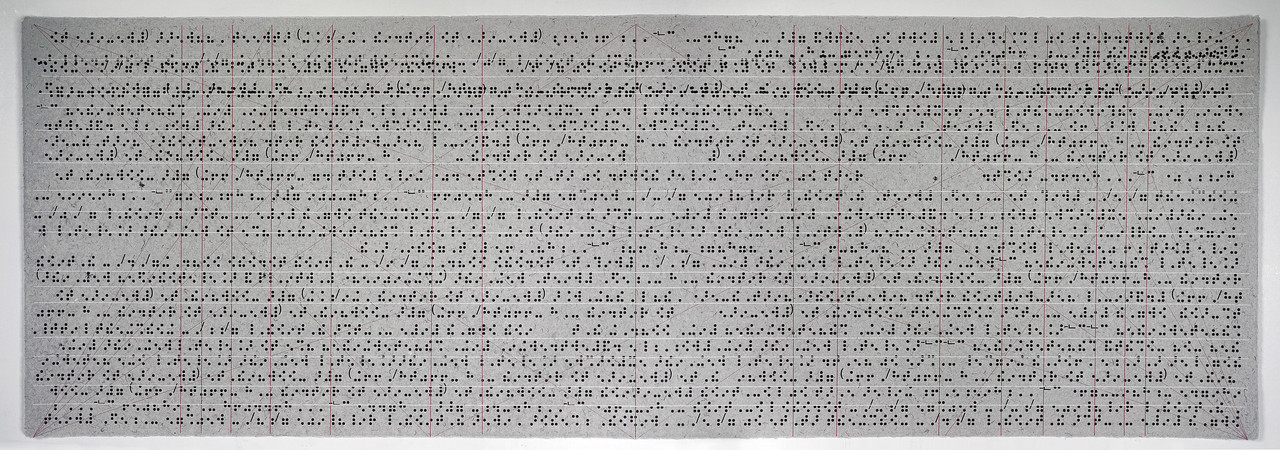
In Misrach’s photographs of the Border Wall, the thick vertical bars looked like a musical grid where everything seemed to be carefully placed. I also thought of patterns and microscopic codes in the texture of the Wall, some of them like invisible holes where people could come through. A photograph of an abandoned sarape reminded me of the codes and stories recorded on the textiles of ancient weavers. The colours, the fog, and contrasts of daylight at dawn made me think of bright musical passages moving into the opaque. The density of the landscape or the curvature of the mountains became melodic contours. The composition of each photograph made me think of alternative ways of reading the music. The human-shaped targets had ruptures that suggested overpowering deliberate gestures, and the lines in the ammo packages became musical pathways. Official documents regarding the construction of the Wall became structural designs. Large Excel documents provided by the Colibrí Center that listed the precise coordinates of where bodies were found in the desert and the possible causes of death were translated into symbols that can be interpreted as music. Text data about the disappeared was converted into scientific formulas, Braille code, and guitar tablature, and superimposed onto Misrach’s photographs, creating musical patterns that merged with the elements present in the visual composition. The Braille code was printed on a large paper made from immigrants’ clothing. Following the tradition of Aztec banners (pantli) used to establish territory, I also printed musical scores onto discarded banners used by humanitarian groups to mark the locations where water is strategically placed for immigrants traveling through the desert.
Translating photographs into events in time reminded me of the conception of space and time by Mayan and Zapotec artists, as described by Octavio Paz, where »space is fluid...and time is solid: a block, a cube. Moving space and frozen time become two extremes of the cosmic movement.«
Guillermo Galindo is an experimental composer, sonic architect, performance artist, and Jungian tarotist. His multidisciplinary output encompasses symphonic works, acoustic chamber works, performance art, visual art, computer interaction, electro-acoustic music, opera, film, instrument building, three-dimensional installation, and live improvisation. He is concerned with redefining the conventional boundaries of music and the art of music composition. Galindo is a senior adjunct professor at the California College of the Arts.
This text was originally published in Aperture’s Border Cantos in 2016, and again in CTM Magazine 2017 – Fear Anger Love.
»Sonic Borders«, presentation by Guillermo Galindo
CTM Festival 2017, Kunstquartier Bethanien
»Sonic Borders«, presentation by Guillermo Galindo
CTM Festival 2017, Kunstquartier Bethanien