
Shortly before he died in 1993, Ernest Berk, a German-born choreographer who spent most of his career in London, reflected on his remarkable but little known parallel life as a pioneering composer of electronic music: »[i]t amazes me how many compositions I made over the years, and the great variety of emotion they covered and the richness of sound-colour they showed,« he wrote in a letter to a friend. »It took me a time distance of nine-ten years before I could appreciate (or hate) my own music, and to understand the actual mass of work with which I am now confronted.«
Berk was not exaggerating in regard to the quantity or quality of the musique concrète and electronic music he produced in London from the 1950s onwards, and, as with many unsung composers and experimenters working in early British electronic music, it is perplexing that someone so colourful and prolific remains so little known. Similar to other tape trailblazers in Britain during the 1950s and 60s, such as Roberto Gerhard, Don Banks, Cyril Clouts, and Jacob Meyerowitz, Berk arrived from overseas, settling in London where he would go on to craft his own vision for coupling tape recorder technology with his training in dance. An advocate for an expressive form of modern ballet with an interest in multidisciplinary projects, he set up his own dance and sound studio in Camden, north London, and began his experiments with tape and electronics in 1955. As a composer, he would collaborate with a variety of other experimental artists, including pianist John Tilbury, composer Basil Kirchin, artist John Latham, and filmmaker David Gladwell. Berk’s electronic music was aligned with the modernist aesthetics of these more celebrated figures in Britain’s 60s avant-garde, and his relative obscurity as a composer can be partly attributed to the fact that he was known primarily as a choreographer and educator. Near the end of his life he seemed ambivalent about his status as a producer of uncompromising electronic works. Included in the letter mentioned above, he wrote: »[w]as that really me who created these music-paintings, reflections of a wild and uncontrolled world?«
Ernest Berk was born in 1909 in Cologne, Germany. As a youth, he studied music and wrote and acted in his own plays. Having great difficulty remembering his lines led him irrevocably towards dance, which he later described as »acting without words.« While a student at the influential Mary Wigman dance school in Cologne, he began to produce his own ballets, and in 1933 he formed his own company and married fellow student Lotte Heymansohn. As the 1930s progressed, conditions in Germany became increasingly dangerous and untenable for the young couple – Lotte was Jewish, and under the Nazi regime both were forbidden to teach – and they left the country in 1935. With Berk’s British passport they made their way to London, and eventually settled in Shepherd’s Bush.
The culture of ballet in the UK in the 1930s was deeply conservative, and critics were largely dismissive of the new European dance style practised by Berk and Lotte. However, the couple performed with Sadler’s Wells Theatre Ballet and several other companies, and they also appeared in the first live televised ballet broadcast from Alexandra Palace. As a lifelong pacifist and Buddhist, Berk put his training in engineering to use on the home front during the war, and though he underwent a hiatus from performing, his dance studies and practice continued. In the immediate postwar years, the Berks worked with Ballet Rambert, and by the 1950s both were seeking to establish their own studios. Lotte Berk developed what would become a world-renowned exercise method, and her London studio became a magnet for celebrity fitness seekers, including Britt Ekland, Barbra Streisand, and Joan Collins.
Although much of Ernest’s early choreography was created for Lotte, she gave up professional dancing and the couple separated amicably in the 1960s. After setting up his Camden studio, Ernest continued to teach his freely expressive dance method, and for practical purposes began using a tape recorder, initially to record instrumental accompaniment for playback during rehearsals. By the mid-50s, experiments with tape and electronics were being conducted in all major Western countries, and it is likely that Ernest would have known about the work of his former countrymen Herbert Eimert and Karlheinz Stockhausen at the WDR studio in Cologne. British electronic composers Tristram Cary and Daphne Oram were already producing work, and experimental pieces for radio by Humphrey Searle and Roberto Gerhard demonstrated that broadcast opportunities and outlets for tape music were beginning to open up in the UK. Those four composers all had close connections to the BBC, while Berk remained partly an outsider, pursuing a fusion of art forms which the British establishment would never fully embrace during his lifetime. Nonetheless, his music did find a route onto television via the 1963 BBC drama A Little Bit of Gold Said Jump; in a TV experiment presenting music and dance titled Here and Now, from the same year; and in the documentary One Of The Family, broadcast in 1964.
At his Camden studio, Ernest set up tape recorders, tone generators, filters, ring modulators, and echo units, and explored both microphone-orientated musique concrète and oscillator-based electronic music; techniques which still represented an ideological divide in France and Germany at the time. Drumming was also central to his approach; he had travelled in Africa and cycled across the Himalayas, and amassed a collection of traditional percussion instruments from around the world. He studied non-Western music, and fed his fundamental interest in rhythm into his dance classes and choreography.
In a March 1963 letter to the British Institute of Recorded Sound, Ernest invited a representative of the organisation to his studio for a special evening programme consisting of playbacks of his recent compositions. »You might be interested in the experimental work I am carrying out in the field of musique concrète and electronic sound,« he wrote. »I am particularly concerned with the creation and combination of totally new sounds, especially those which can be used in conjunction with the spoken word, to evoke images and emotions.« His compositions up to this point underline the number of interdisciplinary projects he was involved in besides creating music for dance. The studio log lists electronic sounds created for a tape/slide presentation, a mime class, poetry readings, and the 1961 short film Talk Mr. Bard, by the visual artist John Latham. The film, an abstract stop frame animation, was presumably screened with Berk’s soundtrack in the 1960s, but it was later replaced, and it appears that this version is no longer extant.
Berk enjoyed a more fruitful relationship with the filmmaker and editor David Gladwell, known for his work with director Lindsay Anderson on the feature films If.... (1968), and O Lucky Man (1973). In the early 60s, Gladwell was interested in incorporating electronic sounds into his own films, and was looking to connect with an experienced tape composer. He contacted Berk, and together they worked on four projects. The first, An Untitled Film (1964), was an independent experimental short that demonstrated Gladwell’s interest in super slow motion. In the film, scenes of everyday rural farm life are transformed through slow speed and cutting into an eerie and captivating study of a young boy bearing witness to a deadly act. The ominous mood is amplified by Berk’s electronic soundtrack, which combines a dissonant piano part with harsh bursts of noise.
Berk’s collaborative and crossover projects continued with scores for plays by Eugene O’Neill and Charles Marowitz, with future AMM pianist John Tilbury on the 1965 piece »Electronic Storm,« and with fellow tape experimenters Basil Kirchin and Desmond Leslie. Kirchin was originally a jazz drummer who turned to serious composing and film soundtrack work in the early 60s. He wrote music for the De Wolfe library label, and went on to collaborate on four pieces with Berk. »Jazz I« and »Jazz II« date from 1965, with Kirchin supplying backing tracks, and Berk completing overdubs and mixing. »Beirut To Baghdad« (1966) featured a melody by Kirchin, and was an attempt to produce commercial electronic music for library use. Berk later heard the track by chance on a visit to Cologne, after Kirchin had sold it to a Swedish company for use on a pornographic film soundtrack. A number of other compositions were made by Berk for labels specialising in library music, including Morgan, Conroy, Rediffusion, and the CBS EZ Cue Library.
Desmond Leslie was a charismatic and eccentric character who entered Ernest Berk’s orbit during the 1950s. He is infamous for his intervention on the satirical TV programme That Was the Week That Was in 1963, in which the strapping 6’4’’ writer, film director, and UFO hunter punched the weedy, bespectacled critic Bernard Levin. Leslie is less well-known as a keen tape experimenter, and in parallel with Berk, he had a well-developed interest in music and drama, being drawn to the possibilities of recorded sound and tape manipulation. Setting up his own private studio in St John’s Wood in west London in the mid-50s, he similarly operated outside the British music establishment and sought commercial work, supplying electronic tracks to library label Joseph Weinberger, and tape interludes for a series of Living Shakespeare LPs issued from 1961. Some of his tracks were licensed by the BBC, and turned up in several episodes of Doctor Who during the 60s. Berk recorded the piece »Kali Yuga« (1962) at Leslie’s St John’s Wood studio, and dedicated his composition »Anecdote 1« (1961) to him. When Leslie left London sometime around 1963 to run the family estate in Monaghan, Ireland, his tape experimentation largely drew to a close. However, Berk continued incorporating his friend’s music into dance performances, and in 1974 he choreographed The Fence and Two Bottles, both of which featured Leslie’s tape sounds, with text by the early 20th century German poet Christian Morgenstern spoken by Leslie’s first wife, the actress and singer Agnes Bernelle.
By the late 1960s, the artistic and cultural landscape in Britain was changing rapidly. Although still not wholly accepted by critics or much of the public, serious electronic music compositions – at least those by celebrated overseas composers – were firmly established and receiving performances. British tape composers during this period were generally self-taught home studio experimenters or academy-trained music graduates, and this curious mix of mavericks, hobbyists, and professionals tended to be overlooked or taken less seriously than their continental counterparts. Nevertheless, two electronic music concerts staged in London early in 1968 – the first at the Queen Elizabeth Hall, the second at the Planetarium – showed not only the diversity of styles and approaches of British composers, but aroused strong interest and large audiences. Berk’s pieces »5 6 7« and »Diversed Mind« (both 1967) were programmed alongside works by Peter Zinovieff, Brian Dennis, Hugh Davies, Delia Derbyshire, Tristram Cary, Daphne Oram, George Newson, Stuart Wynn Jones, Jacob Meyerowitz, and Alan Sutcliffe.
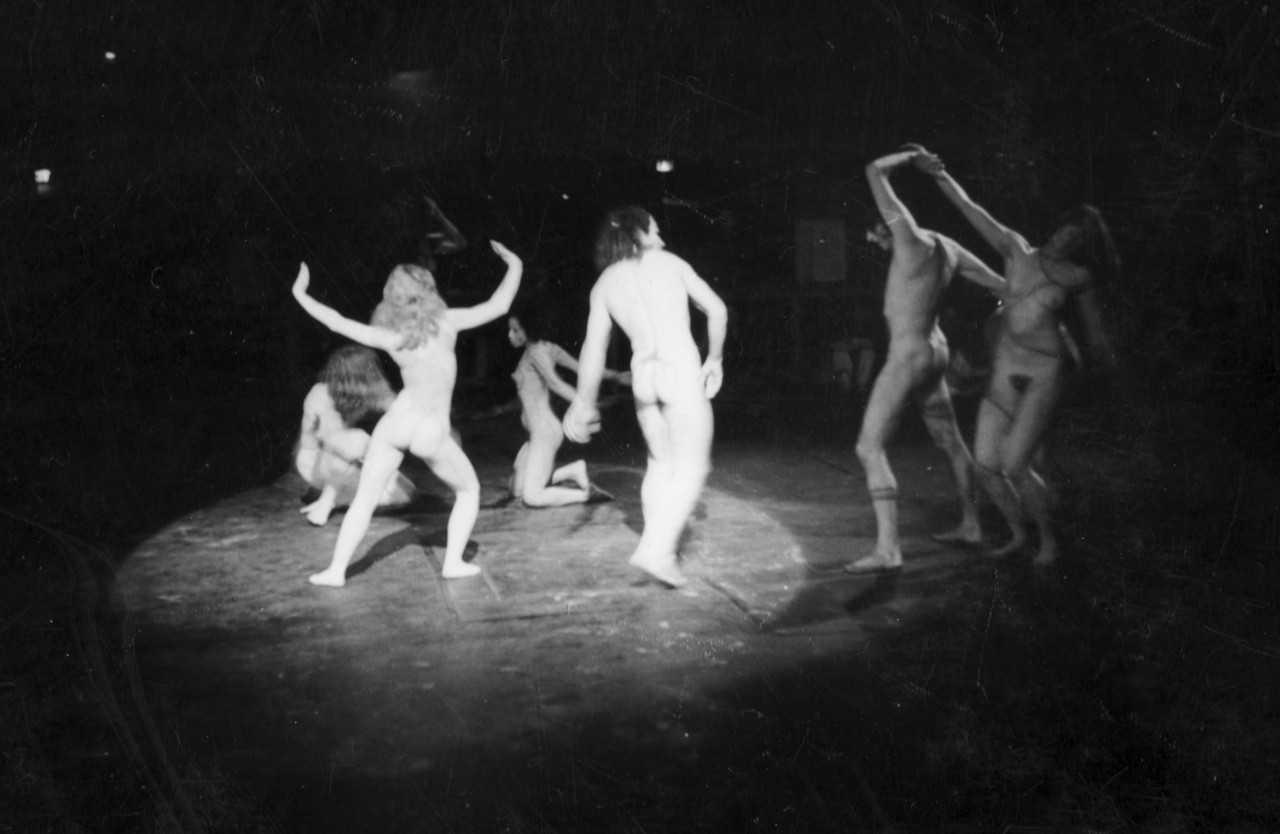
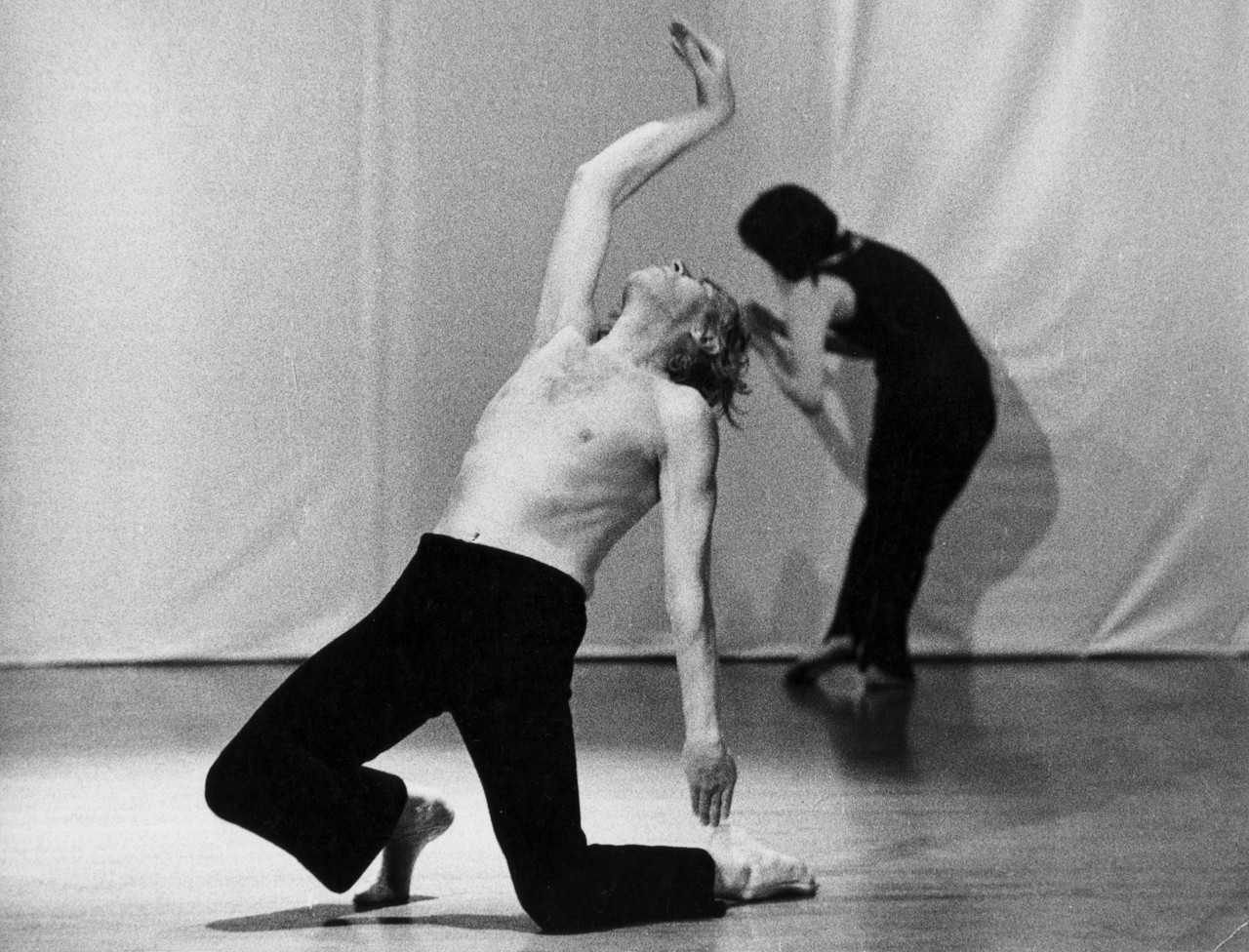
While Berk was involved in the serious end of electronic music presentation, unlike most of his peers he also made connections with the emerging psychedelic counterculture. In summer 1968, just a few months after his work had been included in those Queen Elizabeth Hall and Planetarium concerts, he presented a performance at the Acland Burghley School theatre in Tufnell Park, north London. In a letter to The Times Educational Supplement, he described the programme as »abstract ballets in the modern idiom to electronic music composed in my sound studio. The lighting is of the psychedelic kind produced by kinetic slides…The programme closes with a ›Happening,‹ a simultaneous improvisation for dancers, musicians (who produce unorthodox sounds on a variety of instruments and objects), and a group of kinetic slide operators under the direction of Nick Fairhead.« A number of Berk’s compositions from this period sound similar in approach to the rock électronique of Pierre Henry’s 1967 album Messe Pour Le Temps Présent, and US Synket synthesiser exponent John Eaton’s 1968 single »Bone Dry.« Berk’s »Chigger Sound 1« (1968) best exemplifies this style, using the same basic recording of »Wake Up Cherylina,« a 1967 single B-side by English beat combo The Smoke. With the vocal track removed, Berk added his own electronic sound component.
Listening again to the old stuff is like going through a psychoanalysis. I am hearing what my tormented soul in those days was crying about, and also what my soul was singing about in great elation.
1970 was a pivotal year for Berk; it included a move to a new studio on Dorset Street in London and the establishment of the Dance Theatre Commune. Ernest had met the diminutive dancer Ailsa Park in the early 60s, and they married in 1965, despite a 35-year age difference. Ernest choreographed a dance for Ailsa inspired by the Edith Sitwell poem »Dirge for A New Sunrise,« and in 1968 he produced an electronic score for her ballet based on the WH Auden poem »The Shield of Achilles.« Throughout the 1970s, the couple worked together on a large number of dances and performances, and like the Cockpit Arts Centre in London at exactly the same time, the Dance Theatre Commune became a nerve centre for dance, mixed media performance, and electronic music, with classes and workshops an integral part of studio operations. This drew in a range of dancers and musicians, including Christopher Thomson, Simon Desorgher, Rebecca Wilson, Julia Beddoes, and Bryony Williams, the founder of the SpiralArts Dance Theatre Company, who followed in Berk’s footsteps to become a teacher at the Guildhall School of Music and Drama. »I studied dance with Ernest Berk in London from 1974-77 and continued to study with him for many years after that,« Williams explains. »He was one of the most inspiring and creative teachers I have ever met. He challenged us to explore beyond our personal boundaries and discover our individual creativity, while sowing the seeds for a lifetime in dance.«
For much of his life, Berk lived a spartan existence, owning little furniture, and shunning cars and public transport in favour of a large motorbike. His marriage to Lotte had been an open relationship, and by the 1960s his bohemian lifestyle had parallels with the burgeoning hippie movement. His naturism though, was rooted in a much older Germanic tradition: the back-to-nature »Lebensreform« (life reform) movement, which emerged in the 1890s and took off during the 1920s, promoting health foods, alternative medicine, exercise, the outdoors, and a celebration of the naked human form. Berk introduced elements of this philosophy to his dancers through choreography and what he termed »Liberation« sessions, where he would often set up tape loops to soundtrack improvised freely expressive movement, for which dancers would sometimes perform in the nude. Careful with the mix of participants in the Liberation groups, he sought to develop the dancer from the inside and encourage personal growth. He was interested in how music could affect states of mind through »trance-dance« generated with drumming or tape loop repetition.
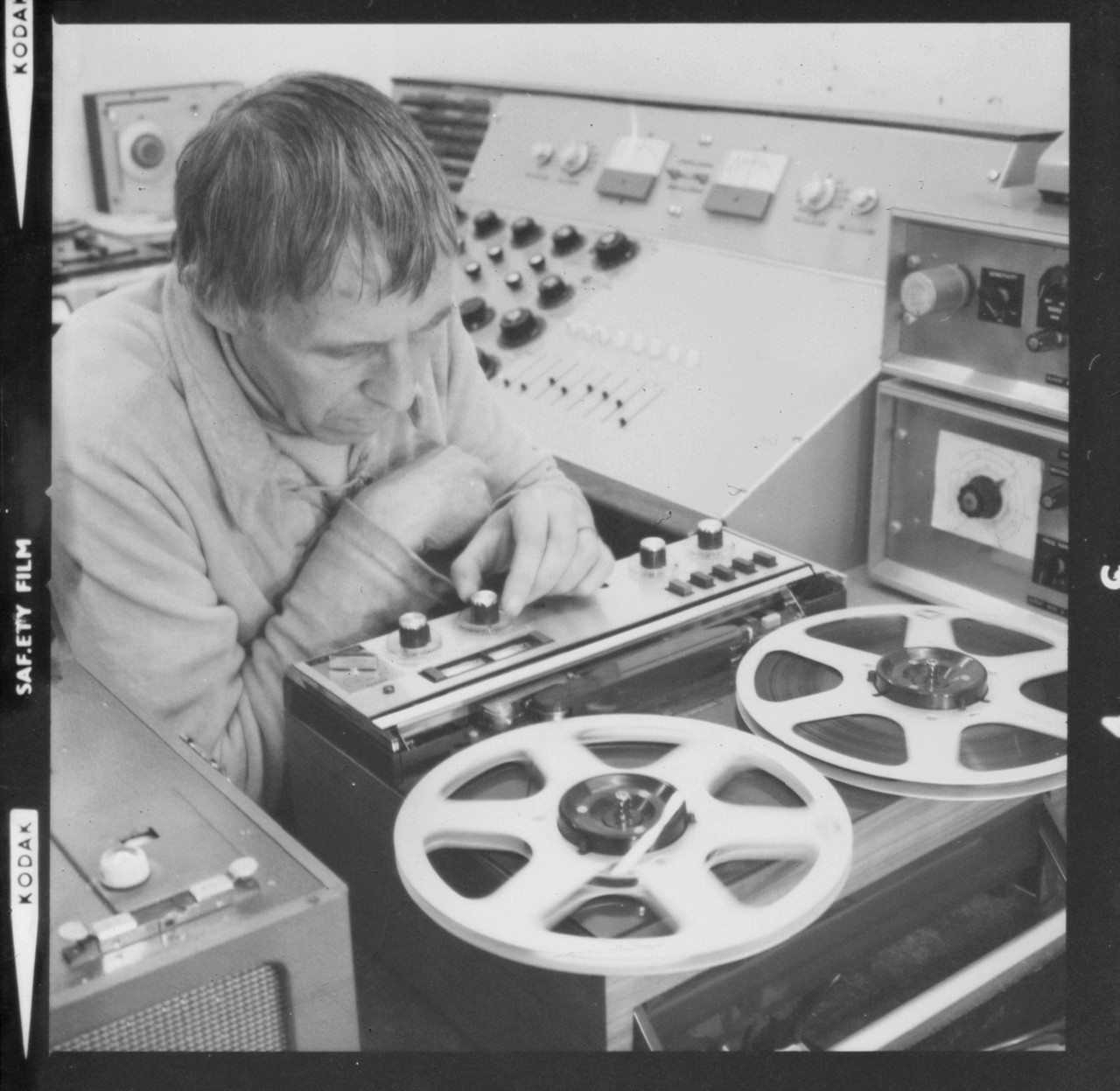
Christopher Thomson, director of creative teaching and learning at the London dance venue the Place, was taught at the Guildhall School by Berk from 1971-73, and performed with the Dance Theatre Commune between 1972 and 74. »We rehearsed and made most of the work in the tiny Dorset Street studio,« he recalls. »Just about all the pieces I danced in were to Ernest’s electronic music, but I didn’t have any real connection to its making. We would just watch Ernest intently working in his cramped corner with tape recorders and various other machines. There was a keyboard and waveform generators, and he would also record live sound and treat it. I have a distinct memory of ball bearings being rolled around in a hubcap. I liked the music, though only remember scraps of it now. When I was about 16, I had bought an LP record1 featuring tape pieces by Ihan Mimaroglu and Luciano Berio, all of which I thought were wonderful, and confirmed my teenager’s view of the modern world as strange and out of joint, but marvellously exciting.
»Most of the choreography in this period was by Ailsa Berk, who was the lead performer with the company. In preparation, Ernest liked nothing better than to get us improvising freely for extended periods, often to African drumming, of which he had a number of field recordings on record. We sometimes improvised naked, as for Ernest it was all about finding expressive freedom in our dancing. There was nothing remotely prurient about it, and anyway this was the 1970s. The same went for dancing nude in a piece from 1973 called ›Duo-Trio-Duo‹ [renamed ›Trilogy‹]. We performed this at the ICA and elsewhere, and didn’t think anything of it. They were good times; we toured in the UK, the Netherlands, and once to East Germany, where the response was enthusiastic. Ernest was an amazingly vital and creative person, and I’m glad to have known him and his music.«
Berk’s grandson, Michael Fairfax, a sculptor and sound artist, moved to London in his late teens and made his way to Dorset Street and the Dance Theatre Commune. »I basically lived there as I couldn’t afford to rent in London,« he says, recalling his time studying with his grandfather during 1972. »I was holed up in the basement along with a number of Revox tape recorders, oscillators, and other noise-making apparatus. The weeks with Ernest were spent learning modern dance, mime, percussion and electronic music – this was standard practice for his students to experience these different disciplines. We would record all sorts of found sounds – running rulers along radiators, footsteps across the floor and a wide variety of drums. We would also record sine and square waves onto tape, and were taught how to splice and create loops, which would sometimes run to great lengths around the whole studio. Through this we built up a collection of electronic sounds and tape loops, as the building blocks for a composition. I loved the whole process of cutting and splicing the tapes, running the sound over the tape heads, playing back at different speeds, playing the tapes backwards. It was a dream soundscape for a young 19-year-old who loved Pink Floyd and could now create his own strange world of sound.«
A notable aspect of Ernest Berk’s composing was that he rejected the commercially-driven cycle of discarding, replacing, and updating useful equipment, a trend common to most other electronic music makers of his era, and which continues to this day. As a result, he maintained a remarkable consistency of experimentation all the way through his composing career. In 1983, aged 74, he produced »Winter’s Tale,« an abrasive 23-minute piece which typified the kind of challenging electronic sound worlds he had been creating since the 1950s. He never got rid of supposedly obsolete equipment, enjoying the quirks and unpredictability of his assortment of waveform generators and tape recorders.
It is not uncommon for composers of Berk’s generation to turn their backs on their early electronic experiments, often deeming them too technically primitive or simplistic. In failing health during the last year of his life in 1993, he began the task of playing back his tape collection – some of which had lain unheard for decades – and experienced a certain ambivalence towards his electronic works. In that letter to a friend quoted above, he wrote, »Listening again to the old stuff is like going through a psychoanalysis. I am hearing what my tormented soul in those days was crying about, and also what my soul was singing about in great elation. I think some of my old music is detestable and also sometimes wonderful. But for me it is as if a mirror is held in front of me, a mirror with a great depth, revealing long forgotten worlds to me now.«
By the mid-80s, the Dance Theatre Commune and Berk’s electronic music composing had wound down, and he subsequently moved to Berlin, where he continued teaching and dancing. In his final years, he acted or danced in several films, including Wim Wenders’s 1991 Until the End of the World, and in Germany there was something of a revival of interest in his work. Rather than his archive being donated to a British institution, his master tapes, a tape recorder, concert programmes, newspaper articles, and letters were bequeathed to the Historical Archive of Cologne. Tragically, the archive building collapsed in March 2009, but before this catastrophic event occurred, all Berk’s master tapes were successfully transferred. They reveal a high standard of hard-edged electronic sound in a body of work stretching across more than three decades and 200 compositions. Its rediscovery and appreciation is long overdue.
Ian Helliwell is an audio-visual artist, composer, electronic instrument builder, filmmaker, writer, and collagist based in Brighton, UK. Ian Helliwell’s 2016 book Tape Leaders comes with a 15-track CD which includes two pieces by Ernest Berk: »Chigger Sound 1,« and »No Fish,« or »Oh Mr. Bard.«
This text was originally published in The Wire magazine No. 380 in October 2015, and again as a revised version in CTM Magazine 2018 – Turmoil.
- 1
An LP of various artists released on the Turnabout label in 1967, featuring electronic music from Luciano Berio, John Cage, and Ilhan Mimaroglu.