When I was eighteen I was living with people that were selling cocaine. Any thoughts I may have had of getting involved ended abruptly when one of my potential colleagues, having hurried back from another city where he was picking up drugs, turned up at our house covered in someone else’s blood. This someone else had been murdered – quite tangentially, suddenly, and unexpectedly – by the other dealer’s bodyguard. Fortunately (I guess) the drugs were already in the car boot. Being impressionable and out of my depth, I was deeply distressed by this experience, and it was clear to me that participating in this particular industry meant making very close contact and entering into exchange with terrible people who were doing terrible things. The ethical considerations were very quickly and clearly resolved for me without ever having to cast my mind to broader questions about what that supply chain involved – the Columbian conflict with FARC, rainforest deforestation, all the tragedies that come from the movement of narcotics through Mexico or Puerto Rico, etc.
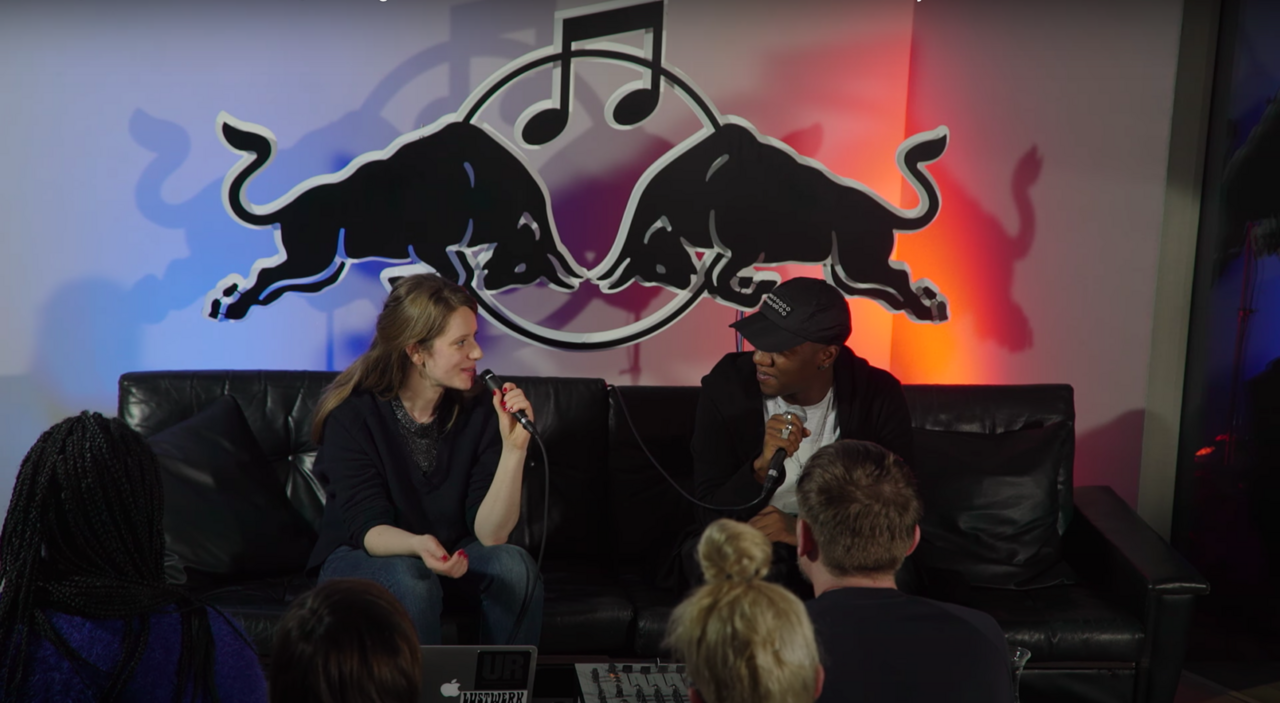
Ten years later I spoke for the first time at a Red Bull Music event. I had been running my music company out of my apartment with a couple friends, and after five years we had finally managed to move into a proper office and studio thanks to providing the music for an international car advert. I was feeling near ecstatic that our vision of creating an economically sustainable creative life running record labels and producing our own musical projects had come to fruition. In the course of this talk the car advert came up, and I was heckled by a member of the crowd who declared that I was complicit in the oil industry and that doing business with such a company was unethical. It did occur to me that this person was sitting in a corporate branded event, but I wasn’t thinking quickly enough to draw attention to it, so I murmured something, felt very embarrassed, and walked off stage. I hadn’t considered up to that point that I might have been doing something negative in the world with the company, and when I subsequently questioned the ethics of it, I defaulted to the Robin Hood defence, which is something to the effect of »we are investing in and supporting the livelihoods of many musicians as well as our small community, and we are redistributing wealth from corporate interests into the pockets of independent artists who we have, to the best of our abilities, verified are good humans.« At this time we were also selling a lot of records (made from toxic petroleum products), and we weren’t exclusively dependent on external corporate money for second use of the music, but licensing music seemed like the logical way to finance expansion and development, which to us meant initially earning something beyond minimum wage.
Almost another decade later, in the present moment, relatively little of my company’s income comes from record sales. A large percentage of it now comes from the American film industry, and is thus corporate money. I have this moment for the first time asked Google which corporation owns Universal – a company we have received money from regularly – and discovered it is Comcast, an entity that incidentally was, according to Wikipedia, awarded the 2014 »Worst Company in America« award, and which employs »the spouses, sons, and daughters of mayors, councilmen, commissioners, and other officials to assure its continued preferred market allocations." Comcast is an internet service provider amongst other activities, so I also imagine that protecting against copyright infringement probably hasn’t been a priority for them. In this sense, they directly contribute to the shift in our economy we rely on them now to replace. It is also the seventh-largest governmental lobbying body in America, and was one of the largest backers of Barack Obama’s run for presidency.
I have red lines. For example, I wouldn’t license music to defence companies, pharmaceutical companies, oil companies, or companies that I’m aware have trespassed against humanity or the natural environment. But then, Universal could just as easily have been owned by Lockheed Martin, Pfizer, or Shell, and I wouldn’t have known until five minutes ago. And then who knows what kind of vile people are involved in the decision-making in large organisations, even those that outwardly appear ethical. I ask myself now why I haven’t looked in detail at each company I’ve earned money from, and the only answer I can come up with is that working on films and film campaigns never struck me as evil. But then, the ideological messaging of many Hollywood films is questionable, and is undoubtedly part of the self-perpetuating force of our over-consumption.
The systems in which we live and operate and the infrastructures that support them are all networked into everything good and bad about our civilisation, but fundamentally our civilisation is unsustainable, so that network is oriented towards, at least for the moment, the slow strangulation of the natural world and the structural repression of a large portion of humanity. Is there any way to not participate in this?
Red Bull is made in Austria and Switzerland. A casual investigation on the internet shows that amongst the accusations levelled against them are advertising irresponsibly to children, and the use of extreme sports to advertise their products – advertisements in which stunt men have died with relative frequency. There was also apparently a bizarre lawsuit in Austria in which they were successfully sued for false advertising because apparently Red Bull doesn’t give you any more energy than a cup of coffee with the equivalent quantity of caffeine – and a temporary sales ban in 2009 on Red Bull Cola after trace amounts of cocaine were found in the drink. Anyways, I couldn’t find anything too juicy, besides a now-notorious interview with CEO Dietrich Mateschitz, a man with a $15.4-billion net worth, in which his comments caused a stir by potentially suggesting ideological alignment with Donald Trump. But the fact remains that this company is a commercial enterprise whose main purpose is to profit by selling a sugary stimulant drink that is unnecessary to the perpetuation of humanity or the world, and there is an environmental price to pay for that. Right now, somewhere out there, the factories are spewing exhaust, as are the vehicles that distribute the aluminum cans throughout the world. I am certain that if we hung a human or two over that exhaust it would have lethal consequences for that person or those persons, but just as the pollution is distributed, its consequences are likewise distributed into the background noise of the slow death that carbon emissions promise for the world as we know it. Up until I saw a dead man’s blood on another person’s clothes, the destructive potential of the cocaine industry was equally diffuse in my imagination.
There is no reason to think that if I found another form of employment I would be any less involved in systems that are rooted in exploitation.
Recently I attended an event in Berlin in which the electronic music streaming platform Boiler Room had teamed up with Google to present a new phone, the Google Pixel 2. We all, more or less, have smartphones, and most of us know full well there are disastrous environmental consequences caused by their production and that some of the raw materials used in this process are acquired in very questionable circumstances. The mineral coltan, for instance, is mined in the Democratic Republic of Congo, amongst other countries. Coltan is »sold in private, unregulated markets, unlike metals such as gold, copper, zinc, and tin. This means that there are no standards for mining operations and any safety procedures must come from the mine owners or their home countries.« Google also has been implicated in many controversies, from large-scale tax avoidance, to being a legitimised monopoly, to censorship and surveillance, to the carbon footprint of its servers, to a potential class action lawsuit based on the faulty screen of the Google Pixel 2. They have also invested a huge amount of money into clean energy, to name one of their virtues. Drawing a veil over all that momentarily, I felt very confused about what exactly the event was. There were a number of acts performing who were all very good and interesting acts, and I imagine that they were invited as part of promoting the product to a particular demographic that Google perceived was an influential body of people in terms of informing buying habits amongst key social groups. So I was, in effect, walking in a three-dimensional advert in which I was both being advertised to and participating in the broadcasting of the advertising by being filmed and photographed being there, effectively becoming a product or advertising instrument myself. I took a free drink.
Perhaps one of those acts had an offer the same night from a local promoter in another city. Chances are this promoter would never be able to match whatever Google paid, so a corporate interest would be served over a grassroots music scene. Or let’s say corporate entity A puts on an event in a city and can pay: {fee a tickets-based promoter can pay} x 3. They will end up pricing that promoter out, which could be interpreted as a form of cultural/corporate gentrification, which means that an event whose purpose is ultimately to advertise a drink becomes tenable for an artist, while an event that would be organised in order to promote… music… would find it harder to survive. I’ve taken that money before, for the record. I would be reluctant to take it now, but if I had to pay my rent and that was the only way to do it, I might find myself becoming more flexible. All of these little decisions we make end up feeling like particles in a vast noise, and our complicity in destructive systems unfortunately takes the form of a rather mundane accumulation of these moments, like deciding it’s too much of a hassle to put a Snickers bar wrapper into the plastic recycling bin, so we just throw it into the general waste, and it ends up in a sea turtle’s mouth.
Apropos gentrification, I wonder if one could interpret Boiler Room as a form of gentrification in which, as urban centres price out anyone but the wealthy and slowly eliminate music venues, it transmits an aspirational lifestyle where those privileged enough to live in urban centres are filmed displaying the artefacts of their lifestyle to people who can not access that lifestyle and who can no longer meet people and experience music culture in physical spaces but only in virtual ones, as »users« who are actually in reality simply the targets of advertising via the pretence of content. Boiler Room, naturally, also gives a platform to talented underground artists around the world and helps propel their careers.
I performed at a festival in Mexico recently and in the venue were large sculptures, if you can call them that, that were made up of three-dimensional letters spelling out the phrase »Britain is Great.« Presumably, the festival was taking money from the British Council, and the British Council’s agenda now includes involvement in project Brexit, which must now involve building stronger trade relationships with non-EU countries. Without getting into the fact that the British Government and its imperial legacy have a lot to answer for, Brexit is something that is diametrically counter to my own political orientation, but also potentially destructive to my livelihood – in which I ride airplanes on a weekly basis and eat airplane food in disposable plastic trays, objects I have no idea whether or not are put into the recycling bin – as a touring musician living in Germany on a British passport. So. Wealth was redistributed from a former imperial power into a grassroots organisation, so that it could be further redistributed to staff, local and international artists, and to international alcohol companies, alcohol being a substance with potentially enormously destructive social consequences and that I drink on a weekly basis, and a substance I presumably facilitate the sale of each time I perform anywhere – while also, I’m sure, from time to time simultaneously facilitating the sale of cocaine.
I wonder what Henry David Thoreau would say. It’s one thing to resent paying taxes to a government that acts in violent and destructive ways in the world; it’s another thing to find yourself in an ethical dilemma in which a state is willing to give you money. Many festivals I have performed at are at least partially financed by state cultural funding. This has the wonderful consequence of allowing cultural events to make curatorial decisions decoupled from economic considerations that ticket sales demand, but it also opens up ethical questions around this money and the agenda of those state-sponsored organisations that distribute it. Would you take money from Trump’s government? From North Korea’s or Syria’s? From Netanyahu or Belarus’ Alexander Lukashenko? From Poland’s current right-wing government? Is taking money from the Canadian government an endorsement of their treatment of their indigenous population? It also entails the problem of giving larger organisations a distinct advantage over smaller groups or individuals who would like to put on events. The latter are more likely to be passed over for funding in preference for more established organisations, and they may not be in a position to pay artists as much as funded events, nor to afford as elaborate a production. This motion in which smaller entities are absorbed or eliminated by larger entities is also one of the defining features of advanced capitalism.
Artists are and should be extremely vocal in offering inspiring critiques and radical solutions for these dilemmas, but how to make sense of that while it is happening within a corporation-enabled and -constructed flow of information woven into and born out of an economic system that we are all unable to extract ourselves from, and in which the critique and solutions themselves become content with more of an economic value to the system than to the artists themselves?
The argument »…because I enjoy it« starts sounding a little bit hollow when one is standing on beaches on remote islands covered in bottles from countries thousands of miles away.
As it stands, my label can’t sell enough records anymore for me to not license music if I want to invest in and develop projects with new artists, and I enjoy performing, and I need to earn a living, and I want my friends and colleagues who put on festivals to continue doing that and supporting artists, and I don’t want to perpetuate suffering, and I’m disgusted by aspects of the world I participate in, and I want to find ways of putting the interests of the world and humanity before my own. At some point, we could ask ourselves, what is enough? For most people in the arts, there isn’t ever enough, because there is literally not enough money to be enough to live on. For non-human entities such as corporations and institutions, self-preservation and growth is coded into their DNA. Boiler Room may not need Google to survive, but they very well may feel they need Google to grow. An artist might be able to survive without Red Bull or other corporate money, but they may not be able to invest in upgrading their equipment without it, or they might not be able to live in a city conducive to their livelihood without it. We are embedded in an unfolding system that is moving in line and in sync with broader economic movements – the polarisation of wealth, gentrification, the automation of labour, etc. – and it is becoming harder to create the illusion that we can operate outside of this system successfully and/or spare ourselves from the hypocrisy which comes from being de facto complicit and yet trying to preserve our human dignity and acknowledge and live the fact that, in essence, the vast majority of us would rather see the world become a better, fairer place.
So what, then? Take our best shots at finding a way to participate in exploitation as little as possible and avoid hypocrisy as much as possible? Could we, for example, just stop buying soft drinks? They are completely unnecessary for us to live and survive – no one would come to any harm if Red Bull disappeared from the world. Coca Cola, the only company in America with a licence to import and process coca leaves and to legally sell cocaine to the one company legally allowed to buy it, manufactures so many PET bottles that they, according to Greenpeace, account for one quarter of all the plastics that end up in the ocean. It would be a relatively easy matter for me to stop drinking it, despite my deeply conditioned affection for it.
And the same is probably true for music. Why do I think I deserve to make music professionally? It’s been my life’s main concern and fascination. If I were to make a radical change, it would involve giving up whatever part of my sense of identity and purpose in the world is linked to a profession in the arts, as well as giving up the many years it took me to arrive at a point where I was able to work in this sphere professionally. If I were presented with a dataset that demonstrated that my profession was directly responsible for X amount of turtle, tree, or human suffering, I would undoubtedly make radical changes that addressed that. So, suspecting that the likelihood is that I am complicit, why don’t I make a radical change? I ask myself regularly whether or not the reason I stay involved is self-serving and bound with my need for acknowledgement, and I ask myself what it would feel like to give it all up. Maybe it would be a relief. At the same time, there is no reason to think that if I found another form of employment I would be any less involved in systems that are rooted in exploitation.
An often-quoted study conducted at Princeton, published in 2014, demonstrated that individuals in US-America wield effectively zero political power, and that policy is dictated more or less exclusively by what is, in effect, an oligarchy. Where does that leave us in terms of proposing ways of creating systemic shifts in our societies that would begin to address these issues? Obviously we all have the power to work on ourselves, to undermine our aggressive ambitions, to reduce our consumption, to inform ourselves, and to make the best decisions we can, and we have to start there. We can find ways of disambiguating greed from a desire for survival and for personal and community development, but it’s an extremely competitive world that tends to be geared towards the greedy, and it's also a world in which many of us lack an understanding of how to organise ourselves effectively to create meaningful change.
Recently, Fis, an artist I’ve worked with for the last couple years and whose last album – a collaboration with Rob Thorne that was in part recorded for free at Red Bull’s Berlin studio courtesy of CTM – my label released, started a record label called Saplings. This label’s physical product is the planting of trees; all the money that consumers pay into the label goes to this end via Eden Reforestation Projects, which provides the infrastructure to enable the conversion of money into the planting and maintenance of trees, just as PayPal – another company that comes problematic baggage – provides the infrastructure to receive the money itself. Fis, whose background is in permaculture, envisages a future in which this is a paradigm that many labels adopt, and envisages that this critical mass would begin to overcome the downsides of using infrastructures that rely on non-renewable energy sources.
It’s interesting that the onus for making positive change generally falls to the individual whose contribution to the overall noise of pollution and exploitation is microscopic, rather than to large-scale organisations such as PayPal who are responsible for the lion’s share. We can only hope that if we collectively make uncompromised decisions, we will create a market for products and experiences that aren’t created in polluting and exploitative circumstances.
Ultimately, whether or not it would be possible to hold to account the entities, corporate or otherwise, that are progressively taking over the financing of underground music seems to be simply a question of how many people would be willing to individually or collectively leverage those entities’ desire to purchase credibility against a demand that they operate in an ethical fashion, and, if that’s not going to happen, to say no. For all my uncertainty, I do believe that any decision we make, however small, that transcends our own individual desires and needs will have a positive effect on our communities, networks, and the world at large.
James Ginzburg is a musician and artist best known as one half of duo emptyset. He runs the label Subtext and the publishing company Multiverse.
This text was originally published in CTM Magazine 2018 – Turmoil.