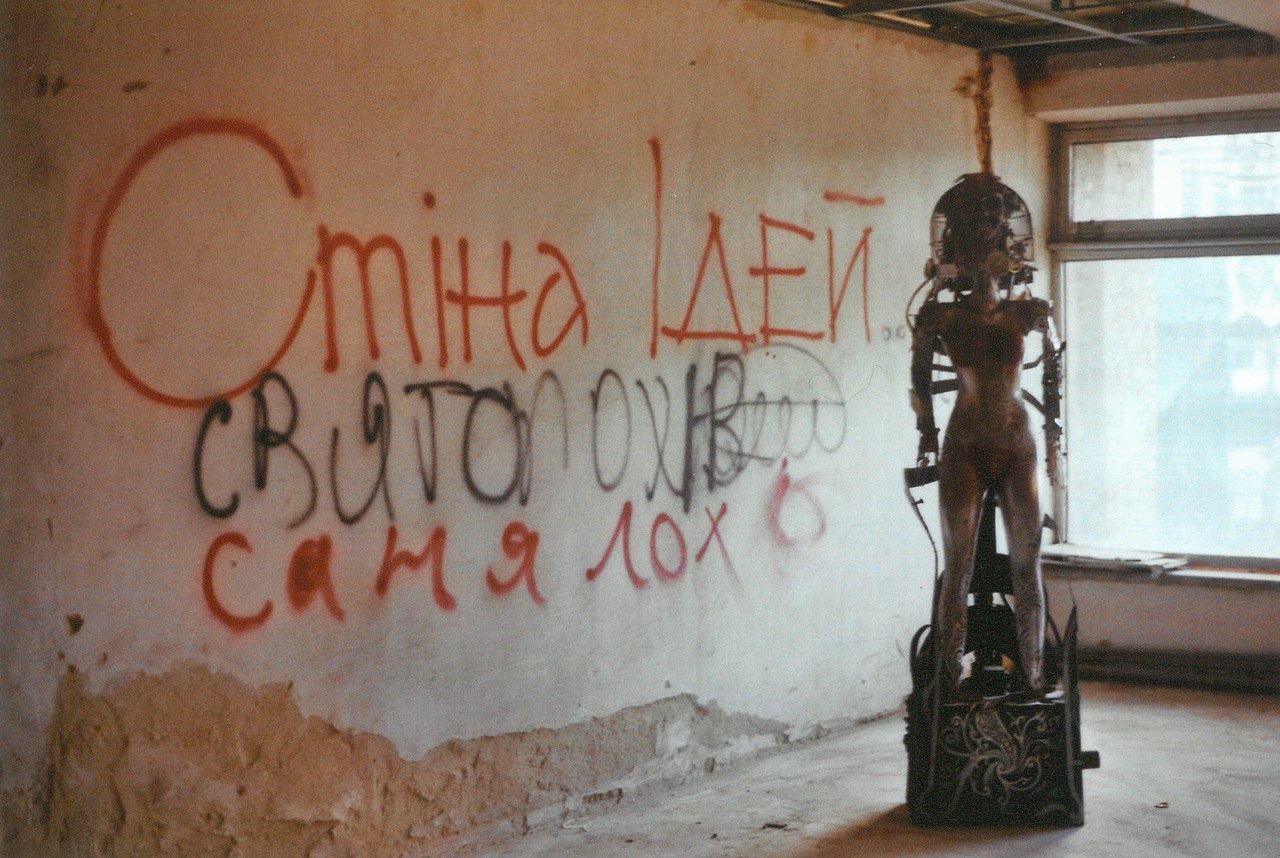
This essay is about Ukraine’s diasporic nets and gaps. We are familiar with the circumstances of russia's war on Ukraine. For sure, the full-scale invasion has provoked a huge wave of emigration of people from Ukraine into the big wide world. But many difficult circumstances in the process of Ukrainian statehood and societal development were already present decades and even centuries before, which also contributed to multiple previous waves of emigration.
Marina Baranova, 42, Hanover, left Kharkiv in 2000, pianist, composer:
»I think that it's just a nightmare if people are forced to leave their homes. It's scary. I actually just really hope that those who wanted to see the world, who wanted to live in the West or study and so on, they just make it work out. All their hopes and dreams shall come true. And those who dream of returning home should have that opportunity.«
If before russia's full scale invasion of Ukraine the talk was about developing infrastructure for arts and culture with the drive of the Revolution of Dignity in 2013/14, then it changed to talk of the evacuation of art and preservation of culture from war’s destructive bullets.
Zavoloka, 43, Berlin, left Kyiv in 2015, composer, sound artist, visual artist:
»I have lived abroad since 2015, for nine years already. I studied at the Fine Arts Academy in Vienna, and then after finishing my diploma I moved to Berlin in 2019. I have been following the music scene in Ukraine sporadically all those years, but I can say that during this time the scene evolved drastically, and I liked that it was blooming. Many Ukrainian artists and musicians moved to Berlin after the full-scale russian invasion of Ukraine, and here I met very nice artists and activists from the new generation. I am very happy to see such bright and intelligent Ukrainians, who grew up in a free Ukraine.«
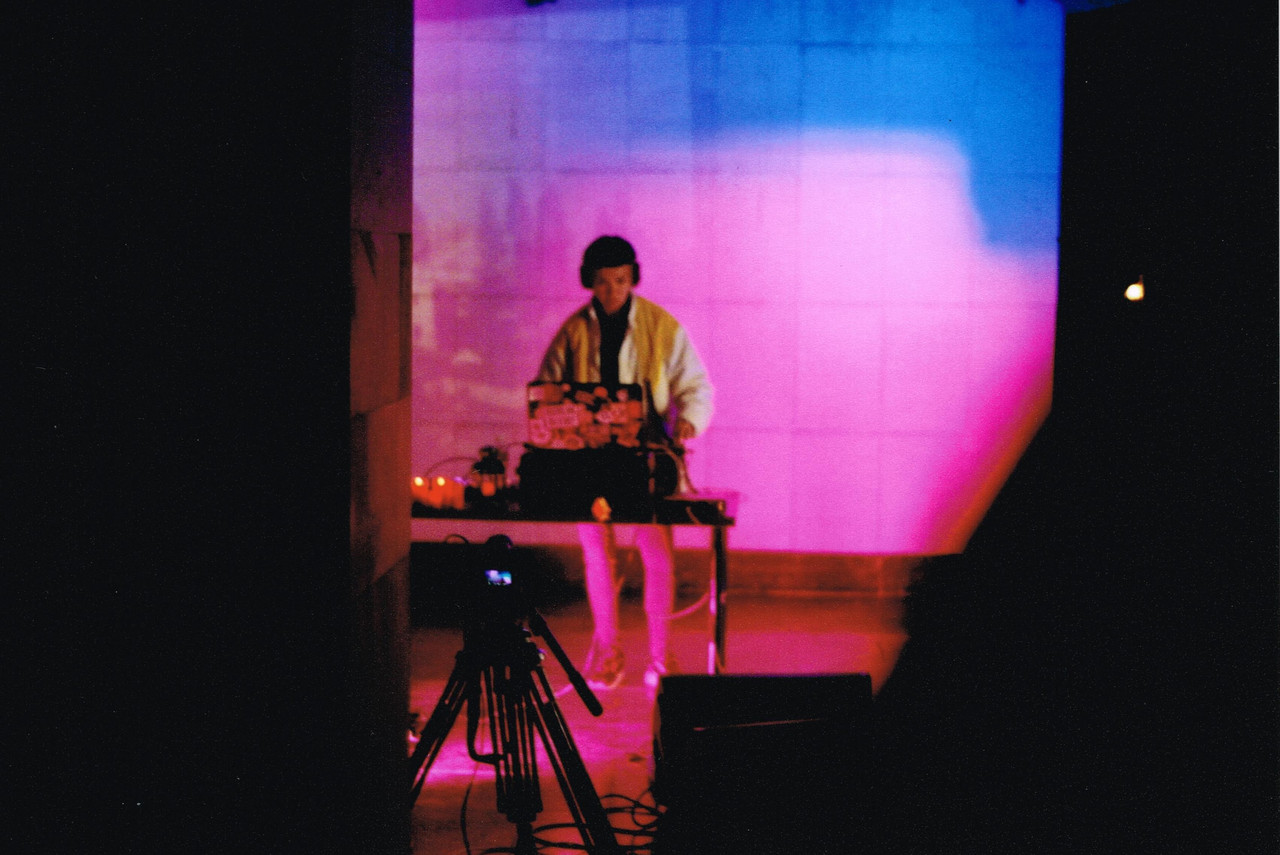
Currently, this generation of Ukrainian, yet globally influenced musicians and cross-media artists create new content which now more than ever is spread, heard, and recognised across the world. The arts in Ukraine and beyond its borders are taking a next step in the process of decolonisation from the previous Soviet era, nourishing their roots and finding new selves. On the axis between folk arts and alternative culture(s), a negotiation is taking place about artistic diversity and its forms and thus about the legitimisation of the country's minority peoples and cultures.
While many artists have left the country and continue working outside its borders, some have stayed. Across borders, there are stories of »loss and separation,« and stories of »closeness and new beginnings.«
ϙue (Vlady Che), 28, Lisbon, left Kyiv at the beginning of February, 2022 cybersecurity / oa (Olena), 27, Lisbon, left Kyiv after the full-scale invasion in 2022, UX Designer, who together perform as OO0oϙ0O0O00O:
»The desire to unite constantly transforms into a sense of loss and vice versa. This is the new reality that is difficult to impose on any previous experience. Surely, the dislocation has massively affected people's connections that existed pre-invasion. Society got fractured; existing social bubbles have popped; roots have been uprooted. For some, it was an ample opportunity to live in cities they always wanted to live in, breaking all existing ties with Ukraine, forgetting the friendships and social relations. For others, the departure was a much less anticipated choice. I feel depreciation towards individuals who have left Ukraine illegally and dishonestly, especially those who did so through bribery.«
Kateryna Agieieva, 35, Hanover, left Dnipro in 2016, jazz student, vocalist, vocal teacher:
»The beginning of integration, difficulty speaking and understanding a foreign language. Losses, anxiety, uncertainty, imitation of a new ›normal‹ life in contrast to the schedule of life back home, and adaptation to reality.«
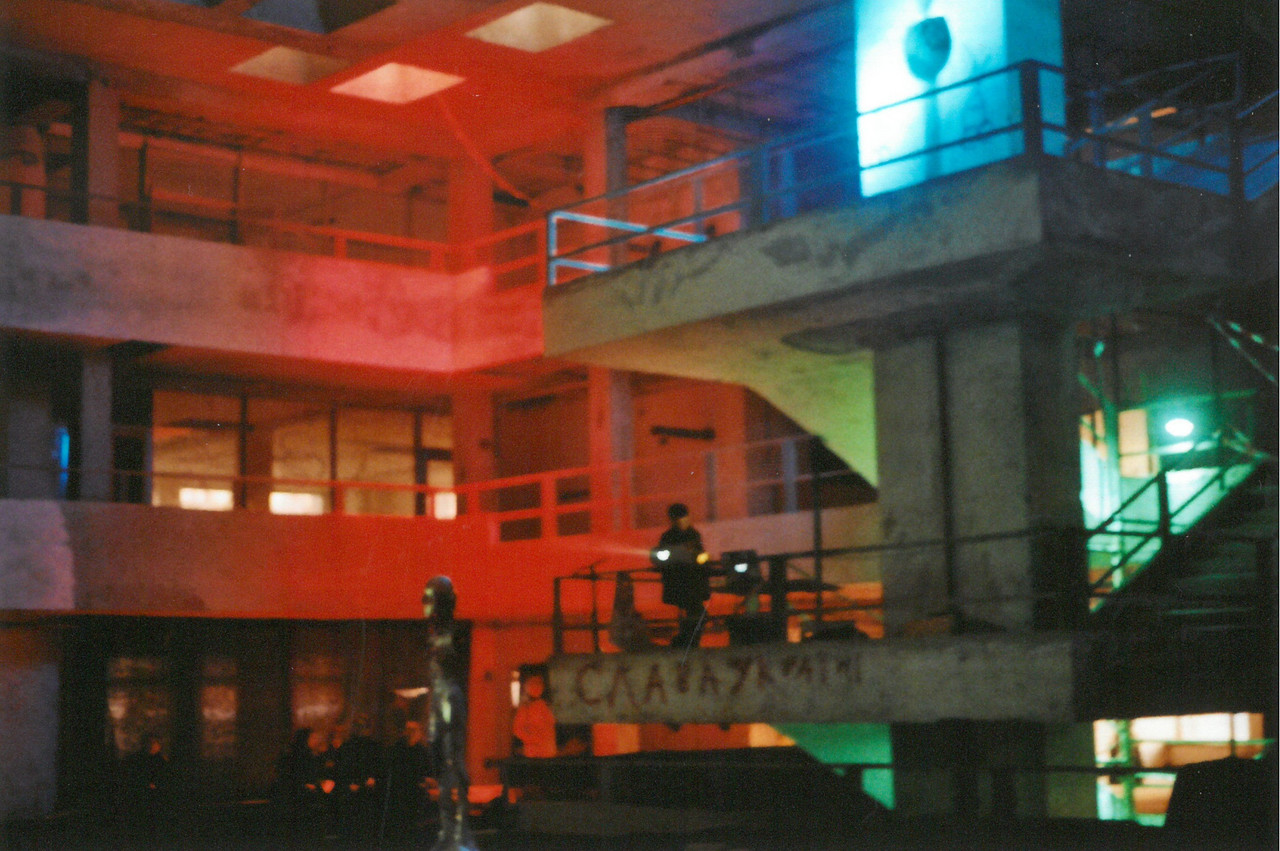
Some describe the feeling of a gap or disconnection, coloured by feelings of envy toward those having a better life, or of shame for wanting to forget, or guilt about having survived while others are dead...
super_inter (Yuliia Vlaskina), 34, Berlin, left Kyiv in March, 2022, musician:
»I feel guilty towards those who stayed behind. I feel that our connection is thinning. For some reason, I do not feel much solidarity with those who left and do not want to communicate with them. Of course, I feel a loss and my own isolation.«
NFNR (Olesia Onykiienko,) Kyiv, electronic music performer, composer:
»I feel very bitter about losing my friends, most of whom now live abroad, and knowing that some of them are not planning to return for various reasons. I understand that people are forced to save their lives or the lives of their children, but it is difficult for me to accept and still very painful that I have lost contact with many of them, and with some of them it has stopped completely. That is, a huge number of people with whom you walked your path as a community are already on a different path.«
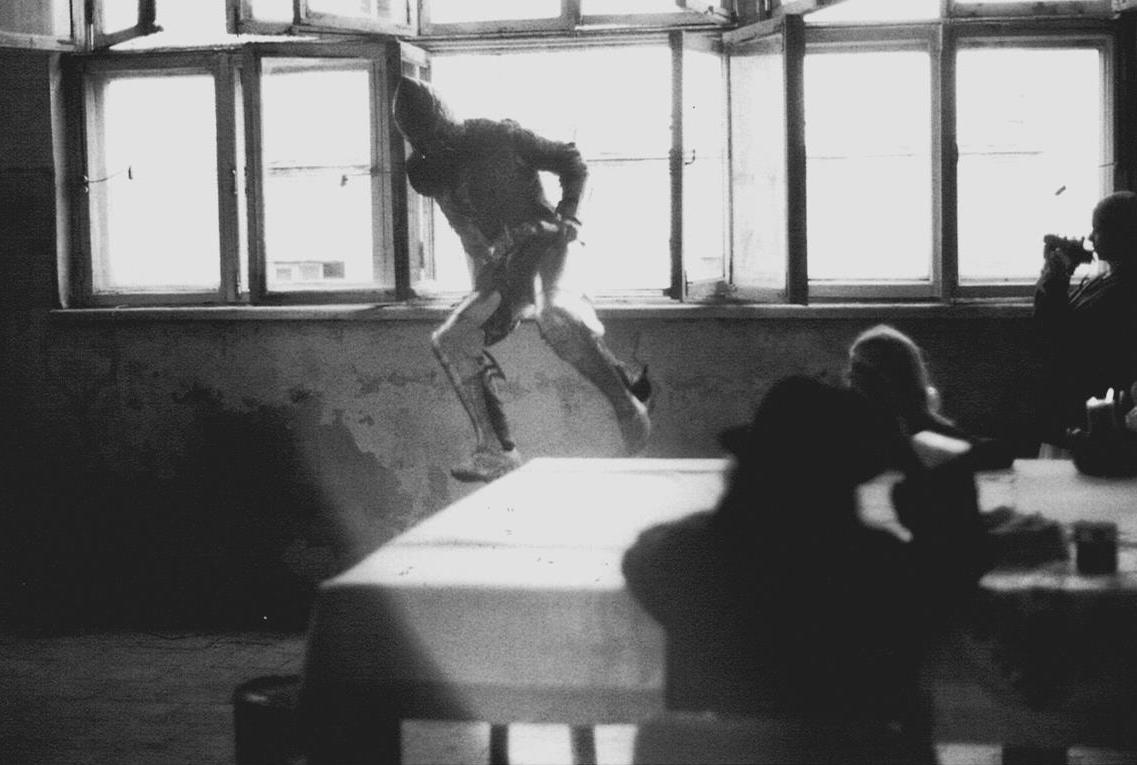
On the contrary, other people feel strong unity and solidarity. There is an endless, constantly shifting spectrum of emotions and individual stories in the middle of the imposed war.
Olesia Holovach, 34, Hanover, left Kyiv in spring 2022, production designer, scenographer:
»I want to isolate myself, avoid contact with other ›new Ukrainians‹ in order not to remember the life and the people I left behind in Ukraine [...] None of the ›new diaspora,‹ like me, is sure whether they will stay in our new country or return to Ukraine, so any relationship will obviously be temporary.«
Especially male artists and those who are identified as male bear the disadvantage of patriarchy, while female and female-identified artists are free to travel. Even those Ukrainian men who have managed to leave the country during the full scale invasion are concerned about the threat of mandatory conscription. Putin declared the »de-militarisation of Ukraine« as an aim. Ukraine‘s government, in contrast, speaks about »mobilisation« to enhance its military units. In the interest of fairness, those 200, 000 Ukrainian men who are now living in Germany should also be recruited, said the former ministry of foreign affairs Pavlo Klimkin in an interview (in German) There is definitely a huge gap of experience between those men who are risking their lives on the battlefield and those who have managed to leave the country, legally or illegally. In each case, there are different reactions to the overwhelming fear of death, in the sense of »fight or flight.« Obviously, it is a balancing act between duty and freedom.
The gender discourse in Ukraine is such a big topic that it needs to be treated separately, though it is important to mention that this essay was inspired by female and queer artists. Some of them are now in Ukraine, others have been in a European country for more than two years (what I term »old diaspora« which migrated before 2022), and still others have emigrated since russia's full-scale invasion in February 2022 (»new diaspora«). Note: I intuitively open up these categories, with reference to push and pull factors of migration, simply to underline a shift of factors which initiated migration in Ukraine. Currently, it's mainly the war pushing people away, similar to the circumstances of the two world wars and Soviet annexation. Before the annexation of Crimea and the war in Donbas starting in 2014, it was rather economic depression that caused people to migrate in the 1990s –2000s, similar as in the late 1800s. For Ukrainian Jews, who started to leave the country as early as the 1970s and 1980s, the growing discrimination in a Ukrainian society that had been harshly homogenised by Soviet rule in the previous decades, was the reason to leave.
Across the history of Ukrainian economic migration, a certain point of view concerning Ukrainians who were working emigrants has persisted: Instead of emigrating to the USA, Canada, or Germany, they should stay and fight for their liberation in Ukraine. But there are many of us, including myself, that think: Do whatever you want – we all live in different circumstances and different times! We all have the right to look for better perspectives and stable surroundings. It's difficult to judge other people's decisions in difficult circumstances.
My path to Germany was via my mother, who had difficulties earning money as a musician in a small Ukrainian town in the 1990s, despite having a full-time job as a music teacher plus playing with her band at wedding parties on weekends. This was not a musician's dream. It was the depressing post-Soviet decade. After a few months without pay at the music school, she went to Germany to play street music. This shows the lack of options in Ukraine back then, and is the reason why I now live in Hanover, where I am a musician and music producer myself. I often ask myself whether all this would have been possible had I stayed in Ukraine. Would I have seen so much of the world? Would I be safe now?
Kateryna Agieieva, 35, Hanover, left Dnipro in 2014, jazz student, vocalist, vocal teacher:
»Back in 2014, I left Ukraine in search of other specialists in art, jazz, and contemporary music. I left to make money as a musician, and at least to realise that this profession can still feed you. Unfortunately, this is not so in Ukraine. [...] Art always manifests itself in such moments. Leaving was an opportunity to talk about the Ukrainian singing nation abroad.«
Let's try to grasp an inside view of Ukraine’s contemporary music and art scene. It seems as if »we« – Ukrainian artists inside and outside of the country – are now more often given the privilege to represent »our people« or »our country.« Many people in science and culture feel a cultural-diplomatic mission for their home country when they are/live abroad. Even when they integrate into a new society, even when no one is forcing them into this mission, they kind of become »cultural experts« when living abroad. Diasporic people not only possess the power to spread information from within their country to the outside, like certain trends, movements, and theories, but they also take key positions in different professions and spheres of life, becoming active and obtaining power in the host culture. Here again the circumstances… while some migrants take on the responsibility of being cultural ambassadors as an urge to continue their »mission,« others experience huge isolation and assimilation pressures.
But honestly, does a diaspora have a »mission?« The Ukrainian diaspora is widespread and heterogeneous. To what extent can it expect to have agency in/over the homeland? What can this diasporic »mission« be about? It can be about financial and material support. It can be about collecting or preserving cultural heritage, about moving Ukrainian culture or cultural diplomacy forward without minding how many borders are in between. In fact, this »in-between peripherality«1 is already part of Ukrainian culture.
ϙue (Vlady Che), 28, Lisbon (Kyiv), cybersecurity / oa (Olena), 27, Lisbon, UX Designer, who together perform as OO0oϙ0O0O00O:
»Our main pursuit has been presenting contemporary Ukrainian cultural and musical heritage in Europe, mainly by co-curating the Ukraine-born festival ICKPA and recording mixtapes for various art platforms with 100% domestic material. I want the world to witness and appreciate the wild talents that have sprouted in UA for the last few decades.«
Historically, Ukraine lies in the double periphery between the »primary centre« of Russia, from which Ukraine started actively turning away in the 1920s, and the »secondary centre« of Western Europe. For the 19th and 20th century Ukrainian avant-garde artists it meant that they were in exchange with and oriented towards both directions. Around the 19th and early 20th century, many creatives obtained their education in Russian metropoles. 2With the beginning of the Soviet Union, amid russification campaigns, a lot of artworks by Ukrainian, Crimean Tatar, or Jewish artists among others were banished; they remained underground or in the personal archives of their creators and friends. Thus a number of works and ideas remained unpublished until after 1991 (fall of the Soviet Union) due to state censorship or through self-censorship by the artists. Only with the opening of Ukraine’s archives since the 1990s has it become possible to process them. At this point art history in Ukraine is considered separately from Russian art history.Some artists fight for not giving space to russian culture on international stages, as if to point out that it doesn't deserve to get space while russia is being aggressive, violent, and dominant. The consequences are massive. This is about de-linking processes on the level of artistic techniques, methods, and repertoire, and of world views, ideals, and values. Goodbye, Lenin, Stalin, Putin!
ϙue (Vlady Che), 28, Lisbon (Kyiv), cybersecurity / oa (Olena), 27, Lisbon, UX Designer, who together perform as OO0oϙ0O0O00O:
»Ukrainian contemporary art will be in great demand among Ukrainians. This is the most important and inevitable thing. Art will be bold, noticeable, thirsty, desirable, and life-affirming. russian imperialism cannot take the most important things from us, nor the ›songs‹ we sing. Our ancestors sang them centuries ago, and we continue doing so today through modern music-making methods under the fires of rocket shelling, despite the danger of not waking up one day. We will sing our songs for our sake. Furthermore, it's a debatable topic, though how can we ›sing‹ our songs, which fortify our nation, in russian? There is no place for russian culture, including their language, on our territories as it is a culture of occupiers.«
Ukraine’s contemporary music scene also makes re-linking processes visible. Many artists have the war and »the heroes at the front« on their minds, ask for donations, and remind audiences that it is about everyone’s security each time they have the opportunity to be on stage or to give an interview. Some uncover the past, the forgotten or the unknown about »us.« The right to make our own narratives is already there, but we also need the courage not to get stuck in traditionalism and old normatives.
And here the elegant leap into inferiority complexes. Ukrainian society still carries traces of inferiority, resulting from Russian imperialism. For centuries, Russian influence, both under the Tsarist regime and later in the Soviet era, suppressed Ukrainian identity by restricting the use of the Ukrainian language and curbing cultural expressions. This systematic russification led many Ukrainians to see their own culture and history as lesser or subordinate to Russian traditions. Despite gaining independence in 1991, these inferiority complexes persist, especially in regions with strong ties to Russia. The conflict in Eastern Ukraine and the annexation of Crimea in 2014 have deepened these complexes, reinforcing the need for Ukraine to assert its distinct identity. Recent efforts to revitalise Ukrainian culture and promote national pride indicate a society actively working to overcome this historical burden.
This f*ckin ́ damn war has pushed many Ukrainian artists to overcome their own impostor syndrome. They not only understand their standards, but they reach them – simply because the circumstances of the war transformed them into adults overnight. This is the unavoidable reality: You must prove your worth! In the long term it won't be enough to play a few concerts when people pity you because of the war in your home country. It is so satisfying when artists from Ukraine acknowledge their competencies and understand that they also have a lot to share... as if we have been waiting for the moment of self-legitimisation!
You know what else is brilliant? With each emigrating wave from Ukraine the interactions with the surroundings and the interconnections among Ukrainians are growing. The world becomes tighter for us. We only have to figure out what kind of supra-national cultural infrastructure could help Ukrainian local and diasporic artists need to cope with the status quo of the socio-political situation. How can we stay connected? Where are the necessary creative hubs on our way? With whom do we want to be friends and partners? A globalised world requires a globalised mindset. Generally speaking, the examination of mixed identities, voices of artistic minorities, subcultures, and their environments make a significant contribution to understanding the present day and today's arts.
Olesia Holovach, 34, Hanover (Kyiv), production designer, scenographer:
»I have a desire to communicate with them [people who moved from Ukraine ›voluntarily,‹ before the war], because there is a sense of peace and understanding, an adequate dialogue, and not a growing sense of pity and helplessness.«
So, what is the future of the contemporary arts of Ukraine? This is an open ended question. In the case of the artists interviewed here, they foresee a future for contemporary arts in Ukraine deeply intertwined with the ongoing war, expressing a mix of hope and concern. They hold onto hope for a blossoming artistic post-war scene, fueled by the resilience and determination of Ukrainian artists. Yet, they also acknowledge the profound impact of war trauma on the nation's collective psyche, prompting a call for integrating art therapy into healing processes. Personally, they feel a longing for improved conditions and support for artistic development within Ukraine itself, while recognising the potential for enriching collaborations with European and other global counterparts.
Masha Kashyna is a sound artist, activist, and ethnomusicologist based between Germany and Ukraine. Her interest in socio-cultural and artistic movements is translated into a transmedial way of working. She holds an M.A. in ethnomusicology on »Sound and Activism in Ukraine,« a topic which she continues to explore. She has contributed to the Heinrich-Böll-Stiftung, PODIUM Esslingen, and Glissando Magazine, among others.
This text was commissioned as part of CTM 2024 – Sustain.
- 1
The comparative literature and culture scholar Steven Totosy de Zepetnek proposes a theoretical designation he terms »in-between peripherality« for the study of East Central European literatures and cultures as well as ethnic minority and diasporic writing and art. This term acknowledges the peripherality of these literatures and cultures in relation to traditional cultural European »centers«, but at the same time does not lose from sight that East Central European literatures and cultures have long histories of their own, enjoying a certain degree of cultural sovereignty and self-referentiality.. See p. 10, Totosy de Zepetnek, Steven. 1998. Comparative Literature. Theory, Method, Application, Rodopi: Amsterdam/Atlanta.
- 2
See p. 26, Faber, Vera. Die ukrainische Avantgarde zwischen Ost und West (The Ukrainian Avantgarde between East and West). 2019. transcript Verlag – Edition Kulturwissenschaften: Bielefeld.