What are the stakes in creating culture when it comes to changing assumptions of what is »normal« or desirable, when it comes to imagining other ways of relating to one another and acting in this world, when it comes to forging coalitions and affinities between seemingly disparate communities?
Anand Pandian is a cultural anthropologist considering the messy entanglements of environmental ethics and horizons of possibility, probing questions of postcoloniality, narrative’s efficacy as a political vessel and tool, and anthropological hope. He is an advocate of degrowth – a multiplicitous, anti-capitalist movement largely oriented around an intentional and equitable downscaling of production and consumption, all in the name of ecological sustainability, collective wellbeing, and social justice.
I first came across his work at an online degrowth conference, where he incisively implicated the role of cultural imaginations in climate debates. As CTM 2021 – Transformation attempts to wrestle with perpetual, formidable questions that have long plagued cultural producers and artists of all stripes, it seemed clear to me that many of Pandian’s preoccupations are salient, if under-acknowledged, in such conversations. While the frailty of our cultural ecosystems may have been apparent before, in the past year it has become increasingly difficult to divert attention away from the fact that many of the mechanisms that structure our creative practices, not to mention everyday lives, have proved to be unsustainable and damaging in a myriad of ways. Amidst economic tumult, social uncertainty, and ecological decay occurring in colonialism’s shadow, politically engaged practices have much to chew on.
Ollie Zhang: I wanted to start with something you brought up at Degrowth Vienna 2020 – this idea that we can’t abandon growth as an ideology without grappling with its cosmology first. There are so many projects in music thinking about how culture can contribute to a more equitable cultural ecosystem or society at large, but inevitably grappling with this cosmology is a gargantuan task that’s far easier said than done. I think this idea is often neglected in cultural output that tries to grapple with the climate crisis somehow; could you expand on this idea?
Anand Pandian: Thanks for this question and for the reminder of that particular conversation. I’m a cultural anthropologist, which means that my job is to make sense of how people live, and the reasons they do what they do, whether those reasons have to do with matters of culture, social life, history, or politics. There are ever so many ways in which the desires that people have, their commitments and aspirations, are shaped by the structures that organise their experience, the things they take for granted about the world, the things they imagine are necessary, the things they imagine are ordinary, the things they imagine are desirable. All of these things have an enormous amount of force when it comes to the choices that people make, and the ways people live.
In my mind, much of this comes down to basic ideas about the nature of the world, the nature of things, the reason why things in the world happen the way they do. One name for all of this is cosmology: the sum total of ideas and assumptions that govern any particular people’s imagination of how the world is organised. I think that when it comes to growth, or the organisation of economic systems and the structures of economic life more generally, we are faced with a cosmology of endless growth and potentially limitless progress: the idea that material and economic advancement are naturally and fundamentally unbounded. This idea is twinned, in the Western world in particular, with certain fictions that are very powerful, about individual choice and freedom: the notion that anyone anywhere has the privilege of making whatever choice they want to make, that it is up to them to exercise a boundless individual domain of personal possibility, and that whatever consequences ensue from those choices are simply their own responsibility, when lives are, in reality, deeply intertwined.
...we are faced with a cosmology of endless growth and potentially limitless progress: the idea that material and economic advancement are naturally and fundamentally unbounded.
I don’t think we’ll ever get a critical handle on obsessions as tenacious as growth without examining these basic assumptions about the world and our place within it, and then asking ourselves the questions that follow: what if our assumptions were actually different? What if the things we took for granted were different, what if our imagination of the basic nature of our collective lives was itself profoundly different? What would a desirable organisation of society or the economy look like? All of this would change profoundly with a different set of basic or axiological assumptions. This is what I’d tried to convey at Degrowth Vienna with »A Stranger to the Weave,« that fictional story set in an Indian village of the distant future, a little thought experiment of this kind.
OZ: As a person who lives and works in the US, how do you reconcile some of these growthist ideologies we inherit with the other cosmologies that you’ve been exposed to or researching?
AP: I’m an anthropologist who writes on human-environmental relations, someone who is American by birth but Indian-American by ancestry, and someone who has spent many years in rural India and in other rural and urban spaces around the world. For all these reasons, it’s peculiar to me how earnest the commitment to economic growth can be, especially here in the United States. It’s as though growth were simply an unvarnished good – as though it were simply obvious that collective wellbeing ought to be identified with a rate of economic growth, as though all the problems of a finite planet with a finite resource base and spiralling forms of disparity and disenfranchisement could be resolved through growth. In a recent book called Self-Devouring Growth: A Planetary Parable, the anthropologist Julie Livingston mounts a powerful critique of these ideas from the vantage point of modern Botswana.
I’ve spent a great deal of my adult life wandering in landscapes and seascapes devastated by the consequences of unchecked growth, whether it’s landfills that I’ve visited as an anthropologist, thinking through ideas of waste and decay here in the United States, or seashores that I have explored with artists and activists concerned about the ubiquity of disposable plastic and the effects of marine plastic debris on the future of oceanic life. For the south Indian farmers whom I’ve gotten to know and spend time with, the pursuit of an adequate market for their products is an unsustainable necessity. People are locked into systems of production that are very difficult to manage in both financial and ecological terms, yet they’re so powerful and compelling that these farmers have no choice but to go along with them, even as they lament all the things that have been lost.
There’s a basic difference between saying that things ought to be a certain way, and being able to live out that alternative imagination.
OZ: Perhaps the widespread naivete around or faith in economic growth has to do, in part, with a failure of imagination to consider the myriad of ways in which we can organise social life and live well. Your work suggests that narrative is central in that – what do you make of criticisms of narrative when it comes to conversations around the climate crisis?
AP: The question of what moves people remains an enormous mystery to me. When I began graduate school in the late 1990s, I pursued a dissertation project in rural south India that focused on a particular community classified as »criminal by nature« in colonial times. This became my first book, Crooked Stalks: Cultivating Virtue in South India. I wrote here about a British colonial ideology that insisted that through certain forms of state and agrarian intervention, Indian subjects could be put on the path of progress, that they could become »better people« through large-scale experiments in social and environmental engineering.
Of course the reality was much more complicated. The ideas that colonial administrators had about ordinary life in that part of India were deeply flawed. The outcomes were much more variegated, and suffused, in fact, with deep irony and unexpected consequence. And yet, to this day, personal commitments to growth and economic development in this region owe a great deal to the complicated legacies of these historical interventions. I recall all this to suggest that any contemporary effort to change the direction of society has to acknowledge that what we have inherited is a result of centuries of deliberate efforts of this kind, often coercive and violent in their style of exercise or implementation.
There’s never anything straightforward about seeking to change what people do, whether we imagine that to be a progressive change or a reactionary change. And yet, at the same time, it’s true that people change all the time, as individuals: they gain new capacities, desires, dispositions, new ways of seeing the world. They also change collectively. Right now, for example, in many places around the world, we find ourselves in the midst of a developing reactionary populism, one that gives a great deal of weight to the idea that one should take care of one’s own most essentially, barring others at the door. We see the harshness of that collective transformation manifest all over the world now, in countries including Germany, the United States, India, Brazil, elsewhere. These are difficult matters to wrestle with. These politics are founded on particular narratives and myths, and they must be met with myths and stories of other kinds.
As an anthropologist, as a writer, as an avid reader of fiction, I am committed to the idea that stories can be transformative, that putting yourself in the space of someone else’s life, their experience, can have profound effects on the way you see the world, what you take for granted, your imagination of how else things could be. I feel this myself with every good book I’ve read, that I’ve found myself caught up in, and also in the work that I’ve pursued as an anthropologist. But it does strike me that for this to happen, whatever we encounter – whether in the form of a book, a story, a film, some music, whatever it is – has to be engaging. It has to captivate. It has to catch people’s attention and hold it long enough for that work of transformation to unfold. Whatever that work might be, there’s no question that it does take time. To find a different path forward, one must first learn to abide with the idea that any given situation can point in other directions. And this takes time.
So the way I’ve come to understand it, what we need are captivating narratives: stories that catch hold of the imagination, work at a slower level, help to cultivate other dispositions. This is what we will ultimately need if we are to find another way of living in the world, rather than just a different idea of what should be. There’s a basic difference between saying that things ought to be a certain way, and being able to live out that alternative imagination. Staying in the space of a different kind of story that tangibly shows how things could be otherwise is one way of living out an alternative. That, to me, is the power of an effective story. At the same time, certainly, people are distracted, hurried, confused, tired, angry; there are ever so many reasons that we’re disposed to close ourselves off. Anyone engaged in the work of cultural transformation has to engage those blockages creatively and effectively. This is something that I learned a lot about in working closely with Tamil filmmakers in South India for an ethnographic portrait of the creative process, which I called Reel World: An Anthropology of Creation.
I’ve come to believe that this kind of contrapuntal storytelling has a great deal of promise in responding to the dominant narratives of our time, whether they are framed by economic imperatives, political exigencies, or scientific certitude.
OZ: Are there limits to narrative here, such as when it may be pit against the sheer scale of the climate crisis? I suppose the subtext to this question is – how are you defining narrative? Is it solely to do with cultural and artistic output, or can we think about scientific studies and other forms of analysis in terms of narrative as well? We could say that the concept of nature itself and its potential exploitation very much has to do with narrative – an old, Western story that we have inherited, one that establishes »humanity« as separate to »nature.«
AP: You’re right to point out that we face challenges at a global scale: the climate crisis, or the now-prevalent idea of the present as an Anthropocene, an era of human planetary dominion. These are matters that ask us to think at vast and potentially unfathomable scales. You also rightly remind us that there are certain influential ideas or stories of a very broad and encompassing scale – the foundational modern fiction that elevates the human over the natural and animal, for example – that have much to do with how we arrived at these difficult impasses. But in wrestling with these matters as an ethnographer and a fieldworker, I am continually reminded of the value of seeing things anew from small and unlikely places and perspectives. Anthropology is founded on the conceit that you truly can reimagine the whole of things from the standpoint of stories and conceptions situated in particular circumstances elsewhere. I’ve come to believe that this kind of contrapuntal storytelling has a great deal of promise in responding to the dominant narratives of our time, whether they are framed by economic imperatives, political exigencies, or scientific certitude.
A few years ago, I spent some days with an American artist, Pam Longobardi, on the Greek island of Kefalonia, where she had been working to clean up and create with the plastic debris on that Mediterranean shoreline. There was something about the modest size of these countless remnants that really touched me with a sense of poignancy: what were these silent witnesses to the obsessive accumulation of our time trying to tell us? I found a CD lying on some rocks beside the water, and when I brought it home and cleaned it off, it turned out to be playable still. It felt to me like these abandoned objects had somehow found a voice in this artifact, and I made a video called »Seaside Lament« that tries to convey this idea. Such moments may represent no more than small slivers of possibility, but they give a kind of purchase on things that would otherwise seem to transpire on a scale impossible to grasp.
OZ: It’s absolutely a massive challenge as to how we can develop these kinds of contrapuntal narratives. You’ve written about the work of Ursula K. Le Guin, and I’ve seen The Dispossessed cited as an example as one potential degrowth world might look like. Are there any other examples of similar narratives, worlds, cosmologies that you find resonate with degrowth?
AP: To me, one of the greatest challenges when it comes to degrowth has to do with the struggle to give body or flesh to those alternatives: if not growth, then what? There has been much recent interest in ideas of wellbeing as an alternative to growth, with many countries, New Zealand among them, beginning to reorganise their collective life on a different kind of footing. These efforts ask us to consider what our picture of a plausible or desirable future might look like if we put wellbeing at its heart instead of growth. It’s an interesting and important question, though I think we have room for other such concepts, as well.
What if we began with a picture of the present as a time of degradation and even ruin, rather than an idea of the present as a perfection of what we had before?
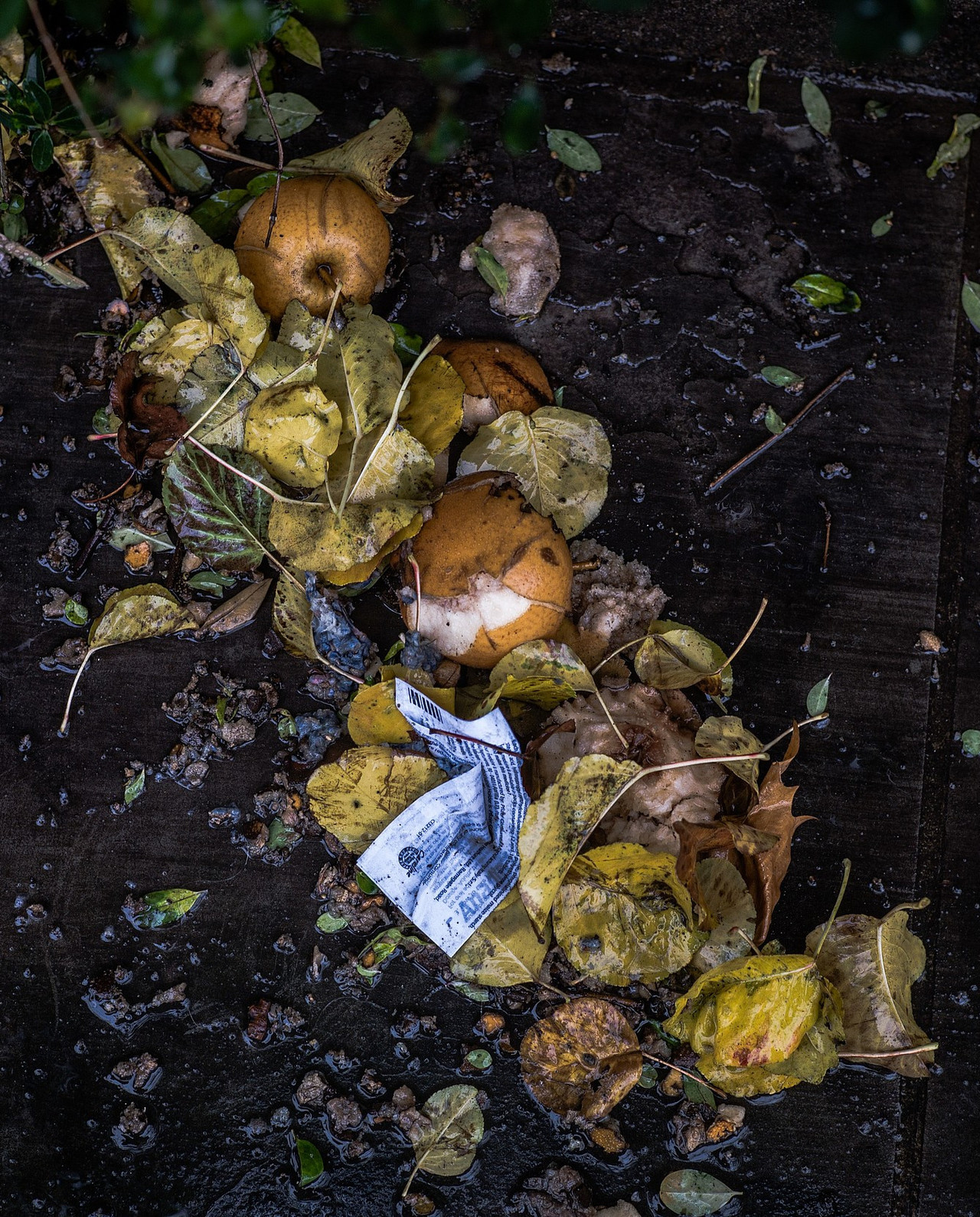
Lately I’ve been thinking a lot about decay: the relationship between growth and decay, and the fact that on a fundamental and even natural level, decay is the underside of growth. There is no growth without decay. There is no way to conceive the progressive development of things without also having to conceive or acknowledge that they will inevitably come apart. I’ve been working on a new book project about decay, taking up rot and waste as ways to come around to a critical perspective on growth. With this project, I’ve been drawn in part to dystopian science fiction, to speculative accounts of the near future that give us a more vivid sense of what it means to live in the rubble of our ordinary present. Octavia Butler’s Parable of the Sower, for example, or Paolo Bacigalupi’s The Windup Girl. You see such themes widely now in the cultural sphere, in countless films and even in animated series for children like Kipo and the Age of the Wonderbeasts.
At the same time, I think it's also important to acknowledge that creative and transformative vision may be found anywhere: that we don't need to look to our most famous and influential cultural producers, whether they're novelists, filmmakers, musicians, and so on, in order to find vivid exemplars of alternative thinking. So part of the effort here is to think through other forms of cultural imagination, the ideas that ordinary people take for granted about the world in other cultural contexts, and what those ideas might offer, by way of critical purchase, on ideologies and commitments as basic as growth.
A cultural producer, seen more holistically, is someone who helps produce a culture, that is to say, someone who helps produce a shared way of being in the world.
For example, most everyone that I've ever met in India is, at a very basic level, much more attuned to the impermanence of things, to the unpredictability of things, to the likelihood that things won't actually work the way you want them to work. Some of this has to do with the challenge of living in a country with a highly stratified economic profile. But there are also, I think, cultural resources that are at stake here, that we might also think about. There is the idea, for example, that the present moment embodies long-term cycles of growth and decay that unfold over many millennia, a cosmological vision that many people in India, especially Hindus, take for granted. The questions that follow are quite suggestive. What if we began with a picture of the present as a time of degradation and even ruin, rather than an idea of the present as a perfection of what we had before? What if restoration to a past and better state was acknowledged as impossible? How would this change the way we live in time? How would this change the way we live in relation to history? How would this change what it is that we imagine as necessary? One important consequence of living with this idea of a decaying present is that it may incline people to be more satisfied with what they have, rather than aspiring to perfect their lives by accumulating more. But even here, so much turns on the ways that such trajectories are narrated: extol the possibility of returning once again to a lost condition of greatness, and you’ve trapped imagination in a reactionary nationalism.
OZ: Some of the most interesting cultural practices that I've come across in recent years do depart from a different conception of the artists’ or writers’ place in the world, and where, broadly speaking, their world is situated right now. I think a lot of these practitioners, at least the ones I'm most excited about, are operating from a place somewhat outside a growthist paradigm, for example, trying to work and produce from a different set of values. Of course, the question of privilege is very much at the forefront of this – who can afford to work at a slower pace, who can afford to not produce as much material as they can?
AP: I think that's a very interesting observation. I hear you saying that whether or not these alternatives are efficacious depends, in part, on community. It depends, in part, on whether people can find company in pursuing these other ways of being. It’s hard to go out on your own and say, »no, I'm not going to try to make it as big as I can.« But if there are others that share that ethos, then those ideas become the ground of a different kind of culture. They become something that people can talk about with each other, something that people can remind each other about, as a different way of doing things. Such community can give solace, even courage to pursue those other experiments with greater confidence. All of these things matter greatly. When we think of cultural producers, we think of them as people who make cultural content. But it's also worth keeping in mind that a cultural producer is more than the maker of a cultural artifact. A cultural producer, seen more holistically, is someone who helps produce a culture, that is to say, someone who helps produce a shared way of being in the world. And so much turns on precisely that, on whether or not you have the company of others to share those novel visions and alternatives with.
Ollie Zhang is a writer, researcher, and musician.
This text was commissioned as part of CTM 2021 – Transformation.