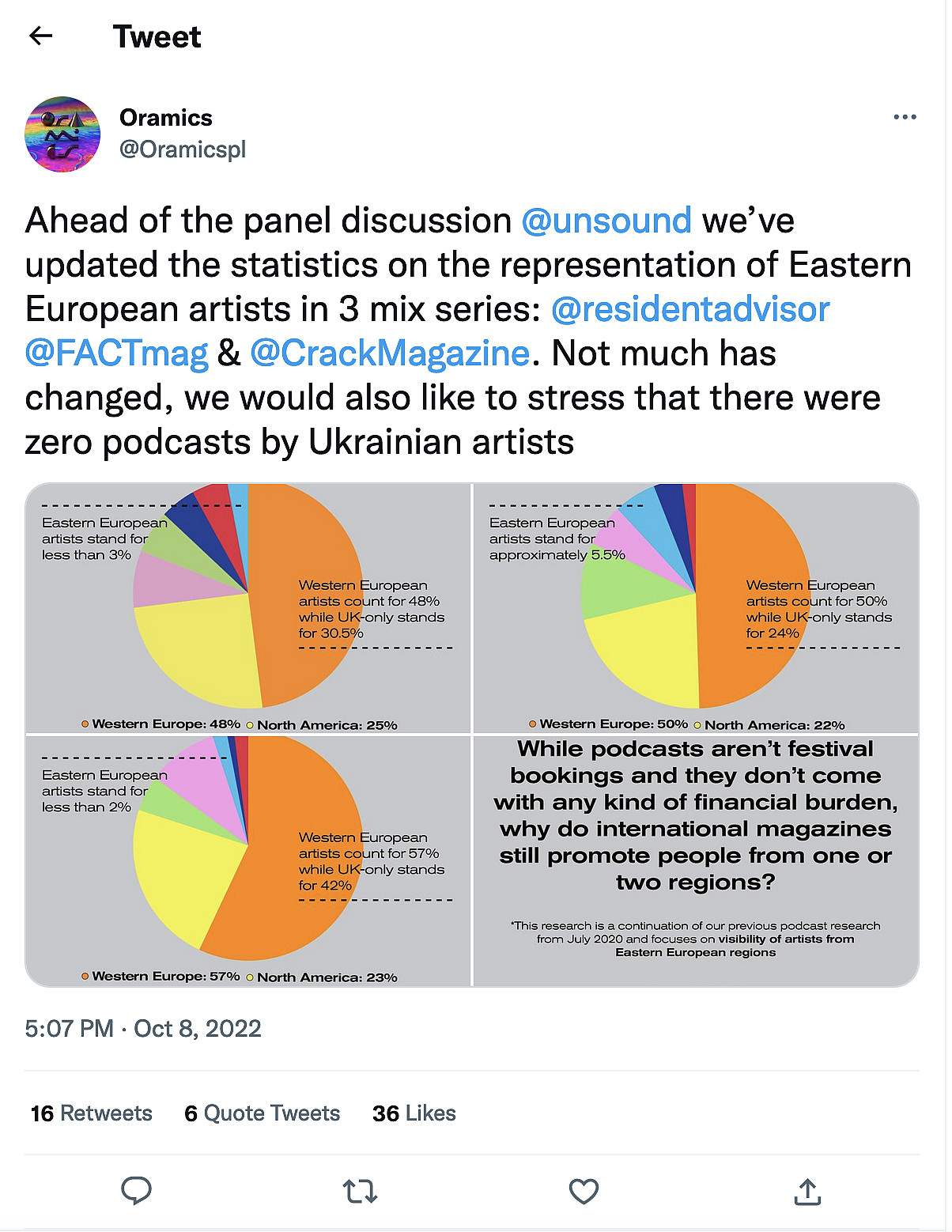
Agata Klichowska: Let's start with a touchy subject. According to a research project run by the Polish collective Oramics between 2020 and 2022, artists from Eastern Europe are marginalised in music podcasts put out by Resident Advisor, Fact Magazine, and Crack Magazine. How can musicians from this region go beyond the Western narrative?
Aleksandra Słyż: I think that geopolitical inequality is an important aspect of the modern music scene and the music industry in general. Still, I have to admit that Oramics' research really shook me. I never expected Eastern European artists to be represented so much less than those from the West.
Yet I still believe that the world is moving forward and spaces will emerge for people with all kinds of identities. I believe that's what the audience wants. If someone were to propose specific changes that would enable geopolitical equality, we'd all be happy to join in. Fighting inequality shouldn't be left to artists. It should also be a part of a solid system that's based on rules which could help us achieve equality. Now that we have defined the problem and illustrated it with research, we should start thinking about the features of a system that would require platforms such as Resident Advisor or Fact Magazine to give voice to all artists in a more equal manner.
However, we’d also need to think about the consequences of doing that. If we start promoting music based on which part of the world it's from, won't we also pay less attention to its inherent quality? Personally, I'd like my music to be promoted because it's good, interesting, or thought-provoking, and not because I'm Polish. Clearly, the solution we talked about has some downsides.
AK: You split your time between Poznań and Stockholm. Does your geopolitical identity affect your visibility in the Swedish musical bubble?
AS: I suppose it might, but I can't really think of a situation where I could feel it. In fact, it's my relationship with Sweden that affects how I'm perceived in the Polish musical bubble. I think this is a part of a larger issue with identity, which we've been dealing with in Poland for a long time. We often see ourselves as inferior and perceive things from abroad as superior. Obviously, this is false. I could name at least several incredible contemporary Polish composers and musicians.
This brings me to another question: Does the fact that I'm close to both the Polish and Swedish music scenes influence my musical identity? Absolutely. But do I want to be perceived as better or worse just because of my geopolitical identity? Absolutely not. Maybe we should try looking for a way to go beyond all these geopolitical categories, although honestly, I have no idea how to even start.
AK: Critics place your work in the context of Scandinavian drone music, spectralism, microtonality, and postminimalism. What areas of music do you find interesting?
AS: I listen to all kinds of music. Of course, I've been influenced by the Scandinavian, and especially Swedish, music scene. But when it comes to inspiration, genres don't seem that important. I find intriguing and analysis-worthy music all over the place, from classical to experimental and pop. It could be anything: a motive, a combination of instruments, timbre, a change in dynamics. Anything. When I find an interesting fragment, I like to decompose it, think about what made me like it, and if I want to get something from it.
AK: So where do you look for new music?
AS: I spend a lot of time looking for new music on the internet, usually on Bandcamp. I also use YouTube a lot, especially when it comes to sheet music. My friends also give me a lot of recommendations, which I often appreciate very much.
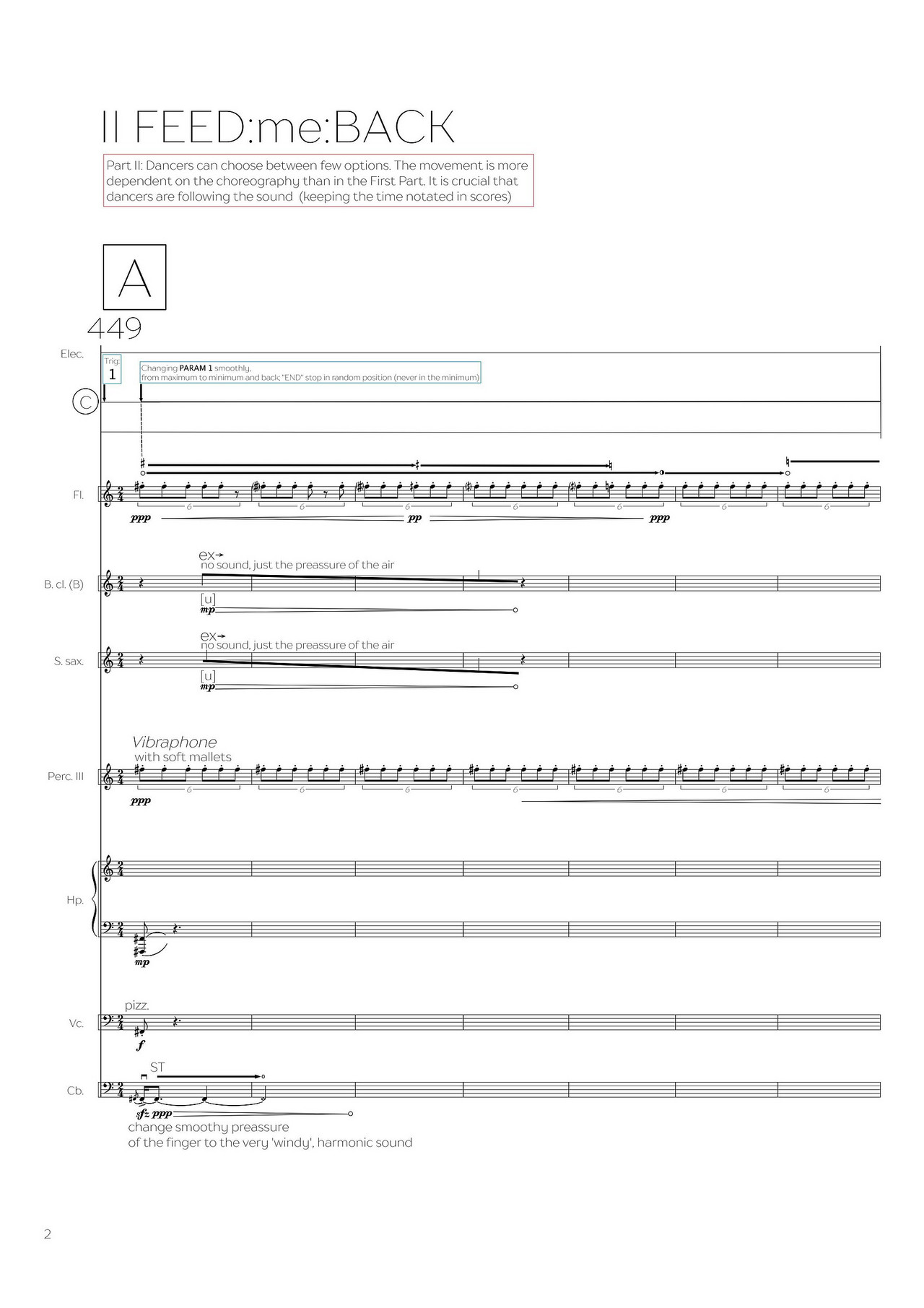
During recording sessions, my scores often end up looking more like sketches than actual scores. It's also a priority to me for everyone to feel comfortable and to know that they have my complete trust.
AK: Your music combines the digital aesthetics of distortion with organic sounds of synthesisers and the physicality of acoustic instruments. Tell us a bit about your creative methods. What's your process for working with sound?
AS: It often varies depending on the project or the tools I've chosen. There is no universal blueprint that I always follow. But there are definitely several things that always come up in the initial part of my creative process which I always pay attention to. First, there is always the main, conceptual thought behind the piece. Sometimes it’s just an intuitive idea, and sometimes it's a thought-out write-up. Another thing is the instrumentation or the timbre, basically what I'd like to hear in a given piece, the colours and textures I'd like to use – and this applies to acoustic, electroacoustic, and electronic music. Next, there's form – a key element, the most difficult one to control. The final component is harmony, which I often combine with a piece's emotional hue. Do I want it emotionally neutral? Should the sound be intense and layered or clear and simpler?
I do the composing itself on my own, but all the processes »in-between« usually involve at least a few other people. First of all, I very often work with instrumentalists, and their suggestions are always extremely important to me. As for mixing, I deal with it myself but definitely prefer to leave mastering to another audio engineer. A pair of fresh ears can often catch things that I've become numb to over months of listening to the same thing again and again. When you're releasing something, there's also a graphic artist involved, a publisher... To me, all this is a part of the creative process, it all contributes to the final effect, so I think of all these people as co-creators.
AK: What's your approach to working with performers? Do you work out different ideas with them before you finish a piece?
AS: In my mind, it's the performer who knows their skills and their instrument best. Another thing is that not every instrument is capable of achieving a specific effect in the same way, especially when it comes to contemporary performance techniques. Which is why I usually spend the first few rehearsals or the first minutes of a recording session having a conversation with the instrumentalists – trying to explain what I want to achieve, but also asking for suggestions and technique-related ideas. Of course, the score is always there, but I don't treat it as some final, ultimate, unchangeable thing. During recording sessions, my scores often end up looking more like sketches than actual scores. It's also a priority to me for everyone to feel comfortable and to know that they have my complete trust.
AK: Moving on to the subject of graphics, you often work with visual artist Maks Posio. How do you come up with the imagery for your album covers and visualisations?
AS: Most of them were and are made by Maks, who I think is a great artist and whose work I value very much. Also, I think that, over the years, we've come up with a way of working together that suits us both. It starts with a list of words and pictures I associate with a given piece, for example »cold,« »luscious,« »shimmery,« »grace,« »monument,« »silver« or »touch.« Then we talk a while about all of that and I leave the rest to Maks. Usually, this is enough for him to create beautiful visuals that perfectly complement my music.
AK: You don't just compose – you're also an audio engineer and a sound designer. How has your approach to creating music evolved as you acquired technical know-how?
AS: The order was reversed in my case. I used to work as an audio engineer in radio and at the opera house, so I learned a lot about the technical aspects of sound. Only later did I realise that it wasn't enough for me and that I need to work with sound more creatively. But to answer your question, this whole experience has a great impact on my composing methods. I deeply care about sound quality, how I record instruments, do mixing, and how it all sounds at the soundcheck. It is as important to me as the creative process, like coming up with a form or choosing the right instruments.
AK: Your first album, Human Glory, was released by Pointless Geometry, a label that specialises in publishing independent music from Poland on cassette tapes.
AS: Since this was my debut, I honestly had no idea what to expect. Justyna Banaszczyk, who runs Pointless Geometry together with Darek Pietraszewski, reached out to me with an offer to publish. I have to admit that, at that point, I wasn't really thinking about publishing anything at all. I guess I just didn’t feel ready to work with a long, 30-plus-minute form. But today I'm genuinely glad we made it. Releasing Human Glory didn't just open up a lot of opportunities for me, both project- and live-act-wise, but most importantly, it helped me grow so much as a composer.
BG II, by Pointless Geometry
BG II, by Pointless Geometry
AK: When I listen to your latest album, A Vibrant Touch, I feel as if I was watching one of Apichatpong Weerasethakul's movies. Can you imagine your music being used in some slow movie?
AS: Of course! Writing music for film or animation is a very important part of my artistic practice. And it has definitely taught me a lot. Working with images opens eyes to so many aspects of music. And indeed, slow cinema really does resonate with how I perceive music in some ways. For instance, composing is an opportunity for me to slow down the action, to somehow force the viewers – or in my case, the listeners – to immerse in a certain reality, and, at the same time, show them that music doesn't have to be perceived linearly, but more... holistically? It's about the need to zoom out to better understand the meaning of a given composition.
Healing, by Aleksandra Słyż
Healing, by Aleksandra Słyż
AK: Your albums published by Pointless Geometry and Warm Winters Ltd. weren't just digital releases, they also came out on physical media. Which one's your favorite?
AS: I’m not sure if I have a favorite medium. They all have things I like, but they're also not without downsides. However, what I’m sure about is that the type of medium matters in the context of a specific release. And that I can shape the material so it complements the medium.
AK: Your musical experience goes beyond publishing albums. You’ve also created interdisciplinary projects using motion sensors, such as multimedia spectacle »SYNESTE7JA.1« (2017–18) and multichannel interactive sound installation »Hypercycle« (2021). What's your view on the performative nature of your pieces?
AS: Correct, I've been working with motion and sensory technologies for many years. I find the human body so fascinating and inspiring. I absolutely love watching contemporary dance improvisations. They tend to have this primal, extremely magnetic energy which, to me, is the essence of performativity. And that's what I try to put at the center of my interdisciplinary works: The human body which, as moving, expresses a whole range of emotions.
AK: You've said in one of your interviews that you were inspired by Pauline Oliveros' practice of deep listening. How does that manifest itself in your music?
AS: I don't know if I can come up with specific examples of where it shows up in my music. It's more that Oliveros' practices influence how I perceive sound and, more importantly, how I perceive background noise. Deep listening has also definitely taught me how to consciously listen to soundscapes.
AK: You've performed at big international festivals, such as Unsound and ORF musikprotokoll, but the premiere of your latest album took place in Chmury, a small local club in Warsaw. What kind of venue suits you best?
AS: I believe that every space has something to offer. I like small venues because of the special kind of intimacy you can create there and the particular type of silence you can only achieve in smaller rooms. Silence in a big room is a whole different thing, but don’t get me wrong, it can also be a huge advantage. I also appreciate bigger venues for how they amplify sound, how massive it can get.
Strangely, the bigger the room, the easier it is for me to play and the less stressed out I get. I don’t really know why. Maybe it's because there’s usually quite a distance between me and the audience, so I can’t see anyone. Perhaps that’s what makes me feel more comfortable?
AK: Now for a mandatory New Year question. What are your plans for 2023?
AS: It looks like it will be a very busy year. Besides performing at CTM festival, the Polish Radio Symphony Orchestra has commissioned a composition from me, which will be performed at the Festival of Premieres in March. It's a real honour to be able to work with such a renowned orchestra.
In the meantime, I'll be taking part in an artistic residency at the MeetFactory in Prague, and after that, I'll be working on music for a movie. And this is just a part of my plans for this year. There's a lot going on for sure.
AK: What can we expect from your performance at CTM?
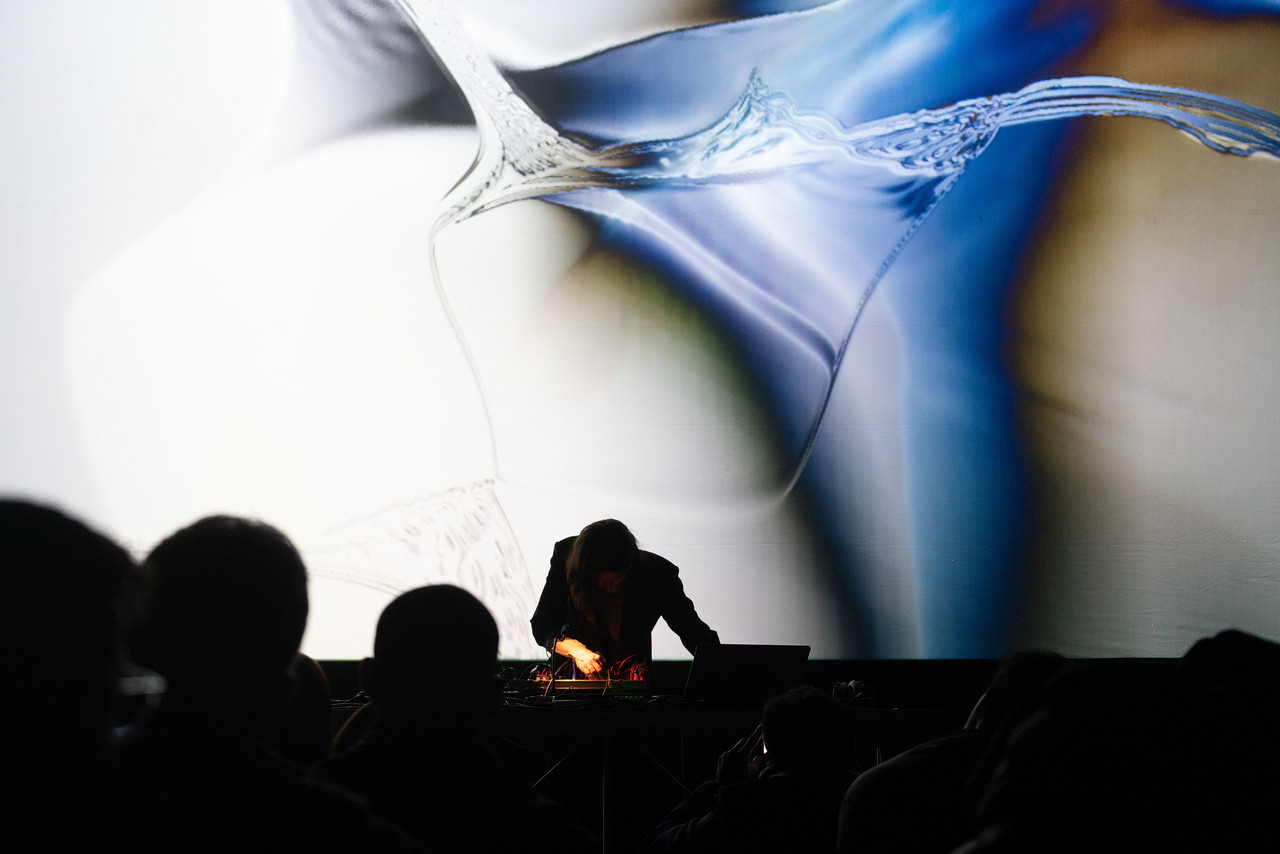
AS: During the SPATIAL LIVE X CTM 2023 event we're going to perform one of my latest compositions, »Softness, Flashes, Floating Rage,« the last track of A Vibrant Touch, released last year by Warm Winters Ltd. The piece will be re-composed and adjusted to the new sound environment, as it will be performed on an incredible multichannel 4DSOUND system, located in the Berlin-based MONOM studio. I'll have a chance to get to know it during a short artistic residency in January, which is also organized by CTM and supported by SHAPE+. It's a unique opportunity for me, especially because that’s the very first time that I'll be able to perform A Vibrant Touch with two brilliant instrumentalists, saxophonist Gerard Lebik and cellist Judith Hamann.
AK: For the final question I have something submitted by my colleague, who is a true fan of your music. What's your favorite interval in the equal temperament system?
AS: That’s a difficult question! But I think that every interval can shine if you put it in the right context.
Agata Klichowska is a researcher, translator, editorial board member of the new music magazine Glissando, and librarian at the Children’s Book Museum in Warsaw. They like to search for sonic soothers and go around in circles.
This text was commissioned as part of CTM 2023 – Portals. Translated from the Polish by Agata Klichowska.
Aleksandra Słyż is supported by SHAPE+ which is funded by the European Union. Views and opinions expressed are however those of the author(s) only and do not necessarily reflect those of the European Union or the European Education and Culture Executive Agency (EACEA). Neither the European Union nor EACEA can be held responsible for them.