Punctuating the political maelstrom of the last couple of years, fresh incidences of social media controversy have erupted every few weeks within the electronic music industry. As early adopters of technology, we were already acclimated to this; our communities are diverse and geographically scattered, so we quickly learned to exploit the connectivity provided by the internet and social media. We also greedily accepted the opportunities to amplify our own causes, and happily used them to help self-promote and brand-build, but also to virtue signal, commentate, weigh in, criticise, spout off. Flash points flared up when a Resident Advisor documentary on Nina Kraviz featured her naked in a bathtub; when the work of UK experimentalist William Bennett was accused of neo-colonial fetishism; and through online spats over uncredited sample credits, cultural appropriation, and Discogs resale prices.
What has come to best illustrate the full extent of call-out culture’s capabilities, however, is the cautionary tale of Lithuanian tech-house producer and DJ Marijus Adomaitis. In the wake of his demise, his best-known artist name, Ten Walls, still elicits scorn as a noun and a verb; to have »done a Ten Walls« is to have witlessly unraveled your reputation and career in the amount time it takes to type and publish a status update. Since firing off three instantly-viral posts on his private Facebook profile that equated homosexuality to paedophilia and bestiality, Adomaitis has tried but not succeeded in shaking off the industry pariah status that those remarks brought him.
In the same year that Ten Walls buried himself, British journalist Jon Ronson declared in his book So You’ve Been Publicly Shamed1 that society was »at the beginning of a great renaissance of public shaming.« Ronson experienced a social media »pile-on« first-hand when he became aware of a stranger’s Twitter profile using his likeness and name. He traced the genesis of the profile to a comment on a video he had made for the Guardian about spambots, and became perplexed, then aggravated, as his repeated requests to cease and desist were simply ignored. The people responsible for the fake account did, however, eventually agree to a filmed face-to-face meeting, but it was a frustrating encounter that only served to drive the real Ronson’s already-increasing fury towards apoplexy. After he uploaded the video of the heated encounter to YouTube, Ronson initially felt warmed by comments from his followers that mirrored his own outrage. He then watched with increasing concern as the tone of tweets directed towards the impostor account escalated from harsh words to harsh insults to threats of physical violence. The ferociousness worked: the fake @jon_ronson profile was neutralised and deleted.
It barely matters that the content of the tweets posted by the spambot, and the motivations of the people who created it, were both bizarre and banal; Ronson’s giddiness responded instead to the harnessed community power of this public shaming. First his adversaries, and then increasingly the public enemies of other individuals with their own causes were, he declares, »being brought down by people who used to be powerless.«
The act of calling out is disruptive, and not only to the instigator and the subject; »call-out fatigue« is cultivated every time there is a race to break a story, to reproduce and reshare its offending material, and each time a compulsion to trumpet one’s own views in relation to its content is indulged.
Yet not even the spectre of Ten Walls and the threat of being brought down in the court of public opinion have been enough to discourage inexcusable behaviour. The global #MeToo phenomenon struck many sectors of the music industry, including our own niche. In addition to this 2017 was overwhelming for its noise and ugliness. Call-outs ranged from the absurd »Saunagate« scandal revolving around French DJ Jeremy Underground to grim allegations of sexual assault against the Gaslamp Killer and Ethan Kath of Crystal Castles. Along the way, the far-right-leaning sympathies of Distal and Funk D’Void were exposed, and there were too many spirit-crushing exposés of misogynistic attitudes, including of course the sexist remarks made by the head of hyped house collective Giegling Records, Konstantin, to a female journalist from Groove Magazine. As the year’s controversies rumbled on tirelessly and the call-out cycle (call-out/denial/receipts/ backtrack & short apology/backlash/news coverage/public apology) continued to turn, predictably and cynically, scattershot opinions began to coalesce around criticisms of call-out culture in general.
The act of calling out is disruptive, and not only to the instigator and the subject; »call-out fatigue« is cultivated every time there is a race to break a story, to reproduce and reshare its offending material, and each time a compulsion to trumpet one’s own views in relation to its content is indulged. Much of the criticism against the usefulness of call-out culture is less concerned with the efficacy of the act than the exhibitionist nature of the prosumer outrage cycle it encourages. In a 2011 blog post titled »Come one, come all! Feminist and Social Justice blogging as performance and bloodshed,« the writer Flavia Dzodan bristled at the »unquestionably reductionist« nature of call-out culture. It was, she wrote, »the most toxic aspect of blogging.« Dzodan continues that »call-out culture might, at times, dangerously resemble bullying. However, unlike bullying, call-out culture is part of the performative aspect of blogging. Unlike bullying, a call-out is intended for an audience.«
Several years later, activist Asam Ahmad put forward the alternative approach of »speaking privately with an individual who has done some wrong, in order to address the behaviour without making a spectacle of the address itself,« which he names as »calling-in.« The case in favour of calling in of course only functions under the presumption of respectful dialoguing, and under the certainty that the problematic behaviours aren’t criminal or threatening. Even so, with no risk of public consequences, assessing any accountability measures becomes the sole responsibility of the transgressed, a strategy that may prove effective in some cases but unlikely in the most reactive ones.
In this pursuit of accountability, the necessary truth is that the originator of the call-out often needs to expose themselves, dredging up uncomfortable moments, circulating offending material, and then girding themselves for repercussion. In the case of Glaswegian DJ and WOC Sarra Wild and her appearance in a documentary produced by Boiler Room about the city’s music landscape, her attempts at a »call-in« in a dialogue with the popular streaming platform over their decision to cut a sentence of hers – in which she stated that Glasgow was »no longer a white man’s techno scene« – was initially met with silence.
For the individual who experiences exclusion and silencing, or abuse and harassment, the democratising – and viral – potential of a tweet or blog post may be their only means of recourse. »Most of the people labelling call-out culture toxic are white and cisgender, just saying,« wrote Busang Senne in the article »Man, F*ck Your Pride: Why Call-Out Culture Isn’t Toxic for Cosmopolitan South Africa.« She continues, »The history of call-out culture started with black people, POC, and queer communities using it as the last line of defence in engaging with trolls online. To erase that history and assume it’s a space used solely for getting attention is to centre your feelings, and the feelings of trolls, above the trauma of marginalised groups. Derailing the conversation to focus on how you’re affected by marginalised groups’ reactions to oppression is 0% helpful because FYI, it’s not always about you, boo.«
The inefficacy of Sarra Wild’s »call in« left her no choice but to call out. She did so on her public Facebook profile, and after receiving a dismissive note from Boiler Room that confirmed they »at no point set out to highlight any negativity« in the documentary and doubled down on the censoring of her words in »the ›white men‹ phrase would have caused all sorts of political repercussions,« she exposed them again. In an official public apology that followed, Boiler Room finally acknowledged that »the effect of what [they] did with this edit was to silence the voice of a woman of colour speaking about the history of racial and gender bias in her city. It inadvertently reinforced a discourse where perspectives of marginalised people are erased, while turning up the volume on the inequality and discrimination so prevalent across the music industry.«
Cases of calling out have also appeared to provoke thoughtful recognition of misconduct on the part of the accused.
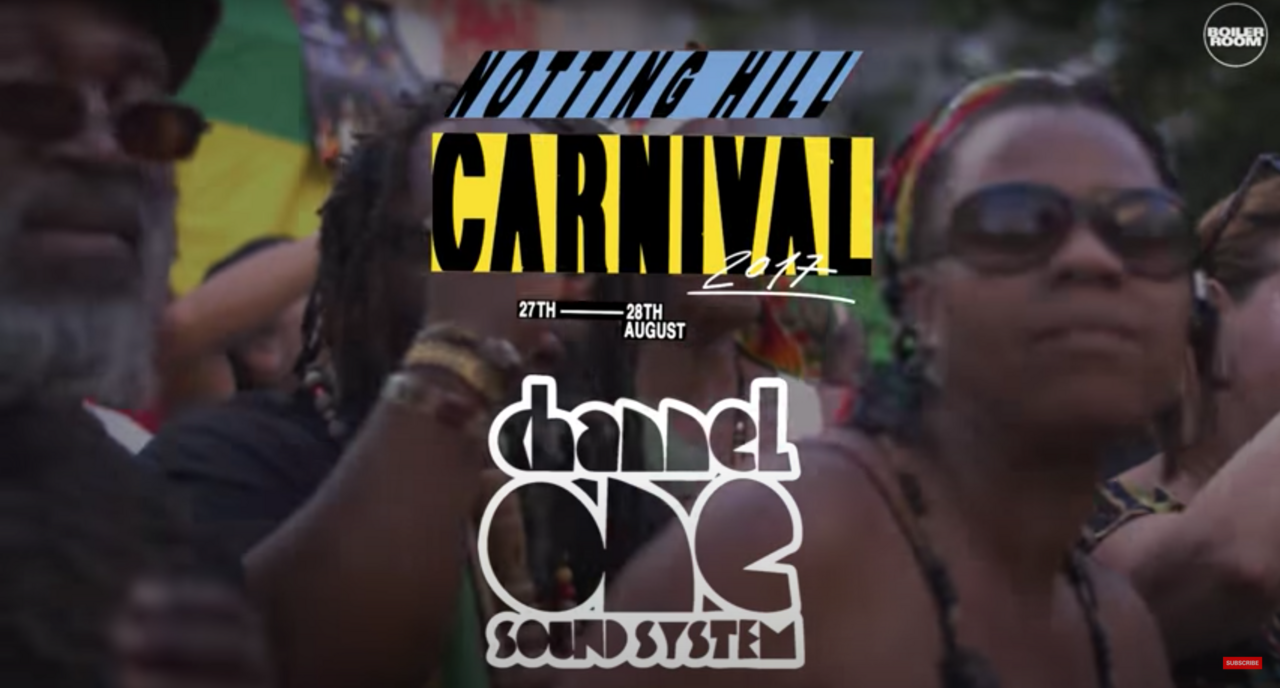
As was witnessed with another Boiler Room controversy this year, a chorus of community support can be essential to navigating this messy, incomplete type of activism. The announcement in July that Boiler Room had the winning bid for a grant of almost £300,000 from Arts Council England to broadcast the Notting Hill Carnival was met with ardent criticism best crystallised by an anonymous writer, pen name Boil The Room, in a widely-shared article published on Medium that questioned what they saw as »an overt attempt to commodify and profit from a celebration of the culture and heritage of the British West Indian community« while the core organising committee of Notting Hill Carnival remained »criminally underfunded.« The annual two-day free event in West London was born out of the turmoil of race riots in the mid-1960s involving London’s Caribbean community, and the gulf between this and the racial and social background of Boiler Room’s founder Blaise Bellville – who was once infamously included in a 2011 tabloid newspaper article titled »Britain’s 50 most powerful posh people under 30« – once again highlighted a long-running criticism of the platform; that its commercial success has come at the expense of dance music’s black roots and unpaid artist performances. Boil The Room posited that the Notting Hill Carnival deal would perpetuate »Boiler Room’s PR campaign, whitewashing black culture into a palatable consumer product and creating lucrative marketing opportunities.« The platform’s response was to embrace transparency: an extensive statement published on their website announced their intention to suspend the use of funding until the 2018 edition of Carnival, and in the meantime, »to guarantee total transparency over every penny of public funding given to this project [and] operate an open book policy with any interested party over the budget.« They also pledged to work in partnership and review the budget together with Carnival stakeholders and to »re-approach anything required to ensure that this initiative is of real benefit to Carnival and their respective members.«
In the aftermath of the Harvey Weinstein exposé, as the global wave of #MeToo solidarity resonated with women across all sectors of the music industry, both Björk and Alice Glass of Crystal Castles credited the courage of women who came forth with their stories of oppression and also shared their own harrowing accounts of abuse, harassment, and humiliation at the hands of former male collaborators. Just one of the concrete initiatives that sprung out of broader discussions about gender inequality and harassment was a dedicated UK telephone helpline created for women in the electronic music industry intended to help combat sexual harassment.
Cases of calling out have also appeared to provoke thoughtful recognition of misconduct on the part of the accused. As 2017 drew to a close, a new hosting job secured by caucasian UK grime figure Logan Sama to head up BBC Radio 1Xtra’s weekly grime show was snatched away from him just two days before he was due to begin. TwinB, a black broadcaster from the same station, cited a series of tweets by Sama from 2011 that was heavy with offensive words towards women generally and women of colour in particular. Although the call-out was precipitated by a supposed rivalry between the two, TwinB’s tweets were direct: »You can’t be operating in black culture and be chatting like that freely, especially when in discussion about the cultural origins of the music you play! And especially If you’re a voice and communicator within black british culture.« An apology statement by Sama after his firing was a sober admission of wrongdoing: »I understand [the BBC’s] decision and agree that these comments are indefensible, regardless of their context.«
Additional positive changes that have emerged anecdotally may well have been propelled by a broader climate of consciousness-raising that call-out culture has participated in. There is the Berlin-based editor of an online electronic music magazine who implemented his own system to positively advantage writers from underrepresented communities when delegating assignments, and the well-regarded DJ and producer who has a baseline requirement of gender diversity on festival lineups that must be met before he will consider any booking requests. It’s not entirely coincidental however, that in both these cases it is a cisgendered European man who holds a position of influence that allows him the freedom to choose to effect change from within.
Our community’s ability to mobilise and amplify a call-out is demonstrably strong, but until we are able to critically engage with some of the myths and outdated truths that we perpetuate about ourselves and our industry – that a capitalist imperative is not welcome; that our taste for nostalgia isn’t a fetish; that a marginalised identity in the real world won’t marginalise your prospects in our world; that racism, sexual predation, classism, misogyny, and other structures of oppression don’t exist, let alone thrive, here — the dragnet of social media will continue to catch, amplify, and then demand a reparative action on our behalf.
Christine Kakaire is an Australian-born, Berlin-based music journalist, editor, and speaker. Her words, work, and voice can be found on Pitchfork, Red Bull Music Academy, Red Bull Radio, Crack Magazine, Boiler Room, Ableton, and Resident Advisor.
This text was originally published in CTM Magazine 2018 – Turmoil.
- 1
Ronson, Jon. So You’ve Been Publicly Shamed. New York: Riverhead Books, 2016.