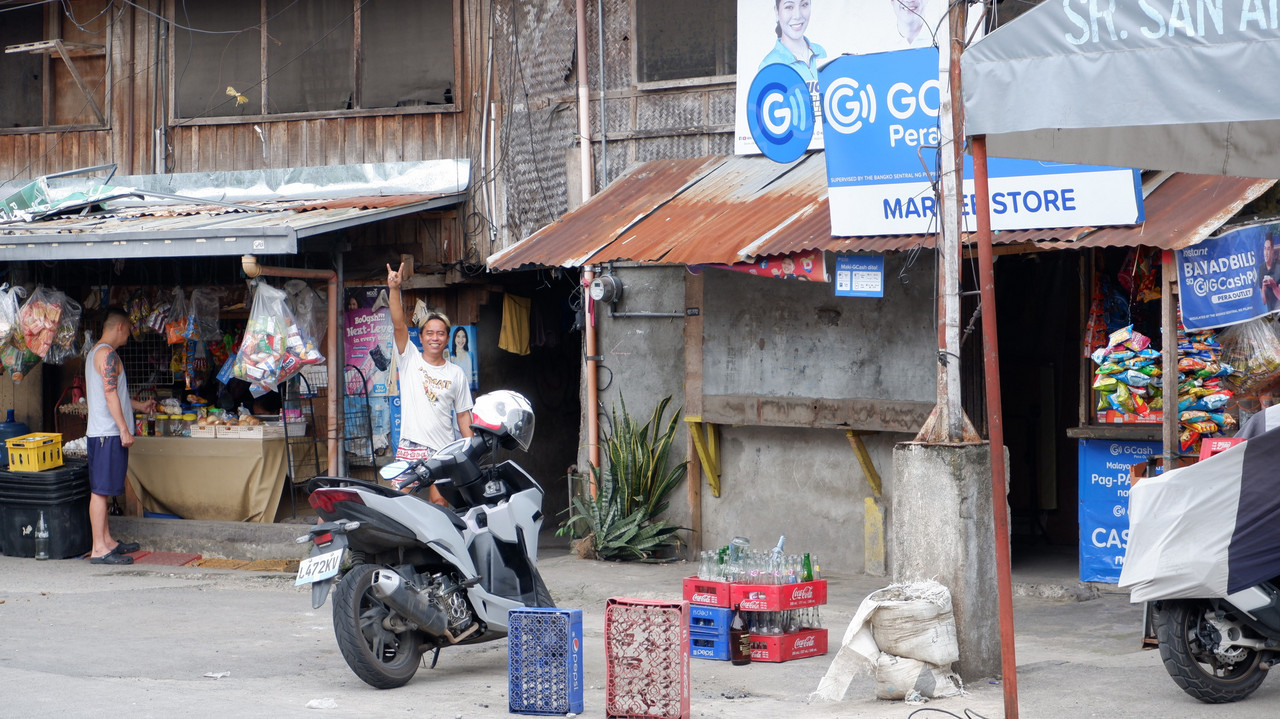
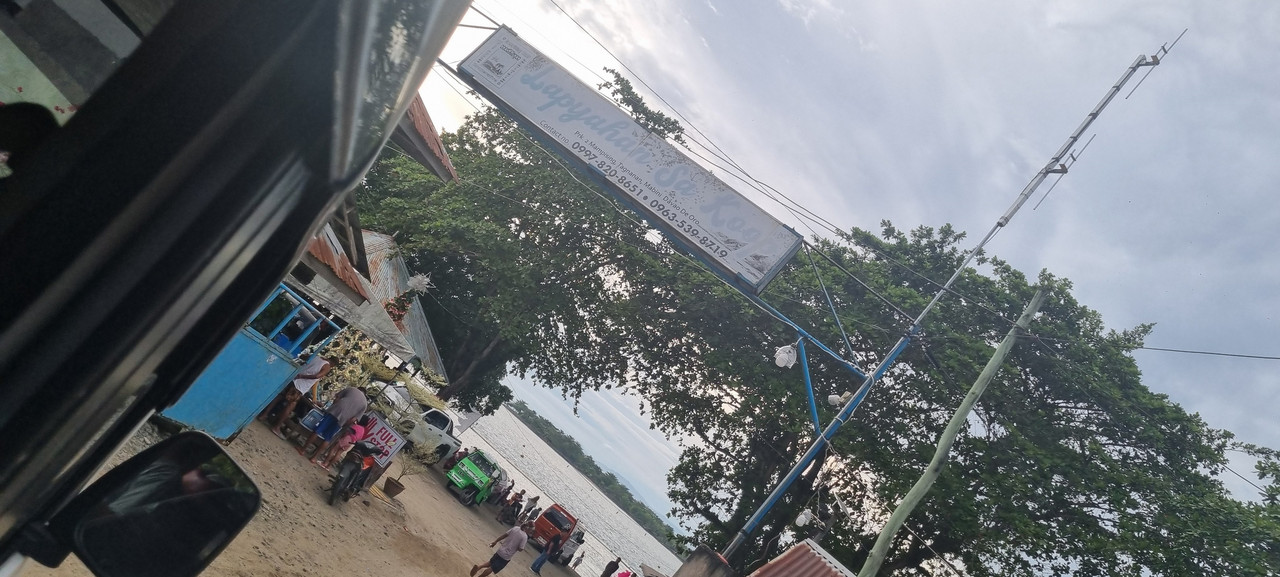
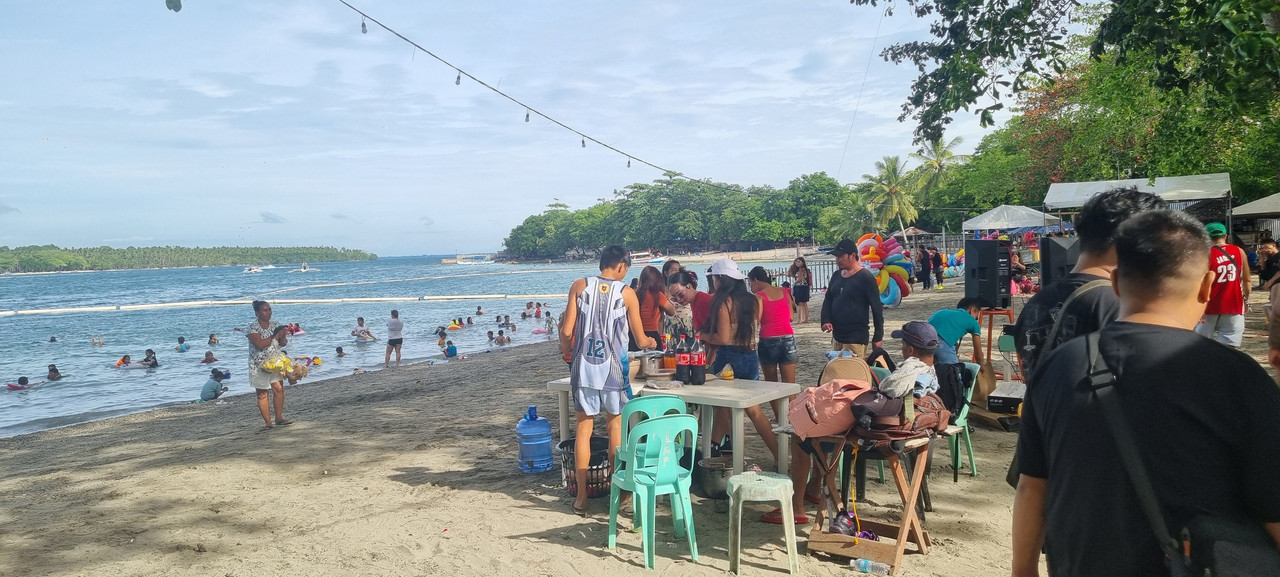
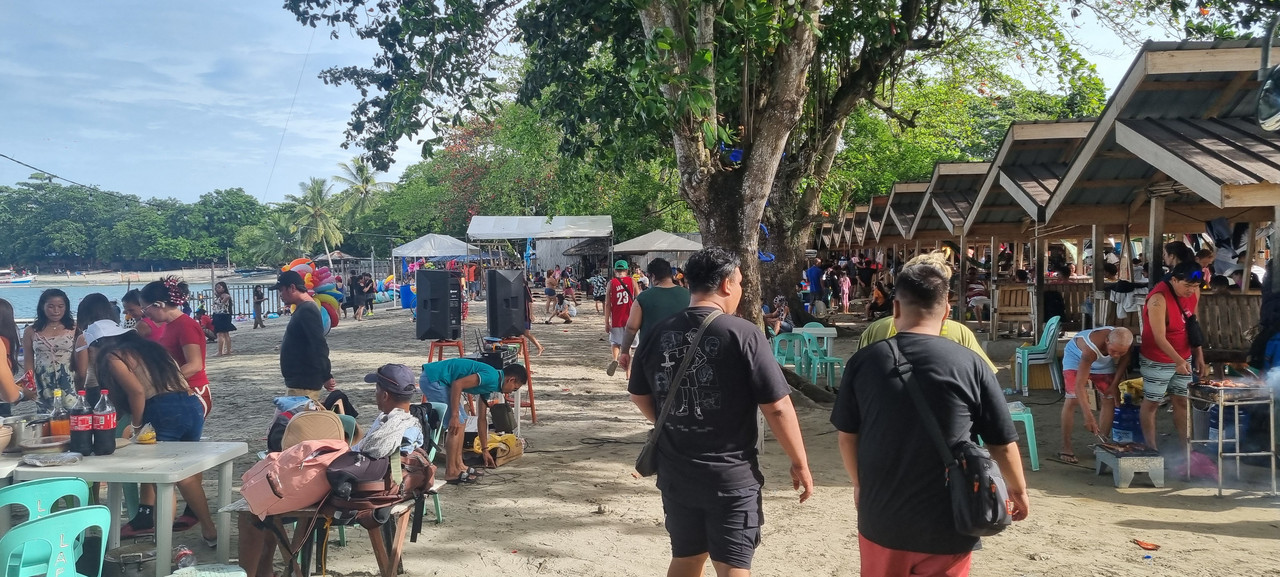
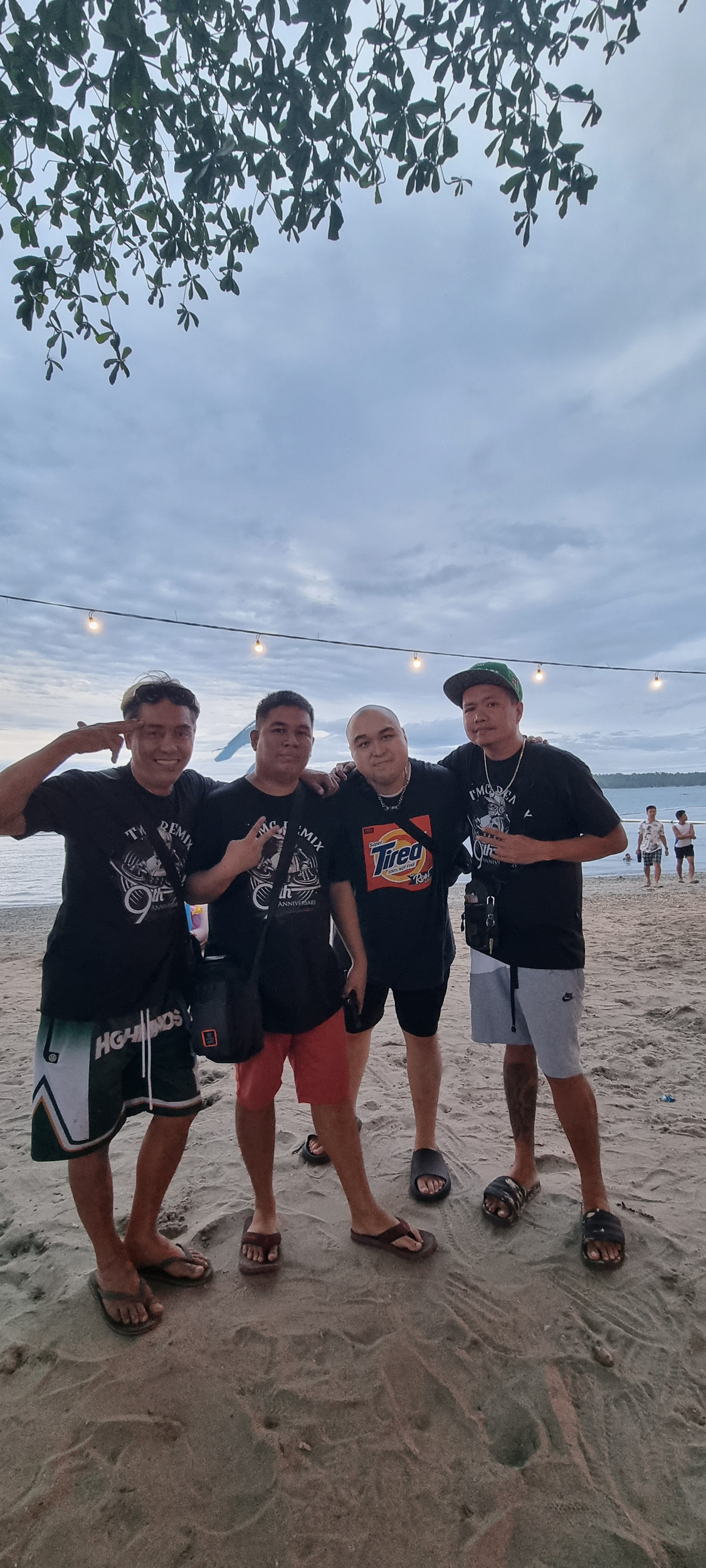
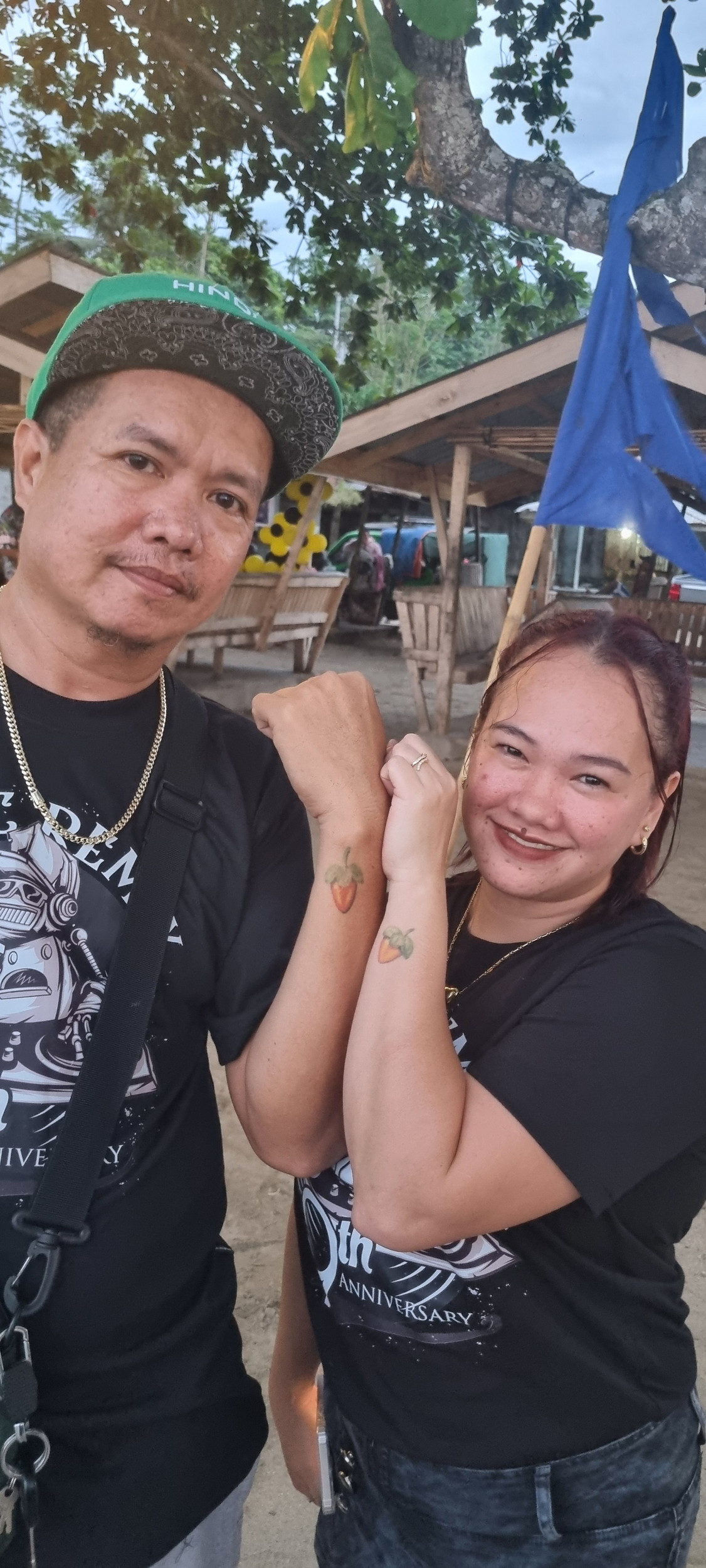
It was already past noon when we arrived at Lapyahan Resort in Mabini, Mindanao the beachfront thick with speaker stacks, foam machines, and the low hum of anticipation. Colourful vans kept pulling in as the sun hung overhead, families unloading lechon, trays of adobo, rice, spaghetti, food passed hand to hand without ceremony. Children ran barefoot across sand already marked by cable lines and extension cords. DJs warmed the afternoon with light sets while the beach filled slowly, bodies drifting in and out of shade, laughter folding into soundchecks and mic tests. Nothing about the setup suggested spectacle for an external gaze. This was not an event being prepared for documentation. It was an event being prepared to be lived.
By four in the afternoon, music was already moving people but not yet pushing, rather teasing, circling, holding something back. Tracks bled into one another without urgency. People moved casually: small steps, shoulder sways, head bobs. The beach remained porous, with participants arriving and leaving freely. Some danced briefly, then returned to food or conversation. Others watched from the edges. There was no visible threshold separating performer and audience, no choreography of attention. DJs played as if the crowd would arrive when it was ready.
As daylight softened, the crowd thickened. Aunties arrived in groups, laughing loudly. Kids hovered near the foam machines, waiting for the moment they would be switched on. Older relatives claimed plastic chairs at the perimeter, watching with amused patience. Dancers, some clearly seasoned, others tentative, tested the ground, stretching calves, tracing small circles in the sand. What emerged was not a homogenous crowd, but a layered social field: different ages, degrees of commitment, and relationships to the music occupying the same space without friction.
Budots began to surface not all at once, but in fragments: rhythmic patterns slipping into other genres, then disappearing again. Familiar textures arrived briefly, then retreated. The effect was not a declaration but a buildup, a pacing of collective readiness.
When DJ Ericnem, DJ Danz, and DJ Love stepped onstage, attention snapped into place without instruction. Foam machines burst into the air, transforming the beachfront into a shifting, semi-opaque field. Circles formed instinctively, without anyone calling for them. Movements sharpened, ridiculous and precise all at once. Bodies synchronised not through choreography, but through shared recognition. No one stood apart. No one performed cool. When budots finally landed fully, bodies locked into a shared pulse. Steps mirrored steps. Laughter broke through the bass. People moved in unison without attempting to look impressive.
In that moment, the beach became a single moving mass, bound not by status or spectacle, but by the overwhelming urge to dance together.
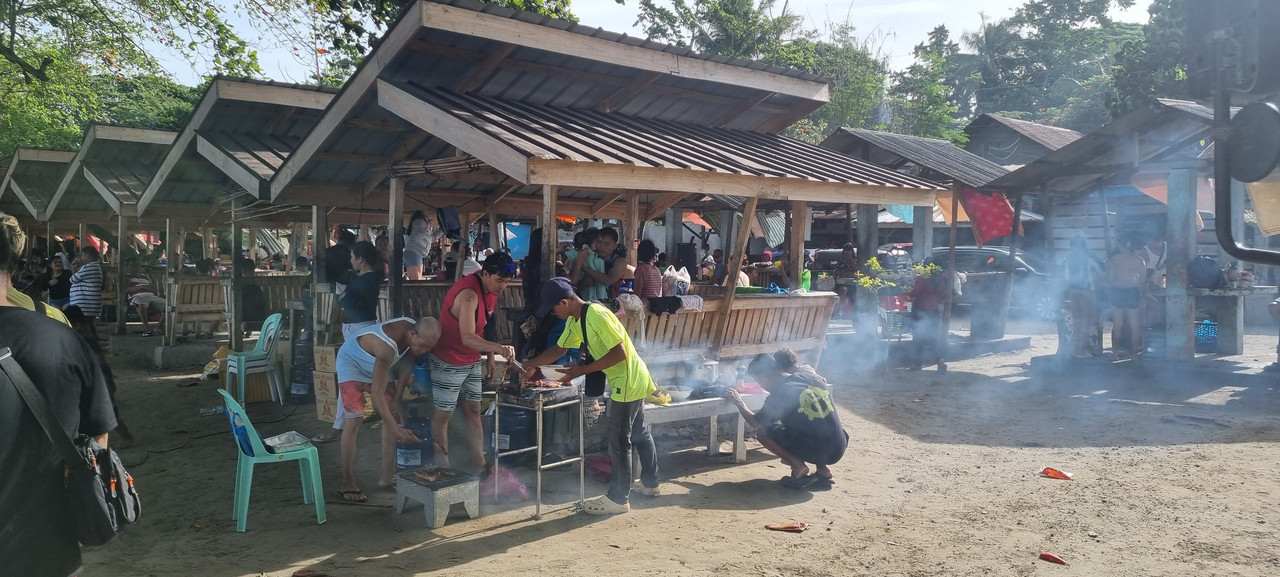
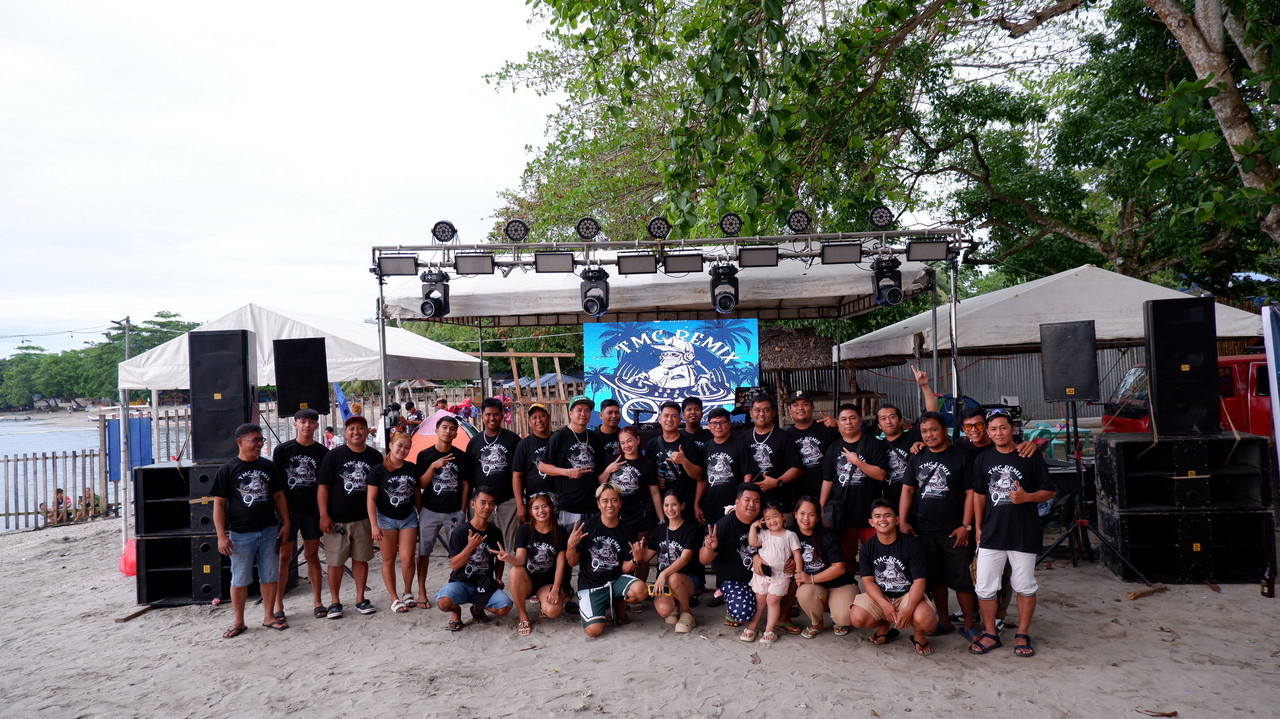

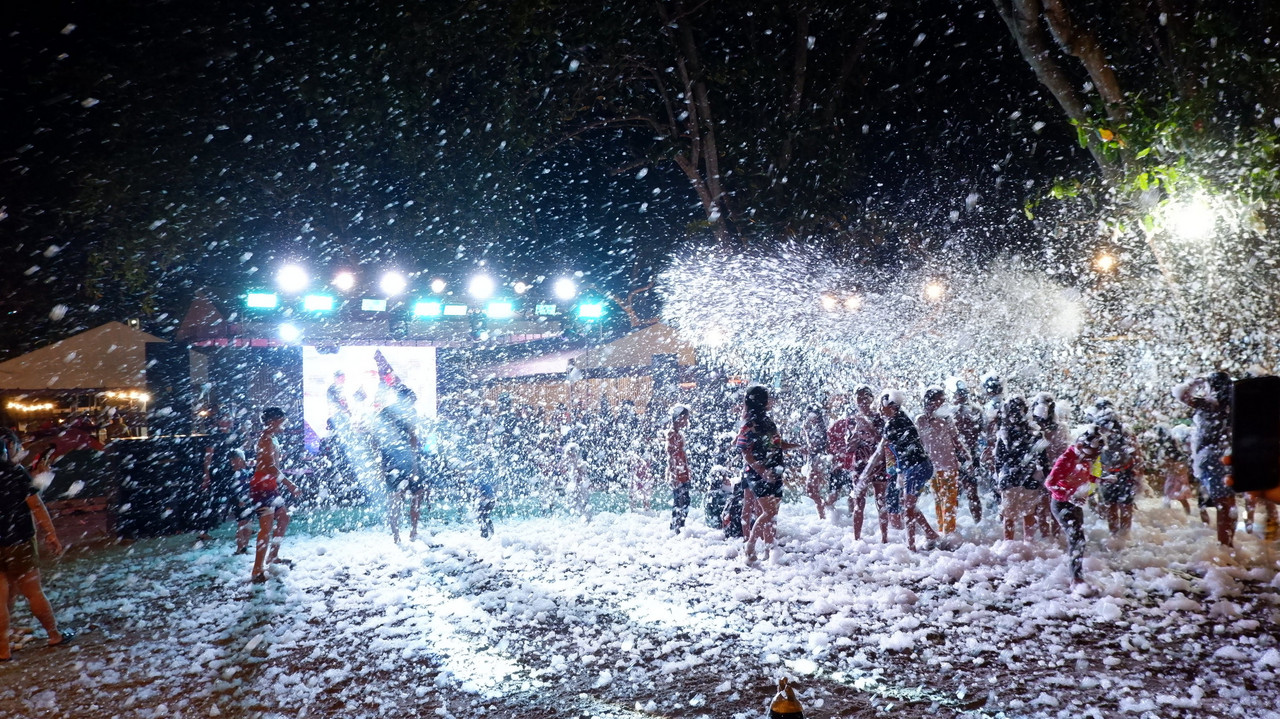
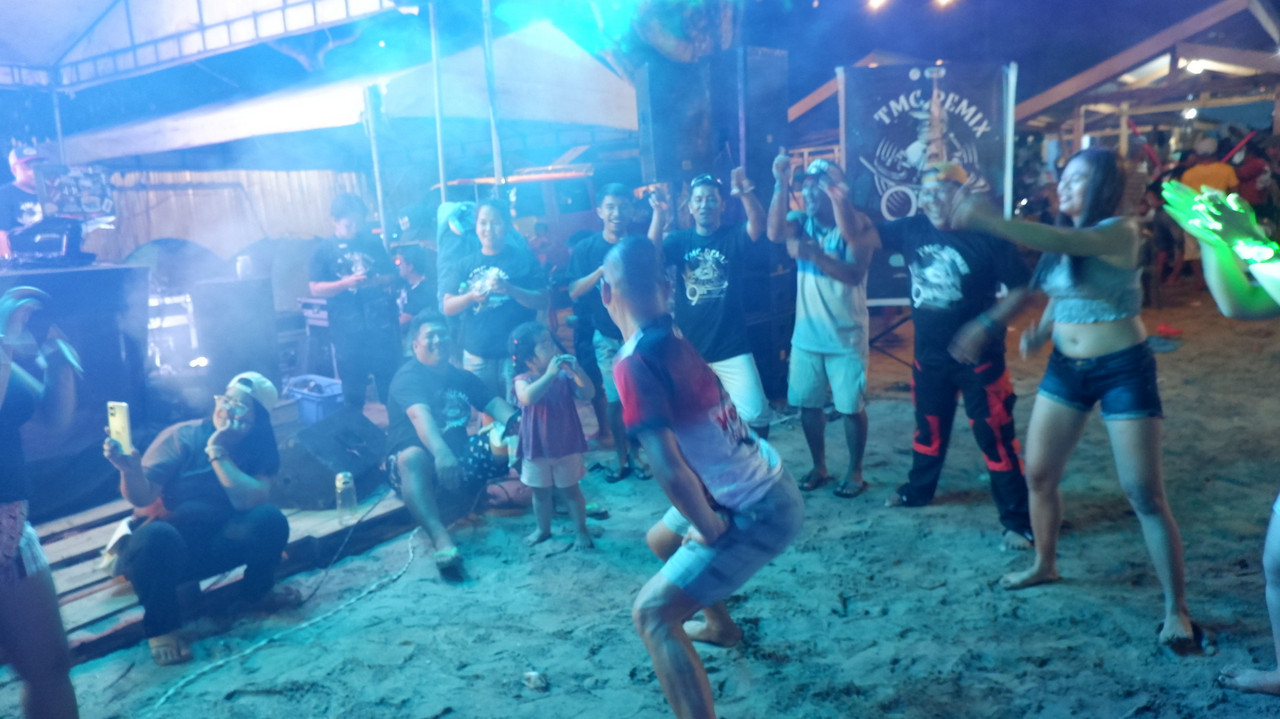
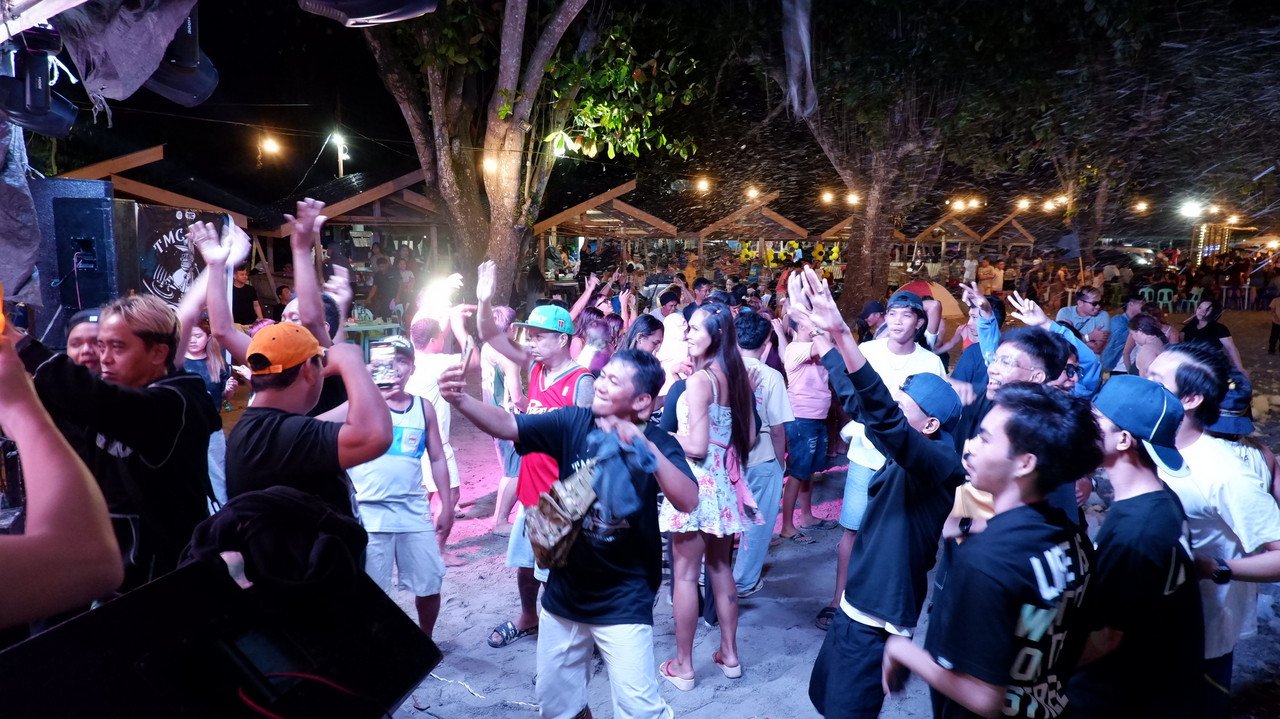
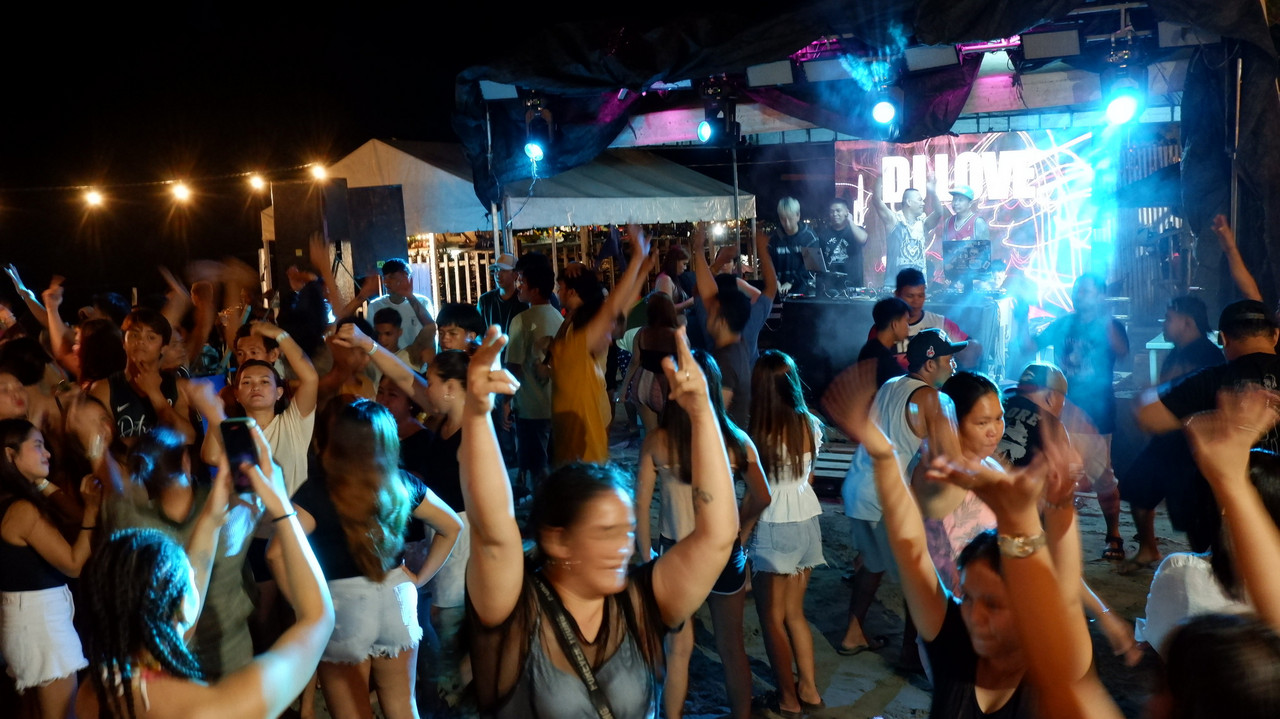
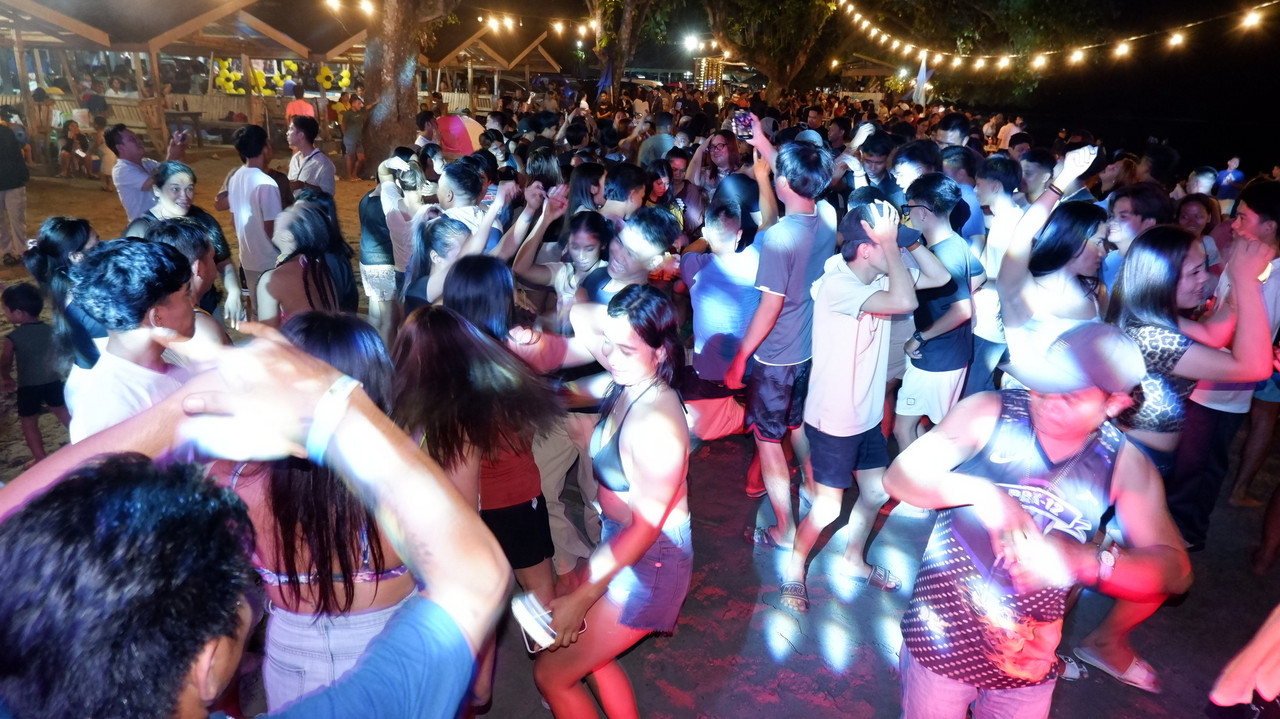
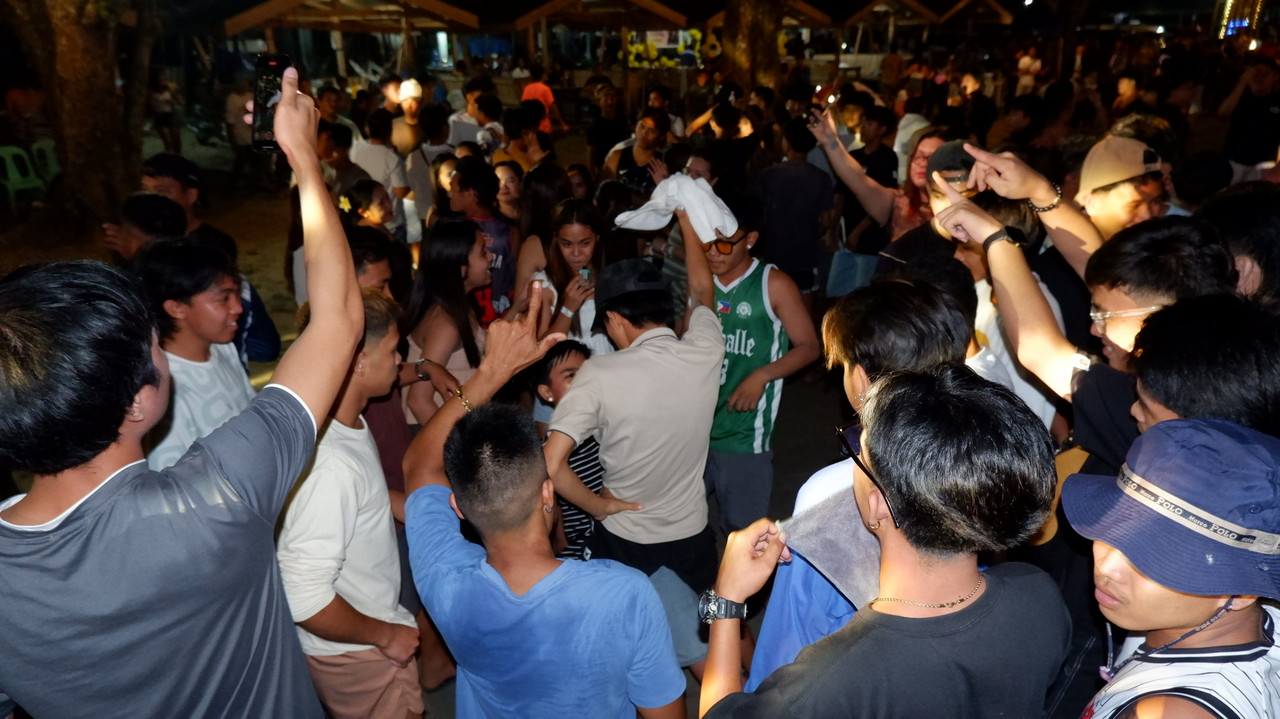


What struck me was not how extraordinary budots appeared in this setting, but how unremarkable its presence felt. There was no hesitation, no need to justify its place in the lineup. Budots did not land as novelty. It landed with familiarity. This ease stands in sharp contrast to how the genre has often been treated elsewhere: dismissed as noisy, unserious, something to be laughed at or held at a distance, even within Manila and parts of Mindanao’s capital city, Davao, itself.
This contrast surfaced repeatedly in conversations with Harry Barnett of We Can't Relate, a Davao-based curator whose work sits at the intersection of local nightlife and international-facing programming. Harry points to a familiar turning point: broader shifts in perception accelerated when budots circulated through platforms like Boiler Room, when it was framed and affirmed beyond its point of origin. What changed was not budots itself, but the conditions under which it was heard.
Harry also returns to something less glamorous but more decisive: environment. Sound systems, room layout, the removal of tables, the orientation of bodies toward the DJ, these are not secondary to genre. They are part of how a dancefloor becomes permissive. The beach in Mabini did not need to be redesigned to accommodate this; the conditions were already there. No tables to hide behind, no VIP sections to define hierarchy, no expectation of restraint. Families, dancers, elders, and children moved together without self-consciousness. Budots functioned less as a genre than as an affective solvent: a mechanism that dissolved inhibition and redistributed permission, to move badly, to move loudly, to move together.
If budots can reorganise bodies so completely in one place, the question is what happens when that force begins to move across places shaped by taste, capital, and institutional recognition. Who carries it, who frames it, and who benefits from its circulation? What frictions emerge when a practice grounded in intimacy and locality enters spaces that demand curation, coherence, and explanation?
This piece does not attempt to stabilise budots through an origin myth or definitive definition. Instead, it tracks what budots does as it travels: how a sound built under constraint becomes globally legible, how it is translated and mutated, and what responsibilities surface when collective joy becomes transportable.
Not Invented, But Named: How Budots Became a Genre
Budots did not emerge in a vacuum, nor did it appear suddenly as a discrete musical invention. In group conversations with founding members of Tagum Mix Club, participants repeatedly emphasised that sounds resembling what is now called budots were already circulating across Cebu, neighboring islands, and other parts of the Visayas and Mindanao in the early 2000s. These sounds were often described simply as »Pinoy Techno« (Tekno) or fast electronic dance music, played in discos, community-focused »barangay« events, and mobile sound systems. They shared recognisable traits: high tempos, rhythmic insistence, an orientation toward mass participation, but moved without a fixed name, genre identity, or shared narrative.
What is striking in these recollections is not the desire to claim primacy, but the ease with which participants situate budots within a broader ecosystem of Filipino electronic practices. Tagum Mix Club members are careful to acknowledge that Davao was not the only place where fast, bass-forward dance music existed. Instead, they describe a period of overlap and pragmatic adaptation, where producers and DJs absorbed foreign electronic influences, regional disco culture, and local listening habits, shaping them through what worked on the ground.
The distinction that repeatedly emerges is not between origin and imitation, but between sound and naming. Albert Oponda, a Davao-born/Manila-based DJ, who encountered budots through college and the Davao dance community around 2010 to 2011, recalls the tiw-tiw sound as the earliest sonic marker. Over time, he began hearing connections between budots drum patterns and everyday street percussion, the rhythms of children drumming and the cadence of jeepney rides. For him, budots was less something discovered than something gradually recognised within ordinary listening environments. While related forms may have existed elsewhere, Davao is consistently described as the place where dispersed practices cohered into something socially legible as budots. This was not a moment of formal declaration, but a gradual consolidation that unfolded through shared workflows, remix practices, and the slow accumulation of scene infrastructure.
Tagum Mix Club members describe long nights after discos, working on tracks using low-powered computers with limited resources. Learning was collective and iterative: one person discovered a technique, another adapted it, others tested it in live settings. Decisions about what worked were not made in abstract musical terms, but through embodied feedback, crowd reaction, movement, facial expression, energy on the dancefloor. Over time, certain tempos, drum structures, and melodic gestures reliably produced collective response. These patterns were repeated and refined because they functioned socially.
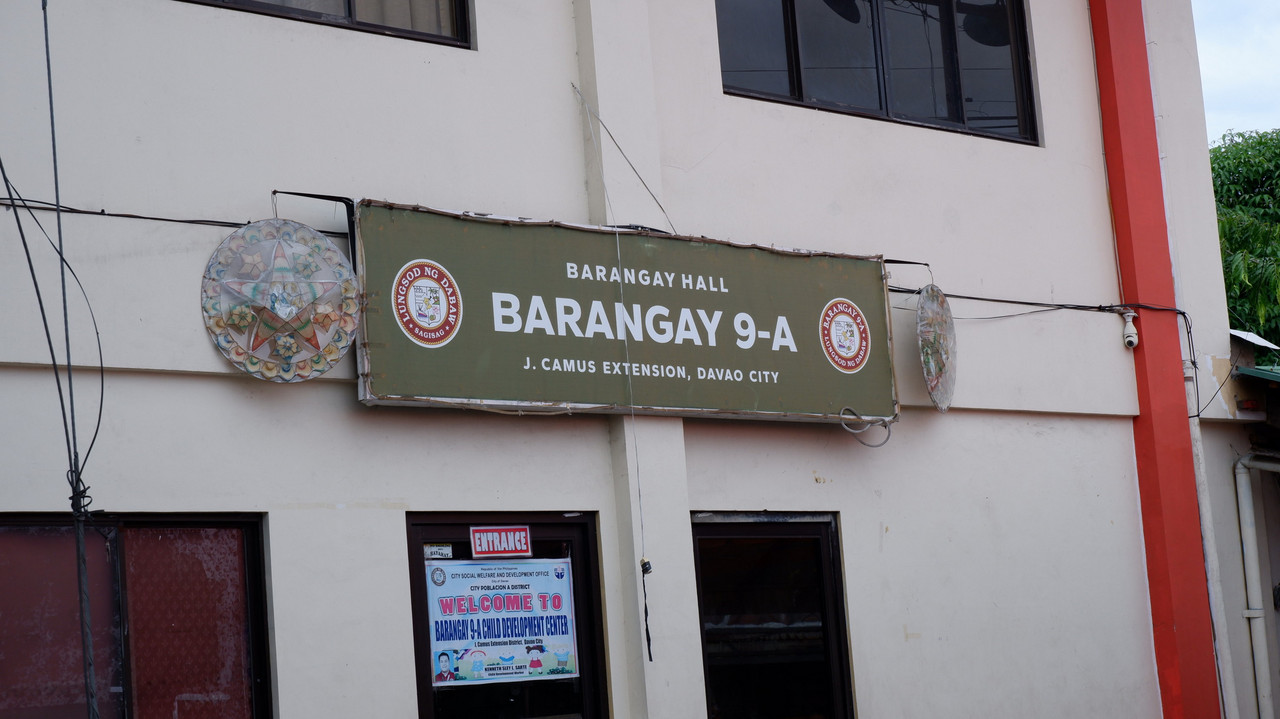
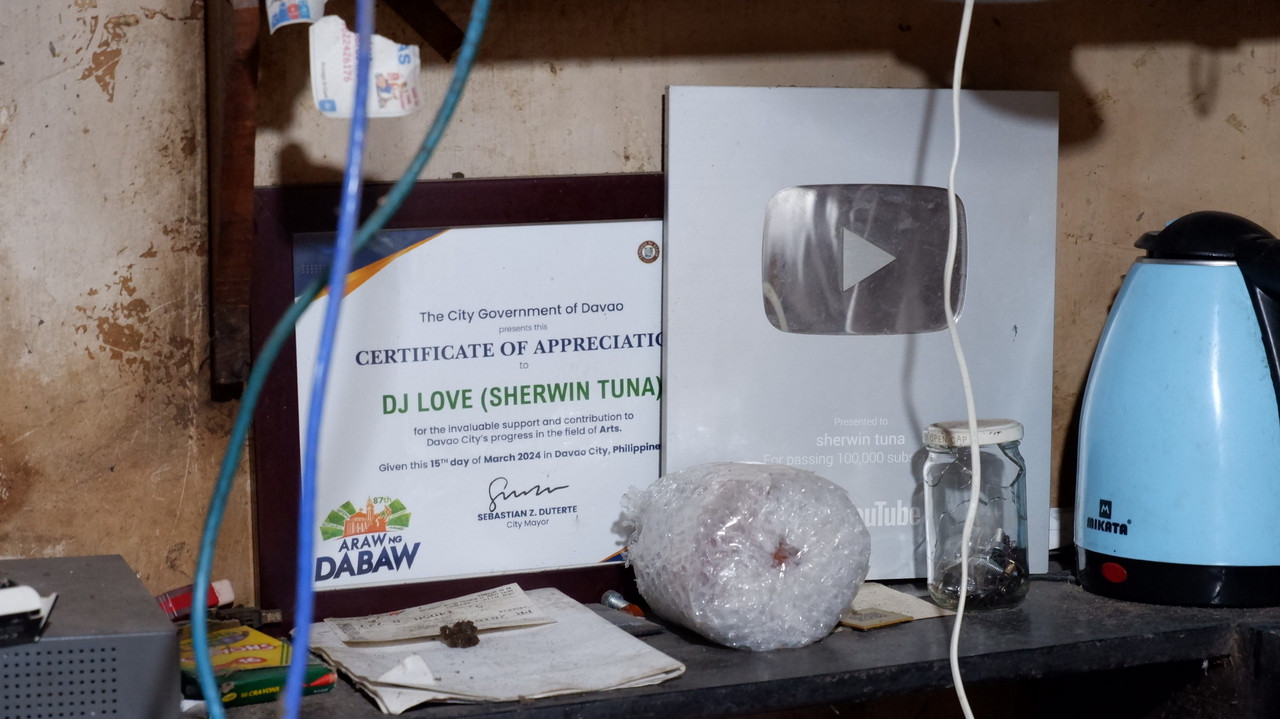
It is within this process that the term budots begins to appear. Participants recall the word being used locally to describe both the sound and the way people moved to it. While the term existed earlier in other contexts, in Davao it came to designate a specific musical and social practice. Within the scene, this naming is often attributed to DJ Love, not as an act of ownership, but as an articulation: a way to point to something already happening, allowing participants to recognise and refer to a shared practice.
Naming, in this sense, is less authorship than consolidation. A genre begins when people start to agree, loosely, provisionally, on what they are hearing and how it circulates. Before budots was named, the sound existed as technique and affect traveling under generic labels like »Pinoy Techno« or »pang-Disco.« Once named, it became possible to talk about budots as budots: to distinguish it, identify it as local, and organise around it as a scene.
This shift has consequences. Naming makes a practice discussable and memorable, but it also introduces tensions around credit and hierarchy that were less urgent when tracks circulated anonymously as just something that worked. Tagum Mix Club members resist the auteur myth that often accompanies genre histories. They foreground a distributed model of authorship rooted in shared practice and collective labour.
That budots became legible as budots in Davao also matters in a Manila-centric cultural landscape. Local naming subtly re-centres cultural authority: meaning can be generated and stabilised outside the capital without institutional endorsement. At the same time, Tagum Mix Club members avoid framing this as a zero-sum territorial claim. Their accounts acknowledge continuity and difference across regions: Cebu may have had adjacent sounds earlier; Davao provided the name and social container that allowed a scene to solidify.
Understanding budots as not invented, but named, reframes what follows. If budots was never a singular invention but a consolidation shaped by infrastructure, environment, and collective use, then mutation and diffusion are not deviations. They extend the same logic. The name marks a moment of legibility, not a boundary.
Cheap Tools and Heavy Bass as Infrastructure
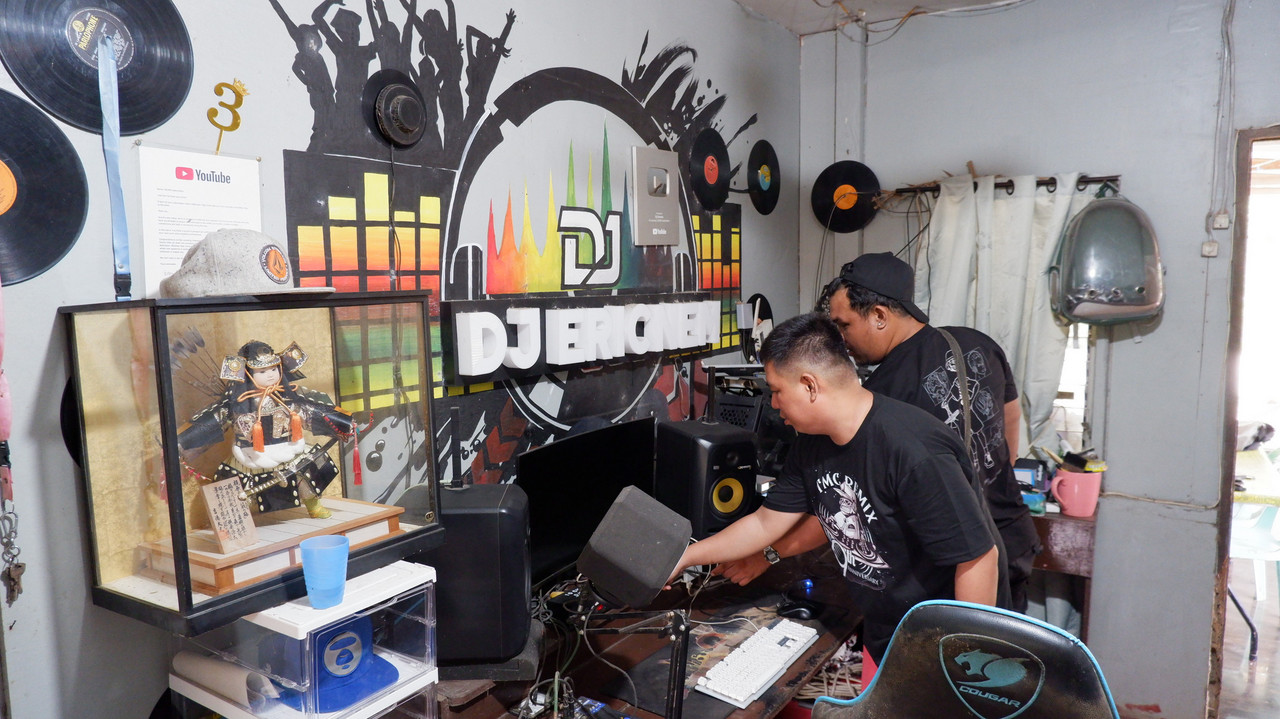
Across interviews with DJ Love and Tagum Mix Club, the material conditions behind budots emerge with striking consistency: low-powered desktop computers running pirated FL Studio, shared USB drives, burned CDs, mobile phones used as primary playback devices, and improvised sound systems assembled from available components. These details are not background. They describe the infrastructure through which budots became possible, and through which its sonic character was shaped.
Tagum Mix Club members recall working on Pentium-era machines that struggled under multiple tracks. Software crashed frequently. Internet access was unreliable or nonexistent, and YouTube was not yet a viable resource for learning production techniques. In this environment, making music required patience and repetition. Knowledge circulated through proximity rather than documentation. A workaround discovered by one producer became shared technique.
These constraints shaped the budots aesthetic in concrete ways. Tempo is one frequently cited example. The now canonical 140 BPM is not remembered as abstract style, but as a practical solution to a specific listening environment: »palakasan sa mobile,« an informal competition over whose music sounded loudest and most energetic through mobile phones or small street sound systems. Faster tempos, heavier kicks, and insistent rhythmic patterns cut through limited speakers more effectively. What might read as exaggeration in a calibrated club becomes optimisation for everyday playback.
This orientation toward mobile and public sound systems distinguishes budots from club-centric electronic genres that presume access to tuned rooms and high-end equipment. Budots was engineered for streets, barangays, discos, and open-air events, spaces where audibility matters more than subtlety. Its emphasis on bass, repetition, and immediacy reflects an aesthetic tuned to mass audibility. Albert’s memory reinforces this ecology. Budots circulated in resort parties outside downtown Davao, where sound restrictions were minimal, and through »uso-uso« jeepneys where loud budots tracks played alongside radio music. These peripheral spaces allowed budots to grow without institutional constraint. Music circulated through USB drives and burned CDs, reinforcing proximity-based sharing economies.
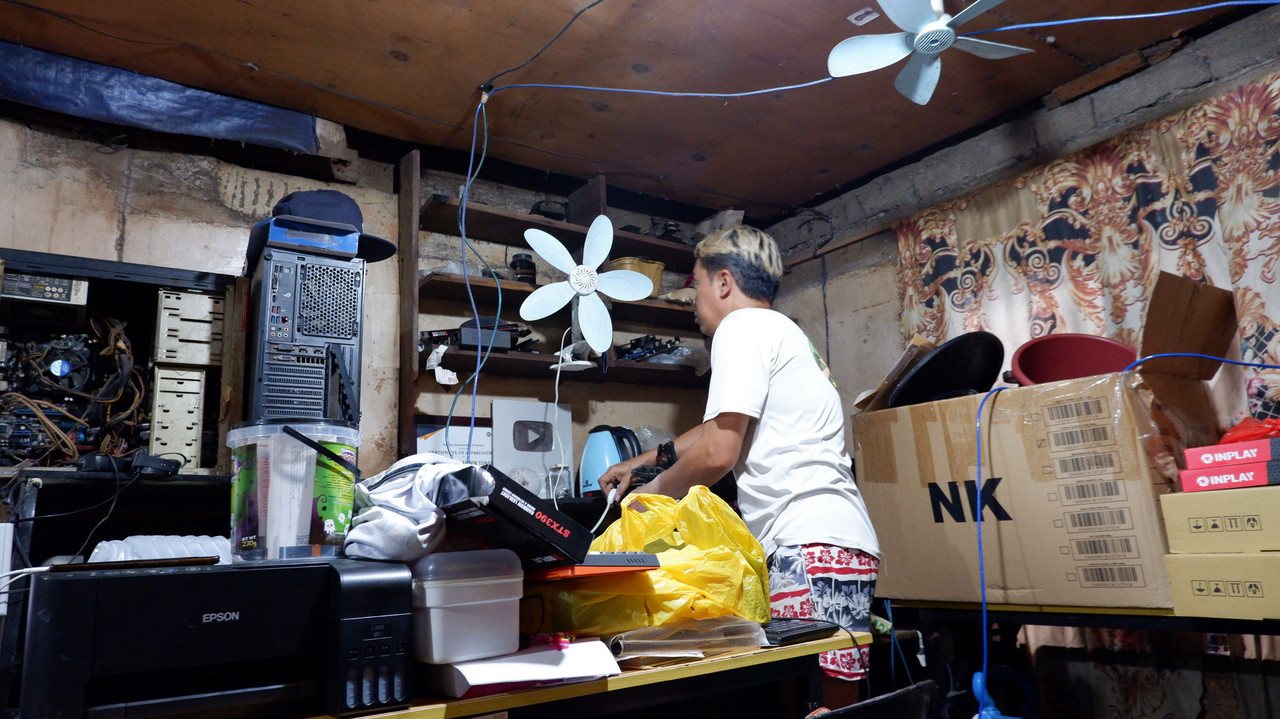
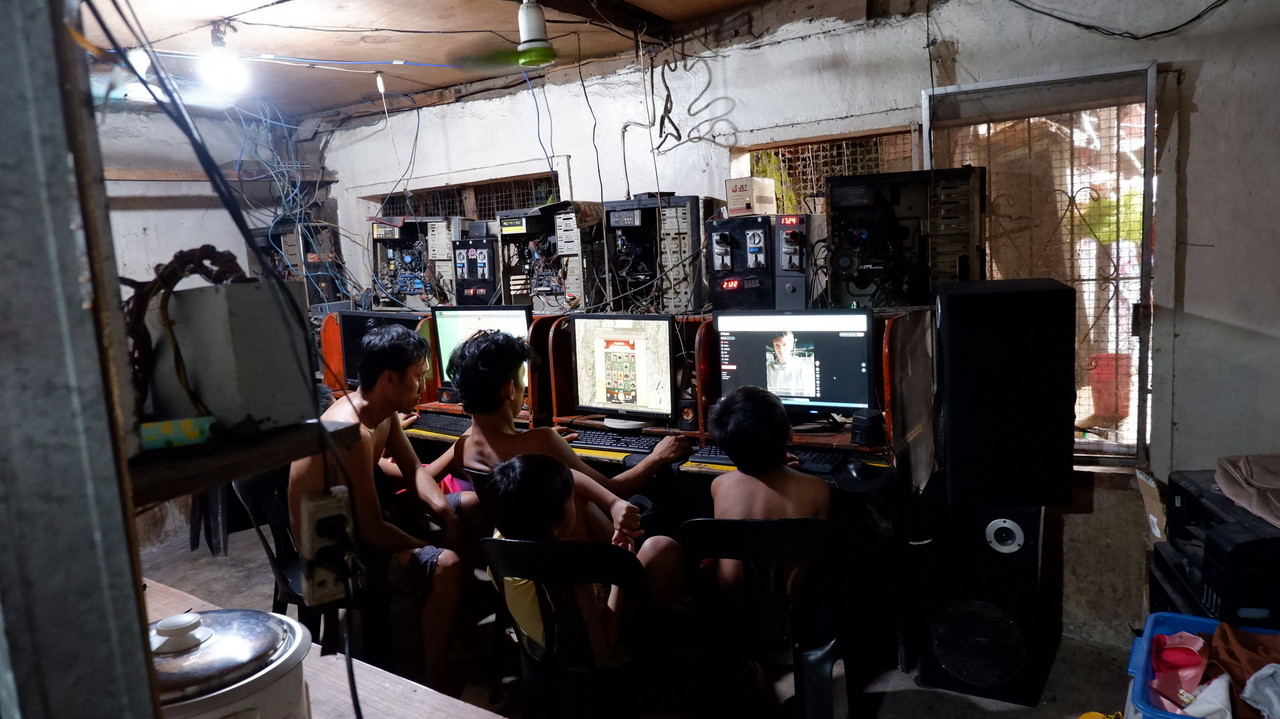
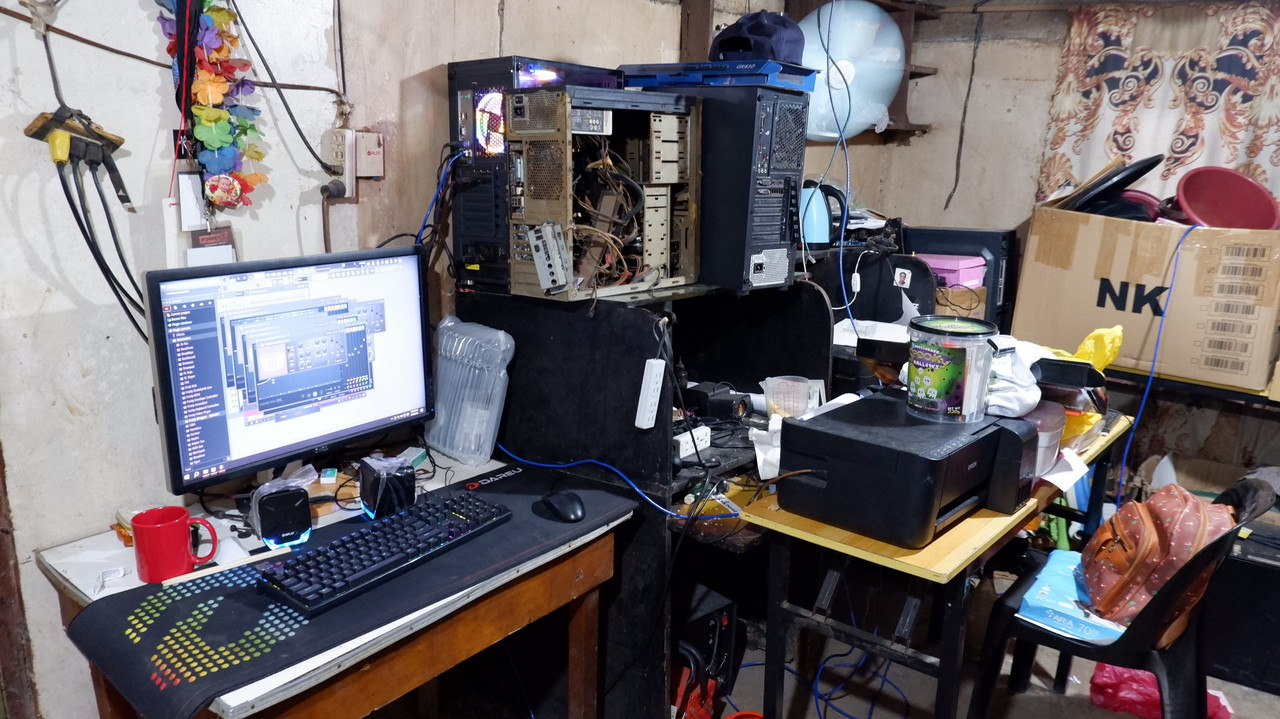

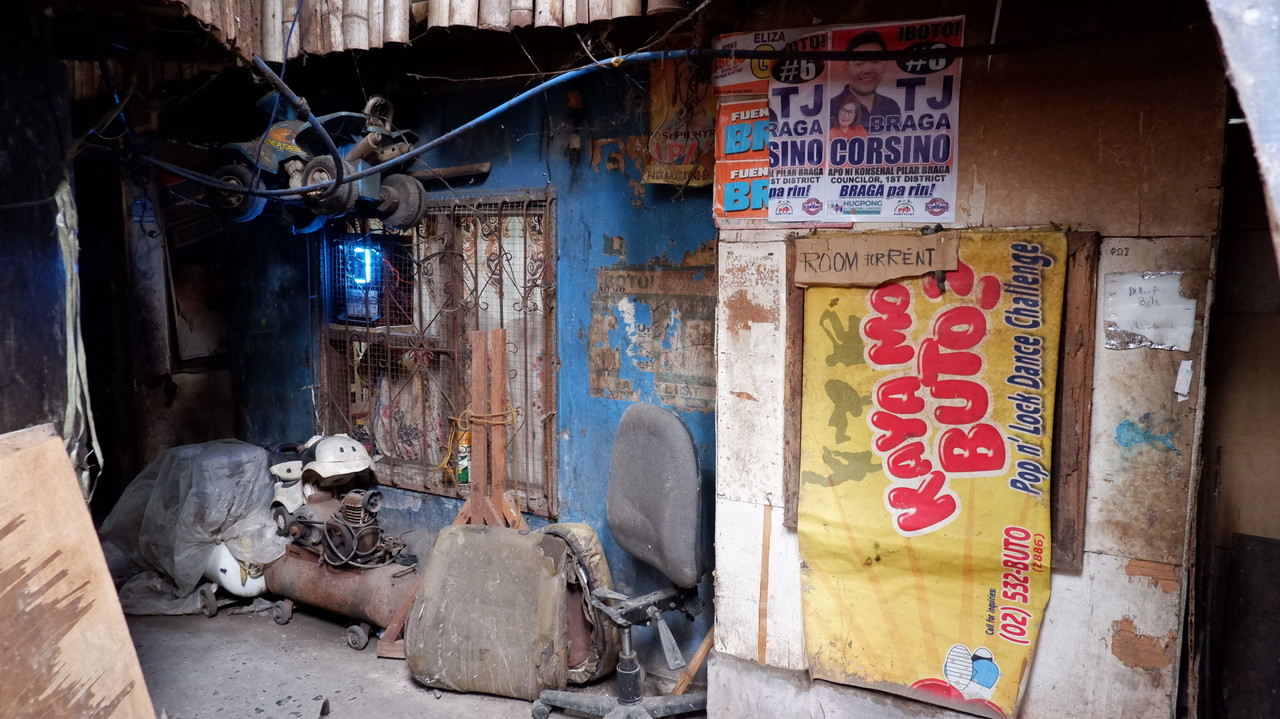

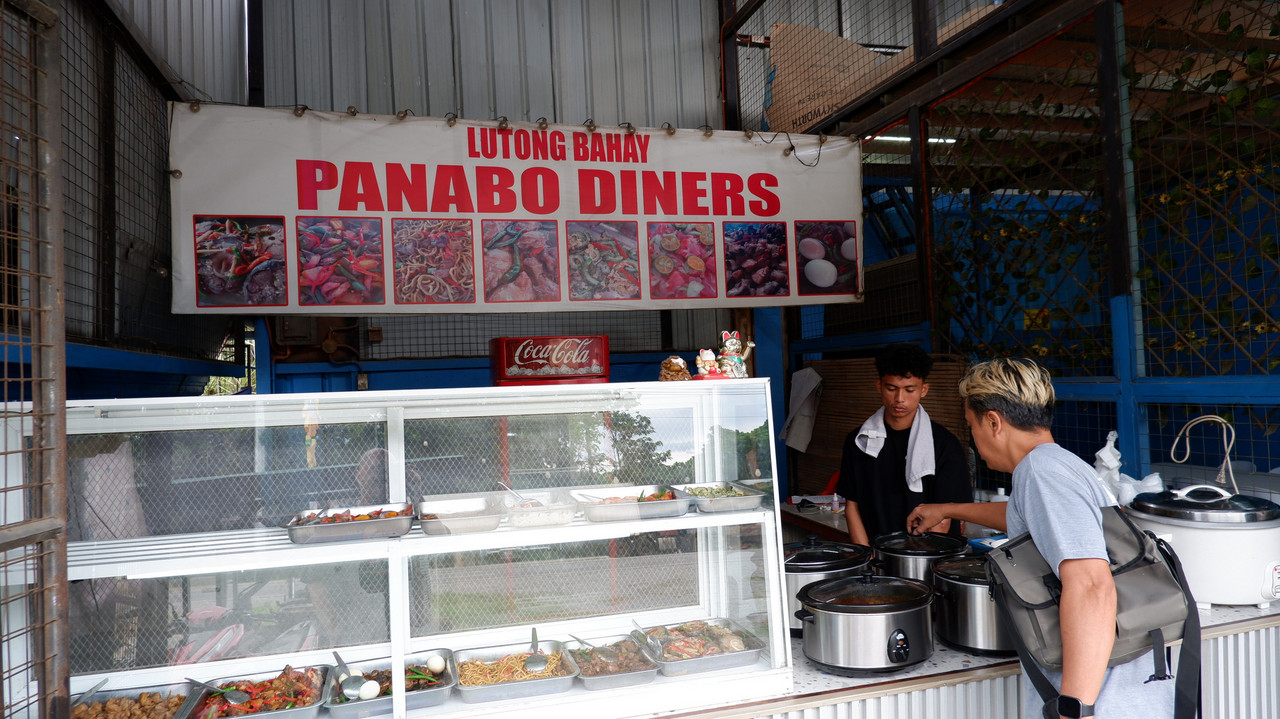
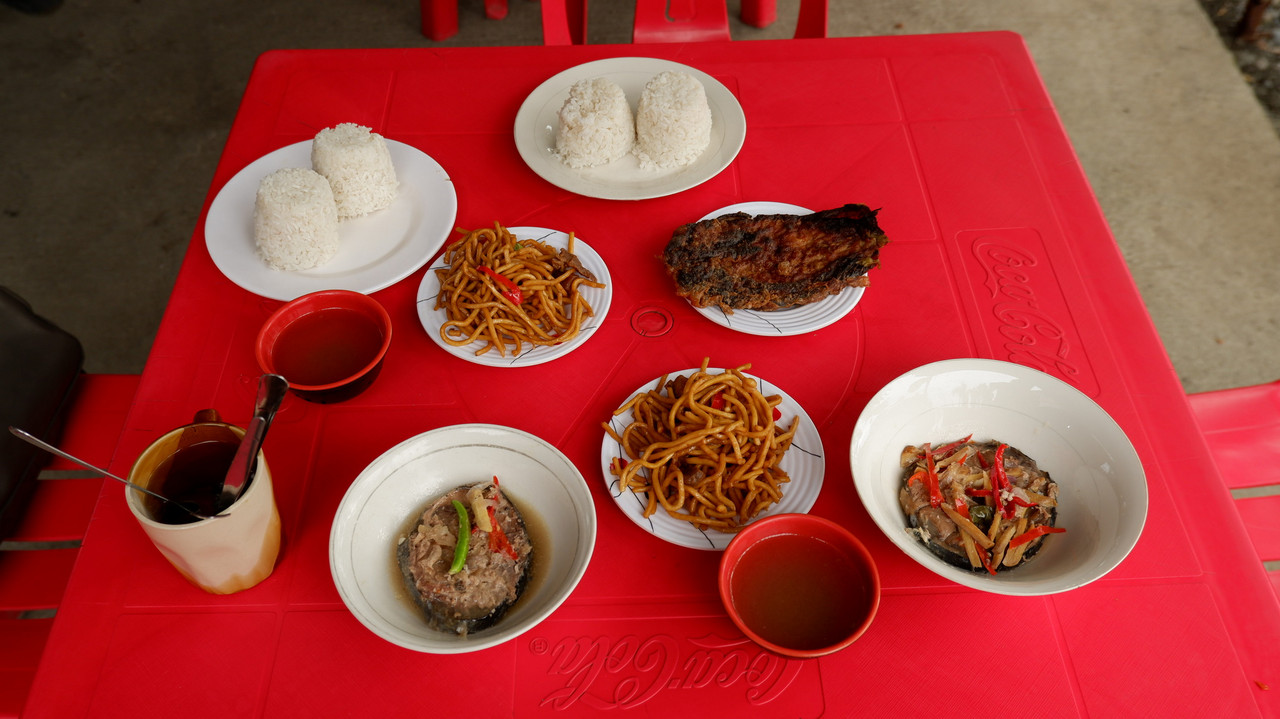
Distribution practices reinforced this logic. Before streaming platforms became dominant, budots circulated through informal economies, combining cultural exchange and livelihood. Tagum Mix Club members describe producing bundles, often fifteen tracks per CD, sold directly or shipped through couriers like LBC. New tracks functioned as economic leverage; exclusivity could determine sales. Circulation was physical, relational, time-bound: music moved because people carried it and copied it hand to hand.
Because distribution depended on proximity and trust, openness became a practical necessity. Files were shared among peers. Remixing was encouraged. Learning happened collectively, through observation and imitation rather than formal instruction. Authorship remained diffuse, with value placed on contribution rather than proprietary control. These conditions complicate later debates about attribution: Budots emerged in a context where withholding knowledge would have stalled the scene.
DJ Love frames budots not as a strategic intervention or brand, but as something sustained through showing up: participating in events, mentoring younger dancers and producers, continuing even when money was scarce. In his account, budots is not only music; it is social infrastructure. He describes it as offering younger people, especially dancers and those at risk of being pulled into conflict, an alternative focus. Music and movement functioned as protective mechanisms, channelling energy into collective activity rather than individual competition. That social function cannot be separated from the genres' infrastructural conditions, or from the openness that allowed people to enter without credentials.
Budots did not remain static under these constraints. It evolved continuously, absorbing foreign electronic influences while localising them through tempo, texture, and rhythm. Tagum Mix Club members describe hearing international tracks, house, techno, EDM, and adapting what could be made to work within local format and audience expectation. This was not imitation but translation: imported ideas filtered through the constraints of local playback systems and the demands of mass participation, producing hybrids that remained distinct from the genres they drew from.
The infrastructural conditions surrounding budots also shaped how it was perceived beyond the spaces that produced it. Interviewees note that music optimised for mobile phones, public spaces, and mass participation was often read as unsophisticated, »baduy,« or »walang pangarap« when measured against institutional norms of refinement. These perceptions would later become entangled with broader hierarchies of class, region, and taste as budots moved into new listening environments.
Seen this way, access is not merely a limitation; it is an aesthetic force. Budots sounds the way it does because it was built to be heard by many, under imperfect conditions, without gatekeeping. Its heavy bass, fast tempos, and repetitive structures are solutions to infrastructural limits and community technologies in their own right.
Who Owns Budots? And Why the Answers Don’t Match
As budots began to circulate beyond the contexts in which it first cohered, into festivals, media platforms, and international club circuits, the question of ownership surfaced with increasing frequency. This question did not dominate the early years, when budots moved through informal networks and collective practice. It became difficult to avoid only once budots entered spaces structured by visibility, capital, and attribution, where sounds are expected to belong to someone and value is often assigned through authorship.
In interviews, ownership rarely appeared as a legal concern. No one spoke primarily in terms of copyright or royalties. Instead, it surfaced as an ethical problem: who gets to speak for budots, who benefits from its circulation, who decides how it should be played or changed, and who bears responsibility when it is misused or misunderstood.
Responses diverge in revealing ways. DJ Love consistently resists the idea that budots can be owned at all. He frames budots as something that emerged through use rather than intention, a shared feeling produced collectively on dance floors, in streets, through informal gatherings. For him, the impulse to claim ownership risks freezing a living practice into an object. Budots survives because it moves.
Yet his refusal of ownership is not indifference. He distinguishes between people who handle budots with care and those who approach it opportunistically. Budots may not belong to anyone, but not everyone relates to it in the same way. Some modes of carrying it feel respectful; others feel extractive or careless. Ownership is displaced, but obligation remains.
Tagum Mix Club members articulate a different, not opposing, emphasis. Like DJ Love, they reject individual ownership claims. However, they speak of budots as inseparable from place, not as exclusive territory, but as lived social context: a set of techniques, infrastructures, and social relations developed under particular conditions. In this framing, budots belongs not to a person, but to a community.

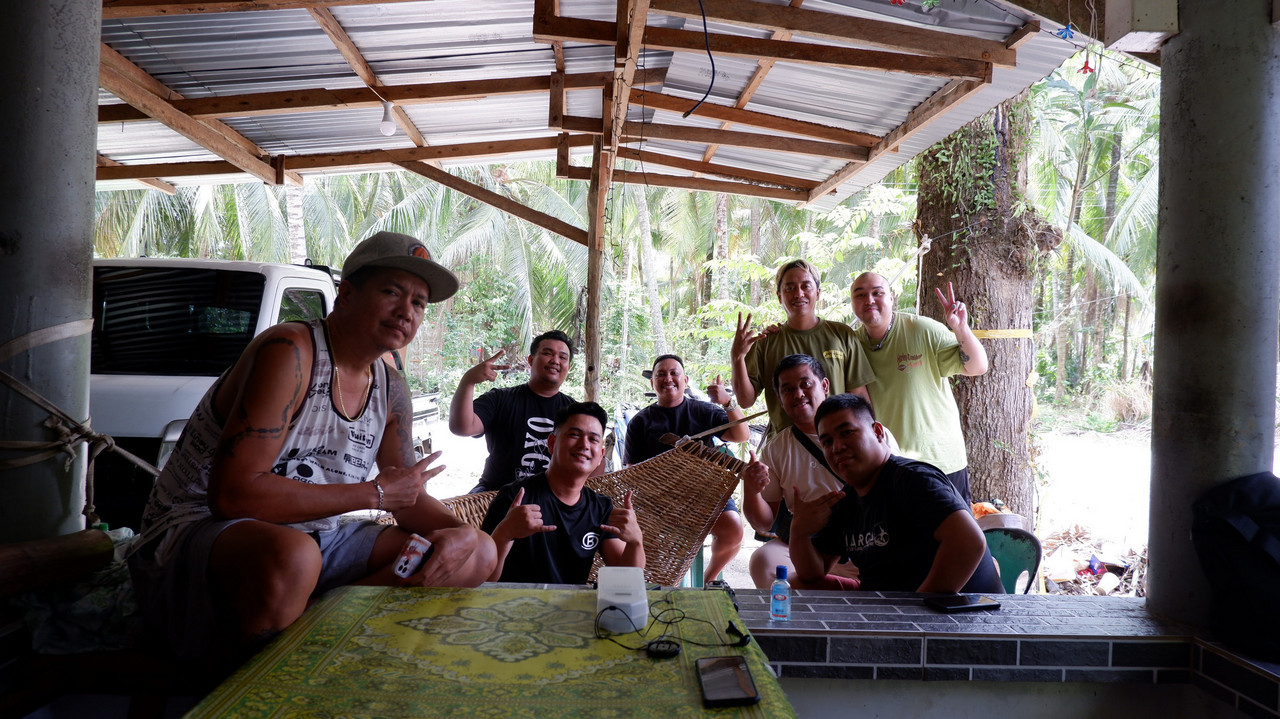
These orientations, budots as spirit and budots as practice, do not cancel each other out. They name different attachments to the same phenomenon. External debates tend to flatten this plurality by demanding clear answers: Who started it? Who gets credit? Who has the right to speak? But these questions presume cultural value must be stabilised through attribution. The interviews suggest a different logic: Budots persists precisely because it is held in more than one way.
This plurality matters when budots circulates globally. Originators, those who lived with budots before it became widely legible, absorbed early stigma, ridicule, and misrecognition, investing labour without guarantee of reward. Later adopters often meet budots after it has already been validated elsewhere. The result is an uneven distribution of risk and reward. What is at stake is not credit alone, but consequence.
DJ Love's response to this asymmetry is instructive. Rather than asserting authority or policing use, he prioritises continuity. He speaks of avoiding conflict over credit because what mattered most was that budots continued to live. This is not passive; it is strategic refusal to let disputes fracture a scene built under constraint.
Taken together, these perspectives suggest ownership is the wrong question, or at least an insufficient one. Budots does not belong to anyone in the conventional sense, yet it is not unclaimed. It is held through care, memory, practice, and responsibility. The ethical challenge is recognising this form of holding without converting it into proprietary logic. Stewardship becomes more useful than ownership; accountability more useful than authority.
When the World Finally Listened: Global Recognition, Delayed Legibility, and Structural Validation
For much of its early life, budots existed outside spaces where serious music was expected to appear. Within Manila-centric scenes and taste-making institutions, it was routinely dismissed as noisy, crude, or unserious, sometimes actively discouraged or banned. These were not neutral aesthetic judgments. They carried moral weight tied to assumptions about class, region, and respectability. Music associated with collective dancing, informal circulation, and provincial nightlife was often marked as excessive or improper, unworthy of careful listening.
Budots practitioners recall years of ridicule long before broader attention arrived. Yet DJ Love rarely narrates this as grievance. He frames it as a condition endured. Budots continued because it remained useful: people danced, events happened, and younger participants found community. Recognition was not required for local survival.
The shift came unevenly. International exposure, most notably circulation through platforms like Boiler Room, invitations to festivals like CTM, and performances across European club circuits, reframed budots for listeners encountering it for the first time. These platforms presented budots not as joke or noise, but as something worth programming within global electronic discourse. For some local observers, this produced dissonance: a sound long dismissed at home became hearable through external validation.
Non-Filipino interlocutors describe this process as layered. Members of the Japanese DJ unit Soi48 recount encountering budots through online circulation well before it appeared on major platforms. Initially, it arrived as fragmented sound detached from context, circulating alongside other Asian dance musics. Over time, playing budots in clubs, writing about it in Japanese music media, and travelling to the Philippines to meet artists such as DJ Love altered how the sound was understood and carried. Yohei Kawada describes a similar accumulation: Budots moving through overlapping channels, political appropriation, online circulation, underground networks, and institutional platforms, each shaping how it was perceived. In this view, global recognition is not an event but a series of mediations that increase visibility while filtering meaning.
Albert Oponda, a Davao-born/Manila-based DJ, describes global circulation as producing both pride and disbelief. Hearing budots played outside Davao felt like confirmation that something long treated as local utility could exist elsewhere. Social media visibility and DJ circulation helped normalise budots in spaces where it had previously been discouraged.
Marco Pedro, a Manila-based DJ and co-founder of Orange Juice Asia known for championing the Philippine DJ and producer community, recalls budots as background sound in jeepney rides, sari-sari stores, and neighborhood construction sites before becoming something DJs intentionally carried into curated sets. He warns that budots risks becoming a guaranteed-reaction tool when detached from context.
Cbongsae, a Seoul-based DJ and live-hall operator, frames budots mobility more optimistically. Its infectious structure makes it naturally portable, provided its distinct identity is not overwritten by external stylistic expectations.
The irony is structural. For many listeners, budots became acceptable only after being heard elsewhere, narrated through foreign platforms and curatorial logics. This mirrors a broader pattern where forms outside dominant centers require external validation before being taken seriously within national taste hierarchies. Recognition follows existing routes of power even when the sound originates far from those routes.
Diaspora complicates this story because budots does not only travel outward toward institutions. It also travels sideways into migrant life, where recognition can precede validation. SGAMO, an Italian DJ from Southern Italy, describes playing budots for Filipino communities in his province, where sound system memory already exists. In that context, budots operates less as imported novelty than as a sonic shortcut to home, a feeling of return created through dance rather than explanation. Global circulation is not a single pipeline from local scene to international stage, but a set of overlapping routes where affect, infrastructure, and belonging can reassemble in unexpected places.
Comparative cases underline the point. In Japan, funkot, an Indonesian-origin dance music, circulated widely online in the 2010s, often detached from its dancefloor contexts. While it gained internet visibility, it struggled to secure sustained acceptance within club circuits, frequently framed as novelty rather than serious dance music. For Soi48, this history informs their approach to budots: He insists on treating it as dance music rather than internet artifact.
This does not make global recognition illegitimate. It situates it inside power relations that demand attention. Platforms do not merely amplify; they frame, within aesthetics of authenticity, global cool, curated diversity, selecting what to highlight and what to mute. These processes shape not only how budots is heard, but which versions of it are allowed to travel.
From DJ Love's perspective, global attention is not proof budots became worthy. It is evidence that listening conditions shifted. Budots did not change to become acceptable; contexts changed to accommodate it. But with this shift comes new pressure: festivals, art projects, and curated club nights are governed by expectations of refinement, spectacle, and coherence that can reshape how budots is received. Translation is never neutral.
Carriers, Not Originators: Asymmetry in Motion
As budots moves through global circuits, a distinction that was once largely irrelevant becomes consequential: the difference between originators and carriers. Originators are those who lived with budots before it was broadly hearable, sustaining it through stigma, infrastructural scarcity, and limited opportunity. Carriers encounter budots later, through recordings, platforms, festivals, and curated nights, and transport it into new spaces. These positions are not oppositional, but they are asymmetrical.
The asymmetry is not primarily about expertise. It is about exposure to risk. Originators bear the social and material consequences of a sound before it is valued: ridicule, exclusion, and the labour of continuity without guarantee of reward. Carriers often engage after value has been established elsewhere, benefiting from infrastructures, media, institutions, transnational networks, unavailable during budots’ early life.
Marco describes the carrier role as subtle but consequential. The way a DJ introduces budots may become the only version an unfamiliar audience encounters. That framing responsibility persists even when intention is respectful.
Cbongsae expresses the role more simply: carrying budots means transporting it without deforming its character, allowing it to remain recognisable even in unfamiliar contexts.
Good intention does not dissolve this unevenness. The capacity to enter and exit a sound without long term consequence is itself a form of privilege, even when exercised with care. The asymmetry becomes especially visible when budots misfires, when it is misunderstood, aestheticised, or reduced to novelty. Originators remain tethered to local meanings and reputations; carriers can pivot, reframe, or move on. Ethical engagement cannot be measured solely by intention. It requires attentiveness to who bears impact.
Recognising this does not demand withdrawal. It clarifies the terrain on which responsibility must operate: framing, credit, context, and humility about the limits of one's position.
Carrying a Sound That Isn't Yours. Ethics, Translation, and Responsibility Beyond Authenticity
Interviews with non-Filipino interlocutors suggest a range of strategies for navigating the role of carrier. Some emphasise refusing novelty framing and insisting on budots as dance music, accountable to bodily response rather than conceptual extraction. Others treat ethical carrying as ongoing decision making: why this track, in this room, at this moment, accepting that complete mutual understanding may be impossible. A third approach emerges in SGAMO’s account, which centers recognition, diaspora return, and platform building as ways of practicing responsibility without claiming authority.
Across these perspectives, authenticity emerges as an unreliable ethical guide. Authenticity presumes a stable original against which later iterations can be measured. Budots resists that logic. It emerged through collective use and constant adaptation. To police whether budots is being presented authentically risks freezing a living practice into narrow sonic markers.
Authenticity can also obscure power. Declaring something authentic does not answer who benefits from circulation, who bears consequences of misrepresentation, or whose voices are amplified. In global contexts, authenticity often functions as aesthetic reassurance, allowing audiences to consume difference without confronting the conditions that produced it.
Responsibility offers a more useful frame. Unlike authenticity, responsibility does not require fidelity to an original form. It demands attentiveness to conditions: how budots is introduced, what histories accompany it, who is credited, and which elements are emphasised or erased. Responsibility acknowledges asymmetry without insisting on withdrawal.
SWEETZ (Remastered), by Kuya Neil
SWEETZ (Remastered), by Kuya Neil
A useful case is the Italian DJ SGAMO, whose encounter with budots begins not with institutions, but with accident and proximity. At the end of 2023, after a show at a local venue in Manila, he found himself at a party inside a squat in Intramuros. No context, no theory, just sound and bodies. Later, back in Italy, a friend showed him DJ Love's Boiler Room set, and it did not register as novelty. It felt consistent with what he had already lived, honest and full of contradictions.
Rather than narrating budots as discovery, SGAMO frames it as recognition. He traces the pull back to a Southern Italian childhood soundscape: Eurodance blasting on beaches, in arcades, cafés, bus stops. Gigi D'Agostino, Eiffel 65, Prezioso. In his telling, budots does not arrive as a foreign object to be decoded, but as a familiar intensity returning under another name. That familiarity becomes a practical ethic: Budots should not be treated as a gimmick or an aesthetic texture detached from dance. It has to remain accountable to physicality, to crowd response, to the messy social mechanism that makes it work.
What complicates this recognition is mobility. SGAMO is explicit about passport privilege, and about the unevenness that structures who gets to carry sounds across borders and who must absorb border violence. His response is not to claim authority, but to practice support: building platforms, centering Filipino artists, and treating diaspora contexts as legitimate sites of meaning rather than diluted copies. In Southern Italy, he notes, thousands of Filipinos live within a province-scale community, many raised around barangay sound systems. In that setting, playing budots can function as a direct link to home, not by restoring an original context, but by reanchoring the sound in migrant life where its effect is immediately legible.
Consent is similarly complex. Budots did not emerge through formal authorisation, nor does it provide a single point of permission carriers can consult. Its circulation was always informal and relational. The absence of formal consent does not imply ethical neutrality. It shifts responsibility onto carriers to consider effects even when clear rules do not exist.
Proximity, travelling to the Philippines, meeting artists, and experiencing budots in local contexts can ground engagement beyond abstraction. It can also slow down circulation, introducing moments of reflection against the speed of online movement. But proximity is not a guarantee of ethical clarity. Relationships can mitigate misunderstanding without eliminating asymmetry.
The question of extraction remains. When does amplification become exploitation? When does translation slide into flattening? Budots openness complicates boundary policing: the genre itself emerged through borrowing, remixing, and shareability. Yet openness heightens the stakes of misrecognition. When budots is reduced to texture or novelty, the social relations that sustained it risk being erased.
To carry budots well is not to secure it against change, nor to claim mastery over its meaning. It is to remain accountable to its social life as it moves beyond it: to foreground relation over extraction, and to stay receptive to critique, correction, and re-framing.
This orientation matters because it sets up a final shift. Once budots is carried widely enough, its spirit begins to outpace its formal markers. Budots persists not only as genre, but as method, reappearing in new configurations where it is no longer formally budots, yet still behaves like it.
Post Budots: When the Spirit Outruns the Form
In recent years, budots has begun to appear in places where it is no longer formally budots. Its most recognisable markers, the 140 BPM pulse, signature rhythmic grammar, metallic tiw tiw leads, surface briefly, sometimes only for seconds, before dissolving into other logics: baile funk drops, juke patterns, hyperpop breakdowns, gabber-budots and experimental club structures. These appearances register as cameos rather than reproductions, fragments rather than wholes. Budots does not arrive intact; it leaks.
This seepage is visible across a growing body of work circulating online and through global DJ networks. »Harlem Funk na Budots,« Baby Oliv and Cabu Edit (2024) folds budots rhythmic grammar into baile funk, letting its cheeky excess operate inside a different Afro-diasporic club logic. Kuya Neil's SWEETZ (2025) pushes budots charge into faster tempos and juke coded structures, maintaining loudness and play while loosening its BPM constraints. Pette Shabu’s »Bingo« (2023), produced by Pikunin, collapses budots into experimental hip-hop and hyperpop registers, foregrounding humour and abrasion over dancefloor orthodoxy. Pikunin’s hyper-budots experiments accelerate toward 160 BPM, translating budots immediacy into juke-inflected and post-club terrains. Anito Soul’s Budots Nonstop Evil Mix (2025) retains rhythmic insistence while recoding affect toward darkness and villainy, pulling budots into bass, breaks, and drum and bass territories without evacuating its core sensibility.
Father Tropa's Spaceship 2020, by Libya Montes
Father Tropa's Spaceship 2020, by Libya Montes
These examples sit alongside earlier and often overlooked experiments that predate budots peak global visibility. Libya Montes’ Father Tropas Spaceship (2020) imagines a budots-inspired space opera, embedding the genre in speculative narrative and world-building. The buwanbuwan collective Bakunawa Vol. 7: Rodrigo Duterte's Summer Budots Party cypher, circa 2017, demonstrates that abstraction and recontextualisation were already part of budots’ extended ecology, emerging from Manila-based experimental scenes in dialogue with, rather than opposition to, Mindanao practices. My own work, »Wow Sabaw Chibao«, obese.dogma777 Mall Edits (2023) participates in this condition, recontextualising budots through hardcore techno, jungle, and ambient breakdowns while preserving its cheeky, destabilising energy.
A related set of performance edits and live DJ reworks further explores this post-budots condition through juxtaposition rather than stylistic imitation. These mixes draw on the sensibility of Pinoy camp, placing OPM pop anthems, internet meme audio, and novelty material alongside techno, rave, and bass-heavy club tracks. In these transitions, humour and sentimentality coexist with intensity: Sarah Geronimo’s »Tala« layered into Bicep’s »Glue,« fragments of Boe Strummer intersecting with hard dance structures, and viral meme references such as Jhepoy Dizon appearing within otherwise serious club momentum. The result is not parody but behavioural continuity, a playful refusal of genre hierarchy where emotional excess, familiarity, and collective recognition remain central to the dancefloor.
What unites these projects is not stylistic fidelity but behavioural resemblance. They behave like budots even when they no longer sound like it. This behaviour is not reducible to tempo or sound design. It reflects what DJ Love repeatedly articulated as spirit rather than formula: immediacy over refinement, bodily intuition over theoretical coherence, collective pleasure over individual display. Post-budots names the moment when this spirit becomes portable, when budots’ underlying logic circulates independently of the infrastructure that first shaped it.
This is not a claim that budots has been transcended or left behind. Budots continues to exist locally and intensely in the contexts that produced it. Post-budots does not replace budots; it runs alongside it. It describes a condition in which a vernacular practice shaped by constraint and care becomes abstracted enough to migrate while still carrying traces of origin.
Albert captures the tension of mutation directly. Hybrid budots experiments can feel exciting or frustrating depending on execution, but experimentation is inevitable. Music evolves through interpretation. His immediate concern is local continuity: Budots should remain playable in Davao without hesitation. A troubling future would be hearing budots more often abroad than at home.
The risk, of course, is flattening: spirit turned into aesthetic shorthand, energy into content. Yet the persistence of humour, excess, and bodily insistence across these hybrid forms suggests something remains resistant to full capture. Post-budots is not a movement with a manifesto. It is an emergent state: evidence that budots’ internal logic is robust enough to survive detachment from its canonical form. Whether this leads to solidarities, misrecognitions, or further asymmetries remains unresolved. What is clear is that budots has begun to outrun itself, and how this surplus is handled will shape the futures it makes possible.
Closing: Responsibility, Not Resolution
Budots has already crossed into global circulation. The sound has proven its capacity to move bodies, reorganise rooms, and survive translation. What remains unsettled is not its value, but the wager it places on those who carry it forward. Budots does not promise refinement, prestige, or consensus. It offers something harder to contain: joy without permission.
The question, then, is not whether budots belongs in new spaces, but whether those spaces are willing to hold it without neutralising what makes it disruptive. Responsibility is not a final position. It is an ongoing practice, expressed through framing, attribution, restraint, and attention to unevenness.
Budots does not ask to be resolved or perfected. It asks to be handled with care as it continues to move, refusing closure even as it becomes globally hearable.
Formal Endnotes / Attribution Section
Interviews and Fieldwork
Albert Oponda, DJ and Davao-raised dance community participant, written questionnaire response, 2026.
C Bong Sae, DJ and venue-owner based in Seoul, written questionnaire response, 2026.
DJ Love (Sherwin Tuna), in situ interview at DJ Love’s home in J. Camus, Davao Region, January 2026. Conducted in Tagalog, Bisaya, and English; translated by the author.
Harry Barnett, co-founder of We Can’t Relate, interview, Davao City, January 2026.
Marco Pedro, Manila-based DJ and co-founder of Orange Juice Asia, written questionnaire response, 2026.
SGAMO, DJ, artist, and community organiser, written questionnaire response, 2026.
Soi48 (DJ unit), written questionnaire response, 2026.
Tagum Mix Club founding members (DJ Ericnem, Khingz Gaviola, Kim Dablu, DJ Kim Trazona,DJ Ian,DJ Danz), group interview, Davao Region, January 2026.
Yohei Kawada, editor and DJ (RICH & BUSY), written questionnaire response, 2026.
Music and Artistic Works (Post-Budots examples)
Anito Soul, Budots Nonstop Evil Mix, released 25 January 2025.
Baby Oliv and Cabu, Harlem Funk na Budots, released 29 November 2024.
buwanbuwan collective, Bakunawa Vol. 7: Rodrigo Duterte’s Summer Budots Party, SoundCloud cypher, circa 2017.
Kuya Neil, SWEETZ EP, released 1 August 2025.
Libya Montes, Father Tropa’s Spaceship, released 25 July 2020.
obese.dogma777, Wow Sabaw Chibao (Mall Edit), released 9 October 2023.
obese.dogma777 x Pikunin | »Boiler Room x Manila Community Radio« released 25 May 2023.
obese.dogma777 - Elephant - KKKeme Lang Bhie! (Blends & Edits) released 30 January 2023.
Pette Shabu, Bingo! (prod. Pikunin), released 30 November 2023.
Pikunin, hyperbudots and aaa-Paro projects, ongoing experimental releases (2023 onward).
(All dates verified by the author.)
Author's Note, Researcher Participant Positioning
This text is written from a position of embedded observation. The author approaches budots not as an external analyst, but as a participant in adjacent electronic music and nightlife infrastructures, programming, DJing, curating, and collaborating across local and international contexts. Fieldwork was conducted through in situ interviews, group conversations, and sustained presence within budots-related scenes in Mindanao and Manila, supplemented by dialogue with international DJs, editors, researchers, and scene participants engaged in budots’ circulation across Asia and Europe.
Rather than aiming for comprehensive documentation or definitive theory, this piece treats budots as a practice best understood through use, care, and consequence, remaining attentive to the asymmetries that emerge when vernacular sounds travel. Any interpretive framing offered is provisional, shaped by proximity, responsibility, and an ongoing commitment to listening.
Jorge Juan B. Wieneke V is a Filipino artist, musician (alias obese.dogma777), producer, curator, and researcher working across electronic music, nightlife infrastructure, and experimental sound practice. He is actively involved in Manila’s independent music scene, among other as Music/Community Director of the venue Apotheka and co-founder and volunteer at Manila Community Radio.
This text was commissioned as part of CTM 2026 »dissonate resonate« and for the tekhnē network, which is co-funded by the European Union.