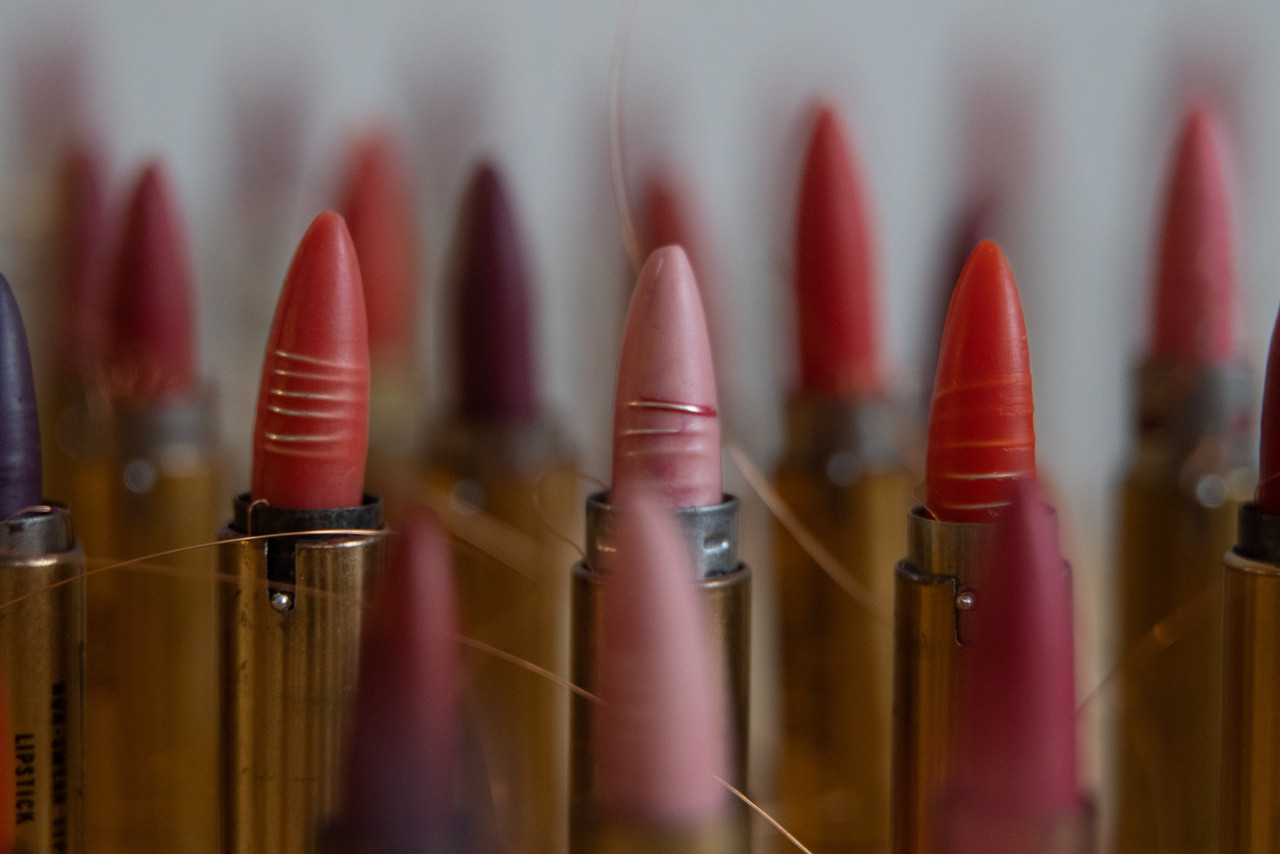
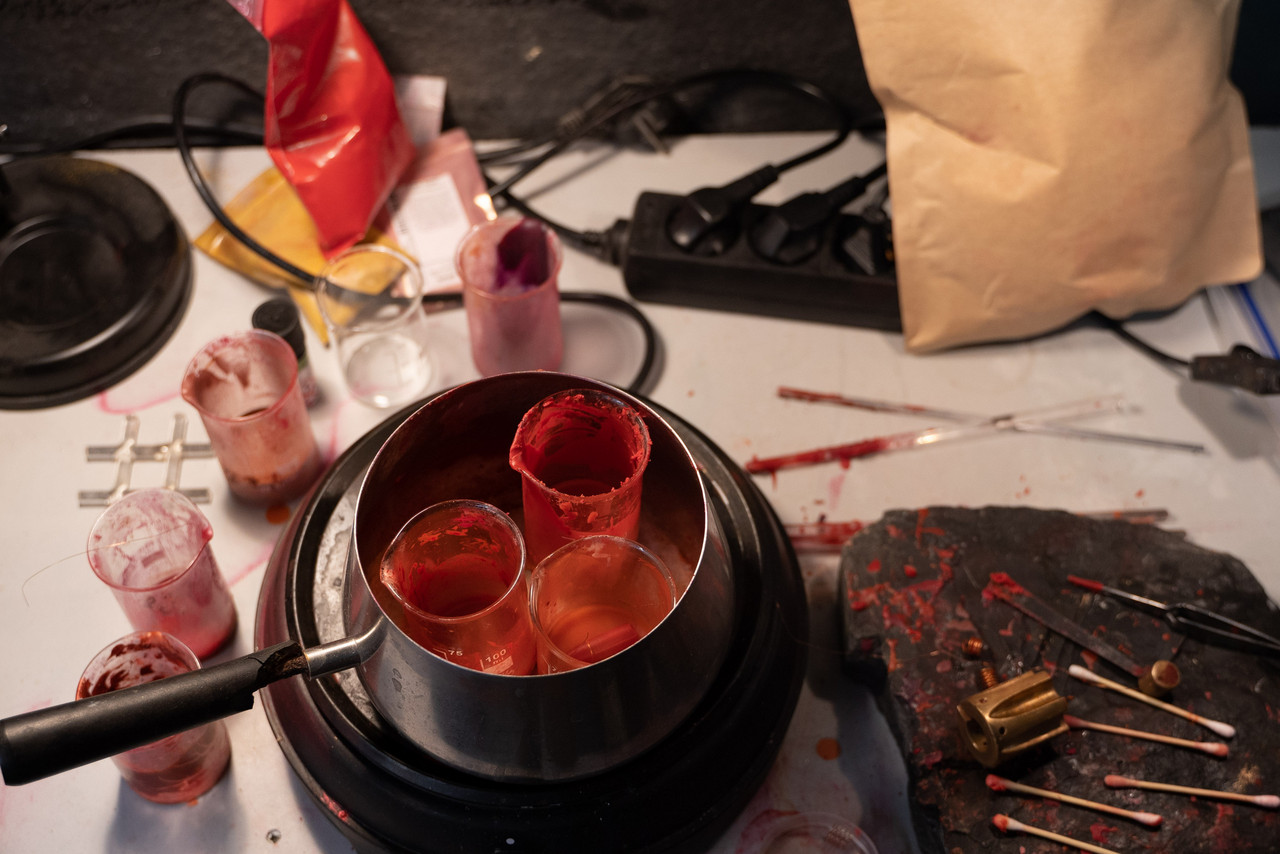
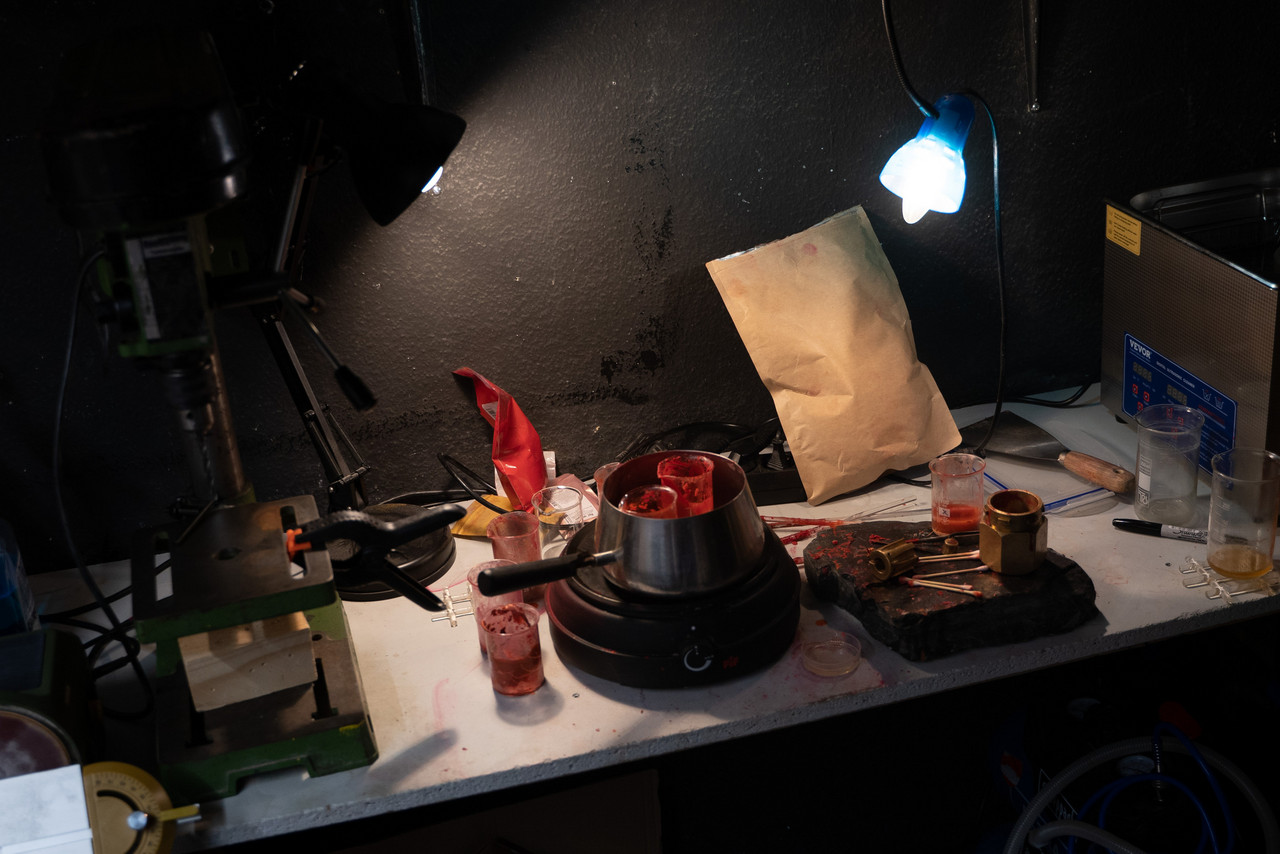
As I arrive at the Berlin atelier-apartment of Romanian sound artist Ioana Vreme Moser, Ioana welcomes me into the kitchen. After setting some tea to boil, she crosses the hall to check on the other stove – a hotplate set up in her studio with a small double boiler on top. Inside is a glass beaker of semi-transparent white melted wax. Spread out across her work bench are ziplock bags of bright pink and red pigments and stacks of petri dishes filled with the messy contents of salvaged old lipsticks. She opens one for me to smell. I’m washed over by the memory of cosmetics strewn across my grandmother’s vanity, some of which she would give me to play with when too old for her to use. »I thought while you’re here, we should make a lipstick,« Ioana says.
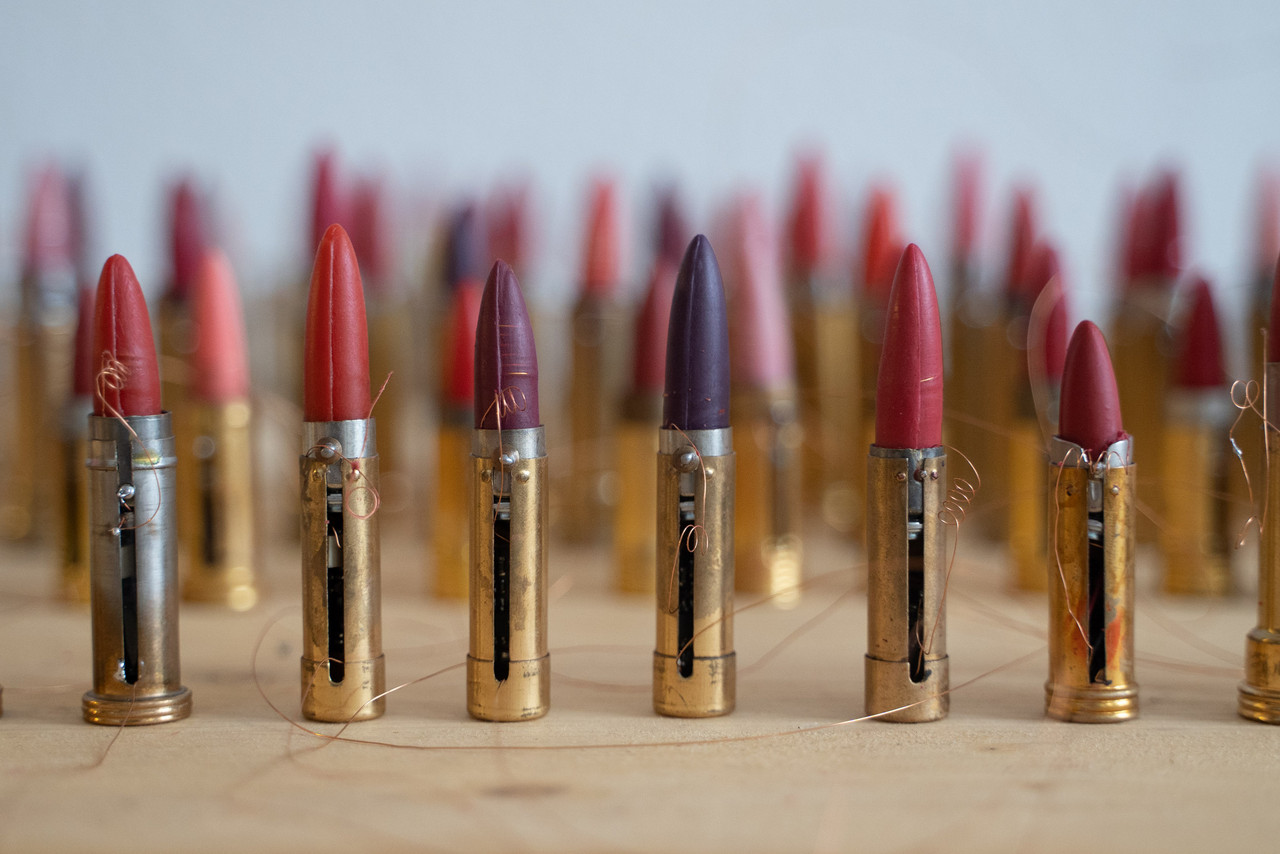
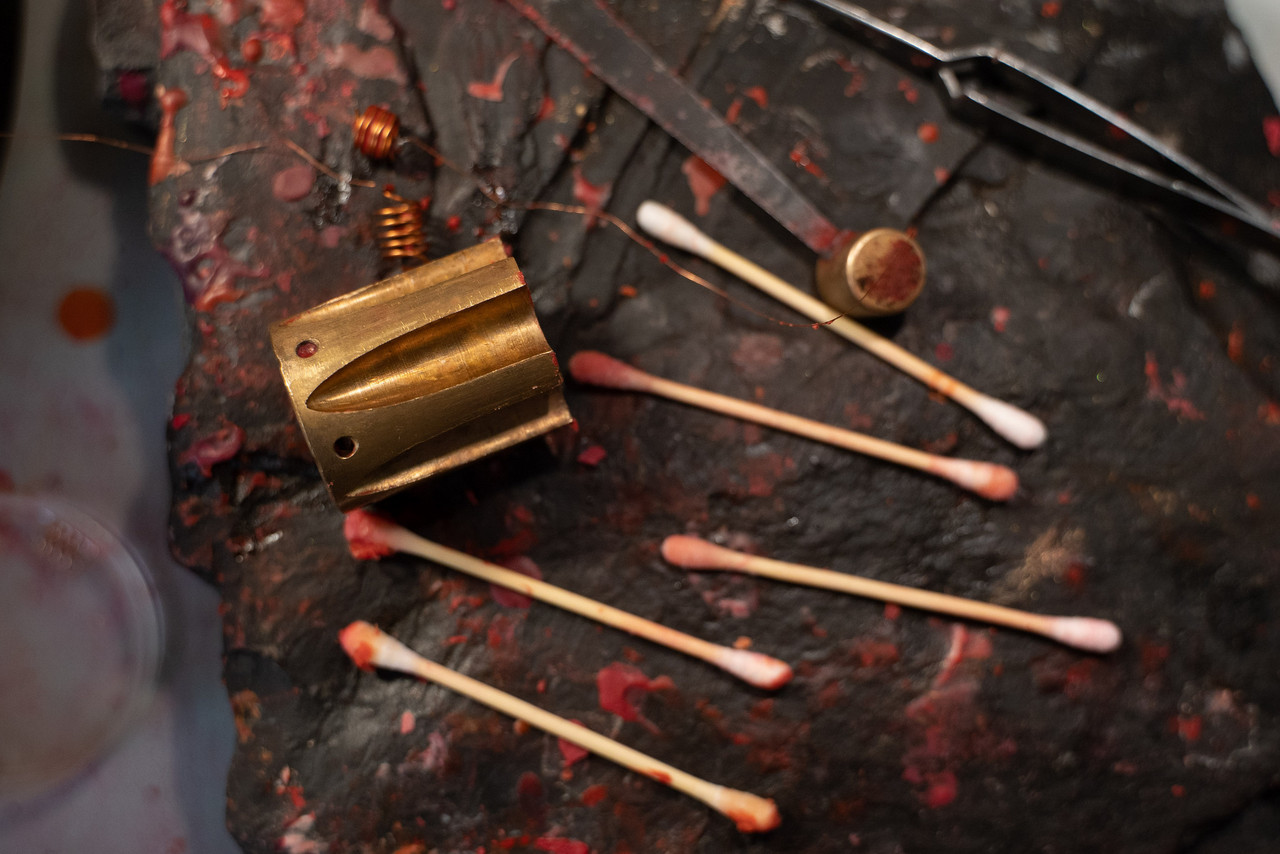
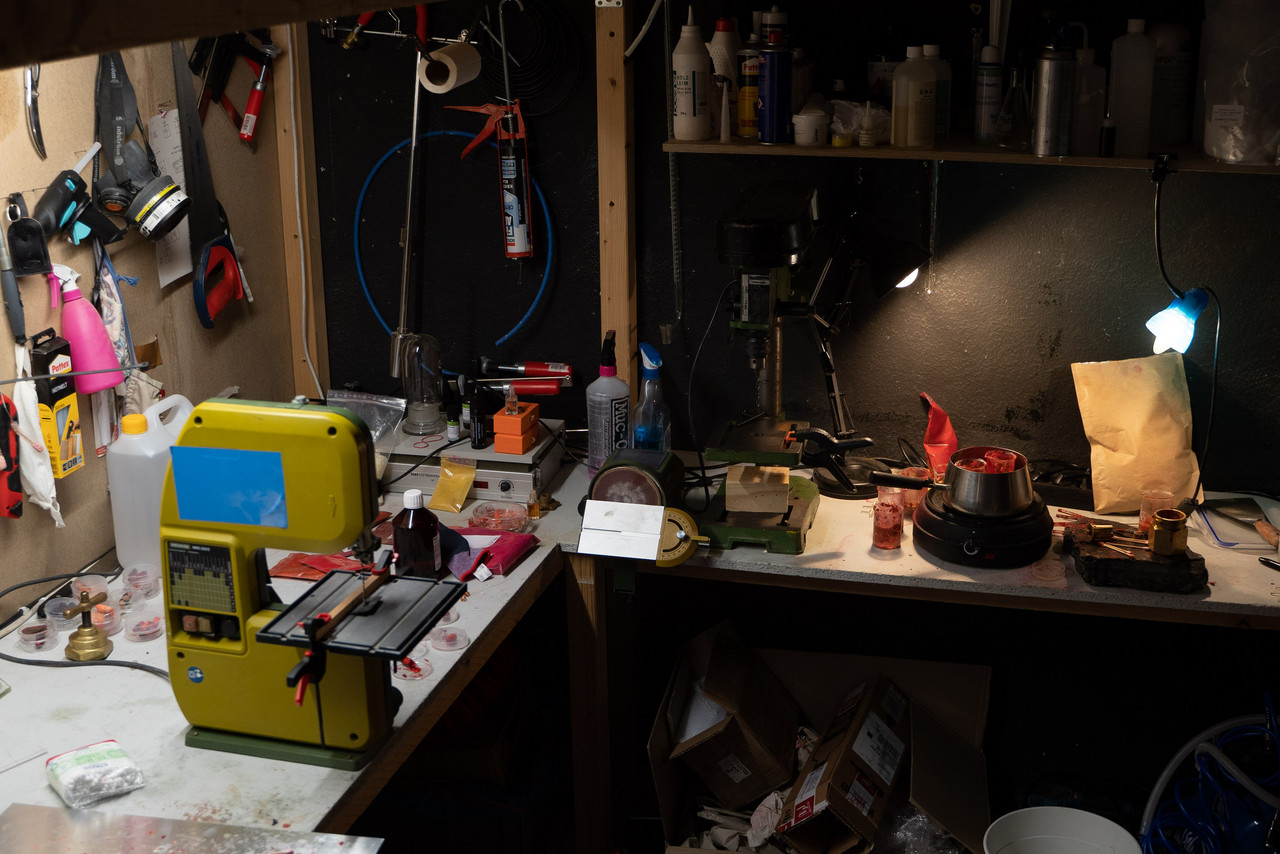
On the other side of her workbench there is a heavy brass mould that looks like the cylinder of a large gun. Ioana adds some magenta pigment and a few drops of rose oil to her beaker of wax. Another workbench is lined with rows of golden lipstick cases, standing on end like tiny soldiers. »I’m deep in production,« she says. She picks each one up lovingly and shows me her favourite details. One has a small blue stone which slides up and down to extend the lipstick out of the case, another has a mirror which twists magically out of the casing.
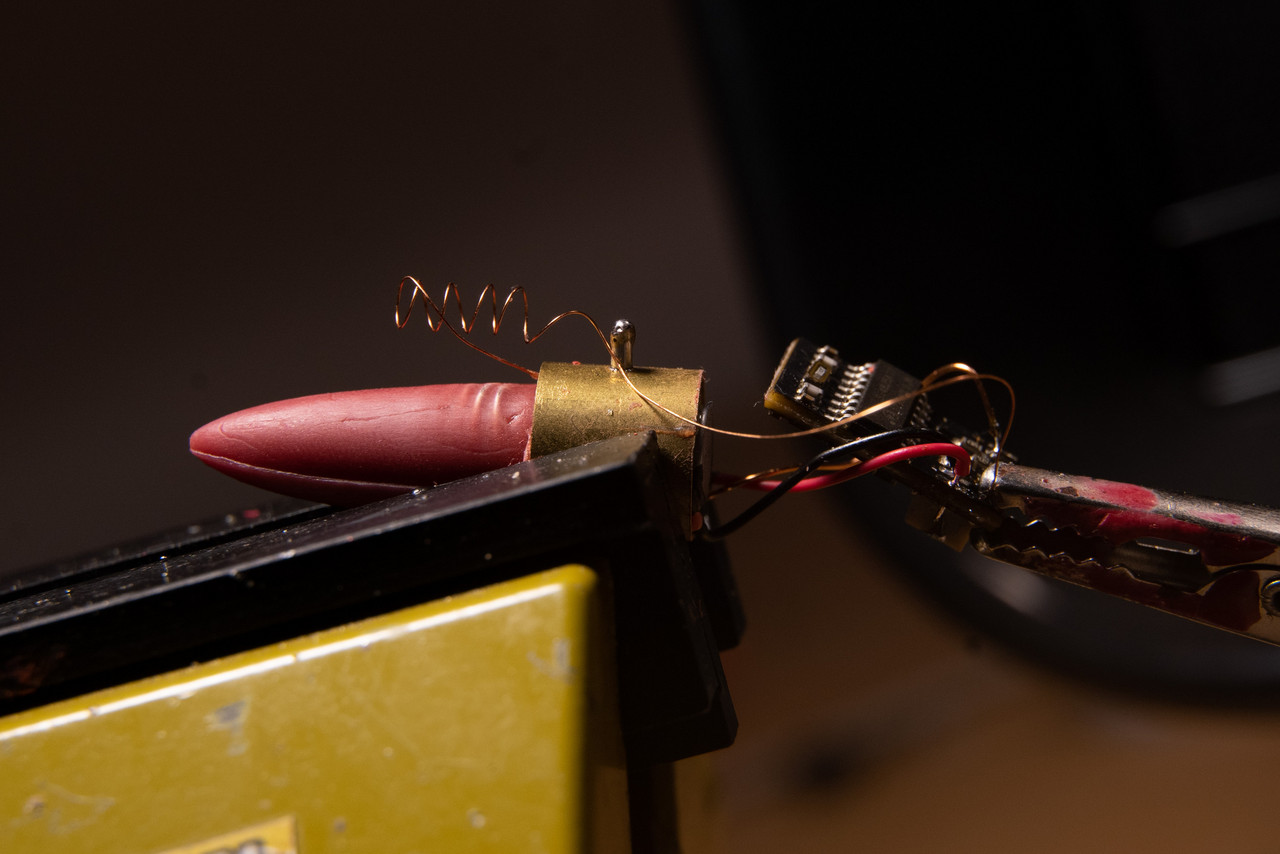
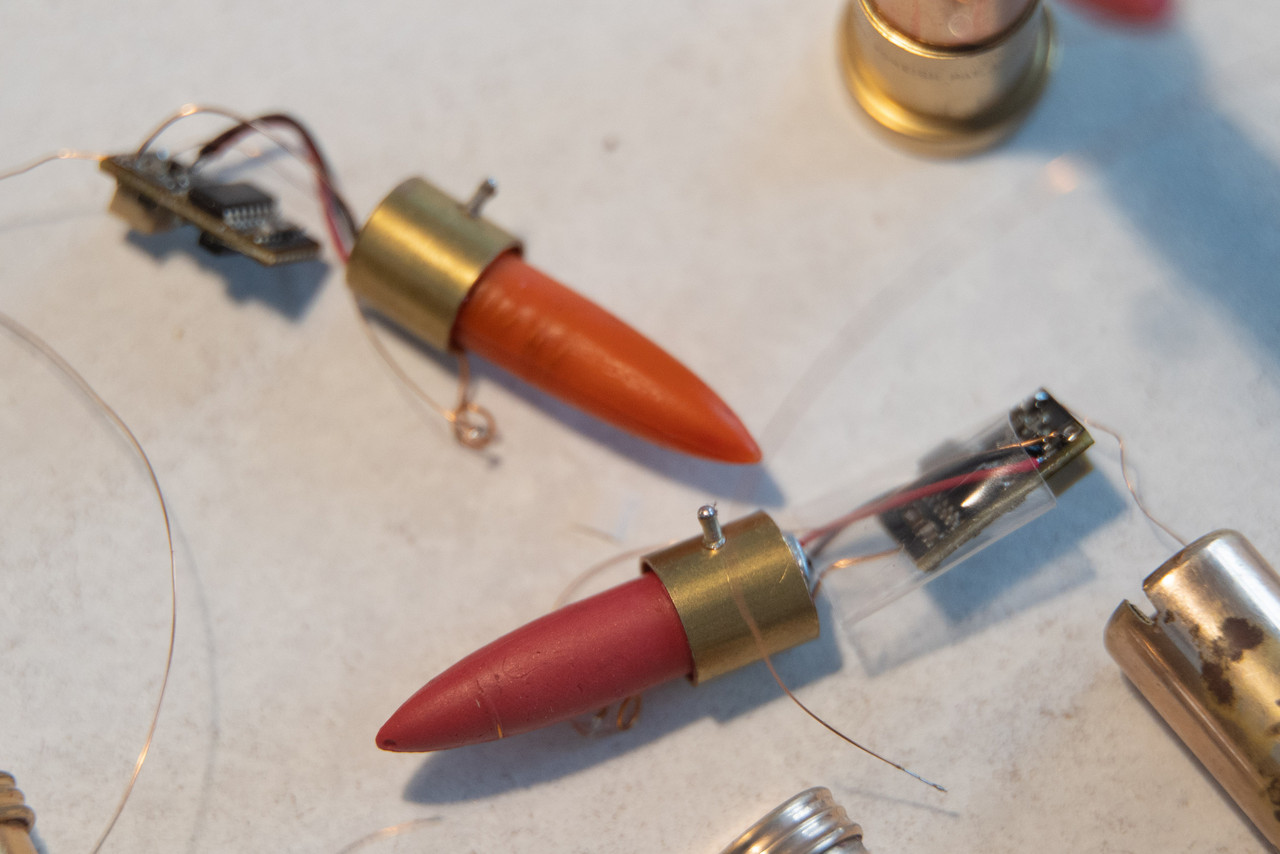
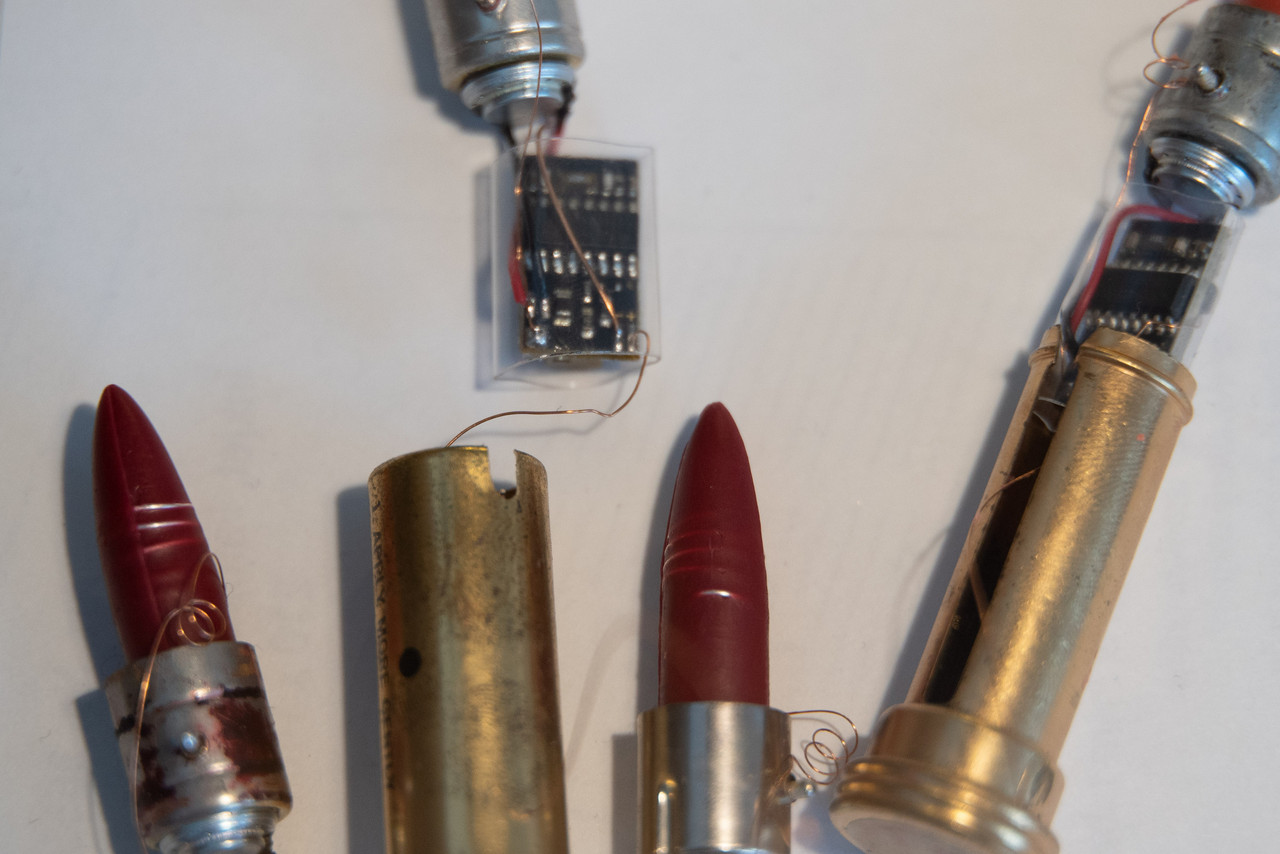
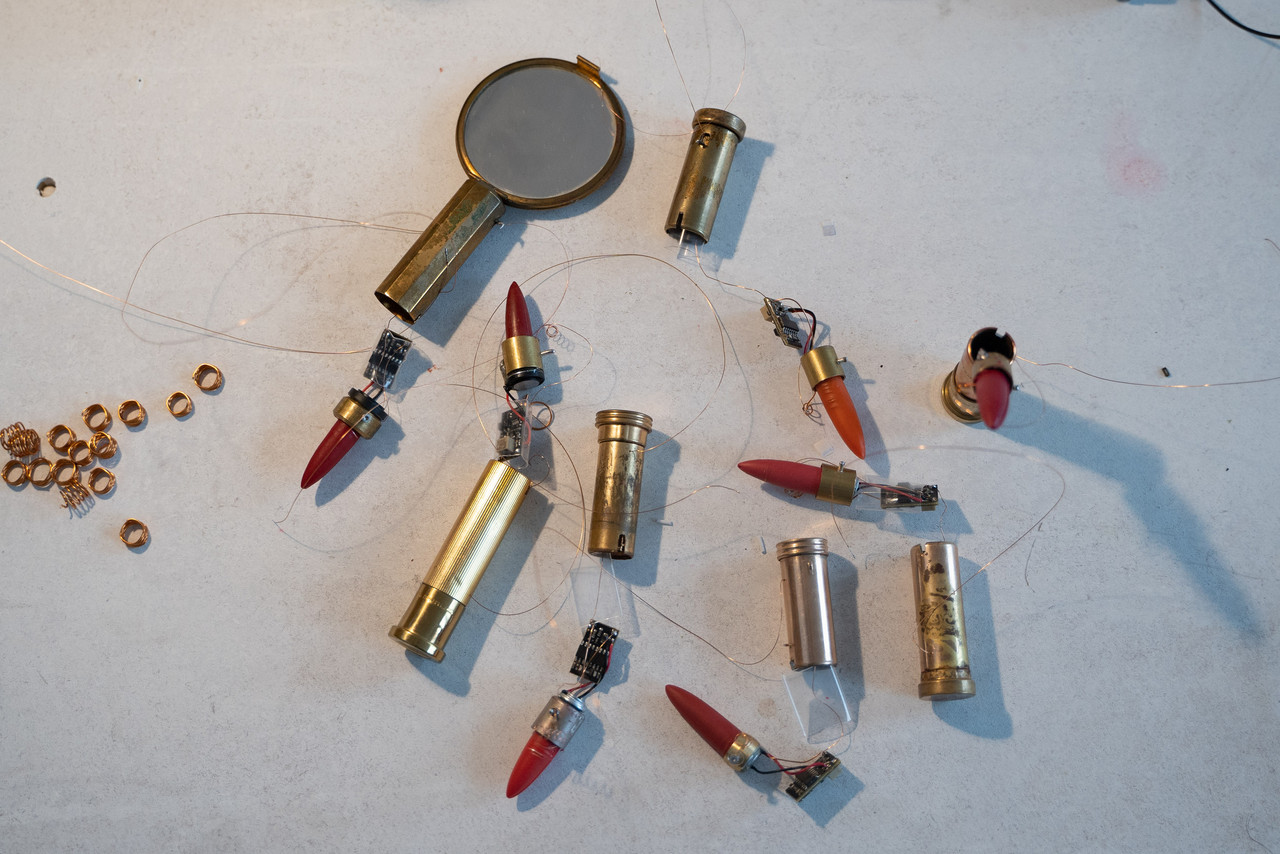
A third workbench contains cables, fine screwdrivers, and small plastic bags of electrical components, including a pack of custom-made circuit boards, each no bigger than my finger. One lipstick case sits on the electronics workbench, with the board already snuggly inserted into the gold casing. Assembly has begun.
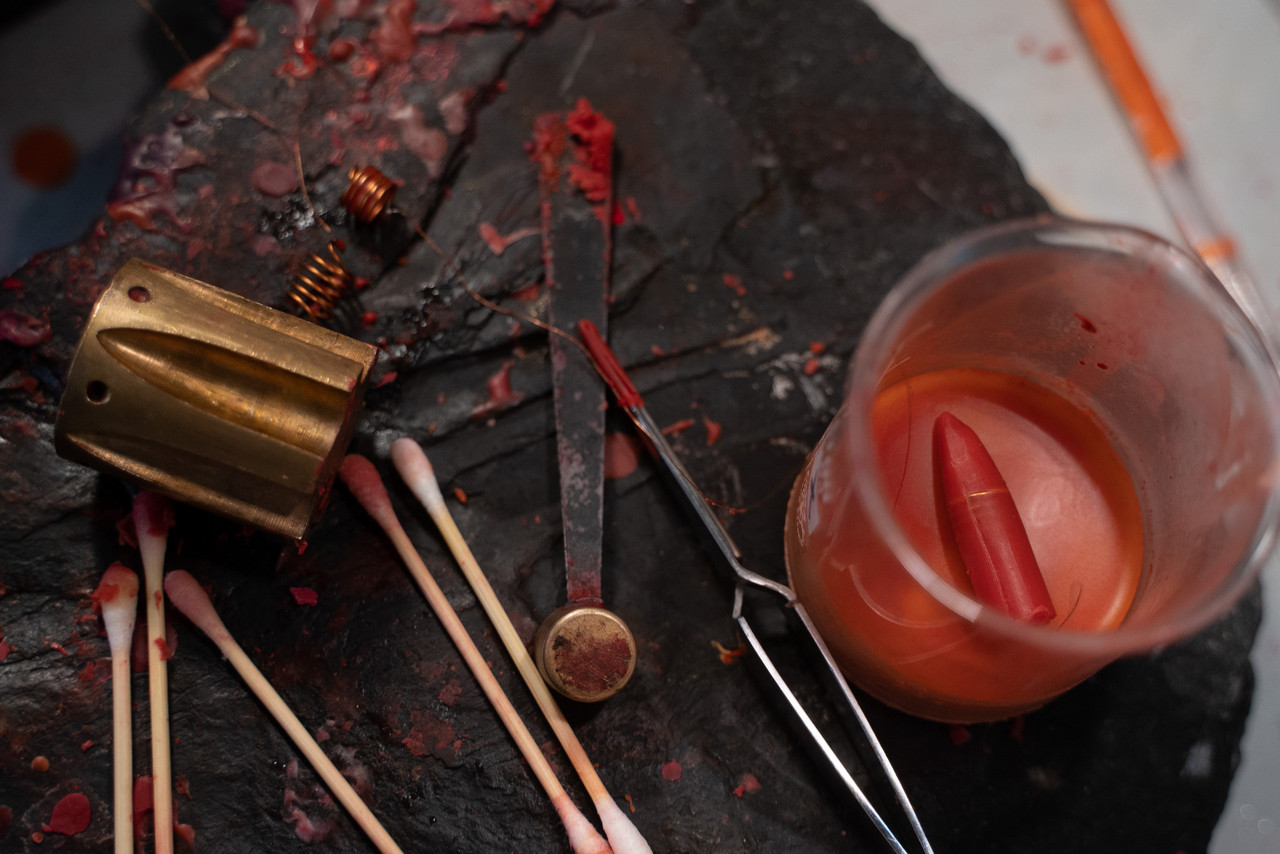
Heading back to check on the wax, Ioana heats the mould with a small blow torch. She inserts a tiny hand-made copper coil antenna into one of the long thin recesses in the mould, then carefully pours in the bright red liquid. I feel like we just put a cake in the oven.
While we wait for the concoction to set, Ioana pulls up some archival material on her computer. I begin to set up the microphones for our interview.
Lottie Sebes: So what is it about lipsticks that drew you into this project?
Ioana Vreme Moser: Lipstick was presented to me as a child while dancing ballet on the stage of the Romanian National Opera in Timisoara. By the age of six, I was wearing a full face of makeup on stage and would have liked to keep it off stage, too. I loved the eerie, flamboyant universe of powder boxes and red velvet backstage dressing rooms.
My grandmother would always wear brick red lipstick. I can still close my eyes and see the colour. During communism, when there was limited access to cosmetics, she would sometimes prepare them herself by mixing egg whites with pigments. She used to work on one of the first computers in Timișoara. I still have her punch cards.
Recently, I discovered the presence of many heavy metals in cosmetics and particularly in lipsticks, as contaminants in pigments. Historically, lead, arsenic, and mercury have been common ingredients in beauty products. One day, while soldering an electronic circuit with leaded solder in my studio, the question came to me: could my lipstick be semiconductive?
LS: I’m wondering how this is related to your previous performance character, Coquetta, who also used cosmetics. Do you feel that you were negotiating your own gender performance with this character, especially as a femme body on stage?
IVM: When I started working with electronics in my early twenties, the fact that I was a girl doing technically complicated things was seen by many around me as an antithesis. I responded by creating this ultrafemme character, Coquetta, who’s also devious and harsh, and I built sonic machines out of cosmetics to perform with. In the performance, I destroy my face on stage with cosmetics, and it's noisy, aggressive, and primordial. I revolt against this femme body and the norms around it. It ends with the application of an electronic lipstick. When I first started performing the work, I was very shy and I would still try to make it sound »good.« But in recent years, I realised the process is also an exorcism of this »niceness« and of my own femininity. Arsenic Ballerinas is a continuation of this line of research. I wanted to dive deeper into the chemical realm of lipstick and see what stories it has to share.
LS: What did you find once you started digging into the semiconductive mineral properties of cosmetics?
IVM: I saw an analogy: the same contaminants that make cosmetics toxic become the core materials for building our informational technologies. I started by excavating as many historical cosmetic recipes as I could find in an attempt to recreate them and explore their electrical properties. I wanted to integrate them into electrical circuits and see how they would respond.
LS: What was your process to make them sound?
IVM: My initial aim was to see if I could make my lipsticks catch radio waves. I experimented with different techniques.
Simplifying an eleventh-century cosmetic recipe in The Trotula: A Medieval Compendium of Women's Medicine, and inspired by my grandmother, I made a solution of egg-white (which is a great electrical conductor) and mineral powder. Setting iron oxides and crushed galena (lead ore) through an LC oscillation circuit, I was able to produce tones.
The »Bad Girl Organ« was a prototype that emerged from these experiments. Each lipstick is made with toxic semiconductive pigments. In a lecture performance, the lipsticks generate noises and alter voltages in my modular synthesiser set up. I think the aesthetic of these lipsticks makes you want to lick them, sit on them, but they're infused with mercury oxide, so actually, you can't even touch them. It’s very toxic – this is where the name »Bad Girl Organ« came from.
LS: What social and mineral histories of cosmetics have you traced throughout your research process?
IVM: Beautification is one of the earliest rituals of humanity. In 2024, a four-thousand-year-old Persian lipstick tube was discovered, which has nearly the same composition and shape as our current lipsticks.
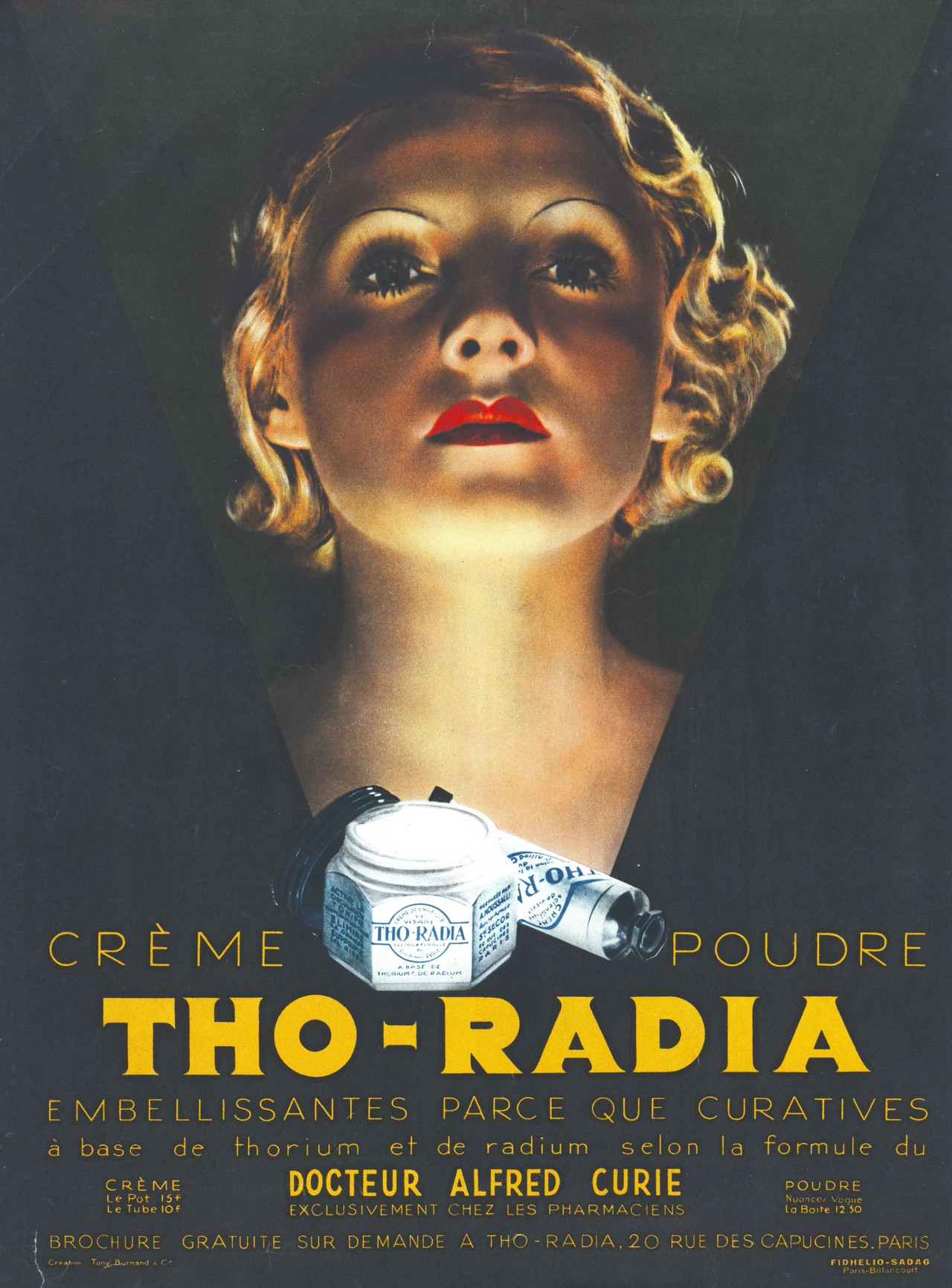
Since then, cosmetics have carried different social meanings, sometimes shifting from virtuous to immoral. During the Inquisition, for example, wearing »devilish smears« or ointments on your face was linked to witchcraft. To make yourself more beautiful artificially was to make yourself less godly, less pure. It is interesting how this association of cosmetics with witchcraft returned at the beginning of the 20th century, with Marie Curie’s 1898 discovery of radium. Some brands advertised the radioactivity of their cosmetics, showing witches casting beauty spells in their commercials. Radium and thorium were thought to offer your face the light from within that never ceases to glow.1 By the 1930s, the cosmetic company Tho Radia released an entire set of lipsticks advertising these radioactive metals as key ingredients.2
Uranium, radium, and lead are intrinsically the same mineral but in different stages of decay, with lead at the end of the decay stage. Lead is very stable and exhibits some special properties: It is radiosensitive, behaving like a diode. Galena crystals (lead ores) were also the first materials to demodulate radio signals in crystal radio sets.3
While diving conceptually into the potential radio properties of my lipstick, I started to imagine my lipstick as a radio receiver. What would it say if it could speak?
LS: I know you've done a lot of work with radio and building radio receivers. We met for the first time at one of your workshops, where you taught me how to make a radio receiver in a teapot. When did your interest in radios first start?
IVM: Growing up in the 1990s in post-communist Romania, there was a lot of talk about the radio wars that were carried out on the air until then. In the Eastern Bloc, radio transmitters were placed all along the border to jam any incoming signals from the West. Sneaky tactics deployed by Radio Free Europe, for instance, like frequency jumping and reflecting signals in the evening’s ionosphere, occasionally brought in some information. I was drawn to all the DIY contraptions around me that people had learned to improvise during this time. Knowing and understanding radio was and still is a great power. And in this sense, I’ve been dedicating a large part of my artistic practice to teaching workshops on these technologies.
LS: At what point in your journey did you discover the pioneering radio builders and operators, the Young Lady Operators?
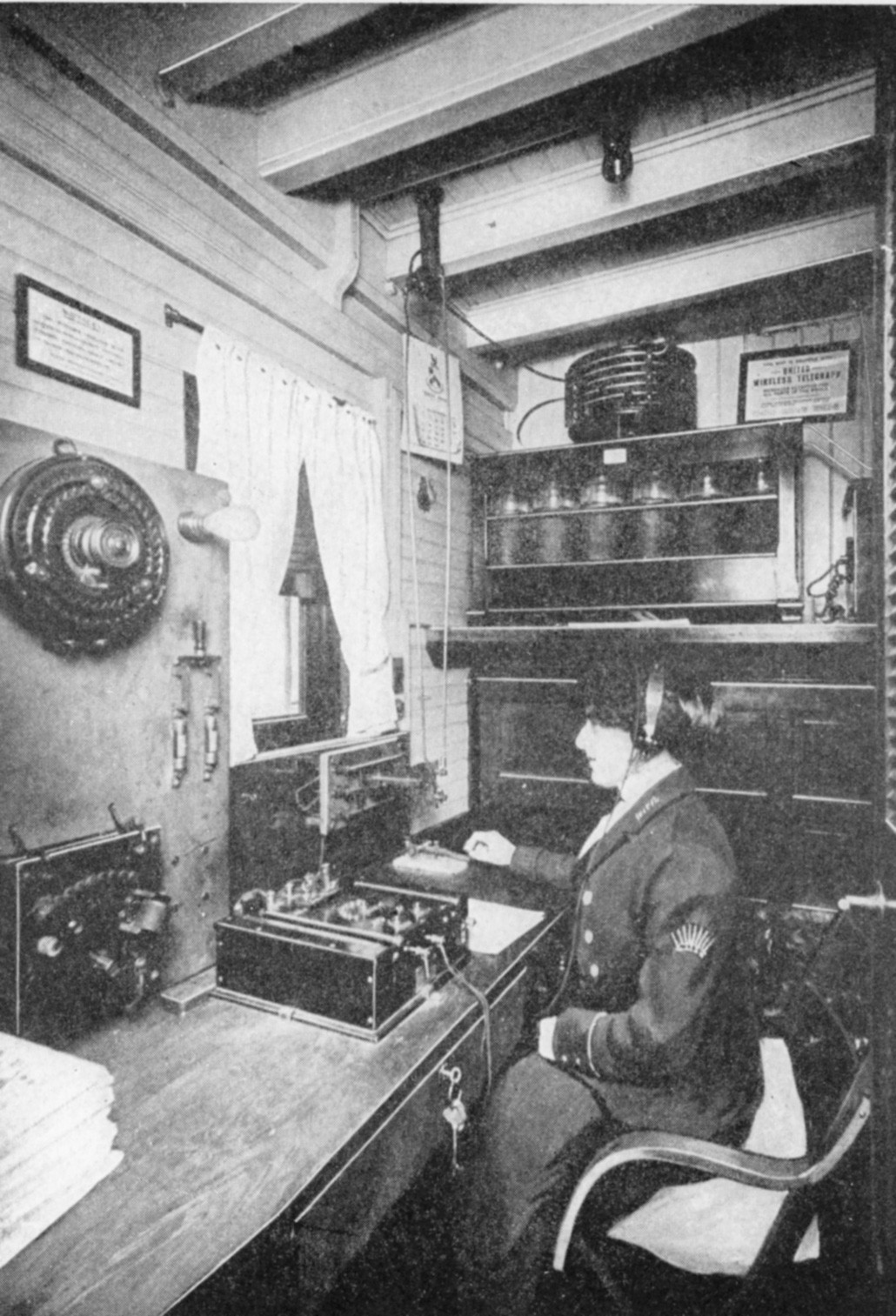
IVM: When you look at the history of technology, there are always uncredited hidden inventors, often women, who made important contributions. Radio pioneers like Graynella Packer, who sailed the seas as a radio operator in the early 1910s and Kathleen Parkin, who obtained a radio license and built her own transmitting device in 1916 at only 15 years of age, paved the pathway in radio telegraphy by persisting in a field generally reserved for men.
Throughout the 1920s and 30s, more women across the world started to get involved in radio, sending mostly morse code as it gave them a sense of anonymity. In Romania, for instance, Lelia Constanta Bajenescu registered under the call name YL CV5BI in 1926. YL stands for Young Lady Operator (used regardless of age), and it came from the wireless culture of the late 19th century.4
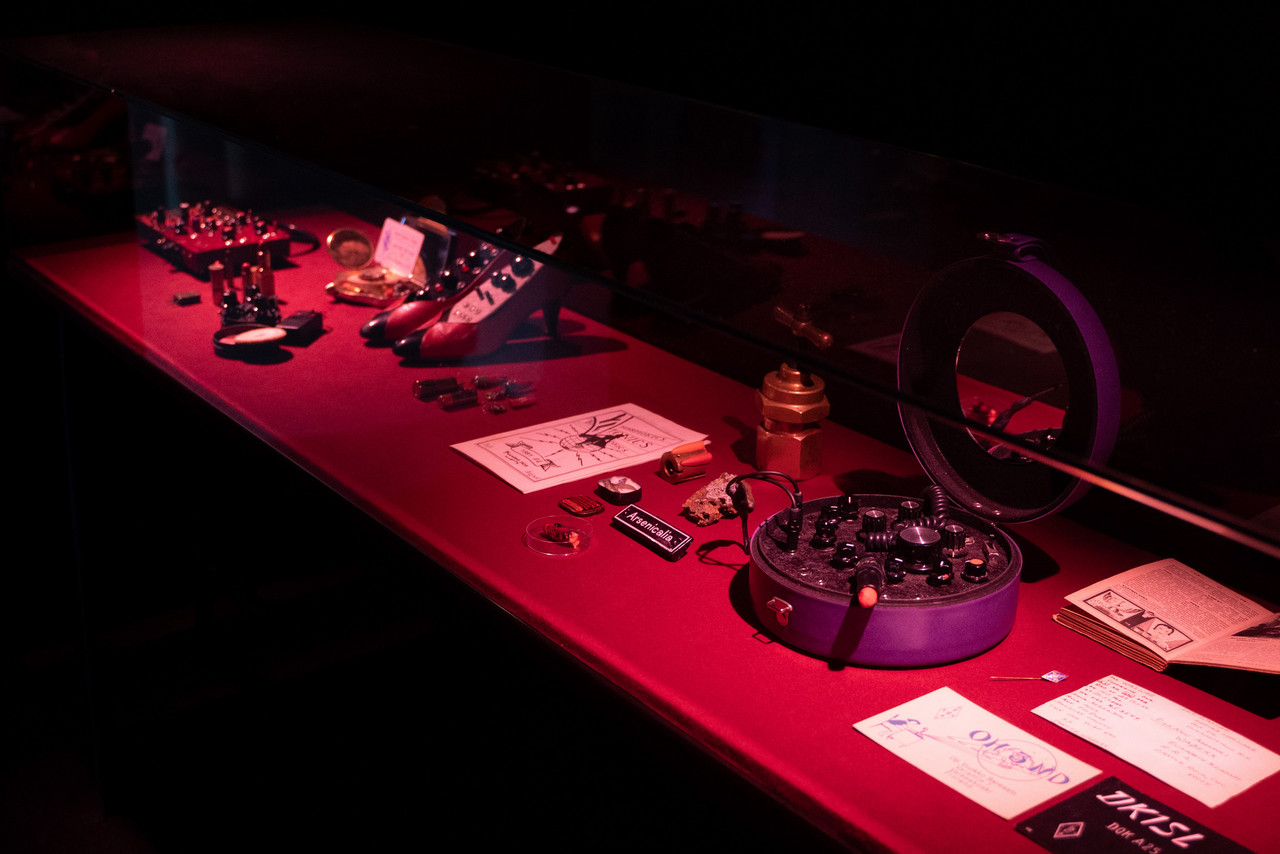
Along the way, while experimenting with radio, I found an archive from the Young Ladies Radio League. The League was founded in 1939 in the US and it was followed by many other leagues across the globe, such as the KLARC (Korea Ladies Amateur Radio Association), SYLRA (Scandinavian YL club), and BRYLA (YL award in Brazil), to name a few. It’s a meeting point for women registered as radio amateurs. I was drawn to this because I'm an amateur as well. I build things, but I'm not an engineer. In my collection I have a few »QSL friendship cards,« which YL operators sent to each other after they established a connection on air, showing the registration number, operator name, place, and the time of connection. The YL Operators also published a monthly magazine, The YLRL Harmonics, which is a melange of technical advice, intimate testimonies, news, and even some quirky poetry about transmitters. Throughout the magazine, one can also peek at how quickly the world changed as it entered war.
LS: It has a proto-internet feeling to it. It’s like a club of women all around the world who’ve found each other through this special interest and have built a subculture around it through this new communication technology.
IVM: Yes, there were even arrangements when all of the YLs would connect at the same time on a frequency (a bit like a group chat but on air) called the »YL Nets.« There's something very magical about tapping into your receiver and just finding someone on the other side of the globe to talk to.
When WWII came, and Nets were not possible anymore, some of these women used their radio experience to become spies, often travelling and transmitting to the Allied forces from inside resistance movements. That’s when you would see guns or cameras concealed inside everyday objects, or even cyanide pills hidden inside lipsticks. The story of toxicity in cosmetics turns back on itself again. You can see how the whole thing got entangled in my head, which brought me to this research project.
LS: How do you honour the YL operators into your project? Does their archive feature in the sound?
IVM: I carefully collected stories from the YLRL Harmonics magazine that I found relevant and intertwined them with morse code transmissions and archival recordings, including fragments from cosmetic commercials associated with the particular lipsticks I had collected. Since there are no audio recordings of YL Nets or communications, I used my voice to highlight fragments of their testimonies.
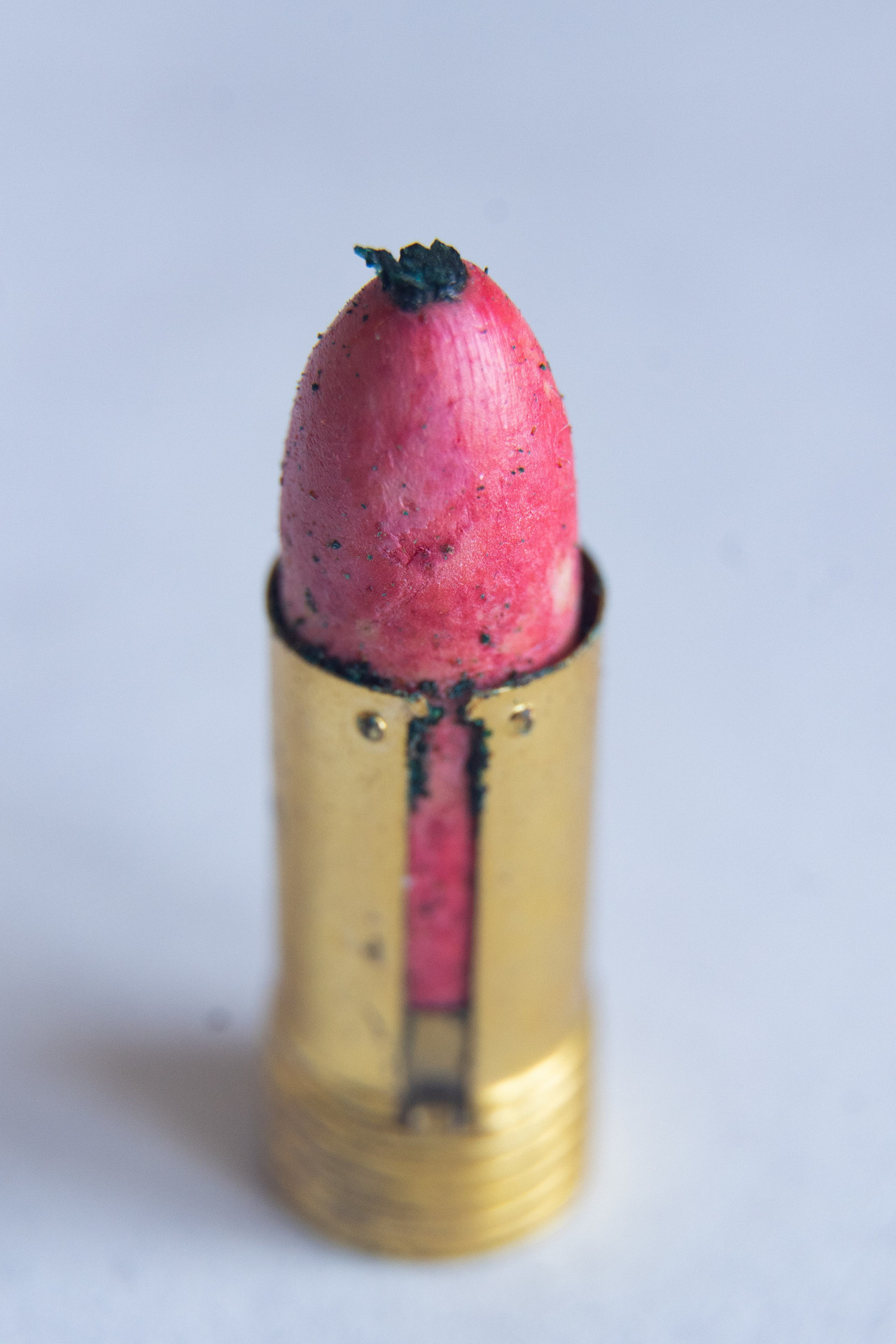
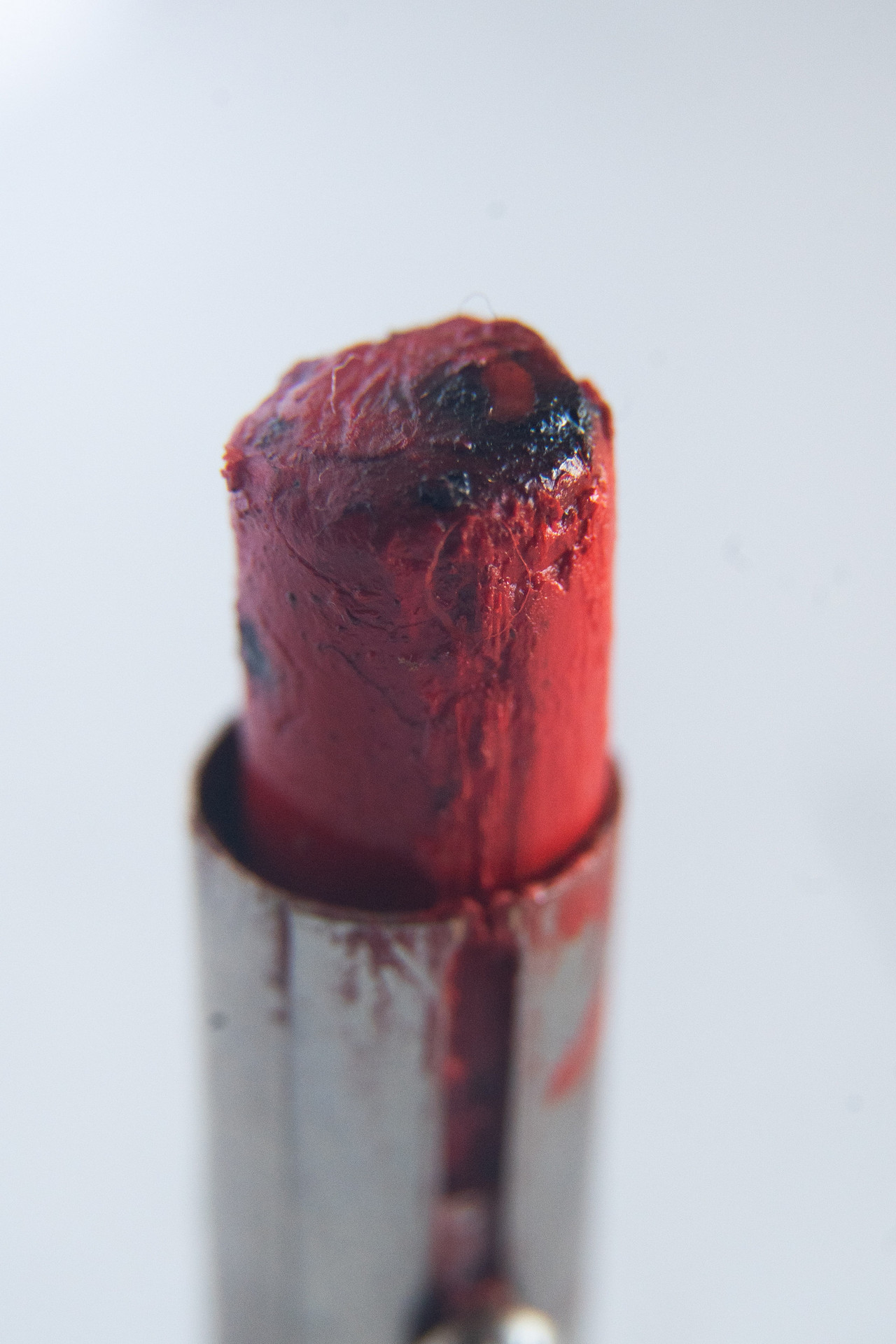
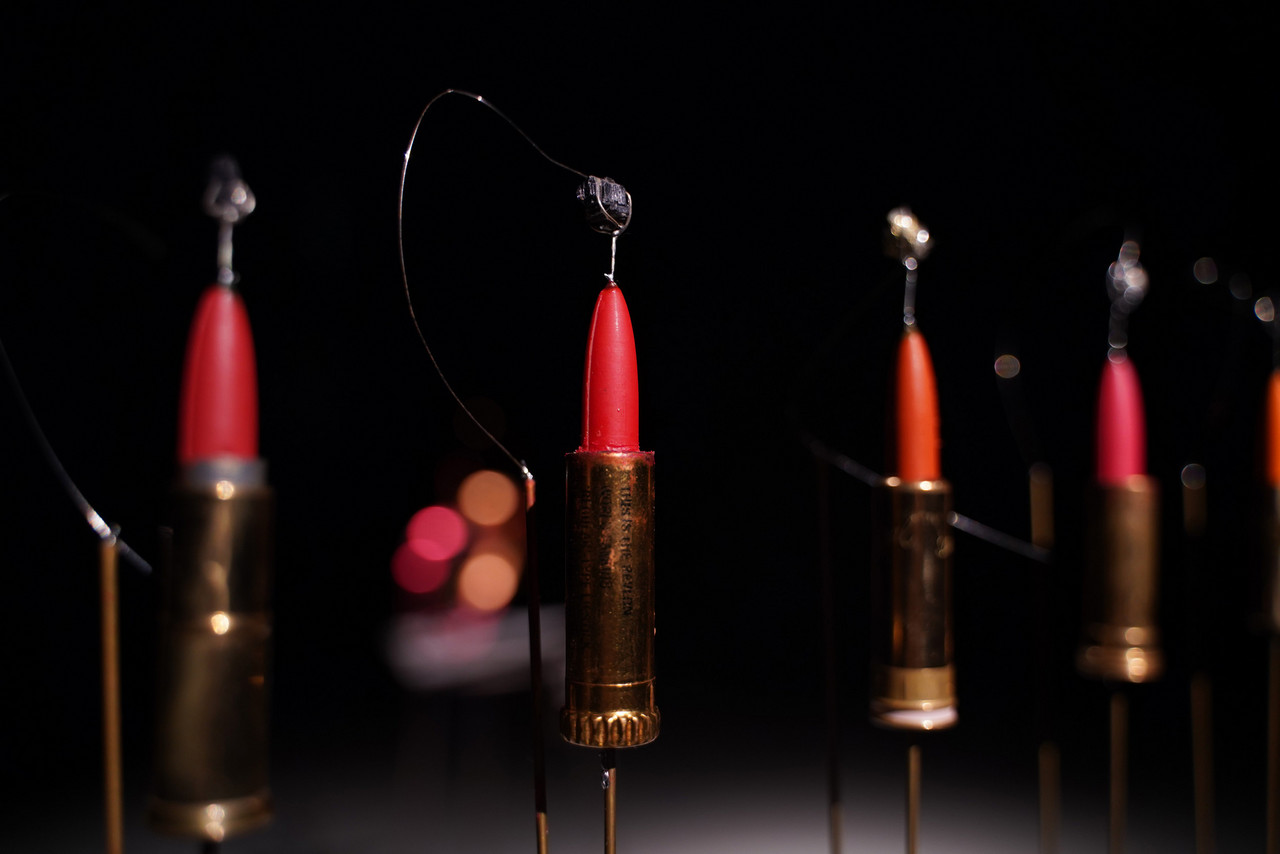
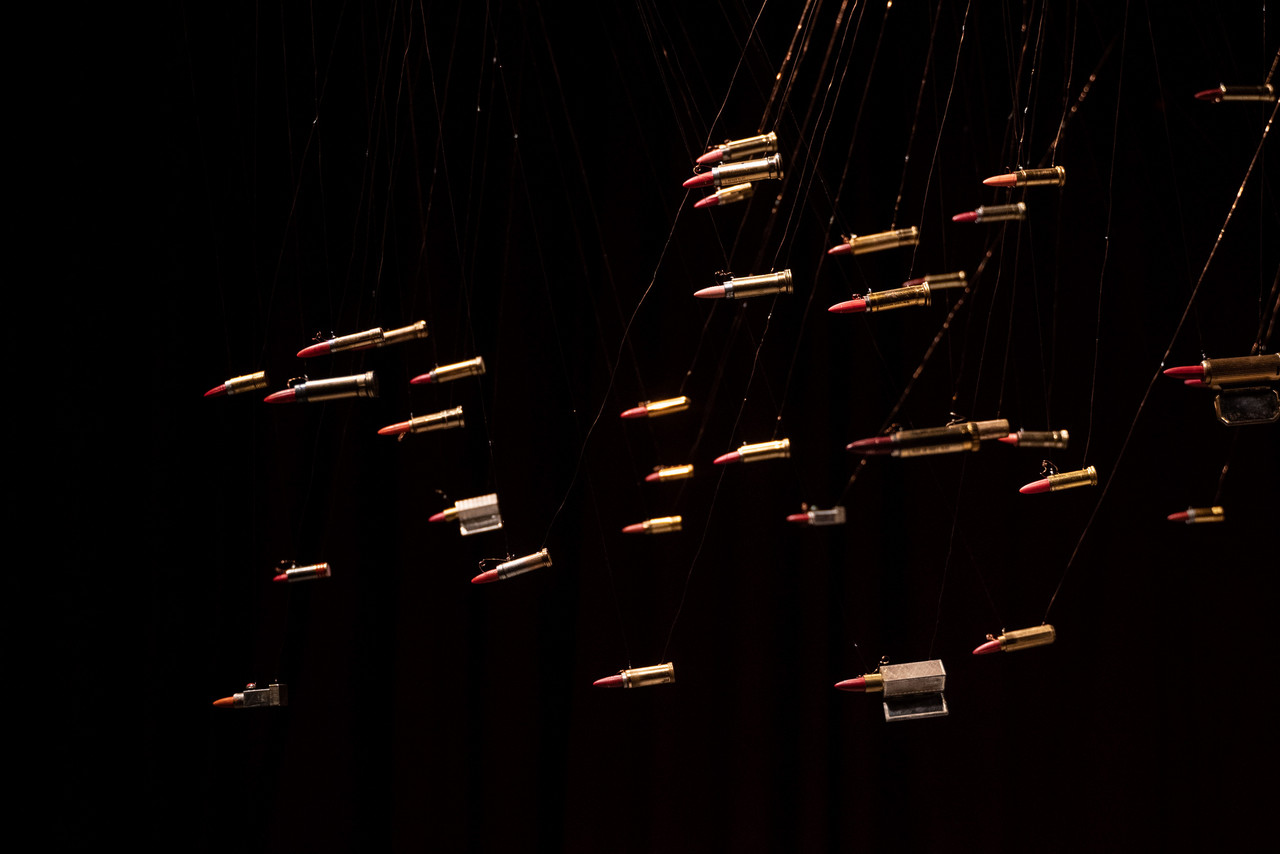
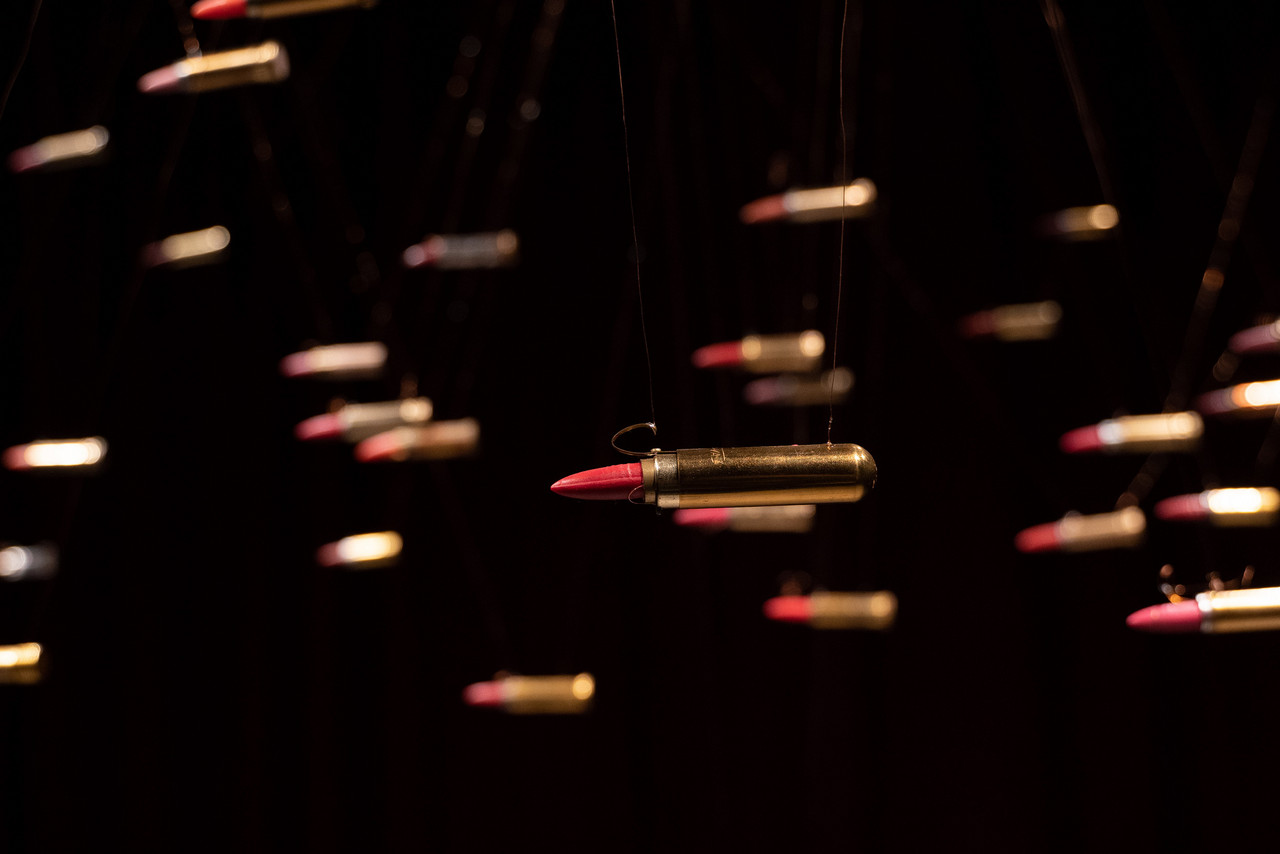
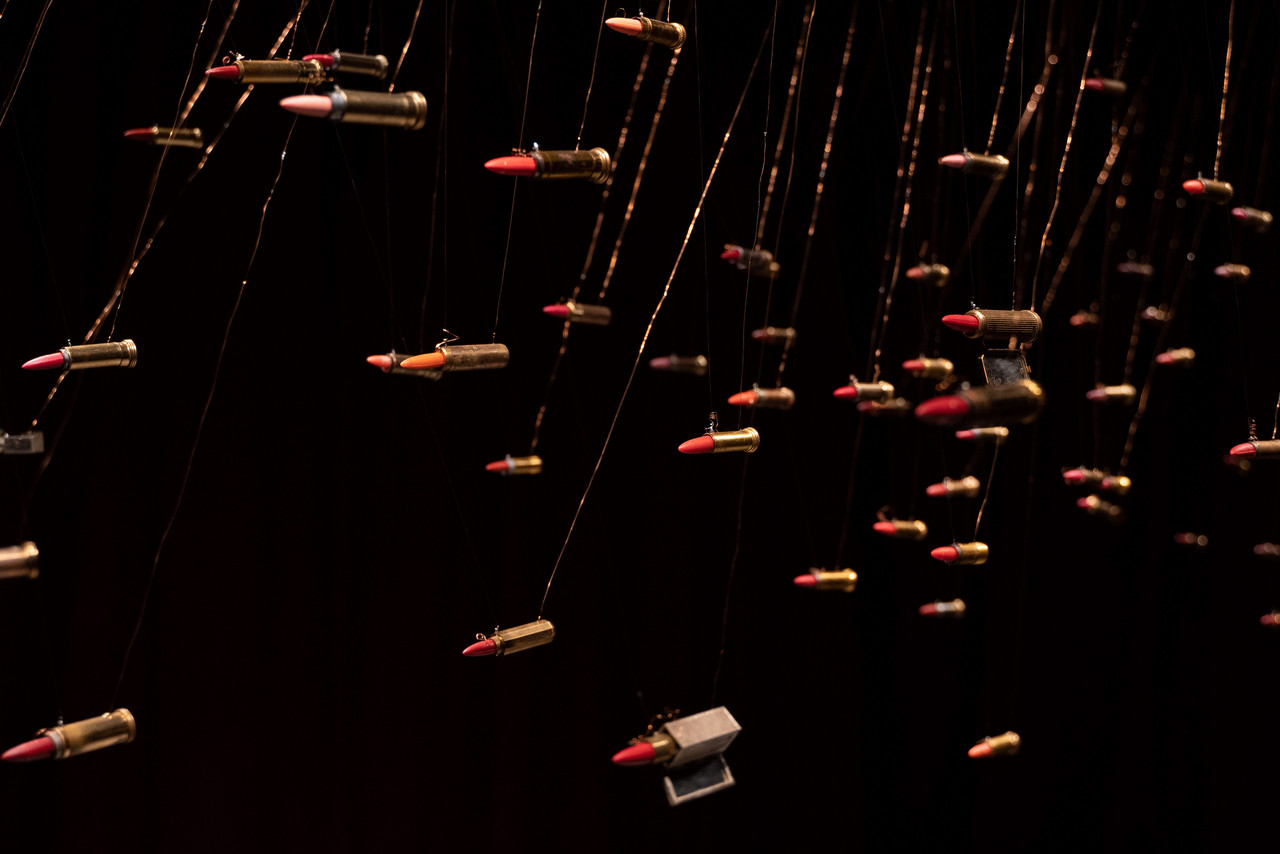
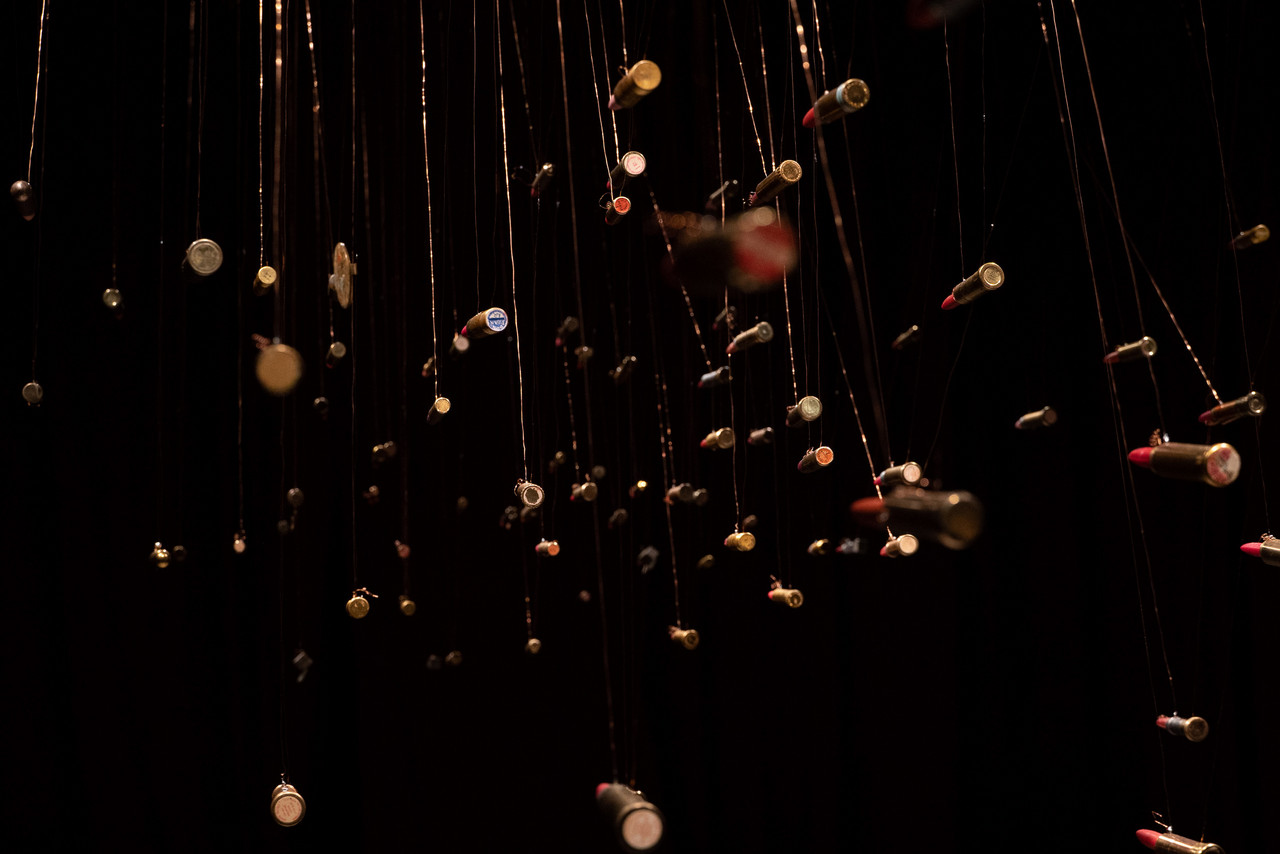
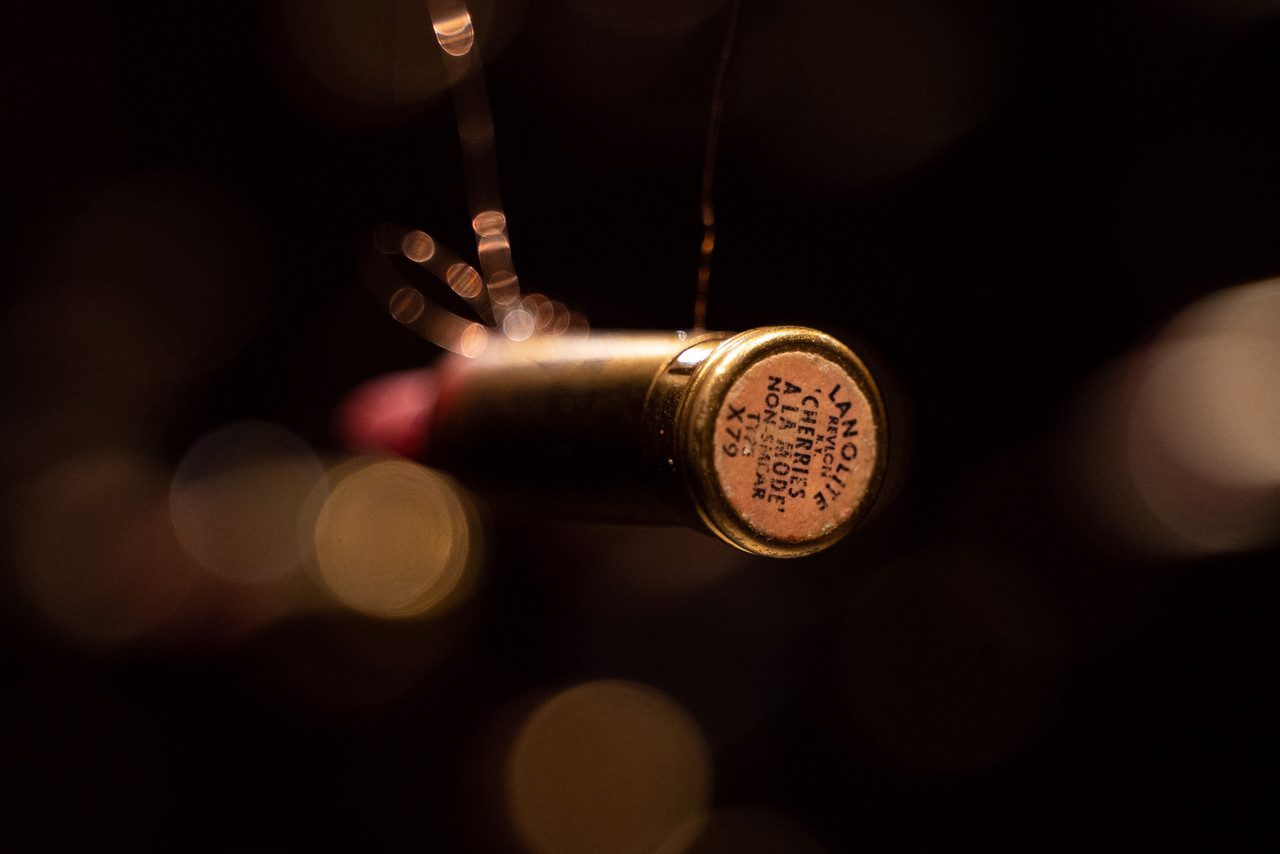
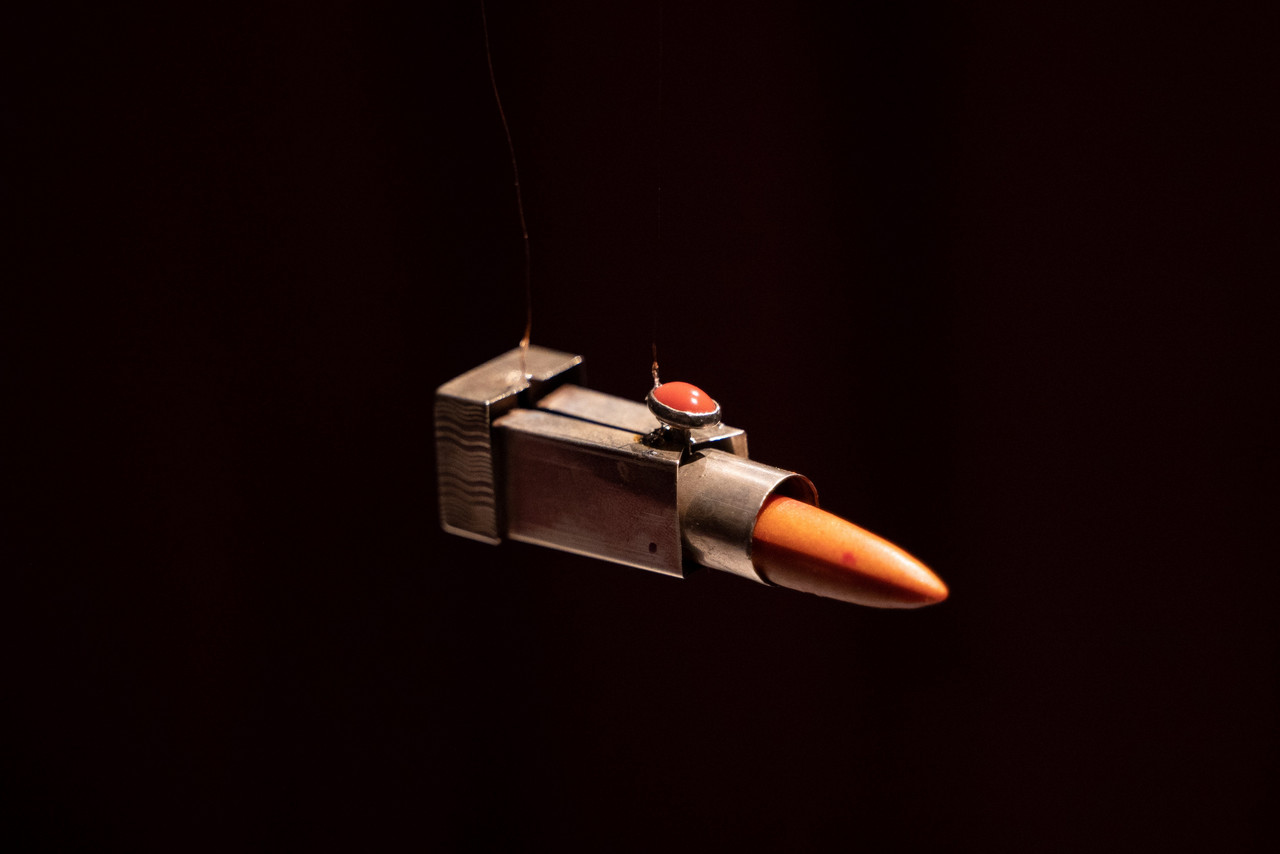
In Arsenic Ballerinas, these sounds are emitted from the lipsticks, which become like audio surveillance bugs, spying on their own history. I used the entire anatomy of each lipstick to create a functional radio receiver. After one year of collecting them, I photographed them all as they were, pestilent and sweet-smelling. Each has its own identity as someone’s darling. Then, I carefully melted the substances out, preserved and remoulded them. Each contains an antenna sealed in the coloured wax and the circuitry and loudspeaker are embedded in the lipstick cases.
In the installation, the 133 lipsticks are suspended in a swarm, catching local FM airwaves. The sound comes in the form of seven radio transmissions that pierce through the static, giving the objects a voice. The transmissions create a swarm of evolving tales that point towards the listeners’ ears like bullets.
Erie cosmetic commercials, my voice reading from Harmonics, audio snippets of Coquetta applying lipstick, YL testimonies and pre-war songs reflect a moment in history quite similar to the one we live in. I wanted to create the feeling of a suspended moment, shortly before impact.
LS: Could you tell me more about the connections between lipsticks and munitions? Which came first, the bullet or the lipstick?
IVM: The lipstick! Remember, the Persian version is four thousand years old. You can see the connection by simply looking at the shape but there is also an entangled history of production and use. Both were made of brass and lead with tips that touch the flesh. The mould I use to cast my lipsticks looks like it was made for cartridges, although it's a medical mould I found in a Berlin antique shop.
During the Spanish Civil War, for instance, one Catalonian lipstick tube factory was converted to manufacture munitions for the anti-fascist Republicans. The machines and materials were the same.
LS: Have lipsticks also played a role in other wars?
IVM: In Nazi Germany, it was thought that the pure white German woman shouldn’t wear decadent cosmetics.5 This was a reaction to the queerness and the colourful expression that was associated with the widespread use of cosmetics in the Weimar Republic. In the Allied countries during WWII, red lips carried a feeling of unity and resistance. Here, lipstick had also recently gone from being a luxury item to an indispensable novelty. It became a statement in the fight against fascism. Elizabeth Arden, a cosmetic mogul, even capitalised on this and made a lipstick colour called Victory Red. The installation features around 20 lipstick tubes made in this period for the US military.
LS: So lipstick was used as a tool to build support for the war. Wearing lipstick was framed as individual freedom or female self-determination, but it was also part of a growing consumerism that served the promotion of capitalist and Western values?
IVM: Yes, a similar thing had just happened with the suffrage movement. In an unverified and possibly false claim by the makeup brand Elisabet Arden, the suffragettes painted their lips red as they marched with her red lipstick on. The brand capitalised on this event and even today sells lipstick under the marketing campaign »March On.«
Unlike these lipstick mythologies, radio operators were actually linked to the suffrage movement. They inspired suffragettes as independent women, working in this novel technology alongside men.6 Radio became an important tool for suffrage.
LS: So you’ve dug deep into the intersecting social histories of cosmetics and technology. Does this underpinning allow you to address political issues in your work, perhaps indirectly?
IVM: Given the new wave of fascism and global militarisation, I feel like we might be re-living a historical loop. »Mar-a-Lago face« or »conservative girl makeup« is also on the rise, caked-on and devoid of colour. Note that red lipstick is excluded from this look.
Putting on red lipstick wasn’t always an act of protest or liberation. It was for some, in certain contexts. The gesture does have a kind of historical relevance to empowerment throughout history. It brought a means of self-transformation and expression. At the same time, it also enforced Western beauty norms and gender stereotypes that affected generations. I am still negotiating how its toxic presence has influenced both my self-perception, my face and the instruments and objects I build. I have brought these histories together in an attempt to understand the present moment and its possible ramifications. The bizarre and conflictual history of lipstick makes it, for me, a powerful tool and a fascinating object of contemplation.
Lottie Sebes is a sound artist and researcher working across performance and installation. Her work and writing explore the material, cultural, and political residues of technological systems, and have been published in Sonic Scope, Echo, and her solo multimedia publication and record Veritas Ventriloquist.
This text was commissioned as part of CTM 2026 »dissonate resonate.«
The »Arsenic Ballerinas« radio sound installation was commissioned by CTM Festival, DAAD Artists-in-Berlin Program, and iii - instrument inventors initiative. Research and development was supported by iii and the Recherchestipendium für Alte Musik, Neue Musik und Klangkunst 2025. Technical assistance by Dorian Largen Schleich and transmission assistance by Martin Kuentz.
- 1
Lucy Jane Santos, Half Lives: The Unlikely History of Radium Hardcover (Pegasus Books, 2021).
- 2
Rene Jacquet, Dictionnaire des Soins de Beauté (Presses de la Régie de I'lmprimerie Crete, 1935).
- 3
J. F. Corrigan, The »P.W.« Crystal Experimenter’s Handbook: Information You Cannot Do Without (Amalgamated Press, 1922, 1925).
- 4
Two starting points for research into wireless culture of late 19th century: https://ylrl.net/history/ and https://en.wikipedia.org/wiki/Women_in_early_radio
- 5
»War on Paint and Lipstick« in GERMANY TO-DAY, Waipa Post, Volume 47, Issue 3375, 3, October 1933, Page 2: https://paperspast.natlib.govt.nz/newspapers/WAIPO19331003.2.5
- 6
Anne Gessler, »Purifying the Upper Atmosphere: Women’s Work in Early Radio, 1905-1913,« American Studies in Scandinavia Vol 46( 1), 2014, Page:95. DOI: https://doi.org/10.22439/asca.v46i1.5152