Sat, 25th Jan 2025
18:00
silent green Kuppelhalle
Tickets coming soon
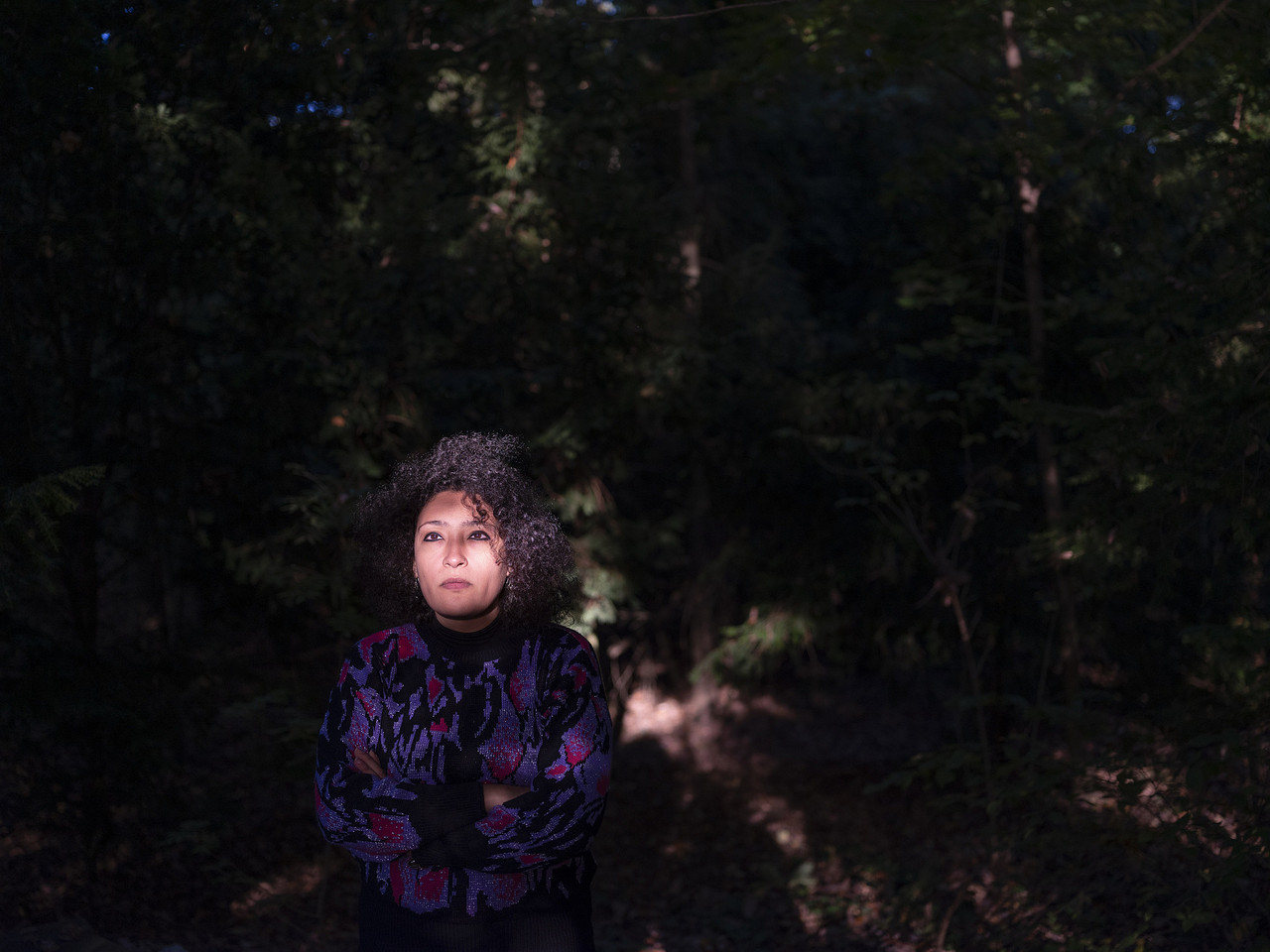
As a woman living in a society dominated by religious conservatism and patriarchal structures, Mekawei explores how affection can serve both as a sanctuary and a battleground. Set against the politically charged landscape of Egypt, where borders with Palestine, Libya, and Sudan represent sites of war and refuge, her project delves into the paradox of seeking safety amid deeper personal struggles.While the country serves as a place of refuge for those escaping violence and instability from neighboring regions, Mekawei’s work reveals that this safety is double-edged. Refugees may escape external danger, but they often face new struggles in a society that limits freedom of expression, especially for women.
Mekawei’s proposed work, »Sonic Forces,« unfolds through an aural exploration of these overlapping conflicts. By capturing field recordings from Egypt’s border regions—areas marked by the transition between war-torn zones and relative safety—she will create a soundscape that reflects this journey: the sounds of crossing points, refugee camps, and border towns transformed into a layered auditory landscape.
Affection, typically seen as a space of care and refuge, becomes a complex and multifaceted theme here. Mekawei reimagines affection as both a source of comfort and a means of resistance. In the context of »Sonic Forces«, it operates within spaces of conflict—both external, where refugees seek safety, and internal, where Mekawei herself struggles to assert her artistic voice against societal restrictions. Her live performance will engage the audience in a dialogue between these external and internal borders, where affection is constantly redefined.
Stay Tuned ...
Following a premiere at CTM 2025, the work will be broadcast via Deutschlandfunk Kultur and ORF in spring and autumn 2025 respectively.
The Radio Lab is a project by Deutschlandfunk Kultur – Hörspiel / Klangkunst and CTM Festival in collaboration with ORF musikprotokoll im steirischen herbst, Ö1 Kunstradio, and the sound art initiative tekhnē, which is co-funded by the Creative Europe programme of the European Union. Views and opinions expressed are however those of the author(s) only and do not necessarily reflect those of the European Union or the European Education and Culture Executive Agency (EACEA). Neither the European Union nor EACEA can be held responsible for them.