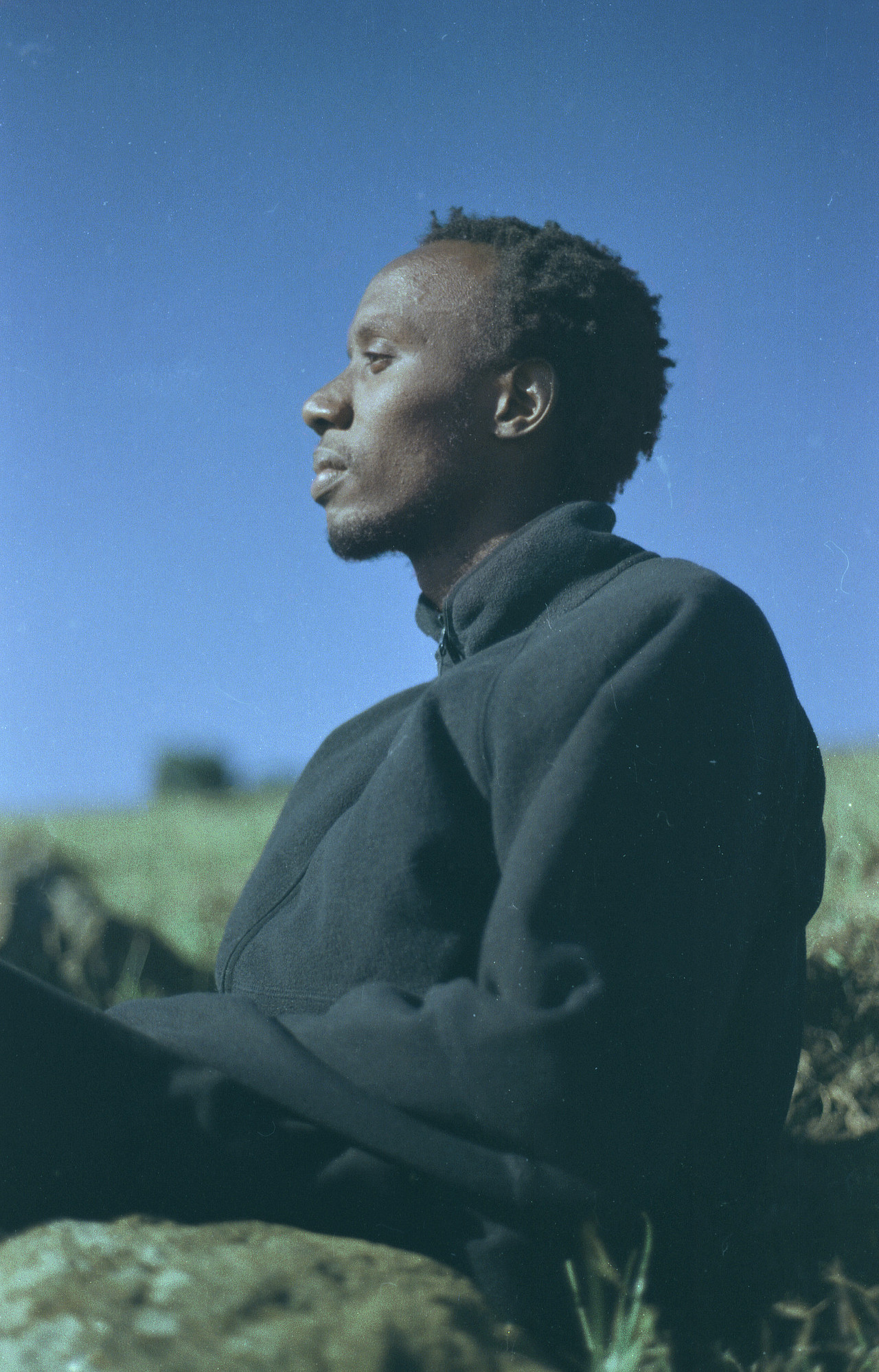
In 2020 he released Peel on the avant-garde label Editions Mego with follow up albums Opaquer, Jar, and logue, each on different labels. His releases have been praised by outlets such as Resident Advisor, DJ Mag, NPR, and Bandcamp. His works have been presented in NyegeNyege Festival, CTM Festival, Atonal, GAMMA, and Mutek.
KMRU inaugurated the year 2022 with a collaboration with the London Contemporary Orchestra at the Barbican, and will continue with a solo tour in the US with Fennesz, and in the UK and Europe with Big Thief.
CTM 2022 X SHAPE mix: KMRU by CTM Festival
CTM 2022 X SHAPE mix: KMRU by CTM Festival
KMRU & Felicity Mangan- They thought of themselves
Petre inspirescu - The Garden
Lucy Railton - First Lament
Francis Harris - Useless Machines
Valance Drakes - Led By The Beheaded One
perila - rolling in the dirt
Space Afrika - self
Obay Alsharani - Release
KMRU - lune
Grand River - Canopies
borshch is a magazine for electronic music on and beyond the dancefloor. Founded in Berlin in 2017 by Mariana Berezovska and Tiago Biscaia, it’s a space to provoke open dialogues and challenge established ideas about making, listening, and dancing to music. In this short interview, Mariana Berezovska speaks to KMRU about his artistic practice.
Mariana Berezovska: There’s a growing interest in environmental sound, both among artists and listeners. You’ve made music applying recordings of a moving train, birdsongs, running water, and a busy market. Releases from artists like Space Afrika, Flora Ying Wong, Perila, Biosphere (to name a few) are becoming more relevant and popular than ever. What do you think are the reasons for this? Do you believe that our months of forced mass self-isolation and relative silence made us less inclined to be hustlers and more better listeners?
KMRU: Well I think artists want to narrate different events happening in their surroundings. This can be field recordings, voices, noises, or soundings happening in the immediate space. Isolation might have given an impetus for the awareness of our environments due to the silences in cities and neighbourhoods, which provoked a deeper listening.
MB: You’ve started your journey as a musician back in Kenya, where I assume you could connect with other artists through festivals like Nyege Nyege, and through internet communities. From my experience, I can say that most of the underground artists from African countries became known in the European landscape through Nyege Nyege and their showcases at CTM, Unsound, NTS, among other. You’re living in Berlin now, and connecting with the European music scene gave you another perspective on your work and its relation to the global community. How, in your experience, are the scenes in countries like Kenya, Uganda, Niger, Ivory Coast, Tanzania (as represented by Nyege Nyege) perceived in European communities?
KMRU: The online community definitely played a role in connecting with artists and persons working in the music world. I believe that yes, a majority of artists from the African continent have been showcased through Nyege Nyege, although I believe more artists and music communities within the continent remain to be discovered. Well, I can't speak much of Nyege Nyege and how they showcase the musics of the different parts of Africa; they’ve played a huge role in this and in bringing artists, musics, and scenes to a global audience.
MB: In Kenya, you’ve organised Ableton workshops for musicians, which also helps them know that they are not alone. Who were the people in your community there? Was there a decisive moment when you felt like your work was being heard and your contributions valued? Are you coming up with new ideas for strengthening such a community back in Kenya while studying Sound Arts in Berlin, where students have many more facilities and possibilities to experiment and learn?
KMRU: The Nairobi Ableton User Group was something that felt important to do, because when I started learning to produce music there weren’t many artists you could connect to and share insights about music production with. Having a space where music makers could come and chat, jam, and learn about production felt important. There's been insights of how the User Group is growing and changing, with the focus being on workshops. Last year myself and the team in Nairobi curated a compilation which will be released at some point this year. I believe there is so much possibility to experiment with a limited set of tools and resources, and make the best out of what's available.
In 2019, when I fully decided to focus on the KMRU project, there was an attention to what I was doing both as an artist as well as for the scene in Nairobi. (I guess)
MB: What would you record if you had a chance to record any environment (whether it’s natural or artificial sound, or a sound of emotion, or space, etc.)? Even if it’s an unrealistic, crazy idea. Where would you present it, and who would you address with such a work?
KMRU: I'd probably set up an open studio somewhere in nature or any natural environment setting, not obscuring the sounds happening, and record / create music with the spontaneous sounds that are present. I would present this in the same place where it was recorded (different sounds will be happening then), and address it to human/non human beings interested in sound and listening practices.
MB: In every interview, you are asked about your grandfather, Joseph Kamaru, the renowned Kenyan artist and activist whose musical archives you’ve been reissuing on Bandcamp. I hope it’s fine to have another question in this direction. I really liked the parallel you drew between his »Listening to your people’s struggle and translating it into a Kikuyu song« and encouraging audience towards developing a deep listening practice to our surroundings. Do you think if we listen to music carefully and attentively, this skill could expand to other areas of our lives?
KMRU: Listening to music or sounds definitely provokes thoughts, ideas, or imaginations that artists posit towards listeners, or the listeners's own interpretation. This doesn’t have to be music with lyrics, where a message is being put across vocally. Even sound(s) on their own can posit a socio-political discourse.
Supported by the SHAPE platform, which is co-funded by the Creative Europe programme of the European Union. Media partner: Borshch.
