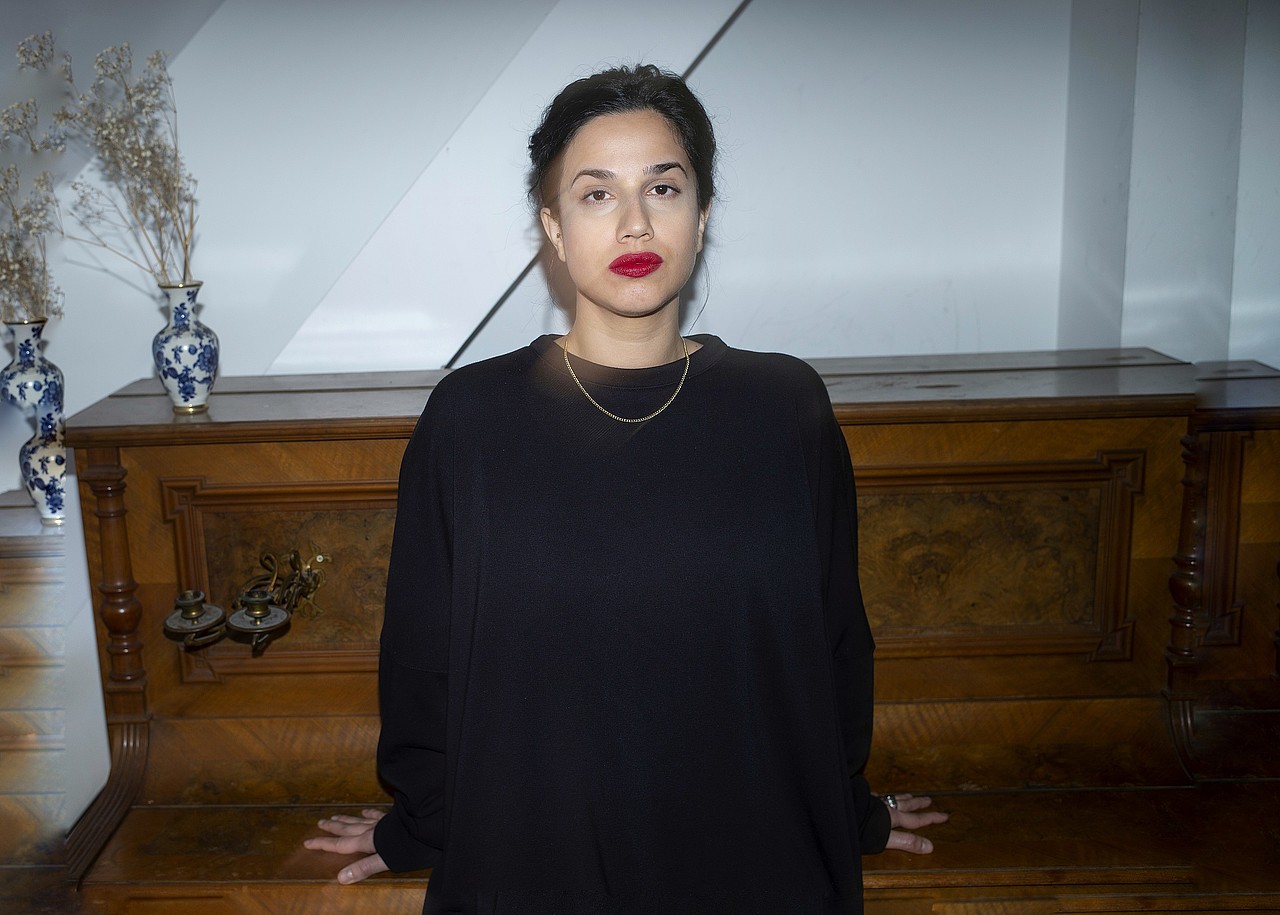
With an overall disregard for genres, Utku utilises melody and sound as tools for storytelling in electronic music. Her full-length Gnosis (2019, Karlrecords), and debut EP Şeb-i Yelda (2018), earned Utku recognition for this unique approach. She has toured extensively across Europe and the Middle East, and was selected as a SHAPE-supported artist in 2021.
Utku is currently preparing to release her new album via Editions Mego.
CTM 2022 x SHAPE mix: Hüma Utku by CTM Festival
CTM 2022 x SHAPE mix: Hüma Utku by CTM Festival
01. Maya Shenfeld – Body Electric
02. Hüma Utku – Live Dangerously
03 .Mi3raj معراج – Knocking On A Nerve الطرق علي العصب
04. Scotch Rolex – Success (ft. Lord Spikeheart)
05. Shackleton – Transformed Into Love
06. Merdh Laleh – The Fifth Attempt
07. Emeka Ogboh – Ojuelegba 2.0
08. AJA – The Thinning
09. Arash Akbari – You Are Made Of Light
10. Igor Stravinsky – The Firebird Suite: Finale (performed by BBC National Orchestra of Wales)
borshch is a magazine for electronic music on and beyond the dancefloor. Founded in Berlin in 2017 by Mariana Berezovska and Tiago Biscaia, it’s a space to provoke open dialogues and challenge established ideas about making, listening, and dancing to music. In this short interview, Mariana Berezovska speaks to Hüma Utku about her artistic practice.
Mariana Berezovska: As we are moving towards an era of mystical exploration and departing from materialistic values, the ideas you explore in your music (such as mysticism, folk tales, and archetypes) have become more relevant than ever. Have you been noticing the shift in our collective consciousness towards mysticism? And if yes, how has the period of isolation and lack of physical interaction influenced this shift?
Hüma Utku: I think this depends on the angle you're looking from. I'm from Turkey, and I grew up in a culture where mysticism and folklore are a part of daily speech and practises. As a part of that, what's not visible to the eye can be as real and legit as what is. There is an acceptance that control is an illusion.
Strangely enough, I felt as if this period was more of a struggle for the Eurocentric world when it comes to rethinking the approach to being in control. Sometimes it all goes batshit, nothing is your fault, and you've no power over the course of events. Sometimes your home is hit by an economic crisis, war, or a natural disaster. Maybe the material could be replaced in time, but where does one turn to fix the non-material? Whatever the answer to this question is, I hope the collective is moving towards openness, humility, and acceptance.
MB: The theme of this year’s CTM edition is »Contact,« where music restores the lost feeling of connection and communication. You’ve previously mentioned that as an introvert, you found the time of isolation productive and stimulating for creative work. What aspects of the creative process have been blocked or inaccessible for you due to the limitations of physical interaction, contact, and touch?
HU: We are social animals, and our physical and psychological health depends on healthy social interactions. So I would never claim that I’ve been blocked by interaction, contact, or touch. What drains me is simply the pace and the meaninglessness of it all. This constant need to be out there, be seen, and perform a social self—it really tires me, and quite frankly, I consider these concerns to be a waste of energy. Even witnessing it drains me, and I feel we’re missing the point. What made 2020 interesting was that the masses started questioning the meaning of genuine interactions and the actual importance of physicality. The questioning caused silence, and creativity works wonderfully with silence. That’s how I got my share of it.
MB: In the description of your music, there is often a reference to »the sense of the ancient« and rituals. Are there specific ancient rituals you work with, and if yes, could you elaborate on the way you've applied them to your music?
HU: The ancient is not necessarily a ritual. It is the fire in the belly and a flutter of the heart. It is wisdom and knowledge that come before the intellect. It reveals itself as chants, deep bass, percussive rhythms at different tempos, and airy melodies in my music. I do put intellectual growth in my music as an artist, yet I don't care for my listener to focus on that. I aim to give the audience goosebumps, head high, and put them in a trancelike state. Because that's how I feel, and I'd like us to resonate.
MB: What’s the theme of your mix? Who are the artists you featured in it? And is the mix related to the work you will present at this year’s CTM?
HU: I called the mix »Dare,« because, after the past two years, physical closeness has almost been turned into a matter of courage or fear. As I mentioned before, we are social animals, and we need each other’s physical presence. Of course, the intensity of the need depends on the person, but it’s also possible to generalise the necessity. Here I invite the listener to dare. As a wise writer once wrote, fear is the mind-killer, and daring is a way to heal. Our minds and bodies are in sync, and they will help each other overcome. My track selection in this mix comes from either conceptual or sonic invitations to the listener to come back to the fire in the belly and let it warm up the physical bodies again. It’s been too cold and metallic lately.
Supported by the SHAPE platform, which is co-funded by the Creative Europe programme of the European Union. Media partner: Borshch.
