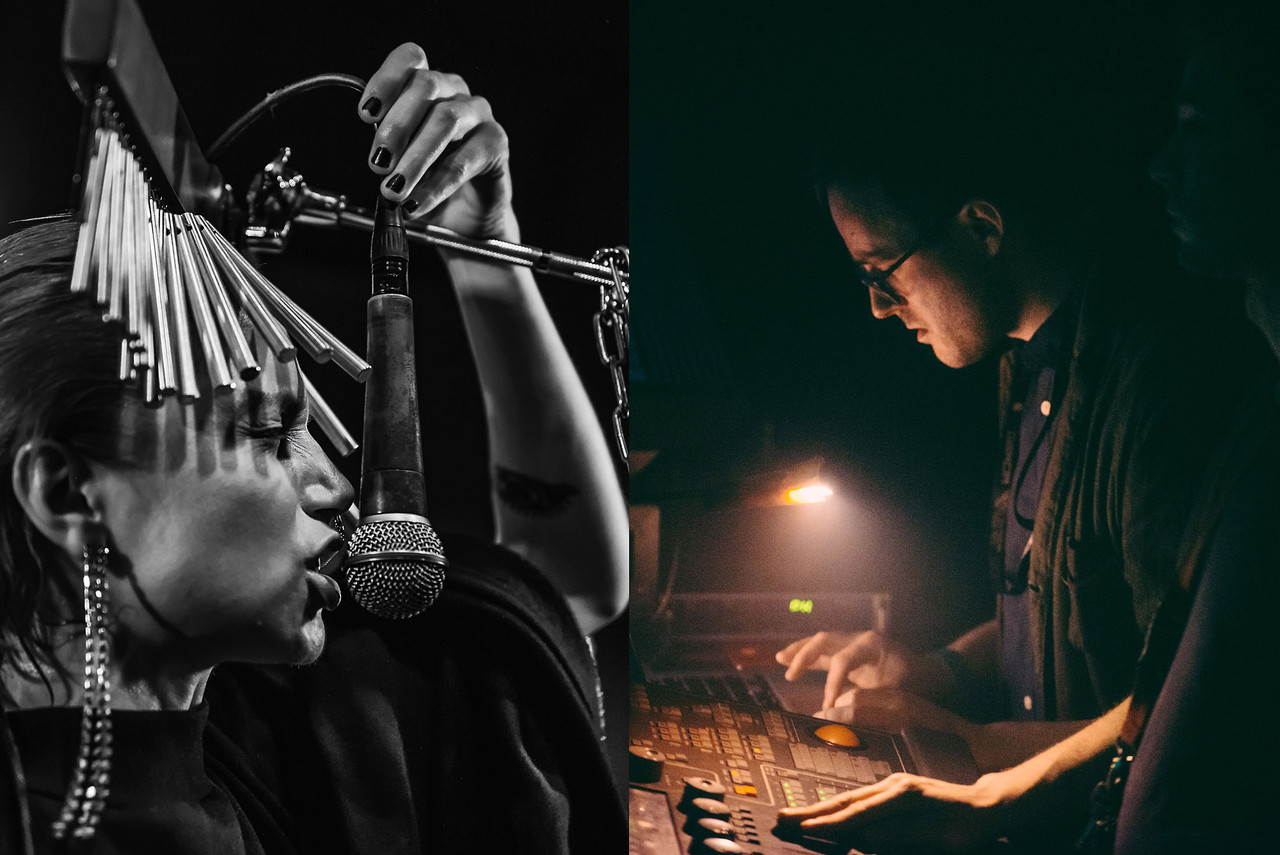
»Synthetic Pulsar« looks at the pulsar as a dazzling multi-dimensional object of scientific and creative focus. While the pulsar traverses a wide range of disciplines – astrophysics, sound technology, and computational speech design – the workings and nature of such an object can never be fully captured, hence remaining incompletely understood.
Astrophysical pulsars are phenomenal objects: rapidly rotating neutron stars that emit beams of radio waves that circle the sky much like lighthouse beams. They are amazingly precise timekeepers that can be used as clocks to test relativity, or for timing and navigation. With a diameter of only about 15 kilometers and a density comparable to that of an atomic nucleus, they also provide a laboratory for extreme physics. The discovery of pulsars by Jocelyn Bell Burnell, who served as a scientific advisor to Marcin Pietruszewski, is considered one of the greatest astronomical discoveries of the 20th century.
Her discovery also gave impulses for the development of the so-called pulsar synthesis technique, which serves as the material basis for »Synthetic Pulsar« in the form of the program The New Pulsar Generator (nuPG), designed and programmed by Pietruszewski. This sound synthesis technique, originally invented by computer music pioneer Curtis Roads, enables the creation of characteristic vowel-like glottal timbres. In the piece, these enter into tension with the AI-synthesised voice of Polish performance artist and vocalist Alex Freiheit (aka Siksa), who, as narrator, thematises processes of synthetic formulation. The central place given to a computer program within the piece positions itself against the usual view of technology as a mere tool, neutral and not worthy of meaningful engagement when thinking about the »true meaning of music.« The work provokes us to look through and beyond the ostensive neutrality of technology by making us aware of the particularities of a computer program at different levels of its articulation: as a historical artifact, as culture, and as a discursive object.