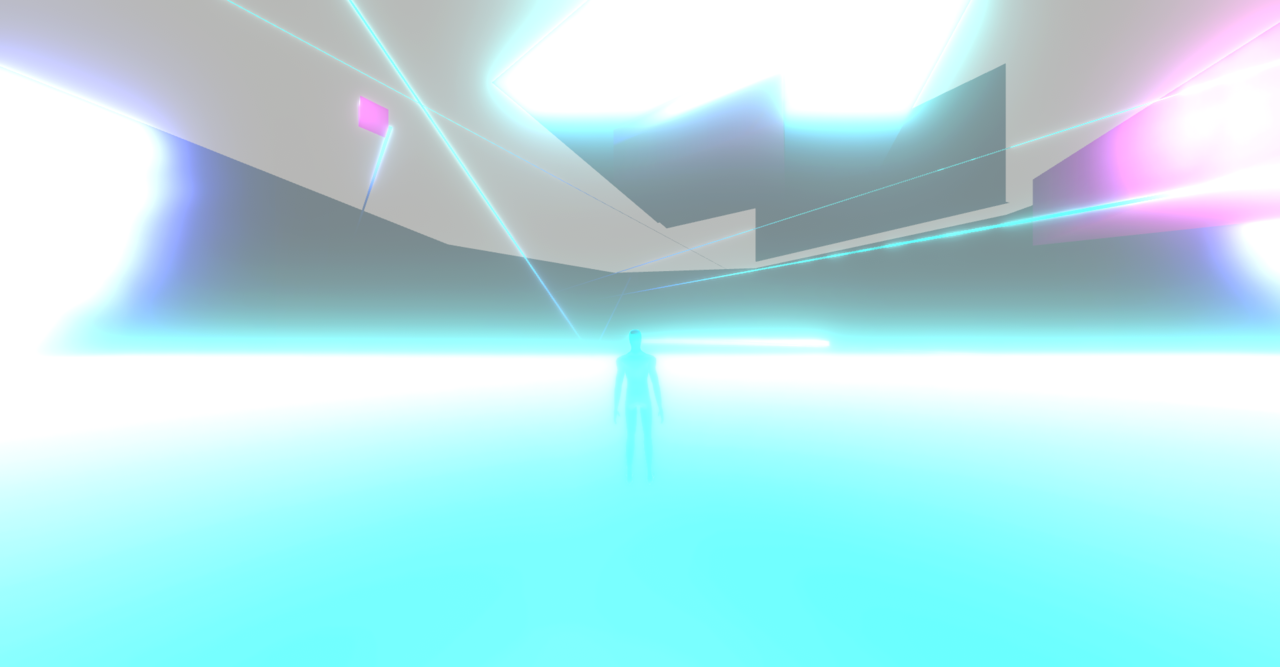
»Synthetic Pulsar« probes the synthetic potential of the pulsar as an integrative object functioning across and within disciplines of astrophysics, technology of sound, and computational speech design.
The notion of the integrative object (objet intégratif) has been coined by Anne-Françoise Schmid to capture the increasing complexity of objects of contemporary scientific and creative practices. A pulsar can be considered such an object: a multi-dimensional entity, each of whose dimensions are a different discipline or a discourse, and whose contours are sketched out according to the points at which each of these disciplines falls short of capturing it. Dimensions of this object can never be added to each other to synthesize a whole object, it is constituted (»made ready« for presentation) each time through the partial perspective and intentions of a given observer.
The material point of departure for »Synthetic Pulsar« is a new implementation of the pulsar synthesis technique in a form of The New Pulsar Generator (nuPG) program designed and programmed in SuperCollider 3 programming language by Marcin Pietruszewski. The central place given to a computer program within the work positions itself against a view which sees technology as a mere tool – neutral and not worthy of meaningful engagement when thinking about a »true meaning of music.« The work provokes us to look through and beyond the ostensive neutrality of technology, by attunement to the specificities of a computer program at various levels of its articulation; as an artefact, as culture, and as discursive-object.
Performer Alex Freiheit’s synthetic voice plays a double role; firstly, as the narrator it thematises processes of synthetic formulation; secondly, as an integral sound generating device its role is to engage with the objectual logics of pulsar and to stage its partial synthesis.
Astrophysical pulsars are phenomenal objects: rapidly rotating neutron stars that send out beams of radio waves which, like lighthouse beams, sweep around the sky as the star rotates. They are amazingly precise timing devices that can be used as clocks for testing relativity theory or for timekeeping and navigation. With a diameter of only about 15 kilometers and a density comparable to that of the nucleus of an atom, they also provide a laboratory for extreme physics. Pulsars appear to »pulse« since the beam of light they emit can only be seen when it faces the Earth. The discovery of pulsars by Jocelyn Bell Burnell is considered to be one of the greatest astronomical discoveries of the twentieth century.
The pulsar as a technological device refers to a sound synthesis technique originally invented by Curtis Roads and popularized in his book Microsound (2001). The technique of pulsar synthesis offers a seamless link between musical time-scales of individual particle rhythms, periodic pitches, and the meso temporal or phrase level of composition. Pulsar micro-events produce rhythmic sequences or, when the density of events is sufficiently high, sustained tones, allowing composition to pass directly from micro to meso temporal domain. As an audio technique, the origins of pulsar synthesis can be traced to historical analogue techniques built around a principle of filtered pulses. The vocal-like, glottal characteristics of its timbre can be linked with early experiments in speech synthesis at the Westdeutscher Rundfunk (WDR) in Cologne by Werner Meyer-Eppler, Herbert Eimert, and Robert Beyer.
The sound work of »Synthetic Pulsar« attempts to mobilise these complex attributes of the pulsar as a synthetic object and present the computer program as a cultural artefact integrating disparate strata of human and non-human creativity.
»Synthetic Pulsar« will also be shown as an audio installation at the silent green Betonhalle venue in May 2021.
Composition, computer program design and libretto: Marcin Pietruszewski
Voice: Alex Freiheit
Synthetic voice design: Birds on Mars
Astrophysical data consultation: Joycelyn Bell Burnell